
BuddhistCatholicContemplativeEvangelicalGeneral ChristianHinduJewishLatter-day SaintMuslimNew VisionsProgressive Christian
Beliefs
- Buddhist
- Catholic
- Contemplative
- Evangelical
- General Christian
- Hindu
- Jewish
- Latter-day Saint
- More Voices
- Muslim
- New Visions
- Pagan
- Progressive Christian
Topics
- Religion News
- Food and Religion
- Sports and Religion
- Religious Art
- Religious Music and Entertainment
- Religious Events
- History and Religion
- Style and Religion
- Politics and Religion
- Women in Religion
- Recreation Outdoors and Religion
- Business Finance and Religion
- Careers Workplace and Religion
- Education and Religion
- Family Parenting and Religion
- Health Fitness and Religion
- Home and Religion
- Relationships and Religion
- Technology and Religion
- Travel and Religion
Columnists
- Buddhist Columnists
- Business Finance and Religion Columnists
- Careers Workplace and Religion Columnists
- Catholic Columnists
- Contemplative Columnists
- Education and Religion Columnists
- Evangelists Columnists
- Family Parenting and Religion Columnists
- General Christian Columnists
- Health Fitness and Religion Columnists
- Hindu Columnists
- History and Religion Columnists
- Home and Religion Columnists
- Jewish Columnists
- More Voices Columnists
- Latter Day Columnists
- Muslim Columnists
- New Visions Columnists
- Nonreligious Columnists
- Pagan Columnists
- Politics and Religion Columnists
- Progressive Columnists
- Recreation Outdoors and Religion Columnists
- Relationships and Religion Columnists
- Religion News Columnists
- Religious Art Columnists
- Religious Events Columnists
- Religious Music and Entertainment Columnists
- Sports and Religion Columnists
- Style and Religion Columnists
- Technology and Religion Columnists
- Travel and Religion Columnists
- Women in Religion Columnists
Resource Library
- 2026 Calendar
- Library of World Religions
- The 100 Most Holy Places on Earth
- Patheos Answers
- Podcasts
- Videos
- Faith Leaders Database
- Anglican Episcopalian
- Bahai
- Baptist
- Buddhism
- Christianity
- Confucianism
- Eastern Orthodoxy
- Hinduism
- Holiness and Pentecostal
- ISKCON
- Islam
- Judaism
- Lutheran
- Methodist
- The Church of Jesus Christ of Latter-day Saints
- New Age
- Paganism
- Presbytarian and Reformed
- Protestantism
- Religion Behind the Scenes
- Roman Catholic
- Scientology
- Shia Islam
- Sikhism
- Sufism
- Sunni Islam
- Taoism
- Zen
- See all religions
Research Tools
 Ad-Free & Subscriber Log-In Subscription Support
Ad-Free & Subscriber Log-In Subscription Support
Follow Patheos 

- Trending:
- Forgiveness
- |
- Marriage
- |
- Consciousness
- |
- Death Penalty
- |
- Election
- |
- Halloween

- Home
- More Voices
- Cynic or Fool? How to Not “Go Low” When We Can’t Agree on Facts
Cynic or Fool? How to Not “Go Low” When We Can’t Agree on Facts
Last updated on: October 19, 2017 at 3:57 pm by Carl Gregg
Cynic or Fool? How to Not “Go Low” When We Can’t Agree on Facts 2017-10-19T15:57:26-04:00 Carl Gregg
Patheos Explore the world's faith through different perspectives on religion and spirituality! Patheos has the views of the prevalent religions and spiritualities of the world.
Michelle Obama famously called us to be our best selves as citizens: “When someone is cruel or acts like a bully, you don’t stoop to their level. No, our motto is, when they go low, we go high.” But that standard is difficult to maintain in our increasingly Orwellian world of “Alternative Facts.” As guides for such a time as this, Oxford University Press has published an excellent and accessible book related to this topic each of the last two years:
- Denying to the Grave: Why We Ignore the Facts That Will Save Us in 2016 and
- The Death of Expertise: The Campaign Against Established Knowledge and Why it Matters by Thomas M. Nichols in 2017.
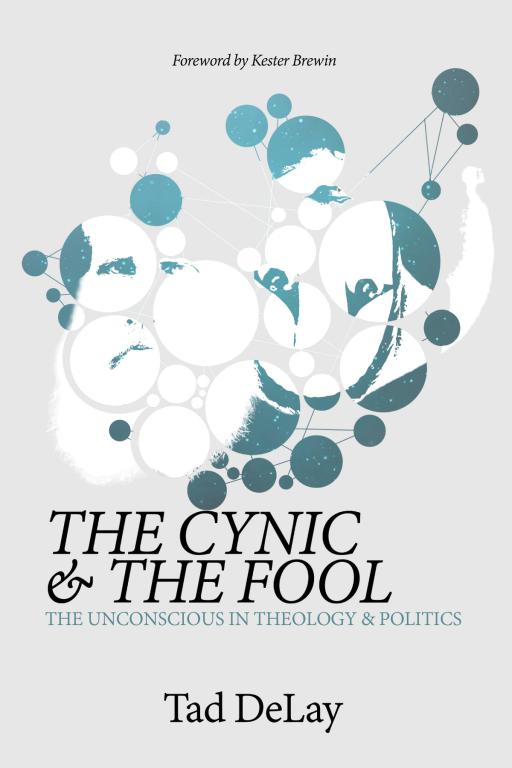 However, as I have reflected on this topic, a third book kept coming to mind: The Cynic & the Fool by Tad DeLay, a scholar who writes at the intersection of psychoanalysis, philosophy, and theology. DeLay’s work is an important reminder that if we can’t agree on the facts, how we proceed will sometimes depend on what is going on underneath our disagreement. To use DeLay’s categories, are the facts in dispute because we are engaged with a “misinformed but honest fool”? Or are we dealing with a nihilistic cynic, who does not care about the truth—only about saying or doing what it takes to spin-doctor perception and amass power at any cost (DeLay 3)?
I suspect we have all watched enough political interviews to have wondered to ourselves periodically whether a given politician “is so foolish as to actually believe what he just said or, instead, is just [cynically] towing a party line he knows is false” (DeLay 3). Along these lines, the late conservative political commentator William F. Buckley (1925-2008) was famous for saying, “I will not insult your intelligence by treating you as if you are as stupid as you pretend to be” (83).
I wish we lived in a world in which everyone was always acting above board. Unfortunately, we have to pause sometimes and consider whether the person disagreeing with us about the facts is acting in good faith (“with honesty and sincerity of intention”) or bad faith (“with an intent to deceive”). And we know there have been a lot of bad faith actors over time, because we have lots of words to describe this phenomenon: con-man, demagogue, snake-oil salesman, huckster, charlatan, cheat, fraud, sham, swindler. I could go on (DeLay 4).
So when I find myself encountering Orwellian doublespeak about “alternative facts,” I remind myself periodically of the Philip K. Dick line that, “Reality is what doesn’t go away even when you stop believing in it.” There is no such thing as an “alternative fact.” A fact is something that is “indisputably the case.” And there may be consequences for one or more parties, as “reality” catches up with the propaganda either in the short- or long-term. But in the meantime, arguing with someone operating in bad faith can be exhausting at best and deeply harmful at worst.
I am also reminded of the line that I find most haunting from George Orwell’s dystopian novel 1984: “The heresy of heresies was common sense…. The Party told you to reject the evidence of your eyes and ears. It was their final, most essential command.” Anytime the powers that be begin to convince significant numbers of people to disbelieve facts, we are in treacherous times. And whenever people in power are promoting “alternative facts,” concerned citizens should leverage political, ethical, technological and other forms of power to replace them with leaders more likely to act in good faith and in accordance with more-reputable information. Of course, history also shows us that promises made on the campaign trail do not always get fulfilled in office.
But I don’t want to dwell only on the depressing number of bad-faith actors in our world. What about the other side of DeLay’s formulation—the many who are not cynical nihilists, but merely “misinformed but honest fools”? David Dunning and Justin Kruger are two research psychologists at Cornell known for researching this question on the relationship between knowledge and confidence. Their most famous finding is called the “Dunning-Kruger Effect,” which shows that the less you actually know, the more confident you about what you think you know. To quote Dunning and Kruger, under-informed people “not only reach erroneous conclusions and make unfortunate choices, but their incompetence robs them of the ability to realize it” (Nichols 44). Of course, experts get it wrong sometimes too, but if they are good faith actors, they have also spent a lot of time studying common errors and pitfalls in their field. And here’s a related corollary to the “Dunning-Kruger Effect” called the “above average effect”: in almost every area, “everyone thinks they’re…well, above average.” Unfortunately, 50% of us are wrong—and which 50% shifts with the category under consideration.
The truth is that most of us don’t like to be wrong and love to be right. And there is good reason why. Our brains “get a dopamine rush when we find confirming data, similar to the one we get if we eat chocolate, have sex, or fall in love” (135). So evolution has given us a strong incentive to maintain our current view—because it feels more pleasurable to do so—irrespective of whether it is right or wrong. Psychologists call a related effect confirmation bias, “the tendency to search for, interpret, favor, and recall information in a way that confirms one’s pre-existing beliefs or hypotheses.”
In addition to the strong incentives that evolution has given us to maintain our current beliefs, brain scans have shown that our amygdala (our “fight or flight reaction”) is triggered when we encounter points with which we currently disagree. “When we hear a disagreeable idea, the body’s chemical reaction is the same as if someone had pulled a knife on us in a dark alley.” And when the amygdala is activated, brain scans also show a darkening of activity in the rational, prefrontal cortex portion of our brain (DeLay 53). These factors contribute to the all-too-human tendency to persist in believing delusions instead of painfully facing the facts (61).
So, having named some of what we are up against, if you want to increase your odds of changing someone’s mind, here’s a few strategies. First, make sure everyone involved is relaxed and well-rested. If one or more people involved is hungry, angry, stressed, or tired, there is a low likelihood of anyone’s mind being changed.
Second, ask the other person if they would be willing to try the following along with you: “(G)o to a quiet place when you are relatively free from stress or distraction and write down what you know about the arguments on the other side of your belief. Also, write down what it would take for you to change your mind.” This practice can potentially expose one of two things for each of you: (1) that potentially there is nothing that could change one or both of your minds, in which case it may be better to stop talking about the subject at hand, if that is possible—these are what the courts call “irreconcilable differences”, or (2) you may identify the data that would be most likely to convince either or both of you (Gorman 140-141).
A more advanced technique is called “motivational interviewing.” There are lots of fascinating examples we could explore in which people disagree on the facts. We could consider the debates over the Raw Milk Movement (Nichols 22-23), Climate Change, Genetically-Modified Foods (Nichols 230), or Preventing Gun Violence (Gorman 4-5) to name only a few examples. But I would like to invite us to spend just a few minutes reflecting on the debate in our society over vaccines. (I should perhaps sub-title this section: ways to potentially make people incredibly angry at me.)
And I will admit that what it would take for me to change my mind about this debate would be for the scientific consensus to shift, which seems incredibly unlikely. The facts, as I understand them, are that:
The vaccine question was up for debate in 1998 when Andrew Wakefield first published his paper. But 17 years and numerous robust studies later, finding absolutely no [statistically-valid association between autism and vaccines], this is no longer a legitimate debate among respectable and well-informed medical experts and scientists. (Gorman 257)
Moreover, “It was uncovered in 2010 that Wakefield had been accepting money from a defense lawyer to publish certain findings, his paper was retracted, and Wakefield eventually lost his medical license. In addition to obvious conflicts of interest, the paper was scientifically unsound, with only 12 non-randomly selected subjects and no comparison group” (79).
All that being said, here’s an example of what it might look like to experiment with “Motivational Interviewing” techniques around this debate with someone who disagrees with you about the facts:
If a parent tells you that they think vaccines are dangerous and they are thinking of not getting their children vaccinated, the best first thing to say to this statement is not, “That is not true—there is no evidence that vaccines are dangerous,” but rather to gently prod the person into exploring their feelings further by saying something to the effect of “Tell me more” or “How did you come to feel nervous about vaccines?” You can then guide the person through a slowed-down, articulated version of their thought process in getting to the conclusion “Vaccines are dangerous,” and along the way get them to express their main desire, to keep their children healthy….
And that is the turning point of motivational interviewing, finding the deep motivation (i.e., “keeping my children healthy”) beneath the surface fear about vaccines.
After prioritizing deep listening over initially disputing facts, you can eventually ask questions that highlight angles this person may not have considered. So you might ask, “Do you know how many children who are vaccinated are diagnosed with autism within the year?” and “I wonder how many children who are not vaccinated get autism” (170)? For a fair assessment, the full range of statistical possibilities must be compared.
I also want to make sure I directly address the struggle to maintain our deepest values—such as the UU First Principle of “the inherent worth and dignity of every person”—even when we can’t reach agreement on the facts. One of the most helpful books I have found recently on this topic is Cultivating Empathy: The Worth and Dignity of Every Person — Without Exception by my colleague The Rev. Nathan Walker. Nate has written:
I once believed that it was powerful to condemn wrongdoers. I believed it right to tear down another’s unexamined assumptions and to vaporize those whose presence was not worthy of my attention. I believed that others were the cause of my aggression, others were to blame for my feelings of despair, disappointment, and righteous indignation…. I was doing justice…all while being a [jerk]…. (7-8).
For Nate, one of the most powerful tools for cultivating empathy is what he called the moral imagination, “the ability to anticipate or project oneself into the middle of a moral dilemma or conflict and understand all the points of view.” Nate writes that,
It is possible for me to understand another person’s views…without necessarily agreeing with them or silencing my own voice. Understanding is a prerequisite for empathy…. When we observe oppression, let us develop strategies that free not only the oppressed but also the oppressor…. Do not let their unjust actions inspire us to cruelty, or else we will soon become what we set out against….
The Rev. Dr. Carl Gregg is a certified spiritual director, a D.Min. graduate of San Francisco Theological Seminary, and the minister of the Unitarian Universalist Congregation of Frederick, Maryland. Follow him on Facebook (facebook.com/carlgregg) and Twitter (@carlgregg).
Learn more about Unitarian Universalism: http://www.uua.org/beliefs/principles
Previous Post

October 4, 2017
Universalism, Then & Now: Insights from the Life of Orestes Brownson
Next Post
October 19, 2017 Immigrants Make America Great
Browse Our Archives
Select a Category Advent Anti-Racism Archaeology Atheism Baptism Best of the Year List Book Reviews Buddhism Catholicism Christian Education Church and State Church Planting Climate Change Conscientious Objection to War Creation Spirituality Death Penalty Didache Disability Rights Discernment Easter Ecology Emergent Church Movement Empire-Critical Ethics Evolution Feminist Theology Film Reviews Gandhi Gospel of Mark Gun Control Hinduism Immigration Reform Interfaith Islam JFK Judaism Jungian Spirituality Lectionary Commentary Lent Letters to the Editor LGBT Marriage MLK Multiculturalism Mysticism Nonviolent Activism Occupy Paganism (Earth-centered Religions) Parables Paul Pluralism Politics Process Theology Quantum Physics Requiescat In Pace Seminary and Divinity School Sermon Series Retrospective Sermons Spiritual Direction Spiritual Practices Stewardship (Fundraising) The Book of J The Wheel of the Year (Paganism) Theoblogger Challenge Triathlon Uncategorized Unitarian Universalism Worship Resources Youth Ministry
Select a Month July 2026 May 2026 March 2026 November 2025 October 2025 August 2025 February 2025 December 2024 October 2024 March 2024 January 2024 December 2023 November 2023 March 2023 February 2023 January 2023 December 2022 November 2022 August 2022 March 2022 February 2022 January 2022 December 2021 September 2021 August 2021 July 2021 June 2021 May 2021 February 2021 January 2021 December 2020 August 2020 June 2020 May 2020 April 2020 March 2020 February 2020 January 2020 December 2019 November 2019 October 2019 September 2019 July 2019 June 2019 March 2019 February 2019 January 2019 December 2018 November 2018 October 2018 September 2018 June 2018 May 2018 April 2018 March 2018 February 2018 January 2018 December 2017 November 2017 October 2017 September 2017 August 2017 July 2017 June 2017 May 2017 April 2017 March 2017 February 2017 January 2017 December 2016 November 2016 October 2016 September 2016 August 2016 June 2016 May 2016 April 2016 March 2016 February 2016 January 2016 December 2015 November 2015 October 2015 September 2015 August 2015 July 2015 June 2015 May 2015 April 2015 March 2015 February 2015 January 2015 December 2014 November 2014 October 2014 August 2014 July 2014 June 2014 May 2014 April 2014 March 2014 February 2014 January 2014 December 2013 November 2013 October 2013 September 2013 August 2013 July 2013 June 2013 May 2013 April 2013 March 2013 February 2013 January 2013 December 2012 November 2012 October 2012 September 2012 August 2012 July 2012 June 2012 May 2012 April 2012 March 2012 February 2012 January 2012 December 2011 November 2011 October 2011 September 2011 August 2011 July 2011 June 2011 May 2011 April 2011 March 2011 February 2011 January 2011 December 2010 November 2010 October 2010 August 2009 July 2009 May 2009
Follow Us!
TAKE THE
Religious Wisdom Quiz
Which Psalm begins with the words, "My God, my God, why have you forsaken me?", later quoted by Jesus?
Select your answer to see how you score.
Psalm 46 Psalm 1 Psalm 110 Psalm 22
Related posts from Carl Gregg

Reading America at 250: A Nation Wrestles With...


Andrew Holocek on the Power of Darkness

The Stories That Shape Us: Myths, Archetypes, &...
TRENDING AT PATHEOS More Voices

Reading America at 250: A Nation Wrestles With...
As part of my own reflection on the 250th anniversary of the...

Whenever I am reading a book or listening to an argument, I...

President Trump Ban Animal Torture Videos on Facebook
Call for Stricter Regulations of Animal Abuse Content on Facebook Although President...

Draft Amendments to Address Ritual Abuse in New...
The proposed changes would make it illegal for individuals in domestic partnerships...

How Bans on LGBTQ+ Student Clubs Threaten Religious...
On June 20, 2025, the State of Texas passed Senate Bill 12....

The Truth About the Gen Z Revival
This past year, there has been a lot of media buzz surrounding...
view all More Voices blogs
Ad-Free & Subscriber Log-In Subscription Support
- About Us
- 2026 Calendar
- Videos
- Podcasts
- Library of World Religions
- Faith In Media Tracker
- Advertise With Us
- Write for Us
- Privacy Policy
- Terms of Service
- Do Not Sell My Data
- Contact Us
- Radiant Digital
- Manage Newsletter Subscriptions
- Unsubscribe From Notifications
- Sitemap
Copyright 2008-2026, Patheos. All rights reserved.
Subscription Support Ad-Free & Subscriber Log-In
Follow Patheos