
BuddhistCatholicContemplativeEvangelicalGeneral ChristianHinduJewishLatter-day SaintMuslimNew VisionsProgressive Christian
Beliefs
- Buddhist
- Catholic
- Contemplative
- Evangelical
- General Christian
- Hindu
- Jewish
- Latter-day Saint
- More Voices
- Muslim
- New Visions
- Pagan
- Progressive Christian
Topics
- Religion News
- Food and Religion
- Sports and Religion
- Religious Art
- Religious Music and Entertainment
- Religious Events
- History and Religion
- Style and Religion
- Politics and Religion
- Women in Religion
- Recreation Outdoors and Religion
- Business Finance and Religion
- Careers Workplace and Religion
- Education and Religion
- Family Parenting and Religion
- Health Fitness and Religion
- Home and Religion
- Relationships and Religion
- Technology and Religion
- Travel and Religion
Columnists
- Buddhist Columnists
- Business Finance and Religion Columnists
- Careers Workplace and Religion Columnists
- Catholic Columnists
- Contemplative Columnists
- Education and Religion Columnists
- Evangelists Columnists
- Family Parenting and Religion Columnists
- General Christian Columnists
- Health Fitness and Religion Columnists
- Hindu Columnists
- History and Religion Columnists
- Home and Religion Columnists
- Jewish Columnists
- More Voices Columnists
- Latter Day Columnists
- Muslim Columnists
- New Visions Columnists
- Nonreligious Columnists
- Pagan Columnists
- Politics and Religion Columnists
- Progressive Columnists
- Recreation Outdoors and Religion Columnists
- Relationships and Religion Columnists
- Religion News Columnists
- Religious Art Columnists
- Religious Events Columnists
- Religious Music and Entertainment Columnists
- Sports and Religion Columnists
- Style and Religion Columnists
- Technology and Religion Columnists
- Travel and Religion Columnists
- Women in Religion Columnists
Resource Library
- 2026 Calendar
- Library of World Religions
- The 100 Most Holy Places on Earth
- Patheos Answers
- Podcasts
- Videos
- Faith Leaders Database
- Anglican Episcopalian
- Bahai
- Baptist
- Buddhism
- Christianity
- Confucianism
- Eastern Orthodoxy
- Hinduism
- Holiness and Pentecostal
- ISKCON
- Islam
- Judaism
- Lutheran
- Methodist
- The Church of Jesus Christ of Latter-day Saints
- New Age
- Paganism
- Presbytarian and Reformed
- Protestantism
- Religion Behind the Scenes
- Roman Catholic
- Scientology
- Shia Islam
- Sikhism
- Sufism
- Sunni Islam
- Taoism
- Zen
- See all religions
Research Tools
 Ad-Free & Subscriber Log-In Subscription Support
Ad-Free & Subscriber Log-In Subscription Support
Follow Patheos 

- Trending:
- Forgiveness
- |
- Marriage
- |
- Consciousness
- |
- Death Penalty
- |
- Election
- |
- Halloween

- Home
- More Voices
- The Revolution in Bioethics is Already Here: from “Gene-editing” to “Genome Engineering”
The Revolution in Bioethics is Already Here: from “Gene-editing” to “Genome Engineering”
Last updated on: September 14, 2017 at 10:01 am by Carl Gregg
The Revolution in Bioethics is Already Here: from “Gene-editing” to “Genome Engineering” 2017-09-14T10:01:13-04:00 Carl Gregg
Patheos Explore the world's faith through different perspectives on religion and spirituality! Patheos has the views of the prevalent religions and spiritualities of the world.
(This post is a continuation of my topic yesterday on “Bioethics, CRISPR, & “Our Children Redesigned.”)
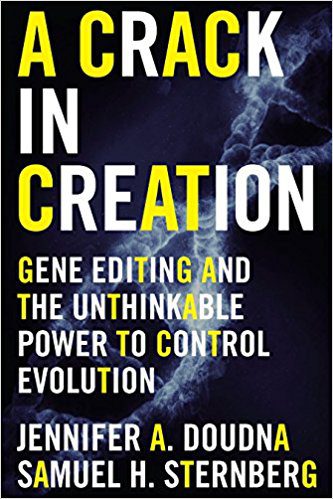 The best metaphor I’ve seen for how CRISPR works—for those of us who don’t have a doctorate in biochemistry—is that CRISPR is kind of like a “designer molecular Swiss army knife” which can “home in on specific twenty-letter DNA sequences and cut apart both strands of the double helix” (101).
The real rub for bioethics arises because CRISPR can alter not only somatic cells (throughout the body of individuals), but also germline cells, whose traits can be inherited by future generations (158). All of a sudden, we humans—ourselves products of the evolutionary process—have the power to micromanage the evolutionary process itself:
Should we begin editing genes in unborn children to lower their lifetime risk of heart disease, Alzheimer’s, diabetes, or cancer? What about endowing unborn children with beneficial traits, like greater strength and increased cognitive abilities, or changing physical traits, like eye and hair color? (xvi)
These are questions of genetics that do not even touch the coming augmentations that will be possible through artificial intelligence, nanotechnology, and other forms of bioenhancement, all of which I’ll delve into more deeply in a forthcoming post in November, inspired by the book Our Grandchildren Redesigned: Life in the Bioengineered Society of the Near Future.
For now, as some context for how rapidly these changes are happening, let’s turn the clock back almost forty years:
- In 1978, Louise Brown is born, the world’s first ‘test-tube baby’…proving that human procreation could be reduced to simple laboratory procedures: the mixing of purified eggs and sperm in a petri dish, the fostering of a zygote as it grew into a multicellular embryo, and the implantation of that embryo in the female womb. In vitro fertilization, or IVF.
- Around that time, in the 1980s, scientists were content to edit individual genes at efficiencies that were just fractions of a percent” (100). In other words, not very efficient at all.
- Then, a little less than 30 years ago in 1990, headlines broke about scientists teaming up around the world to sequence the human genome.
- And in 1996, the world witnessed the birth of Dolly the sheep, “the first successful cloning of a mammal” (191).
- And we now know that less than twenty years ago, “In 2001, after herculean efforts and at a cost of more than three billion dollars, the first draft” of the Human Genome Project was completed (14-15). By then, scientists were able to edit individual genes at efficiencies of low-single-digit percentages. (Still not every efficient.)
- But in just the past few years with CRISPR, gene editing is now “so powerful and multifaceted that it is often referred to”—not as gene editing—but as “genome engineering” (100).
To give you a further example of the power that CRISPR holds, we humans could potentially choose to wield this new technology to either make mosquitos less dangerous or to make the mosquito extinct. Why would we want to do that? It’s not about having a few less annoying misquote bites:
The mosquito [arguably] causes [as much or] more human suffering than any other creature on earth. Mosquito-borne diseases—malaria, dengue virus, West Nile virus, yellow fever virus, Chikungunya virus, Zika virus, and many others —have an annual death toll in excess of one million. CRISPR-based gene drives might be the best weapon we have against this pervasive threat. (152-153)
And here’s the even more head-spinning twist: If we were to regret making mosquitos extinct, we could potentially bring them back, Jurassic Park-style, in the same way that CRISPR could allow us to bring back from extinction the Wooly Mammoth and other species (118-119). Cue: #LawOfUnintendedConsequences!
None of this is an exaggeration. There really are earth-shattering consequences at stake. Indeed, the U.S. Senate Armed Services Committee in its Worldwide Threat Assessment has classified
genome editing as one of the six weapons of mass destruction and proliferation that nation-states might try to develop, at great risk to America. (The others were Russian cruise missiles, Syrian and Iraqi chemical weapons, and the nuclear programs of Iran, China, and North Korea.) (217)
There is indeed much to be wrestled with about the implications of forthcoming biotechnology. But we already live in a world in which CRISPR has made “the human genome as easily manipulable as that of a bacterium” (187). For almost all the related bioethical questions, the issue is not only “if,” but what and when and how and by whom?(188). To quote the late Marshall Nirenberg, who shared the Nobel Prize in 1968 for “breaking the genetic code”: “[Humanity’s] [power to shape [it’s] own destiny can be used wisely or unwisely, for the betterment or detriment of [humankind]” (189). The choice is ours.
At this point, I’m tempted to re-post my blog from a few month ago about Eugenics. But the truth is that twenty-first century bioethics is more complicated than merely rejecting twentieth-century eugenics, which in most cases was racist and repugnant. For a more twenty-first century perspective, consider the view of Charles Sabine, who lives with Huntington’s Disease: “Anyone who has to actually face the reality of one of these diseases is not going to have a remote compunction about thinking that there is any moral issue at all.” You may disagree. But there are people who feel strongly about pursuing the power of these new biotechnologies.
And for better or worse, we likely do not have the luxury of indecision. As the historian Howard Zinn liked to say, “You can’t stay neutral on a moving train.” We can decline to explore the bioethical frontiers, but other nations are already going ahead. As we wrestle with these and other forthcoming bioethical dilemmas, it may help to keep in mind Pope Francis’s message to Tim Cook, CEO of Apple: “Never has humanity had such power over itself. Yet nothing ensures it will be used wisely.” Cook’s related insight for recent MIT graduates is also crucial:
Technology is capable of doing great things. But it doesn’t want to do great things. It doesn’t want anything. That part takes all of us. It takes our values, and our commitment, our love, our belief that all of us are interconnected, our decency, our kindness.
The frontiers of biotechnology are both fascinating and frightening. As we continue to explore the what is possible, one piece of guidance I remind myself of often is from the 4th Principle in my own tradition of Unitarian Universalism: the call to pursue “A free and responsible search for truth and meaning.”
The Rev. Dr. Carl Gregg is a certified spiritual director, a D.Min. graduate of San Francisco Theological Seminary, and the minister of the Unitarian Universalist Congregation of Frederick, Maryland. Follow him on Facebook (facebook.com/carlgregg) and Twitter (@carlgregg).
Learn more about Unitarian Universalism: http://www.uua.org/beliefs/principles
Previous Post

September 13, 2017
Bioethics, CRISPR, & "Our Children Redesigned"
Next Post
September 21, 2017 American Muslims
Browse Our Archives
Select a Category Advent Anti-Racism Archaeology Atheism Baptism Best of the Year List Book Reviews Buddhism Catholicism Christian Education Church and State Church Planting Climate Change Conscientious Objection to War Creation Spirituality Death Penalty Didache Disability Rights Discernment Easter Ecology Emergent Church Movement Empire-Critical Ethics Evolution Feminist Theology Film Reviews Gandhi Gospel of Mark Gun Control Hinduism Immigration Reform Interfaith Islam JFK Judaism Jungian Spirituality Lectionary Commentary Lent Letters to the Editor LGBT Marriage MLK Multiculturalism Mysticism Nonviolent Activism Occupy Paganism (Earth-centered Religions) Parables Paul Pluralism Politics Process Theology Quantum Physics Requiescat In Pace Seminary and Divinity School Sermon Series Retrospective Sermons Spiritual Direction Spiritual Practices Stewardship (Fundraising) The Book of J The Wheel of the Year (Paganism) Theoblogger Challenge Triathlon Uncategorized Unitarian Universalism Worship Resources Youth Ministry
Select a Month July 2026 May 2026 March 2026 November 2025 October 2025 August 2025 February 2025 December 2024 October 2024 March 2024 January 2024 December 2023 November 2023 March 2023 February 2023 January 2023 December 2022 November 2022 August 2022 March 2022 February 2022 January 2022 December 2021 September 2021 August 2021 July 2021 June 2021 May 2021 February 2021 January 2021 December 2020 August 2020 June 2020 May 2020 April 2020 March 2020 February 2020 January 2020 December 2019 November 2019 October 2019 September 2019 July 2019 June 2019 March 2019 February 2019 January 2019 December 2018 November 2018 October 2018 September 2018 June 2018 May 2018 April 2018 March 2018 February 2018 January 2018 December 2017 November 2017 October 2017 September 2017 August 2017 July 2017 June 2017 May 2017 April 2017 March 2017 February 2017 January 2017 December 2016 November 2016 October 2016 September 2016 August 2016 June 2016 May 2016 April 2016 March 2016 February 2016 January 2016 December 2015 November 2015 October 2015 September 2015 August 2015 July 2015 June 2015 May 2015 April 2015 March 2015 February 2015 January 2015 December 2014 November 2014 October 2014 August 2014 July 2014 June 2014 May 2014 April 2014 March 2014 February 2014 January 2014 December 2013 November 2013 October 2013 September 2013 August 2013 July 2013 June 2013 May 2013 April 2013 March 2013 February 2013 January 2013 December 2012 November 2012 October 2012 September 2012 August 2012 July 2012 June 2012 May 2012 April 2012 March 2012 February 2012 January 2012 December 2011 November 2011 October 2011 September 2011 August 2011 July 2011 June 2011 May 2011 April 2011 March 2011 February 2011 January 2011 December 2010 November 2010 October 2010 August 2009 July 2009 May 2009
Follow Us!
TAKE THE
Religious Wisdom Quiz
What does Paul say about weakness in 2 Corinthians 12?
Select your answer to see how you score.
"Avoid all weakness." "God’s power is made perfect in weakness." "The weak shall perish." "Weakness leads to destruction."
Related posts from Carl Gregg

Reading America at 250: A Nation Wrestles With...


Andrew Holocek on the Power of Darkness

The Stories That Shape Us: Myths, Archetypes, &...
TRENDING AT PATHEOS More Voices

Reading America at 250: A Nation Wrestles With...
As part of my own reflection on the 250th anniversary of the...

Whenever I am reading a book or listening to an argument, I...

President Trump Ban Animal Torture Videos on Facebook
Call for Stricter Regulations of Animal Abuse Content on Facebook Although President...

Draft Amendments to Address Ritual Abuse in New...
The proposed changes would make it illegal for individuals in domestic partnerships...

How Bans on LGBTQ+ Student Clubs Threaten Religious...
On June 20, 2025, the State of Texas passed Senate Bill 12....

The Truth About the Gen Z Revival
This past year, there has been a lot of media buzz surrounding...
view all More Voices blogs
Ad-Free & Subscriber Log-In Subscription Support
- About Us
- 2026 Calendar
- Videos
- Podcasts
- Library of World Religions
- Faith In Media Tracker
- Advertise With Us
- Write for Us
- Privacy Policy
- Terms of Service
- Do Not Sell My Data
- Contact Us
- Radiant Digital
- Manage Newsletter Subscriptions
- Unsubscribe From Notifications
- Sitemap
Copyright 2008-2026, Patheos. All rights reserved.
Subscription Support Ad-Free & Subscriber Log-In
Follow Patheos