
BuddhistCatholicContemplativeEvangelicalGeneral ChristianHinduJewishLatter-day SaintMuslimNew VisionsProgressive Christian
Beliefs
- Buddhist
- Catholic
- Contemplative
- Evangelical
- General Christian
- Hindu
- Jewish
- Latter-day Saint
- More Voices
- Muslim
- New Visions
- Pagan
- Progressive Christian
Topics
- Religion News
- Food and Religion
- Sports and Religion
- Religious Art
- Religious Music and Entertainment
- Religious Events
- History and Religion
- Style and Religion
- Politics and Religion
- Women in Religion
- Recreation Outdoors and Religion
- Business Finance and Religion
- Careers Workplace and Religion
- Education and Religion
- Family Parenting and Religion
- Health Fitness and Religion
- Home and Religion
- Relationships and Religion
- Technology and Religion
- Travel and Religion
Columnists
- Buddhist Columnists
- Business Finance and Religion Columnists
- Careers Workplace and Religion Columnists
- Catholic Columnists
- Contemplative Columnists
- Education and Religion Columnists
- Evangelists Columnists
- Family Parenting and Religion Columnists
- General Christian Columnists
- Health Fitness and Religion Columnists
- Hindu Columnists
- History and Religion Columnists
- Home and Religion Columnists
- Jewish Columnists
- More Voices Columnists
- Latter Day Columnists
- Muslim Columnists
- New Visions Columnists
- Nonreligious Columnists
- Pagan Columnists
- Politics and Religion Columnists
- Progressive Columnists
- Recreation Outdoors and Religion Columnists
- Relationships and Religion Columnists
- Religion News Columnists
- Religious Art Columnists
- Religious Events Columnists
- Religious Music and Entertainment Columnists
- Sports and Religion Columnists
- Style and Religion Columnists
- Technology and Religion Columnists
- Travel and Religion Columnists
- Women in Religion Columnists
Resource Library
- 2026 Calendar
- Library of World Religions
- The 100 Most Holy Places on Earth
- Patheos Answers
- Podcasts
- Videos
- Faith Leaders Database
- Anglican Episcopalian
- Bahai
- Baptist
- Buddhism
- Christianity
- Confucianism
- Eastern Orthodoxy
- Hinduism
- Holiness and Pentecostal
- ISKCON
- Islam
- Judaism
- Lutheran
- Methodist
- The Church of Jesus Christ of Latter-day Saints
- New Age
- Paganism
- Presbytarian and Reformed
- Protestantism
- Religion Behind the Scenes
- Roman Catholic
- Scientology
- Shia Islam
- Sikhism
- Sufism
- Sunni Islam
- Taoism
- Zen
- See all religions
Research Tools
 Ad-Free & Subscriber Log-In Subscription Support
Ad-Free & Subscriber Log-In Subscription Support
Follow Patheos 

- Trending:
- Forgiveness
- |
- Marriage
- |
- Consciousness
- |
- Death Penalty
- |
- Election
- |
- Halloween

- Home
- More Voices
- Islam in America
Islam in America
Last updated on: September 22, 2017 at 11:53 am by Carl Gregg
Islam in America 2017-09-22T11:53:41-04:00 Carl Gregg
Patheos Explore the world's faith through different perspectives on religion and spirituality! Patheos has the views of the prevalent religions and spiritualities of the world.
This post is a continuation of yesterday’s theme of “American Muslims.”
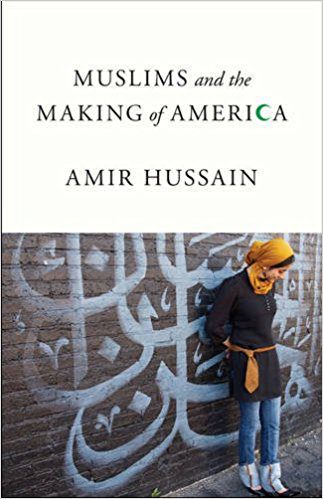 Regarding the first line of President Obama’s speech in Cairo that I ended with yesterday (“Islam has always been a part of America’s story”), here’s one example. We have a biography from 1734 about Job ben Soloman, an enslaved African Muslim who in 1730 was sold in Annapolis, Maryland. Part of why we know about him at all (including that he was a Muslim) is that his owner found it remarkable that Job could speak and write Arabic (8). Similarly, some of you may recall from Alex Haley’s 1977 television miniseries Roots (about tracing his ancestry) that there is a scene in which Kunta Kinte (played by LeVar Burton) shares with his mentor (played by Louis Gosset, Jr.) about being a Muslim. I should perhaps also note that Kunta Kinte was also sold in Annapolis (8-9).
To widen our lens beyond these two specific examples, “Historians estimate that between 10 and 20 percent of the enslaved people who were kidnapped and brought here from West Africa were Muslim…. The first Muslim immigrants to North America other than slaves were from the Ottoman Empire in the late nineteenth century” (9). Enslaved Muslims helped enrich and build this country from before its official beginning. Indeed, George Washington, the first president of the United States, owned two enslaved Muslims named Fatima and Little Fatima, both named after the youngest daughter of the Prophet Muhammad and his first wife (and first follower) Khadījah. So—enslaved Muslims also helped build Mount Vernon (21).
Turning the clock back further, we also have records about Estevancio the Moor, an enslaved Muslim owned by a Spanish conquistador who landed in Florida in 1528. Estevancio was part of a group that explored Florida and Arizona before a member of the Zuni tribe killed him in 1539, in what is now New Mexico. “Almost eighty years before the Pilgrims landed in America,” a Muslim had already explored uncharted territory and died here” (16).
Turning the clock back one more time, it is important to remember that in the same year—1492—that “Columbus sailed the ocean blue,” Spain was also expelling all the Jews and Muslims who refused to convert to Christianity. Relatedly, there is a fascinating part of the 1994 book Shards of Love by the late María Rosa Menocal (1953-2012), the Sterling Professor of Humanities at Yale University, about Luis de Torres, a converso (a Jewish person forced to convert to Christianity) who was part of Columbus’s expedition as a translator. De Torres could speak Arabic and Hebrew in addition to Portuguese. Now this is where the historical records get fuzzy, but it seems that when Columbus landed in Cuba, de Torres was able to speak in Arabic with some of the Taíno chiefs in Cuba. This lends some potential credence to legends from the tenth and twelfth centuries about Arabic sailors crossing the Atlantic—perhaps pre-Columbus contacts (14-15). Menocal writes provocatively about “the speaking of Arabic in the New World when in the Old it is being outlawed” (15).
I don’t, however, want us to get distracted on this speculative point. Regardless, we know much more definitively that 10,000 years before Columbus’s voyage, in approximately 8,500 B.C.E., semi-nomadic groups of hunter-gatherers began to practice agriculture in seven different places on this continent, becoming the indigenous residents of this land (Dunbar-Ortiz 15). And as Columbus Day approaches next month, it is important to remind ourselves periodically that many history books fail to emphasize that even though our nation’s capital (the District of Columbia) is named after him, Columbus didn’t “discover America.” He never set foot in North America, much less on the land known today as The United States. Columbus’s first voyage landed in what is now the Dominican Republic and Haiti. When he returned on his second voyage, what he “discovered” was that the colony of forty men he had left had all been killed by the Indigenous people. On his third trip, he landed in what is now Venezuela, and on his fourth and final trip he reached “the Caribbean coast of Central America” (43).
But now we are definitely as far back in history as we’ll be going in this post. So let me give you one more historical example of Muslims in America, before moving into much more contemporary times. Given all the violence that has erupted about images of the prophet Mohammad, most commentators fail to note that there is an image of the Prophet Muhammad holding a sword and a Qur’an on the frieze on the walls of the United States Supreme Court. The intention of this art—which depicts many other figures—is to honor “the great lawgivers of history.” But given all the controversy about contested plaques and memorials, maybe it’s best to say, “Shhh! Don’t tell anybody” (Hussain 28-29).
In contrast, perhaps ones of the places Muslims have been most visible in American public life is in the sports arena. Cassius Clay, one of the most famous athletes of all time, changed his name to the very Islamic “Muhammad Ali.” There’s a lot of be said about his story, including being arrested, having his boxing title stripped, and being unable to box for three prime fighting years for being a conscientious objector to the Vietnam War, an objection based on the teachings of Islam about unjust wars. He famously said, “I ain’t got no quarrel with them Viet Cong—no Viet Cong ever called me [N-word].” In 1971, the U.S. Supreme Court unanimously overturned his conviction (73-75).
In addition to Muhammad Ali, there are so many examples of prominent American Muslim professional athletes. To name only a few of the most famous, starting with basketball:
- Ferdinand Lewis Alcindor, Jr. became Kareem Abdul-Jabbar in 1971 (61-68),
- Hakeem Olajuwon (71)
Moving on to football:
- Ahmad Rashad, wide receiver for the Vikings (78)
- Muhammad Wilkerson, a defensive end for the New York Jets
- Abdullah brothers, Husain and Hamza, safeties in the NFL
- Aqib Talib, a cornerback for the Denver Broncos,
- Shahid Khan, owner of the Jacksonville Jaguars.
- Ibtihaj Muhammad, a member of the U.S. Fencing Team, who at the 2016 Olympics became the first American woman to compete in hijab.
Some interesting dynamics have arisen as these popular athletes have periodically acted in public not only as celebrities, but also as Muslims.
There is so much more to say about Islam in America, but my hope is that at least in some small part, this post can help give lie to the perception that Islam is “new to America, foreign to America, or composed of adherents who are violent, ‘un-American,’ or a threat to our nation” (4). Instead, the reality has always been that most Muslims in America are our neighbors, friends, and fellow citizens. The debates about “Islam vs. the West” or “Muslims vs. America” have far too frequently been exaggerated and exploited for political gain. May we be part of learning to tell a better, more historical, and more hopeful story about “American Muslims” and “Islam in America,” a story which has been part of America since before there was an America.
The Rev. Dr. Carl Gregg is a certified spiritual director, a D.Min. graduate of San Francisco Theological Seminary, and the minister of the Unitarian Universalist Congregation of Frederick, Maryland. Follow him on Facebook (facebook.com/carlgregg) and Twitter (@carlgregg).
Learn more about Unitarian Universalism: http://www.uua.org/beliefs/principles
Previous Post

September 21, 2017
American Muslims
Browse Our Archives
Select a Category Advent Anti-Racism Archaeology Atheism Baptism Best of the Year List Book Reviews Buddhism Catholicism Christian Education Church and State Church Planting Climate Change Conscientious Objection to War Creation Spirituality Death Penalty Didache Disability Rights Discernment Easter Ecology Emergent Church Movement Empire-Critical Ethics Evolution Feminist Theology Film Reviews Gandhi Gospel of Mark Gun Control Hinduism Immigration Reform Interfaith Islam JFK Judaism Jungian Spirituality Lectionary Commentary Lent Letters to the Editor LGBT Marriage MLK Multiculturalism Mysticism Nonviolent Activism Occupy Paganism (Earth-centered Religions) Parables Paul Pluralism Politics Process Theology Quantum Physics Requiescat In Pace Seminary and Divinity School Sermon Series Retrospective Sermons Spiritual Direction Spiritual Practices Stewardship (Fundraising) The Book of J The Wheel of the Year (Paganism) Theoblogger Challenge Triathlon Uncategorized Unitarian Universalism Worship Resources Youth Ministry
Select a Month July 2026 May 2026 March 2026 November 2025 October 2025 August 2025 February 2025 December 2024 October 2024 March 2024 January 2024 December 2023 November 2023 March 2023 February 2023 January 2023 December 2022 November 2022 August 2022 March 2022 February 2022 January 2022 December 2021 September 2021 August 2021 July 2021 June 2021 May 2021 February 2021 January 2021 December 2020 August 2020 June 2020 May 2020 April 2020 March 2020 February 2020 January 2020 December 2019 November 2019 October 2019 September 2019 July 2019 June 2019 March 2019 February 2019 January 2019 December 2018 November 2018 October 2018 September 2018 June 2018 May 2018 April 2018 March 2018 February 2018 January 2018 December 2017 November 2017 October 2017 September 2017 August 2017 July 2017 June 2017 May 2017 April 2017 March 2017 February 2017 January 2017 December 2016 November 2016 October 2016 September 2016 August 2016 June 2016 May 2016 April 2016 March 2016 February 2016 January 2016 December 2015 November 2015 October 2015 September 2015 August 2015 July 2015 June 2015 May 2015 April 2015 March 2015 February 2015 January 2015 December 2014 November 2014 October 2014 August 2014 July 2014 June 2014 May 2014 April 2014 March 2014 February 2014 January 2014 December 2013 November 2013 October 2013 September 2013 August 2013 July 2013 June 2013 May 2013 April 2013 March 2013 February 2013 January 2013 December 2012 November 2012 October 2012 September 2012 August 2012 July 2012 June 2012 May 2012 April 2012 March 2012 February 2012 January 2012 December 2011 November 2011 October 2011 September 2011 August 2011 July 2011 June 2011 May 2011 April 2011 March 2011 February 2011 January 2011 December 2010 November 2010 October 2010 August 2009 July 2009 May 2009
Follow Us!
TAKE THE
Religious Wisdom Quiz
What gift did the wise men NOT bring?
Select your answer to see how you score.
Silver Gold Myrrh Frankincense
Related posts from Carl Gregg

Reading America at 250: A Nation Wrestles With...


Andrew Holocek on the Power of Darkness

The Stories That Shape Us: Myths, Archetypes, &...
TRENDING AT PATHEOS More Voices

Reading America at 250: A Nation Wrestles With...
As part of my own reflection on the 250th anniversary of the...

Whenever I am reading a book or listening to an argument, I...

President Trump Ban Animal Torture Videos on Facebook
Call for Stricter Regulations of Animal Abuse Content on Facebook Although President...

Draft Amendments to Address Ritual Abuse in New...
The proposed changes would make it illegal for individuals in domestic partnerships...

How Bans on LGBTQ+ Student Clubs Threaten Religious...
On June 20, 2025, the State of Texas passed Senate Bill 12....

The Truth About the Gen Z Revival
This past year, there has been a lot of media buzz surrounding...
view all More Voices blogs
Ad-Free & Subscriber Log-In Subscription Support
- About Us
- 2026 Calendar
- Videos
- Podcasts
- Library of World Religions
- Faith In Media Tracker
- Advertise With Us
- Write for Us
- Privacy Policy
- Terms of Service
- Do Not Sell My Data
- Contact Us
- Radiant Digital
- Manage Newsletter Subscriptions
- Unsubscribe From Notifications
- Sitemap
Copyright 2008-2026, Patheos. All rights reserved.
Subscription Support Ad-Free & Subscriber Log-In
Follow Patheos