
BuddhistCatholicContemplativeEvangelicalGeneral ChristianHinduJewishLatter-day SaintMuslimNew VisionsProgressive Christian
Beliefs
- Buddhist
- Catholic
- Contemplative
- Evangelical
- General Christian
- Hindu
- Jewish
- Latter-day Saint
- More Voices
- Muslim
- New Visions
- Pagan
- Progressive Christian
Topics
- Religion News
- Food and Religion
- Sports and Religion
- Religious Art
- Religious Music and Entertainment
- Religious Events
- History and Religion
- Style and Religion
- Politics and Religion
- Women in Religion
- Recreation Outdoors and Religion
- Business Finance and Religion
- Careers Workplace and Religion
- Education and Religion
- Family Parenting and Religion
- Health Fitness and Religion
- Home and Religion
- Relationships and Religion
- Technology and Religion
- Travel and Religion
Columnists
- Buddhist Columnists
- Business Finance and Religion Columnists
- Careers Workplace and Religion Columnists
- Catholic Columnists
- Contemplative Columnists
- Education and Religion Columnists
- Evangelists Columnists
- Family Parenting and Religion Columnists
- General Christian Columnists
- Health Fitness and Religion Columnists
- Hindu Columnists
- History and Religion Columnists
- Home and Religion Columnists
- Jewish Columnists
- More Voices Columnists
- Latter Day Columnists
- Muslim Columnists
- New Visions Columnists
- Nonreligious Columnists
- Pagan Columnists
- Politics and Religion Columnists
- Progressive Columnists
- Recreation Outdoors and Religion Columnists
- Relationships and Religion Columnists
- Religion News Columnists
- Religious Art Columnists
- Religious Events Columnists
- Religious Music and Entertainment Columnists
- Sports and Religion Columnists
- Style and Religion Columnists
- Technology and Religion Columnists
- Travel and Religion Columnists
- Women in Religion Columnists
Resource Library
- 2026 Calendar
- Library of World Religions
- The 100 Most Holy Places on Earth
- Patheos Answers
- Podcasts
- Videos
- Faith Leaders Database
- Anglican Episcopalian
- Bahai
- Baptist
- Buddhism
- Christianity
- Confucianism
- Eastern Orthodoxy
- Hinduism
- Holiness and Pentecostal
- ISKCON
- Islam
- Judaism
- Lutheran
- Methodist
- The Church of Jesus Christ of Latter-day Saints
- New Age
- Paganism
- Presbytarian and Reformed
- Protestantism
- Religion Behind the Scenes
- Roman Catholic
- Scientology
- Shia Islam
- Sikhism
- Sufism
- Sunni Islam
- Taoism
- Zen
- See all religions
Research Tools
 Ad-Free & Subscriber Log-In Subscription Support
Ad-Free & Subscriber Log-In Subscription Support
Follow Patheos 

- Trending:
- Forgiveness
- |
- Marriage
- |
- Consciousness
- |
- Death Penalty
- |
- Election
- |
- Halloween

- Home
- More Voices
- Insights from Octavia Butler’s 1998 Novel that Predicted a “Make American Great Again” President
Insights from Octavia Butler’s 1998 Novel that Predicted a “Make American Great Again” President
Last updated on: September 1, 2017 at 10:05 am by Carl Gregg
Insights from Octavia Butler’s 1998 Novel that Predicted a “Make American Great Again” President 2017-09-01T10:05:48-04:00 Carl Gregg
Patheos Explore the world's faith through different perspectives on religion and spirituality! Patheos has the views of the prevalent religions and spiritualities of the world.
This post is a continuation of yesterday’s theme of “Orwell, Atwood, Butler: Reading for Resistance & Resilience in the Age of Trump” about a three-part book discussion series on “Reading for Resistance & Resilience.” This sentiment is echoed in the central discussion question for our third piece of fiction Octavia Butler’s Parable of the Talents: What lessons might 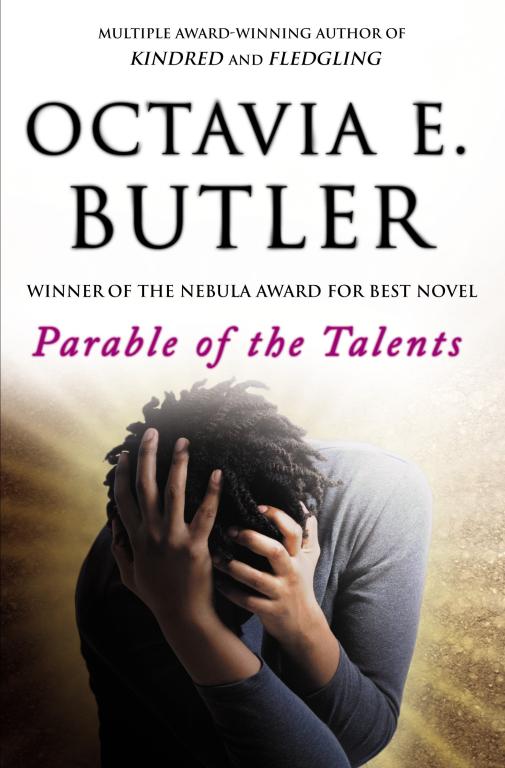 we learn from a novel published in 1998—almost twenty years ago—in which a populist, authoritarian zealot is elected President of the United States using the campaign slogan “Make American Great Again”? The New Yorker calls her book prescient.
Tragically, Butler is unable to speak for herself because she died in 2006 from a fall near her home at the far too young age of 58. But she is on the record in a brilliant speech at MIT from around the time Parable of the Talents was published saying, “This was not a book about prophecy; this was an if-this-goes-on story. This was a cautionary tale, although people have told me it was prophecy. All I have to say to that is, ‘I certainly hope not.’”
As Gerry Canavan details in his excellent book about Octavia E. Butler for the “Modern Masters of Science Fiction” series from University of Illinois Press, when Butler calls her novel an “if-this-goes-on story, she is explicitly referring to some of the worst trends of the Reagan era: greed, selfishness, war-mongering, race-baiting, and skepticism toward science (110). I should hasten to add, however, that Butler was interested not only in dystopian cautionary tales, but also in the utopian imagination. To build a better world, we first have to dream “what might be.” And Octavia Butler is a fascinating example of someone who lived deeply within that tension between dystopian realism and utopian hope. To explore some of what we might learn from her writings and worldview, let me tell you a little more about her life.
Octavia Butler was born in 1947 in Pasadena, California. She was only a toddler when her father died, and was raised primarily by her grandmother and her mother, who was a housecleaner. Butler confesses to sometimes feeling ashamed of her mother, but she came to see her mother quite differently. In Butler’s words: “I didn’t have to leave school when I was ten, I never missed a meal, always had a roof over my head, because my mother was willing to do demeaning work.” Indeed, commentators have noted that, “Many of Butler’s most-beloved heroines would be women quite like her mother, women who struggled and compromised, not because they were ‘frightened or timid or cowards’ but who made the best of no-win situations because ‘they were heroes.’” And although her mother did not understand her daughter’s aspiration to be a professional writer, she nevertheless scraped together the money to buy Octavia her first typewriter and to fund attendance at her first science fiction writers’ workshop (14).
And although Butler wrote stories from a very young age, her call to write science fiction came when she was twelve years old, and saw a mediocre film titled Devil Girl from Mars. She later said:
As I was watching this film, I had a series of revelations. The first was that, “Geez, I can write a better story than that.” And then I thought, “Gee, anybody can write a better story than that.” And my third thought was the clincher: “Somebody got paid for writing that awful story.” So I was off and writing, and a year later I was busy submitting terrible pieces of fiction to innocent magazines. (15)
But it was a long journey from being a young African-American girl in the racially-segregated 1950s, dreaming of being a professional writer, to winning the MacArthur Foundation “genius grant” almost four decades later in 1995 (141).
 As you can perhaps guess, she was given some pretty racist advice along the way, but it is powerful to witness the ways she persevered in bringing her experience of being both black and a woman to a science fiction field that at the time was almost exclusively dominated by white men. To give you one example, when she was told that race was an unwelcome topic in a genre allegedly best suited for “escapism,” she asked about Star Wars: “Violence, kidnapping, and planetary destruction [are] all in good fun—but ‘the sight of a minority person? Too heavy? Too real?” (77).
Her best-known novel is Kindred, which turns on the idea that time traveling can be a very different prospect for a person of color who might find themselves returning to a time of legalized enslavement (62-63). And some of you may have seen the news that director Ava Duvernay—known for directing Selma (2014), 13th (2016), and A Wrinkle in Time (2018)—has signed on to adapt for TV the first part of what may be Butler’s best work, her Lilith’s Brood trilogy. Those novels tell the story of “a black woman named Lilith who, 250 years after humanity nearly incinerates itself in a nuclear war, works with aliens to restart the human race — primarily by mixing with aliens. As you might expect, some other humans don’t take to the idea as quickly as Lilith” and therein lies the tale (5).
Regarding why science fiction matters beyond entertainment, Butler once wrote that,
We write about aliens because we can’t stop creating them out of each other. We want aliens to be real so that we are not alone in a universe that cares no more for us than it does for stones or suns or any other fragments of itself. And yet we are unable to get along with those aliens who are closest to us, those aliens who are of course ourselves. (174)
And part of what makes Butler’s writing so compelling is that she does not write naïve utopian dreams. Her experiences as woman in a sexist society and as a black person in a racist society deeply inform her speculations about what the future might hold. In her words, “I don’t write utopian science fiction because I don’t believe imperfect humans can form a perfect society” (120-121). Butler speculated that we humans might only choose solidarity across our differences in the face of extreme adversity (151).
In a similar vein, as I have been reflecting on the science fiction of Octavia Butler, I was reminded that we recently passed the fiftieth anniversary of a sermon from another dreamer: The Rev. Dr. Martin Luther King. Fifty years ago, Dr. King delivered his famous sermon, later published as “Where Do We Go from Here: Chaos or Community?” Some of our current leaders seem to know only how to lead us into chaos. But Dr. King, Octavia Butler, and so many other progressives called us in a different direction: toward beloved community. Within our spheres of influence, may we each do our part—individually and collectively—to turn our dreams of beloved community into deeds.
The Rev. Dr. Carl Gregg is a certified spiritual director, a D.Min. graduate of San Francisco Theological Seminary, and the minister of the Unitarian Universalist Congregation of Frederick, Maryland. Follow him on Facebook (facebook.com/carlgregg) and Twitter (@carlgregg).
Learn more about Unitarian Universalism: http://www.uua.org/beliefs/principles

Browse Our Archives
Select a Category Advent Anti-Racism Archaeology Atheism Baptism Best of the Year List Book Reviews Buddhism Catholicism Christian Education Church and State Church Planting Climate Change Conscientious Objection to War Creation Spirituality Death Penalty Didache Disability Rights Discernment Easter Ecology Emergent Church Movement Empire-Critical Ethics Evolution Feminist Theology Film Reviews Gandhi Gospel of Mark Gun Control Hinduism Immigration Reform Interfaith Islam JFK Judaism Jungian Spirituality Lectionary Commentary Lent Letters to the Editor LGBT Marriage MLK Multiculturalism Mysticism Nonviolent Activism Occupy Paganism (Earth-centered Religions) Parables Paul Pluralism Politics Process Theology Quantum Physics Requiescat In Pace Seminary and Divinity School Sermon Series Retrospective Sermons Spiritual Direction Spiritual Practices Stewardship (Fundraising) The Book of J The Wheel of the Year (Paganism) Theoblogger Challenge Triathlon Uncategorized Unitarian Universalism Worship Resources Youth Ministry
Select a Month July 2026 May 2026 March 2026 November 2025 October 2025 August 2025 February 2025 December 2024 October 2024 March 2024 January 2024 December 2023 November 2023 March 2023 February 2023 January 2023 December 2022 November 2022 August 2022 March 2022 February 2022 January 2022 December 2021 September 2021 August 2021 July 2021 June 2021 May 2021 February 2021 January 2021 December 2020 August 2020 June 2020 May 2020 April 2020 March 2020 February 2020 January 2020 December 2019 November 2019 October 2019 September 2019 July 2019 June 2019 March 2019 February 2019 January 2019 December 2018 November 2018 October 2018 September 2018 June 2018 May 2018 April 2018 March 2018 February 2018 January 2018 December 2017 November 2017 October 2017 September 2017 August 2017 July 2017 June 2017 May 2017 April 2017 March 2017 February 2017 January 2017 December 2016 November 2016 October 2016 September 2016 August 2016 June 2016 May 2016 April 2016 March 2016 February 2016 January 2016 December 2015 November 2015 October 2015 September 2015 August 2015 July 2015 June 2015 May 2015 April 2015 March 2015 February 2015 January 2015 December 2014 November 2014 October 2014 August 2014 July 2014 June 2014 May 2014 April 2014 March 2014 February 2014 January 2014 December 2013 November 2013 October 2013 September 2013 August 2013 July 2013 June 2013 May 2013 April 2013 March 2013 February 2013 January 2013 December 2012 November 2012 October 2012 September 2012 August 2012 July 2012 June 2012 May 2012 April 2012 March 2012 February 2012 January 2012 December 2011 November 2011 October 2011 September 2011 August 2011 July 2011 June 2011 May 2011 April 2011 March 2011 February 2011 January 2011 December 2010 November 2010 October 2010 August 2009 July 2009 May 2009
Follow Us!
TAKE THE
Religious Wisdom Quiz
Who was the first son of Adam and Eve?
Select your answer to see how you score.
Abel Irad Cain Levi
Related posts from Carl Gregg

Reading America at 250: A Nation Wrestles With...


Andrew Holocek on the Power of Darkness

The Stories That Shape Us: Myths, Archetypes, &...
TRENDING AT PATHEOS More Voices

Reading America at 250: A Nation Wrestles With...
As part of my own reflection on the 250th anniversary of the...

Whenever I am reading a book or listening to an argument, I...

President Trump Ban Animal Torture Videos on Facebook
Call for Stricter Regulations of Animal Abuse Content on Facebook Although President...

Draft Amendments to Address Ritual Abuse in New...
The proposed changes would make it illegal for individuals in domestic partnerships...

How Bans on LGBTQ+ Student Clubs Threaten Religious...
On June 20, 2025, the State of Texas passed Senate Bill 12....

The Truth About the Gen Z Revival
This past year, there has been a lot of media buzz surrounding...
view all More Voices blogs
Ad-Free & Subscriber Log-In Subscription Support
- About Us
- 2026 Calendar
- Videos
- Podcasts
- Library of World Religions
- Faith In Media Tracker
- Advertise With Us
- Write for Us
- Privacy Policy
- Terms of Service
- Do Not Sell My Data
- Contact Us
- Radiant Digital
- Manage Newsletter Subscriptions
- Unsubscribe From Notifications
- Sitemap
Copyright 2008-2026, Patheos. All rights reserved.
Subscription Support Ad-Free & Subscriber Log-In
Follow Patheos