
BuddhistCatholicContemplativeEvangelicalGeneral ChristianHinduJewishLatter-day SaintMuslimNew VisionsProgressive Christian
Beliefs
- Buddhist
- Catholic
- Contemplative
- Evangelical
- General Christian
- Hindu
- Jewish
- Latter-day Saint
- More Voices
- Muslim
- New Visions
- Pagan
- Progressive Christian
Topics
- Religion News
- Food and Religion
- Sports and Religion
- Religious Art
- Religious Music and Entertainment
- Religious Events
- History and Religion
- Style and Religion
- Politics and Religion
- Women in Religion
- Recreation Outdoors and Religion
- Business Finance and Religion
- Careers Workplace and Religion
- Education and Religion
- Family Parenting and Religion
- Health Fitness and Religion
- Home and Religion
- Relationships and Religion
- Technology and Religion
- Travel and Religion
Columnists
- Buddhist Columnists
- Business Finance and Religion Columnists
- Careers Workplace and Religion Columnists
- Catholic Columnists
- Contemplative Columnists
- Education and Religion Columnists
- Evangelists Columnists
- Family Parenting and Religion Columnists
- General Christian Columnists
- Health Fitness and Religion Columnists
- Hindu Columnists
- History and Religion Columnists
- Home and Religion Columnists
- Jewish Columnists
- More Voices Columnists
- Latter Day Columnists
- Muslim Columnists
- New Visions Columnists
- Nonreligious Columnists
- Pagan Columnists
- Politics and Religion Columnists
- Progressive Columnists
- Recreation Outdoors and Religion Columnists
- Relationships and Religion Columnists
- Religion News Columnists
- Religious Art Columnists
- Religious Events Columnists
- Religious Music and Entertainment Columnists
- Sports and Religion Columnists
- Style and Religion Columnists
- Technology and Religion Columnists
- Travel and Religion Columnists
- Women in Religion Columnists
Resource Library
- 2026 Calendar
- Library of World Religions
- The 100 Most Holy Places on Earth
- Patheos Answers
- Podcasts
- Videos
- Faith Leaders Database
- Anglican Episcopalian
- Bahai
- Baptist
- Buddhism
- Christianity
- Confucianism
- Eastern Orthodoxy
- Hinduism
- Holiness and Pentecostal
- ISKCON
- Islam
- Judaism
- Lutheran
- Methodist
- The Church of Jesus Christ of Latter-day Saints
- New Age
- Paganism
- Presbytarian and Reformed
- Protestantism
- Religion Behind the Scenes
- Roman Catholic
- Scientology
- Shia Islam
- Sikhism
- Sufism
- Sunni Islam
- Taoism
- Zen
- See all religions
Research Tools
 Ad-Free & Subscriber Log-In Subscription Support
Ad-Free & Subscriber Log-In Subscription Support
Follow Patheos 

- Trending:
- Forgiveness
- |
- Marriage
- |
- Consciousness
- |
- Death Penalty
- |
- Election
- |
- Halloween

- Home
- More Voices
- American Muslims
American Muslims
Last updated on: September 22, 2017 at 11:55 am by Carl Gregg
American Muslims 2017-09-22T11:55:56-04:00 Carl Gregg
Patheos Explore the world's faith through different perspectives on religion and spirituality! Patheos has the views of the prevalent religions and spiritualities of the world.
There are approximately 1.5 billion Muslims in the world today, making it the world’s second largest religion. (Christianity is the first largest, with 2.1 billion adherents. And the Hindu Tradition is third, with 900 million.) Projections estimate that Islam will become the world’s largest religion by 2070. So there are many reasons to increase our familiarity with the Islamic tradition—from correcting misinformation that exacerbates Isalamophobia, to equipping ourselves to be better able to advocate for a more open, liberal, and progressive Islam of the future.
And our motivation should be not only be to dismantle prejudice, but also to end the irrational wasting of our limited taxpayer resources. For instance, “By the end of 2016, Muslim terrorists were responsible for 123 of the 240,000 murders in the United State since 9/11. Yet counter-terrorism remained the number one priority of the FBI, which spends several billion dollars annually to prevent and prosecute Muslim terrorists.” While a certain level of funding is needed to help prevent future attacks, we seem to be well into the territory of diminishing marginal returns. Moreover, when representatives of our government routinely harass innocent Muslim citizens, we sow seeds of resentment and alienation, and fertilize the soil in which future terrorism can grow.
A few data points may also be illuminating. For instance, new survey results released a few weeks ago about “America’s Changing Religious Identity” included the headline that, “White Christians, once the dominant religious group in the U.S., now account for fewer than half of all adults living in the country. Today, fewer than half of all states are majority white Christian. As recently as 2007, 39 states had majority white Christian populations.”
There are at least two other trends about Muslims in America worth highlighting:
-
Non-Christian religious groups are growing, but they still represent less than one in ten Americans combined. Jewish Americans constitute 2% of the public, while Muslims, Buddhists, and Hindus each constitute only 1% of the public. All other non-Christian religions constitute an additional 1%.
-
America’s youngest religious groups are all non-Christian. Muslims, Hindus, and Buddhists are all far younger than white Christian groups. At least one-third of Muslims (42%), Hindus (36%), and Buddhists (35%) are under the age of 30. Roughly one-third (34%) of religiously unaffiliated Americans are also under 30. In contrast, white Christian groups are aging. Slightly more than one in ten white Catholics (11%), white evangelical Protestants (11%), and white mainline Protestants (14%) are under 30. Approximately six in ten white evangelical Protestants (62%), white Catholics (62%), and white mainline Protestants (59%) are at least 50 years old…. The median ages of Hindus (32 years), Muslims (32 years), Buddhists (36 years), religiously-unaffiliated Americans (37 years), and Hispanic Protestants (37 years) are below 40.
That’s a lot of numbers to keep track of, so I’ll repeat the highlights about Islam: Muslims are approximately 1% of the U.S. population. And of that 1%, one-third of Muslims are under the age of 30.
And although I do not want to overwhelm you with data, there are a few more helpful points worth considering about Islam in America in recent decades:
- In 1967, there were probably fewer than 250,000 self-identifying Muslims in the United States; today, there are about 3.35 million.
- The growth of the Muslim community is largely due to immigration. In 1965, the Immigration and Naturalization Act signed by President Lyndon Johnson in the shadow of the Statue of Liberty reformed the racist system of immigration that largely prohibited immigrants from countries perceived as non-white. Millions of non-white people have immigrated to the United States since then, and perhaps two million of them have been Muslim.
- In 1967, there were perhaps fewer than 200 mosques in the country. Today, there are more than 2,000.
- Today, the sectarian profile of Muslim America roughly mirrors that of the rest of the Muslim world. The majority of Muslim Americans are Sunni, while 16% identify as Shi‘a, 14% say they are “just Muslim,” and 4% are members of smaller communities such as the Ahmadiyya movement and the Nation of Islam.
No more data, I promise!
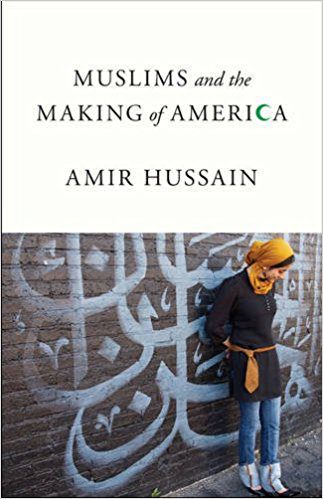 My larger point is that the stories we tell matter. And some of this data begins to point us toward a story different than the tired debates about “Islam and the West” or “Islam and America” as if they were completely oppositional, with nothing in common. In contrast, as Amir Hussain, a theology professor at Loyola Marymount University, details in her important book Muslims and the Making of America, a more accurate—and arguably much more helpful and hopeful—story to tell may be about “Islam in the West” and “Muslims in America.” After all, Muslims have always been in the United States of America—since before there was an America (116).
As an example of learning how to tell that story better, I will lift up one paragraph from President Obama’s 2009 speech to the Muslim world, delivered at Cairo University—an address worth revisiting in full:
Islam has always been a part of America’s story. The first nation to recognize my country was Morocco. In signing the Treaty of Tripoli in 1796, our second President John Adams wrote, “The United States has in itself no character of enmity against the laws, religion or tranquility of Muslims.” And since our founding, American Muslims have enriched the United States. They have fought in our wars, served in government, stood for civil rights, started businesses, taught at our universities, excelled in our sports arenas, won Nobel Prizes, built our tallest building, and lit the Olympic Torch. And when the first Muslim-American was recently elected to Congress, he took the oath to defend our Constitution using the same Holy Koran that one of our Founding Fathers – Thomas Jefferson – kept in his personal library.
In my post tomorrow on “Islam in America,” I will unpack a few of those details more fully.
The Rev. Dr. Carl Gregg is a certified spiritual director, a D.Min. graduate of San Francisco Theological Seminary, and the minister of the Unitarian Universalist Congregation of Frederick, Maryland. Follow him on Facebook (facebook.com/carlgregg) and Twitter (@carlgregg).
Learn more about Unitarian Universalism: http://www.uua.org/beliefs/principles
Next Post

September 22, 2017 Islam in America
Browse Our Archives
Select a Category Advent Anti-Racism Archaeology Atheism Baptism Best of the Year List Book Reviews Buddhism Catholicism Christian Education Church and State Church Planting Climate Change Conscientious Objection to War Creation Spirituality Death Penalty Didache Disability Rights Discernment Easter Ecology Emergent Church Movement Empire-Critical Ethics Evolution Feminist Theology Film Reviews Gandhi Gospel of Mark Gun Control Hinduism Immigration Reform Interfaith Islam JFK Judaism Jungian Spirituality Lectionary Commentary Lent Letters to the Editor LGBT Marriage MLK Multiculturalism Mysticism Nonviolent Activism Occupy Paganism (Earth-centered Religions) Parables Paul Pluralism Politics Process Theology Quantum Physics Requiescat In Pace Seminary and Divinity School Sermon Series Retrospective Sermons Spiritual Direction Spiritual Practices Stewardship (Fundraising) The Book of J The Wheel of the Year (Paganism) Theoblogger Challenge Triathlon Uncategorized Unitarian Universalism Worship Resources Youth Ministry
Select a Month July 2026 May 2026 March 2026 November 2025 October 2025 August 2025 February 2025 December 2024 October 2024 March 2024 January 2024 December 2023 November 2023 March 2023 February 2023 January 2023 December 2022 November 2022 August 2022 March 2022 February 2022 January 2022 December 2021 September 2021 August 2021 July 2021 June 2021 May 2021 February 2021 January 2021 December 2020 August 2020 June 2020 May 2020 April 2020 March 2020 February 2020 January 2020 December 2019 November 2019 October 2019 September 2019 July 2019 June 2019 March 2019 February 2019 January 2019 December 2018 November 2018 October 2018 September 2018 June 2018 May 2018 April 2018 March 2018 February 2018 January 2018 December 2017 November 2017 October 2017 September 2017 August 2017 July 2017 June 2017 May 2017 April 2017 March 2017 February 2017 January 2017 December 2016 November 2016 October 2016 September 2016 August 2016 June 2016 May 2016 April 2016 March 2016 February 2016 January 2016 December 2015 November 2015 October 2015 September 2015 August 2015 July 2015 June 2015 May 2015 April 2015 March 2015 February 2015 January 2015 December 2014 November 2014 October 2014 August 2014 July 2014 June 2014 May 2014 April 2014 March 2014 February 2014 January 2014 December 2013 November 2013 October 2013 September 2013 August 2013 July 2013 June 2013 May 2013 April 2013 March 2013 February 2013 January 2013 December 2012 November 2012 October 2012 September 2012 August 2012 July 2012 June 2012 May 2012 April 2012 March 2012 February 2012 January 2012 December 2011 November 2011 October 2011 September 2011 August 2011 July 2011 June 2011 May 2011 April 2011 March 2011 February 2011 January 2011 December 2010 November 2010 October 2010 August 2009 July 2009 May 2009
Follow Us!
TAKE THE
Religious Wisdom Quiz
Who threw Daniel into the lion’s den?
Select your answer to see how you score.
King Darius King Saul King Nebuchadnezzar Pharaoh
Related posts from Carl Gregg

Reading America at 250: A Nation Wrestles With...


Andrew Holocek on the Power of Darkness

The Stories That Shape Us: Myths, Archetypes, &...
TRENDING AT PATHEOS More Voices

Reading America at 250: A Nation Wrestles With...
As part of my own reflection on the 250th anniversary of the...

Whenever I am reading a book or listening to an argument, I...

President Trump Ban Animal Torture Videos on Facebook
Call for Stricter Regulations of Animal Abuse Content on Facebook Although President...

Draft Amendments to Address Ritual Abuse in New...
The proposed changes would make it illegal for individuals in domestic partnerships...

How Bans on LGBTQ+ Student Clubs Threaten Religious...
On June 20, 2025, the State of Texas passed Senate Bill 12....

The Truth About the Gen Z Revival
This past year, there has been a lot of media buzz surrounding...
view all More Voices blogs
Ad-Free & Subscriber Log-In Subscription Support
- About Us
- 2026 Calendar
- Videos
- Podcasts
- Library of World Religions
- Faith In Media Tracker
- Advertise With Us
- Write for Us
- Privacy Policy
- Terms of Service
- Do Not Sell My Data
- Contact Us
- Radiant Digital
- Manage Newsletter Subscriptions
- Unsubscribe From Notifications
- Sitemap
Copyright 2008-2026, Patheos. All rights reserved.
Subscription Support Ad-Free & Subscriber Log-In
Follow Patheos