
BuddhistCatholicContemplativeEvangelicalGeneral ChristianHinduJewishLatter-day SaintMuslimNew VisionsProgressive Christian
Beliefs
- Buddhist
- Catholic
- Contemplative
- Evangelical
- General Christian
- Hindu
- Jewish
- Latter-day Saint
- More Voices
- Muslim
- New Visions
- Pagan
- Progressive Christian
Topics
- Religion News
- Food and Religion
- Sports and Religion
- Religious Art
- Religious Music and Entertainment
- Religious Events
- History and Religion
- Style and Religion
- Politics and Religion
- Women in Religion
- Recreation Outdoors and Religion
- Business Finance and Religion
- Careers Workplace and Religion
- Education and Religion
- Family Parenting and Religion
- Health Fitness and Religion
- Home and Religion
- Relationships and Religion
- Technology and Religion
- Travel and Religion
Columnists
- Buddhist Columnists
- Business Finance and Religion Columnists
- Careers Workplace and Religion Columnists
- Catholic Columnists
- Contemplative Columnists
- Education and Religion Columnists
- Evangelists Columnists
- Family Parenting and Religion Columnists
- General Christian Columnists
- Health Fitness and Religion Columnists
- Hindu Columnists
- History and Religion Columnists
- Home and Religion Columnists
- Jewish Columnists
- More Voices Columnists
- Latter Day Columnists
- Muslim Columnists
- New Visions Columnists
- Nonreligious Columnists
- Pagan Columnists
- Politics and Religion Columnists
- Progressive Columnists
- Recreation Outdoors and Religion Columnists
- Relationships and Religion Columnists
- Religion News Columnists
- Religious Art Columnists
- Religious Events Columnists
- Religious Music and Entertainment Columnists
- Sports and Religion Columnists
- Style and Religion Columnists
- Technology and Religion Columnists
- Travel and Religion Columnists
- Women in Religion Columnists
Resource Library
- 2026 Calendar
- Library of World Religions
- The 100 Most Holy Places on Earth
- Patheos Answers
- Podcasts
- Videos
- Faith Leaders Database
- Anglican Episcopalian
- Bahai
- Baptist
- Buddhism
- Christianity
- Confucianism
- Eastern Orthodoxy
- Hinduism
- Holiness and Pentecostal
- ISKCON
- Islam
- Judaism
- Lutheran
- Methodist
- The Church of Jesus Christ of Latter-day Saints
- New Age
- Paganism
- Presbytarian and Reformed
- Protestantism
- Religion Behind the Scenes
- Roman Catholic
- Scientology
- Shia Islam
- Sikhism
- Sufism
- Sunni Islam
- Taoism
- Zen
- See all religions
Research Tools
 Ad-Free & Subscriber Log-In Subscription Support
Ad-Free & Subscriber Log-In Subscription Support
Follow Patheos 

- Trending:
- Forgiveness
- |
- Marriage
- |
- Consciousness
- |
- Death Penalty
- |
- Election
- |
- Halloween

- Home
- More Voices
- What Does It Mean to “Wake up” or “Get Enlightened”?
What Does It Mean to “Wake up” or “Get Enlightened”?
Last updated on: August 11, 2017 at 9:50 am by Carl Gregg
What Does It Mean to “Wake up” or “Get Enlightened”? 2017-08-11T09:50:23-04:00 Carl Gregg
Patheos Explore the world's faith through different perspectives on religion and spirituality! Patheos has the views of the prevalent religions and spiritualities of the world.
Ken Wilber (1949-) is a contemporary American philosopher who has written a host of books related to what he calls Integral Theory. Wilber has a gift for synthesizing information across diverse fields of studies, and then designing helpful charts and graphs depicting how various intersecting systems can mutually inform one another. Along these lines, what might a “religion of the future” look like? What might it mean to practice a spirituality that takes seriously the paradigm-shifting discoveries of Copernicus, Darwin, Freud, Einstein, Hubble, and so many others?
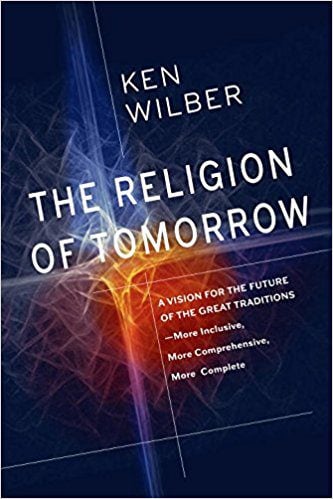 I have been reflecting on this question over the past few weeks as I have made my way through Wilber’s latest book The Religion of Tomorrow: A Vision for the Future of the Great Traditions. Unless you are feeling particularly ambitious, I would not recommend starting with this latest volume from Wilber because it’s a bit of a doorstop of a book, weighing in at more than 800 pages. In comparison:
- The Integral Vision is a short, accessible introduction,
- Integral Spirituality is an earlier, much briefer (only 336 pages) book on religion, and
- Integral Life Practice is an accessible guide to putting Wilber’s theory into practice.
To give you a few highlights from Wilber’s latest book, he has four touchstones of what a “Religion of Tomorrow” might look like: waking up, growing up, cleaning up, and showing up. I will be focusing primarily on the first two: Waking up and Growing up. I have previously posted about “Cleaning up,” Wilber’s term for shadow work, which includes practices like therapy that help address the unconscious and repressed aspects of ourselves. And “showing up,” for Wilber, refers to the flourishing that can happen when we focus on the first three aspects of ourselves: Waking up, Growing up, and Cleaning up.
But let’s start with “Waking up.” As an entry point, many of you may know that Buddha is not anyone’s name. Rather, it’s a title meaning “Awakened One” given to a historical figure named Siddhartha Gautama. Similar to a Buddhist “Awakening” or “Enlightenment” experience, Wilber’s term “Waking up” refers to practices that help us progress through different “states” of consciousness.
The easiest state of consciousness to access is the “waking state.” That’s the one that presumably most of us find ourselves in right now, in which some combination of the five senses (hearing, sight, smell, taste, and touch) help us perceive the physical world. Hopefully no more than a few of us have drifted off in the last few moments of reading this post into the more subtle “dream state” of consciousness! Further, through spiritual practices like meditation, one can access deeper states of consciousness. To the extent that language can adequately describe such advanced states, some traditional descriptions include “pure empty Witness,” “unqualified pure Awareness,” and “unity consciousness” (86-88).
In an effort to describe the shifts in consciousness that can happen through practices like meditation, Robert Kegan of the Harvard Graduate School of Education, says, “I know of no better way to summarize development than that the subject of one stage becomes the object…of the next stage” (105). Let me say more about what that means. If you have experimented some with meditation, I suspect you have experienced—even if you didn’t know the name for it—what is sometimes called the “Witness.” Part of what one is doing during the early stages of learning to meditate is cultivating a capacity to witness the flow of various sensations—continually “arising and passing away”—that we have come to think of as our “self.”
A common part of the human condition is to become caught up in a cycle of unreflective stimulus-response. For instance, someone says something, and I react immediately with anger, sadness, joy, fear, or shame. In contrast, meditation can help you cultivate the ability to reflectively notice what is going on. As one of my meditation teachers says, we’re seeking to “Notice what we notice while we’re noticing it.”
When someone continually does or says something we don’t like, we can cultivate a capacity to notice what is happening—witnessing the situation and ourselves in it with curiosity and sometimes even equanimity. So instead of reacting immediately, for instance, I can become aware that I’m noticing anger rising up. I can feel my chest constricting. And underneath that, I can perhaps begin to sense some sadness at the loss of connection between myself and the other person. This more reflective response has the potential to radically shift our way of being and becoming in the world.
There’s a lot more to say about cultivating a Witness stance, but for now, let me push one step farther. Regarding how one moves beyond the Witness to the full potential of “Awakening” that Wilber calls “Waking up,” there is a famous saying by the late Katagiri Roshi (1928-1990), the founding Abbot of the Minnesota Zen Meditation Center, that “The Witness is the last stand of the ego.” While the Witness stance can retain aspects of subject-object dualism, “Awakening” experiences transcend duality, in what is sometimes called a nondual state: “pure empty Witness,” “unqualified pure Awareness,” or “unity consciousness.”
So, depending on your religious or spiritual path of choice, “Waking up” is all about practices that help shift you through states of conscious toward:
- Christian illumination, union, Christ-consciousness, or gnosis (“secret knowledge”);
- Buddhist nibbana, satori, kensho (various words about Enlightenment/Awakening);
- Jains kevala jnana (“absolute knowledge”);
- Hindu moksha (“ultimate freedom”);
- Islamic Sufis ma’arifat (“ultimate knowledge”) or fana fi Allah (“annihilation”);
- Jewish Kabbalistic Ein Sof (“oneness”);
- secularized “Big Mind / Big Heart.”
Despite the differences between these many traditions, all of these terms refer to “Waking up” into advanced states of consciousness.
(I will continue this theme tomorrow in a post on Is Your Religion “Grown up?”)
The Rev. Dr. Carl Gregg is a certified spiritual director, a D.Min. graduate of San Francisco Theological Seminary, and the minister of the Unitarian Universalist Congregation of Frederick, Maryland. Follow him on Facebook (facebook.com/carlgregg) and Twitter (@carlgregg).
Learn more about Unitarian Universalism: http://www.uua.org/beliefs/principles
Previous Post

July 21, 2017
Dissent: For Such a Time as This
Next Post
August 11, 2017 Is Your Religion "Grown up?"
Browse Our Archives
Select a Category Advent Anti-Racism Archaeology Atheism Baptism Best of the Year List Book Reviews Buddhism Catholicism Christian Education Church and State Church Planting Climate Change Conscientious Objection to War Creation Spirituality Death Penalty Didache Disability Rights Discernment Easter Ecology Emergent Church Movement Empire-Critical Ethics Evolution Feminist Theology Film Reviews Gandhi Gospel of Mark Gun Control Hinduism Immigration Reform Interfaith Islam JFK Judaism Jungian Spirituality Lectionary Commentary Lent Letters to the Editor LGBT Marriage MLK Multiculturalism Mysticism Nonviolent Activism Occupy Paganism (Earth-centered Religions) Parables Paul Pluralism Politics Process Theology Quantum Physics Requiescat In Pace Seminary and Divinity School Sermon Series Retrospective Sermons Spiritual Direction Spiritual Practices Stewardship (Fundraising) The Book of J The Wheel of the Year (Paganism) Theoblogger Challenge Triathlon Uncategorized Unitarian Universalism Worship Resources Youth Ministry
Select a Month July 2026 May 2026 March 2026 November 2025 October 2025 August 2025 February 2025 December 2024 October 2024 March 2024 January 2024 December 2023 November 2023 March 2023 February 2023 January 2023 December 2022 November 2022 August 2022 March 2022 February 2022 January 2022 December 2021 September 2021 August 2021 July 2021 June 2021 May 2021 February 2021 January 2021 December 2020 August 2020 June 2020 May 2020 April 2020 March 2020 February 2020 January 2020 December 2019 November 2019 October 2019 September 2019 July 2019 June 2019 March 2019 February 2019 January 2019 December 2018 November 2018 October 2018 September 2018 June 2018 May 2018 April 2018 March 2018 February 2018 January 2018 December 2017 November 2017 October 2017 September 2017 August 2017 July 2017 June 2017 May 2017 April 2017 March 2017 February 2017 January 2017 December 2016 November 2016 October 2016 September 2016 August 2016 June 2016 May 2016 April 2016 March 2016 February 2016 January 2016 December 2015 November 2015 October 2015 September 2015 August 2015 July 2015 June 2015 May 2015 April 2015 March 2015 February 2015 January 2015 December 2014 November 2014 October 2014 August 2014 July 2014 June 2014 May 2014 April 2014 March 2014 February 2014 January 2014 December 2013 November 2013 October 2013 September 2013 August 2013 July 2013 June 2013 May 2013 April 2013 March 2013 February 2013 January 2013 December 2012 November 2012 October 2012 September 2012 August 2012 July 2012 June 2012 May 2012 April 2012 March 2012 February 2012 January 2012 December 2011 November 2011 October 2011 September 2011 August 2011 July 2011 June 2011 May 2011 April 2011 March 2011 February 2011 January 2011 December 2010 November 2010 October 2010 August 2009 July 2009 May 2009
Follow Us!
TAKE THE
Religious Wisdom Quiz
They will beat their swords into plowshares and their spears into what farming tool?
Select your answer to see how you score.
Hoes Pruning hooks Scythes Sickles
Related posts from Carl Gregg

Reading America at 250: A Nation Wrestles With...


Andrew Holocek on the Power of Darkness

The Stories That Shape Us: Myths, Archetypes, &...
TRENDING AT PATHEOS More Voices

Reading America at 250: A Nation Wrestles With...
As part of my own reflection on the 250th anniversary of the...

Whenever I am reading a book or listening to an argument, I...

President Trump Ban Animal Torture Videos on Facebook
Call for Stricter Regulations of Animal Abuse Content on Facebook Although President...

Draft Amendments to Address Ritual Abuse in New...
The proposed changes would make it illegal for individuals in domestic partnerships...

How Bans on LGBTQ+ Student Clubs Threaten Religious...
On June 20, 2025, the State of Texas passed Senate Bill 12....

The Truth About the Gen Z Revival
This past year, there has been a lot of media buzz surrounding...
view all More Voices blogs
Ad-Free & Subscriber Log-In Subscription Support
- About Us
- 2026 Calendar
- Videos
- Podcasts
- Library of World Religions
- Faith In Media Tracker
- Advertise With Us
- Write for Us
- Privacy Policy
- Terms of Service
- Do Not Sell My Data
- Contact Us
- Radiant Digital
- Manage Newsletter Subscriptions
- Unsubscribe From Notifications
- Sitemap
Copyright 2008-2026, Patheos. All rights reserved.
Subscription Support Ad-Free & Subscriber Log-In
Follow Patheos