
BuddhistCatholicContemplativeEvangelicalGeneral ChristianHinduJewishLatter-day SaintMuslimNew VisionsProgressive Christian
Beliefs
- Buddhist
- Catholic
- Contemplative
- Evangelical
- General Christian
- Hindu
- Jewish
- Latter-day Saint
- More Voices
- Muslim
- New Visions
- Pagan
- Progressive Christian
Topics
- Religion News
- Food and Religion
- Sports and Religion
- Religious Art
- Religious Music and Entertainment
- Religious Events
- History and Religion
- Style and Religion
- Politics and Religion
- Women in Religion
- Recreation Outdoors and Religion
- Business Finance and Religion
- Careers Workplace and Religion
- Education and Religion
- Family Parenting and Religion
- Health Fitness and Religion
- Home and Religion
- Relationships and Religion
- Technology and Religion
- Travel and Religion
Columnists
- Buddhist Columnists
- Business Finance and Religion Columnists
- Careers Workplace and Religion Columnists
- Catholic Columnists
- Contemplative Columnists
- Education and Religion Columnists
- Evangelists Columnists
- Family Parenting and Religion Columnists
- General Christian Columnists
- Health Fitness and Religion Columnists
- Hindu Columnists
- History and Religion Columnists
- Home and Religion Columnists
- Jewish Columnists
- More Voices Columnists
- Latter Day Columnists
- Muslim Columnists
- New Visions Columnists
- Nonreligious Columnists
- Pagan Columnists
- Politics and Religion Columnists
- Progressive Columnists
- Recreation Outdoors and Religion Columnists
- Relationships and Religion Columnists
- Religion News Columnists
- Religious Art Columnists
- Religious Events Columnists
- Religious Music and Entertainment Columnists
- Sports and Religion Columnists
- Style and Religion Columnists
- Technology and Religion Columnists
- Travel and Religion Columnists
- Women in Religion Columnists
Resource Library
- 2026 Calendar
- Library of World Religions
- The 100 Most Holy Places on Earth
- Patheos Answers
- Podcasts
- Videos
- Faith Leaders Database
- Anglican Episcopalian
- Bahai
- Baptist
- Buddhism
- Christianity
- Confucianism
- Eastern Orthodoxy
- Hinduism
- Holiness and Pentecostal
- ISKCON
- Islam
- Judaism
- Lutheran
- Methodist
- The Church of Jesus Christ of Latter-day Saints
- New Age
- Paganism
- Presbytarian and Reformed
- Protestantism
- Religion Behind the Scenes
- Roman Catholic
- Scientology
- Shia Islam
- Sikhism
- Sufism
- Sunni Islam
- Taoism
- Zen
- See all religions
Research Tools
 Ad-Free & Subscriber Log-In Subscription Support
Ad-Free & Subscriber Log-In Subscription Support
Follow Patheos 

- Trending:
- Forgiveness
- |
- Marriage
- |
- Consciousness
- |
- Death Penalty
- |
- Election
- |
- Halloween

- Home
- More Voices
- Is Your Religion “Grown up?”
Is Your Religion “Grown up?”
Last updated on: August 11, 2017 at 9:49 am by Carl Gregg
Is Your Religion “Grown up?” 2017-08-11T09:49:24-04:00 Carl Gregg
Patheos Explore the world's faith through different perspectives on religion and spirituality! Patheos has the views of the prevalent religions and spiritualities of the world.
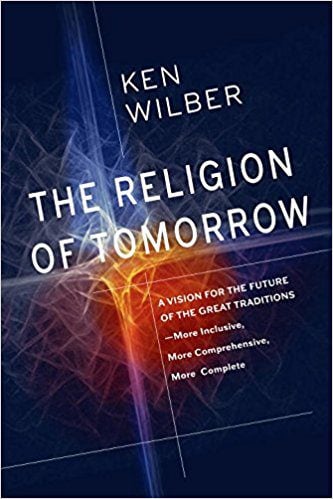 My post yesterday was on “waking up” into different states of consciousness. My focus today is on the second of Ken Wilber’s four touchstones: “growing up” by progressing through stages of development (56) One related dictum about the importance of different stages of development is that, “We do not see the world simply as it is; rather, we see the world as we are.”
In other words, as we “grow up,” both individuals and societies have the potential to pass through various stages of development. To oversimplify for the sake of time, here’s a brief overview:
- As infants, we are in a fairly undifferentiated stage of basic “sensorimotor drives.” (That’s fancy psychology-speak for spending a great deal of time eating, sleeping, peeing, and pooping.)
- Approximately age 1 to 4 is an “impulsive-fantasy” stage. On the individual level, this might manifest as a child hiding her head under a pillow and literally thinking no one can see her because she can’t see anyone. On a societal level, the equivalent might be hunter-gatherers.
- During the elementary age of childhood comes the “Magic-Mythic” stage, corresponding to the agricultural revolution societally. One trait of this stage is believing myths literally: “Moses really did part the Red Sea, Elijah really did go straight up to heaven while still alive, Lao Tzu really was nine hundred years old when he was born, and so on” (74).
- In adolescence, we become increasingly capable of rational thought, corresponding to the Enlightenment and modernity in Western civilization.
- Middle age corresponds to postmodernity: an increased openness to paradox, and to the realization that, “There are more things in heaven and earth than are dreamt of in your philosophy.”
- Wilber’s Integral Theory is one among many systems trying to account for the interplay between all these stages (43-44).
I know that the above list is only a cursory summary. The point is not to memorize the details. Instead, the larger point is that instead of merely getting older each year, we have the opportunity to increasingly experience the world in a fuller, wiser, more integrated way.
Even more importantly, here’s one of the real twists of Wilber’s Integral Theory: we can now begin to explore how “Growing up” and “Waking up” interrelate. Remember that dictum I quoted earlier that, “We do not see the world simply as it is; rather, we see the world as we are.” Along those lines, Wilber invites us to consider that human beings in various different religious traditions have been having authentic experiences of “Waking up” for thousands of years (83). The nondual experience of “Awakening” remains the same, then and now. In Wilber’s words, “A sage who, two thousands years ago, directly realized Emptiness would discover and ‘possess’ the same, identical Freedom as a sage who experience Emptiness today, even though the world has evolved considerably in the meantime.” Waking up is the same, but that’s about states, not the stages of “growing up.”
So what difference does it make that we now have access to new stages (Modernity, Postmodernity, Integral) that were not available even a few hundred years ago, much less a few thousand years ago. For Wilber, what’s new is the potential to become “more and more conscious, more complex, more caring, more loving, more creative, more self-organized, containing higher and high Wholes” than has been possible ever before in known history (33). The Wilber-Combs Lattice is a visualization of how states (“Waking up”) relate to stages (“Growing up.”)

One of the “Aha!” moments that I had when I first started studying Integral Theory was that it helped me understand how someone could be an authentic spiritual teacher (with a real experience of “Waking Up”), yet still be sexist, homophobic, or abusive. (For only the most recent example, see allegations of abuse by a renowned Tibetan Buddhist teacher.) The reason is that one can be “Awake” spiritually while being less “Grown up” developmentally—as was the case with all spiritual awakening prior to the Scientific Revolution only a few centuries ago. Conversely, one can be “Grown up” developmentally—that is, a citizen of the modern, globalized world—without ever having had a spiritual experience of awakening (508-509). Similarly, a failure to do shadow work (what Wilber calls “cleaning up”) can cause pathologies at any stage or state. An Integral perspective (“Showing up”) of course challenges us to evolve on all lines and levels: Waking up, Growing up, and Cleaning up!
To give another example of how these dynamics can play out, imagine that a person in an almost exclusively Christian setting has a powerful “dream of a radiantly-luminous being of light and love.” A natural response would be to interpret this dream as about Jesus Christ:
- If that person is in an ego-centric (“first-person”) stage of development, he might interpret the dream as meaning that he himself—and only himself—is a reincarnation of Jesus. (There are multiple examples in history of people having experiences that lead them to think that they are Jesus.) A first-person singular (“I”) perspective is narcissistic and primarily experiences things only as they relate to oneself.
- However, from a more ethno-centric, tribalistic (“second-person”) stage of development, this same dream might be interpreted as affirming that one’s group is the only, exclusive, chosen group. A second-person singular (“you”) perspective begins to be able to empathically relate to others (especially others who are perceived as “like” oneself). As the proverb goes, one begins to be better able to “experience the world” as if in another person’s shoes.
- Next, from a more rational, globo-centric (“third-person”) stage, this same dream might be interpreted not literally, but metaphorically: as a reminder of Jesus as one among many wisdom figures. A third-person singular (“it”) perspective is similar to the scientific methods attempts to study the material world as objectively as possible.
- Finally, from an Integral perspective we can begin to understand how we might “have the same phenomenon—a [dream about a] being of radiant light and love—and yet three completely different interpretations and experiences of the same phenomenon, depending on the subject’s stage and worldview (113-114). At this point in the grammatical metaphor we have been following, we transition to the first-person plural (“we”) in which we experience fewer rigid boundaries between the various worldviews. Wilber calls this shift the call to “transcend and include.”
Regarding the above stages, recall as well from yesterday’s post that “the subject of one stage becomes the object…of the next stage.” Thus, from the “second-person” perspective, one can now better see the “I” (oneself) as other people might see you. And from a third-person, scientific perspective (“it”), both the “I” and the “you” can be studied more objectively than was previously thought possible. And from the integral (“we”) stage, there is the possibility of transcending duality and experiencing nondual unity.
To further tie all this together, the following is a quote from Wilber about how these dynamics play out over time:
During the Renaissance, as…the sciences, medicine, law, art, education, and politics began their moves into modern Rational, then postmodern Pluralistic, then unifying Integral Theory, religion remained frozen at Mythic-literal level—ethnocentric, racist, sexist, patriarchal, homophobic, authoritarian, absolutist, dogmatic, unquestionable. [Note: Given the state of the world, Wilber may actually be speaking a little too hastily about politics. But my focus is on religion.] The Western world, in effect, ceased its spiritual growth. Spiritual intelligence (that is, of stages), the way we spiritually grow up, was frozen at Mythic, or that of today’s typical seven-year-old. Higher spiritual states, the way we wake up, were banned in general. This is, in essence, the anemic state of Western spirituality today, a double catastrophe (i.e., low stages, no states). (528-529)
Most major religions are deeply shaped by scriptures, rituals, and worldviews that arose before the Scientific Revolution (pre-Coperncius, pre-Darwin, pre-Einstein), while religious hierarchies often discourage first-hand religion experiences—instead encouraging adherents to simply believe the traditional dogmas.
This dynamic of religious institutions failing to help people wake up, grow up, clean up, and show up is part of what has contributed to burgeoning numbers of people identifying as “Spiritual, But Not Religious.” Many people want authentic first-hand spiritual experiences of “waking up”—while also being able to be a “grown up” who doesn’t have to “check their brain at the door” and stop believing in science when they enter a religious community. My hope is increasing numbers of progressive religious movements will seek to be both spiritual and religious–and to support individuals and groups seeking to wake up, grow up, clean up, and show up.
So much is possible within progressive movements that give us the freedom to explore the possibilities of encouraging spiritual growth, building beloved community, and acting for peace and justice in the globalized, pluralistic, postmodern world in which we find ourselves—without having to repress or deny any part of ourselves. None of us knows with any certainty what a “Religion of Tomorrow” might hold, but I am grateful to be with so many of you on this journey of seeking to co-create a more hopeful future not merely for some, but for all.
The Rev. Dr. Carl Gregg is a certified spiritual director, a D.Min. graduate of San Francisco Theological Seminary, and the minister of the Unitarian Universalist Congregation of Frederick, Maryland. Follow him on Facebook (facebook.com/carlgregg) and Twitter (@carlgregg).
Learn more about Unitarian Universalism: http://www.uua.org/beliefs/principles
Previous Post

August 10, 2017
What Does It Mean to “Wake up” or “Get Enlightened”?
Next Post
August 17, 2017 What Do Animals Think & Feel?
Browse Our Archives
Select a Category Advent Anti-Racism Archaeology Atheism Baptism Best of the Year List Book Reviews Buddhism Catholicism Christian Education Church and State Church Planting Climate Change Conscientious Objection to War Creation Spirituality Death Penalty Didache Disability Rights Discernment Easter Ecology Emergent Church Movement Empire-Critical Ethics Evolution Feminist Theology Film Reviews Gandhi Gospel of Mark Gun Control Hinduism Immigration Reform Interfaith Islam JFK Judaism Jungian Spirituality Lectionary Commentary Lent Letters to the Editor LGBT Marriage MLK Multiculturalism Mysticism Nonviolent Activism Occupy Paganism (Earth-centered Religions) Parables Paul Pluralism Politics Process Theology Quantum Physics Requiescat In Pace Seminary and Divinity School Sermon Series Retrospective Sermons Spiritual Direction Spiritual Practices Stewardship (Fundraising) The Book of J The Wheel of the Year (Paganism) Theoblogger Challenge Triathlon Uncategorized Unitarian Universalism Worship Resources Youth Ministry
Select a Month July 2026 May 2026 March 2026 November 2025 October 2025 August 2025 February 2025 December 2024 October 2024 March 2024 January 2024 December 2023 November 2023 March 2023 February 2023 January 2023 December 2022 November 2022 August 2022 March 2022 February 2022 January 2022 December 2021 September 2021 August 2021 July 2021 June 2021 May 2021 February 2021 January 2021 December 2020 August 2020 June 2020 May 2020 April 2020 March 2020 February 2020 January 2020 December 2019 November 2019 October 2019 September 2019 July 2019 June 2019 March 2019 February 2019 January 2019 December 2018 November 2018 October 2018 September 2018 June 2018 May 2018 April 2018 March 2018 February 2018 January 2018 December 2017 November 2017 October 2017 September 2017 August 2017 July 2017 June 2017 May 2017 April 2017 March 2017 February 2017 January 2017 December 2016 November 2016 October 2016 September 2016 August 2016 June 2016 May 2016 April 2016 March 2016 February 2016 January 2016 December 2015 November 2015 October 2015 September 2015 August 2015 July 2015 June 2015 May 2015 April 2015 March 2015 February 2015 January 2015 December 2014 November 2014 October 2014 August 2014 July 2014 June 2014 May 2014 April 2014 March 2014 February 2014 January 2014 December 2013 November 2013 October 2013 September 2013 August 2013 July 2013 June 2013 May 2013 April 2013 March 2013 February 2013 January 2013 December 2012 November 2012 October 2012 September 2012 August 2012 July 2012 June 2012 May 2012 April 2012 March 2012 February 2012 January 2012 December 2011 November 2011 October 2011 September 2011 August 2011 July 2011 June 2011 May 2011 April 2011 March 2011 February 2011 January 2011 December 2010 November 2010 October 2010 August 2009 July 2009 May 2009
Follow Us!
TAKE THE
Religious Wisdom Quiz
Who said, "Your people will be my people and your God my God"?
Select your answer to see how you score.
Bathsheba Leah Esther Ruth
Related posts from Carl Gregg

Reading America at 250: A Nation Wrestles With...


Andrew Holocek on the Power of Darkness

The Stories That Shape Us: Myths, Archetypes, &...
TRENDING AT PATHEOS More Voices

Reading America at 250: A Nation Wrestles With...
As part of my own reflection on the 250th anniversary of the...

Whenever I am reading a book or listening to an argument, I...

President Trump Ban Animal Torture Videos on Facebook
Call for Stricter Regulations of Animal Abuse Content on Facebook Although President...

Draft Amendments to Address Ritual Abuse in New...
The proposed changes would make it illegal for individuals in domestic partnerships...

How Bans on LGBTQ+ Student Clubs Threaten Religious...
On June 20, 2025, the State of Texas passed Senate Bill 12....

The Truth About the Gen Z Revival
This past year, there has been a lot of media buzz surrounding...
view all More Voices blogs
Ad-Free & Subscriber Log-In Subscription Support
- About Us
- 2026 Calendar
- Videos
- Podcasts
- Library of World Religions
- Faith In Media Tracker
- Advertise With Us
- Write for Us
- Privacy Policy
- Terms of Service
- Do Not Sell My Data
- Contact Us
- Radiant Digital
- Manage Newsletter Subscriptions
- Unsubscribe From Notifications
- Sitemap
Copyright 2008-2026, Patheos. All rights reserved.
Subscription Support Ad-Free & Subscriber Log-In
Follow Patheos