
BuddhistCatholicContemplativeEvangelicalGeneral ChristianHinduJewishLatter-day SaintMuslimNew VisionsProgressive Christian
Beliefs
- Buddhist
- Catholic
- Contemplative
- Evangelical
- General Christian
- Hindu
- Jewish
- Latter-day Saint
- More Voices
- Muslim
- New Visions
- Pagan
- Progressive Christian
Topics
- Religion News
- Food and Religion
- Sports and Religion
- Religious Art
- Religious Music and Entertainment
- Religious Events
- History and Religion
- Style and Religion
- Politics and Religion
- Women in Religion
- Recreation Outdoors and Religion
- Business Finance and Religion
- Careers Workplace and Religion
- Education and Religion
- Family Parenting and Religion
- Health Fitness and Religion
- Home and Religion
- Relationships and Religion
- Technology and Religion
- Travel and Religion
Columnists
- Buddhist Columnists
- Business Finance and Religion Columnists
- Careers Workplace and Religion Columnists
- Catholic Columnists
- Contemplative Columnists
- Education and Religion Columnists
- Evangelists Columnists
- Family Parenting and Religion Columnists
- General Christian Columnists
- Health Fitness and Religion Columnists
- Hindu Columnists
- History and Religion Columnists
- Home and Religion Columnists
- Jewish Columnists
- More Voices Columnists
- Latter Day Columnists
- Muslim Columnists
- New Visions Columnists
- Nonreligious Columnists
- Pagan Columnists
- Politics and Religion Columnists
- Progressive Columnists
- Recreation Outdoors and Religion Columnists
- Relationships and Religion Columnists
- Religion News Columnists
- Religious Art Columnists
- Religious Events Columnists
- Religious Music and Entertainment Columnists
- Sports and Religion Columnists
- Style and Religion Columnists
- Technology and Religion Columnists
- Travel and Religion Columnists
- Women in Religion Columnists
Resource Library
- 2026 Calendar
- Library of World Religions
- The 100 Most Holy Places on Earth
- Patheos Answers
- Podcasts
- Videos
- Faith Leaders Database
- Anglican Episcopalian
- Bahai
- Baptist
- Buddhism
- Christianity
- Confucianism
- Eastern Orthodoxy
- Hinduism
- Holiness and Pentecostal
- ISKCON
- Islam
- Judaism
- Lutheran
- Methodist
- The Church of Jesus Christ of Latter-day Saints
- New Age
- Paganism
- Presbytarian and Reformed
- Protestantism
- Religion Behind the Scenes
- Roman Catholic
- Scientology
- Shia Islam
- Sikhism
- Sufism
- Sunni Islam
- Taoism
- Zen
- See all religions
Research Tools
 Ad-Free & Subscriber Log-In Subscription Support
Ad-Free & Subscriber Log-In Subscription Support
Follow Patheos 

- Trending:
- Forgiveness
- |
- Marriage
- |
- Consciousness
- |
- Death Penalty
- |
- Election
- |
- Halloween

- Home
- More Voices
- Robots (Not Immigrants) Are Coming for Your Job: Promise & Peril of Dataism as Religion
Robots (Not Immigrants) Are Coming for Your Job: Promise & Peril of Dataism as Religion
Last updated on: July 14, 2017 at 10:33 am by Carl Gregg
Robots (Not Immigrants) Are Coming for Your Job: Promise & Peril of Dataism as Religion 2017-07-14T10:33:13-04:00 Carl Gregg
Patheos Explore the world's faith through different perspectives on religion and spirituality! Patheos has the views of the prevalent religions and spiritualities of the world.
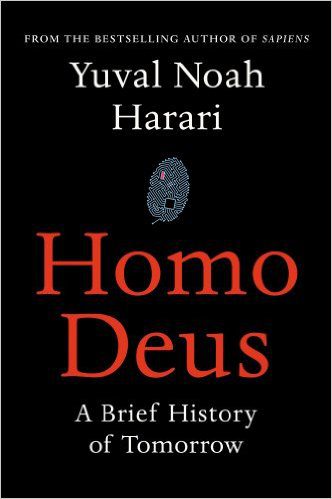
(This post is a continuation of yesterday’s post on “A Brief History of Tomorrow”: What Apple, Facebook, & Google Don’t Want You to Know, inspired by Yuval Harari’s book Homo Deus: A Brief History of Tomorrow.)
There are positive benefits of big data. Public monitoring based on Google searches, called “Google Flu Trends,” can already give a warning about flu outbreaks “ten days before traditional health services.” It could be even more accurate, of course, if Google also searched private emails for signals of flu outbreaks (340).
Or consider the forthcoming potential of autonomous cars. If we were collectively willing to give up the privacy of our location—and let algorithms know in advance where we are, where we want to go, and when we want to get there—then experts estimate that we could replace 1 billion private cars (which spend most of their time sitting around unused) with 50 million communal cars (whose use is optimized by algorithms). We would also need “far fewer road, bridges, tunnels, and parking spaces,” and we would lose less time and equanimity in traffic—and traffic jams. (390).
To give another example along those lines, have you ever used Google Maps or the app Waze, which was bought in 2013 by Google? Even when I am driving familiar roads, I sometimes turn on Google Maps because it lets me know if there is an unexpected traffic backup for any confluence of reasons, and if so, what my potential options are for re-routing. This app has frequently saved me a lot of time. And more than once I’ve ended up stuck in traffic because I was not using my mapping app. Of course, when I have it on, I’m giving Google lots of data about myself.
But my larger point is actually one level beyond that. Currently, all the various mapping apps give control to individual drivers. They present the situation and ask if you want to take an alternative route. But as some of you may have experienced, this can cause a bunch of people using the same mapping app to create a secondary traffic jam on a small side road. The next generation of mapping apps may try to “think for us”: “Maybe it will inform only half the drivers that Route #2 is open, while keeping this information secret from the other half. Thereby, pressure will ease on Route #1 without blocking Route #2” (347). More perniciously, maybe the “better” routes will be given to users who pay extra for a “pro” level of the app.
I’ll give you just one more example of the many different ways the religion of data could take us in the future. People may, one day in the not too distant future, find themselves picking up a smart phone and asking Apple’s Siri, Amazon’s Alexa, Google’s Assistant, or Microsoft’s Cortana—you know, depending on your Corporate Overlord of choice—and find themselves asking, “Siri/Alexa/Assistant/Cortana, whom should I marry?” And you might hear this answer:
Well, I’ve known you from the day you were born. I have read all your emails, recorded all your phone calls, and know your favorite films, your DNA and the entire biometric history of your heart. I have exact data about each date you went on, and, if you want, I can show you second-by-second graphs of your heart rate, blood pressure and sugar levels whenever you went on a date with John or Paul*….* And naturally, I know them as well as I know you. Based on all this information, on my superb algorithms, and on decades’ worth of statistics about millions of relationships—I advise you to go with John, with an 87 percent probability that you will be more satisfied with him in the long run. Indeed, I know you so well that I also know you don’t like this answer. Paul is much more handsome than John, and because you secretly give external appearances too much weight, you secretly wanted me to say “Paul….” My algorithms, which are based on the most up-to-date studies and statistics—say that looks have only a 14 percent impact on the long-term success of romantic relationships. So, even though I took Paul’s looks into account, I still tell you that you would be better off with John (342).
That sort of dating “Big Data” style may (or may not) sound appealing. But you might ask whether it could be a helpful perspective to consider, irrespective of whether you decide to follow its advice.
However, Big Data also has the potential to create the “Big Brother” of an Orwellian police state (350). This sort of totalitarian regime would not only continually monitor our bodies and minds (providing information for individuals to use for their self-optimization), but also seek to control and regulate our every movement and thought.
 There is so much more to say about all of this. But for now I’ll say this. There is a lot of fear-mongering happening these days around immigration. I invite you to consider that all that energy might be more fruitfully spent planning for a transition to a future in which, not immigrants, but robots and other forms of Artificial Intelligence really are coming for our jobs. And the jobs under threat of robotization are not only of bus/cab drivers, telemarketers, insurance underwriters, sports referees, cashiers, chefs, waiters, tour guides, construction laborers, and security guards, but also doctors, pharmacists, teachers, music composers, artists (316-321, 328-329, 330-331).
This is where Harari’s Dataism, his religion of data, can challenge us to ask: What are our deepest, most authentic “ultimate concerns?” On the brink of a potential paradigm shift from homo sapiens (“wise humans”) to homo deus (“godlike humans”)—augmented through algorithms, nanotechnology, and wearable/implanted data processing—we have the opportunity to ask ourselves anew “What are people for?” If we allow the answer to be that people are for the so-called bottom line of corporate profit alone, then we are headed toward some form of dystopia along the lines of Orwell’s 1984. (This point does not even get into the perversity of the Supreme Court’s Citizens United ruling that “Corporations are people.”)
But there are alternative paths in which “we the people” demand a global ethic such as the “Triple Bottom Line” of people, planet, and profit. Financial profit is still a factor, but it must be balanced against the wellbeing of people and the long term sustainability of this planet.
The Rev. Dr. Carl Gregg is a certified spiritual director, a D.Min. graduate of San Francisco Theological Seminary, and the minister of the Unitarian Universalist Congregation of Frederick, Maryland. Follow him on Facebook (facebook.com/carlgregg) and Twitter (@carlgregg).
Learn more about Unitarian Universalism: http://www.uua.org/beliefs/principles
Next Post

July 20, 2017 Dissent
Browse Our Archives
Select a Category Advent Anti-Racism Archaeology Atheism Baptism Best of the Year List Book Reviews Buddhism Catholicism Christian Education Church and State Church Planting Climate Change Conscientious Objection to War Creation Spirituality Death Penalty Didache Disability Rights Discernment Easter Ecology Emergent Church Movement Empire-Critical Ethics Evolution Feminist Theology Film Reviews Gandhi Gospel of Mark Gun Control Hinduism Immigration Reform Interfaith Islam JFK Judaism Jungian Spirituality Lectionary Commentary Lent Letters to the Editor LGBT Marriage MLK Multiculturalism Mysticism Nonviolent Activism Occupy Paganism (Earth-centered Religions) Parables Paul Pluralism Politics Process Theology Quantum Physics Requiescat In Pace Seminary and Divinity School Sermon Series Retrospective Sermons Spiritual Direction Spiritual Practices Stewardship (Fundraising) The Book of J The Wheel of the Year (Paganism) Theoblogger Challenge Triathlon Uncategorized Unitarian Universalism Worship Resources Youth Ministry
Select a Month July 2026 May 2026 March 2026 November 2025 October 2025 August 2025 February 2025 December 2024 October 2024 March 2024 January 2024 December 2023 November 2023 March 2023 February 2023 January 2023 December 2022 November 2022 August 2022 March 2022 February 2022 January 2022 December 2021 September 2021 August 2021 July 2021 June 2021 May 2021 February 2021 January 2021 December 2020 August 2020 June 2020 May 2020 April 2020 March 2020 February 2020 January 2020 December 2019 November 2019 October 2019 September 2019 July 2019 June 2019 March 2019 February 2019 January 2019 December 2018 November 2018 October 2018 September 2018 June 2018 May 2018 April 2018 March 2018 February 2018 January 2018 December 2017 November 2017 October 2017 September 2017 August 2017 July 2017 June 2017 May 2017 April 2017 March 2017 February 2017 January 2017 December 2016 November 2016 October 2016 September 2016 August 2016 June 2016 May 2016 April 2016 March 2016 February 2016 January 2016 December 2015 November 2015 October 2015 September 2015 August 2015 July 2015 June 2015 May 2015 April 2015 March 2015 February 2015 January 2015 December 2014 November 2014 October 2014 August 2014 July 2014 June 2014 May 2014 April 2014 March 2014 February 2014 January 2014 December 2013 November 2013 October 2013 September 2013 August 2013 July 2013 June 2013 May 2013 April 2013 March 2013 February 2013 January 2013 December 2012 November 2012 October 2012 September 2012 August 2012 July 2012 June 2012 May 2012 April 2012 March 2012 February 2012 January 2012 December 2011 November 2011 October 2011 September 2011 August 2011 July 2011 June 2011 May 2011 April 2011 March 2011 February 2011 January 2011 December 2010 November 2010 October 2010 August 2009 July 2009 May 2009
Follow Us!
TAKE THE
Religious Wisdom Quiz
Who was known as the doubter among Jesus' disciples?
Select your answer to see how you score.
Thomas James Peter John
Related posts from Carl Gregg

Reading America at 250: A Nation Wrestles With...


Andrew Holocek on the Power of Darkness

The Stories That Shape Us: Myths, Archetypes, &...
TRENDING AT PATHEOS More Voices

Reading America at 250: A Nation Wrestles With...
As part of my own reflection on the 250th anniversary of the...

Whenever I am reading a book or listening to an argument, I...

President Trump Ban Animal Torture Videos on Facebook
Call for Stricter Regulations of Animal Abuse Content on Facebook Although President...

Draft Amendments to Address Ritual Abuse in New...
The proposed changes would make it illegal for individuals in domestic partnerships...

How Bans on LGBTQ+ Student Clubs Threaten Religious...
On June 20, 2025, the State of Texas passed Senate Bill 12....

The Truth About the Gen Z Revival
This past year, there has been a lot of media buzz surrounding...
view all More Voices blogs
Ad-Free & Subscriber Log-In Subscription Support
- About Us
- 2026 Calendar
- Videos
- Podcasts
- Library of World Religions
- Faith In Media Tracker
- Advertise With Us
- Write for Us
- Privacy Policy
- Terms of Service
- Do Not Sell My Data
- Contact Us
- Radiant Digital
- Manage Newsletter Subscriptions
- Unsubscribe From Notifications
- Sitemap
Copyright 2008-2026, Patheos. All rights reserved.
Subscription Support Ad-Free & Subscriber Log-In
Follow Patheos