
BuddhistCatholicContemplativeEvangelicalGeneral ChristianHinduJewishLatter-day SaintMuslimNew VisionsProgressive Christian
Beliefs
- Buddhist
- Catholic
- Contemplative
- Evangelical
- General Christian
- Hindu
- Jewish
- Latter-day Saint
- More Voices
- Muslim
- New Visions
- Pagan
- Progressive Christian
Topics
- Religion News
- Food and Religion
- Sports and Religion
- Religious Art
- Religious Music and Entertainment
- Religious Events
- History and Religion
- Style and Religion
- Politics and Religion
- Women in Religion
- Recreation Outdoors and Religion
- Business Finance and Religion
- Careers Workplace and Religion
- Education and Religion
- Family Parenting and Religion
- Health Fitness and Religion
- Home and Religion
- Relationships and Religion
- Technology and Religion
- Travel and Religion
Columnists
- Buddhist Columnists
- Business Finance and Religion Columnists
- Careers Workplace and Religion Columnists
- Catholic Columnists
- Contemplative Columnists
- Education and Religion Columnists
- Evangelists Columnists
- Family Parenting and Religion Columnists
- General Christian Columnists
- Health Fitness and Religion Columnists
- Hindu Columnists
- History and Religion Columnists
- Home and Religion Columnists
- Jewish Columnists
- More Voices Columnists
- Latter Day Columnists
- Muslim Columnists
- New Visions Columnists
- Nonreligious Columnists
- Pagan Columnists
- Politics and Religion Columnists
- Progressive Columnists
- Recreation Outdoors and Religion Columnists
- Relationships and Religion Columnists
- Religion News Columnists
- Religious Art Columnists
- Religious Events Columnists
- Religious Music and Entertainment Columnists
- Sports and Religion Columnists
- Style and Religion Columnists
- Technology and Religion Columnists
- Travel and Religion Columnists
- Women in Religion Columnists
Resource Library
- 2026 Calendar
- Library of World Religions
- The 100 Most Holy Places on Earth
- Patheos Answers
- Podcasts
- Videos
- Faith Leaders Database
- Anglican Episcopalian
- Bahai
- Baptist
- Buddhism
- Christianity
- Confucianism
- Eastern Orthodoxy
- Hinduism
- Holiness and Pentecostal
- ISKCON
- Islam
- Judaism
- Lutheran
- Methodist
- The Church of Jesus Christ of Latter-day Saints
- New Age
- Paganism
- Presbytarian and Reformed
- Protestantism
- Religion Behind the Scenes
- Roman Catholic
- Scientology
- Shia Islam
- Sikhism
- Sufism
- Sunni Islam
- Taoism
- Zen
- See all religions
Research Tools
 Ad-Free & Subscriber Log-In Subscription Support
Ad-Free & Subscriber Log-In Subscription Support
Follow Patheos 

- Trending:
- Forgiveness
- |
- Marriage
- |
- Consciousness
- |
- Death Penalty
- |
- Election
- |
- Halloween

- Home
- More Voices
- Dissent: For Such a Time as This
Dissent: For Such a Time as This
Last updated on: July 21, 2017 at 11:15 am by Carl Gregg
Dissent: For Such a Time as This 2017-07-21T11:15:32-04:00 Carl Gregg
Patheos Explore the world's faith through different perspectives on religion and spirituality! Patheos has the views of the prevalent religions and spiritualities of the world.
(This post is a continuation of yesterday’s theme of “Dissent.”)
When considering the ongoing struggle in this country to genuinely achieve peace, liberty, and justice for all (not merely for some), it is vital to remember that in the beginning of our nation, the deep injustice of slavery was inked into our Constitution. Article I, Section 2 calculates membership in the U.S. House of Representatives based on counting enslaved human beings as “three-fifths” of a person. And Article I, Section 9 explicitly says that slavery could not be ended prior to 1808 (Chemerinsky 21). We now know in retrospect that slavery did not end in the U.S. until the mid-1860s, and only after so many lives were lost in the Civil War.
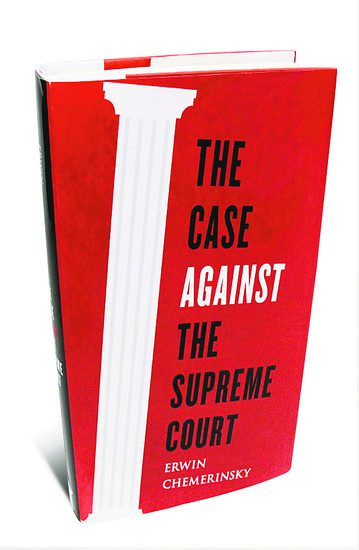 As a point of comparison, “England, by act of Parliament, abolished slavery throughout its empire in 1833” (Chemerinsky 27). The United States Congress (and large parts of our populace) made that impossible in our country because of too many people dissenting on the wrong side of history. (Along those lines, if you haven’t already, be sure to read Mayor Mitch Landrieu’s speech on removing New Orleans’ Confederate monuments.)
In the lead-up to the Civil War, the 1857 case of Dred Scott v. Sanford ruled against the rights of people whose ancestors had been enslaved. This decision is almost universally regarded as the single most reprehensible decision ever made by the U.S. Supreme Court. It was decided 7-2, and the majority opinion was written by Roger Taney (TAW-ney) (1777-1864), the fifth Chief Justice of the Supreme Court, who is buried a few hundred feet from my house in downtown Frederick, Maryland. There has been a long saga of removing a bust of Taney from in front of Frederick City Hall, which finally happened in March.
From the perspective of dissent, I invite you to consider that it is perhaps equally significant not only to know why Taney—and the six other justices who voted with him—were wrong, but also to know why the two dissenters to the Dred Scott decision were right. Writing in opposition to the majority opinion in Dred Scott, Associate justices John McLean and Benjamin Curtis wrote what most scholars consider “the most important dissents handed down in the Supreme Court up to that time” (69). President Lincoln famously refused to comment on Taney’s opinion because he could not “improve on McLean and Curtis” (Urofsky 76). And here is why dissent can be vital: McLean and Curtis’s view lost the day, but they planted seeds that came to fruition years later when the tide of history finally turned against the heinous Dred Scott decision.
Likewise, we could fruitfully trace how the many dissents favoring racial justice written by Justice John Harlan (1833-1911) were largely ignored for decades, until his more progressive views finally gained traction during the mid-twentieth century Civil Rights Movement. Harlan died in 1911 at the age of 78, so he did not live to enjoy the full fruits of his labors.
There are multiple ironies as well. Prior to the Civil War, Harlan himself had been a slave holder (106). And there were many other ways in which he was far from the perfect ally in the struggle for racial justice. But in 1896, he was the sole dissenting voice in Plessy v. Ferguson, in which the eight other justices ruled in favor of racial segregation laws on the basis of “separate but equal” (Urofsky 117-119). Here’s another irony: Harlan’s famous dissent that “our Constitution is color-blind” began to be vindicated with the 1954 Supreme Court decision of Brown v. Board of Education. But that same logic, that “our Constitution is color-blind,” has, in recent decades, been turned against racial justice programs like Affirmative Action—as if there were no difference between using race to discriminate against people of color and using race as a factor in advancing racial equality (120-125).
There is so much more I would like to say about the history of dissent in general, and at the Supreme Court in particular, but for now I will begin moving toward my conclusion by inviting you to consider the following two dissents as being particularly worthy of keeping track of. Earlier, I quoted the recently-retired Justice Stevens. He wrote a powerful dissent against the 2010 case of Citizens United v. Federal Election Commission, a ruling which argued that since “corporations are people” their campaign contributions are protected as “freedom of speech.” Justice Stevens’ dissent may one day help overturn that 5-4 ruling, which was along partisan lines. I’ll limit myself to quoting one crucial line:
the Court’s opinion is…a rejection of the common sense of the American people, who have recognized a need to prevent corporations from undermining self-government since the founding, and who have fought against the distinctive corrupting potential of corporate electioneering since the days of Theodore Roosevelt… (Chemerinsky 254-256)
Hopefully Justice Stevens’ dissent can lead the common sense of the American people to again become the law of the land.
A second crucial dissent that may come to be vindicated is William Brennan’s 1987 dissent in McCleskey vs. Kemp. Michele Alexander’s important book, The New Jim Crow: Mass Incarceration in an Age of Colorblindness, shows how racial bias in our country’s criminal justice system has led to there being “more African-American adults under correctional control—in prison or jail, on probation or parole—than were enslaved in 1850, a decade before the Civil War began.” This raises the question: did we end enslavement in the mid-nineteenth century, or did White Supremacists merely reinvent a more insidious version of slavery through a racially-biased criminal justice system—invoking an urgent need for a “Third Reconstruction” in our country. (A powerful film along these lines is the powerful documentary 13th by Ava DuVernay.) Tragically:
Since McCleskey, the Court has refused to accept statistical evidence of discrimination against groups, and insist…that proof of individual impact must be shown. If, and when, changes on the Court lead to accepting the [growing number of studies about systemic bias], then Justice Brennan’s dissent will guide them in how they use these materials. (Urofsky 416-418)
Relatedly, it was moving and meaningful last term to see Justice Sonia Sotomayor’s including in her dissents quotes from W. E. B. Du Bois’s The Souls of Black Folk, James Baldwin’s The Fire Next Time, Michelle Alexander’s The New Jim Crow, and Ta-Nehisi Coates’s Between the World and Me. It matters who our Supreme Court justices read and quote. In many cases, whether we end up advancing the cause of peace, liberty, and justice for *all—*or whether we end up merely protecting the peace, liberty, and justice of a select *few—*turns on whether we are experiencing the world mostly from the perspective of the powerful or whether we are a part of and in solidarity with groups who have been historically oppressed.
In the congregation where I serve as minister, we voted at our recent Annual Meeting to approve for at least the next year, the following banner:

There are, of course, many other worthy causes from “Healthcare Is a Human Right” to Disability Justice, and more. For such a time as this, in what emerging moral arena do you feel called to dissent? Where do you feel called to say that the way things are is not the way things have to be?
In that spirit of dissent, I will conclude for now with a quote from James Baldwin:
For nothing is fixed, forever and forever and forever, it is not fixed; the earth is always shifting, the light is always changing, the sea does not cease to grind down rock. Generations do not cease to be born, and we are responsible to them because we are the only witnesses they have. The sea rises, the light fails, lovers cling to each other, and children cling to us. The moment we cease to hold each other, the moment we break faith with one another, the sea engulfs us and the light goes out.
May our choices in the days to come lead us to be ones about whom it will be said, “They kept the faith. They kept the candles burning when the light threatened to go out.
The Rev. Dr. Carl Gregg is a certified spiritual director, a D.Min. graduate of San Francisco Theological Seminary, and the minister of the Unitarian Universalist Congregation of Frederick, Maryland. Follow him on Facebook (facebook.com/carlgregg) and Twitter (@carlgregg).
Learn more about Unitarian Universalism: http://www.uua.org/beliefs/principles
Previous Post

July 20, 2017
Dissent
Next Post
August 10, 2017 What Does It Mean to “Wake up” or “Get Enlightened”?
Browse Our Archives
Select a Category Advent Anti-Racism Archaeology Atheism Baptism Best of the Year List Book Reviews Buddhism Catholicism Christian Education Church and State Church Planting Climate Change Conscientious Objection to War Creation Spirituality Death Penalty Didache Disability Rights Discernment Easter Ecology Emergent Church Movement Empire-Critical Ethics Evolution Feminist Theology Film Reviews Gandhi Gospel of Mark Gun Control Hinduism Immigration Reform Interfaith Islam JFK Judaism Jungian Spirituality Lectionary Commentary Lent Letters to the Editor LGBT Marriage MLK Multiculturalism Mysticism Nonviolent Activism Occupy Paganism (Earth-centered Religions) Parables Paul Pluralism Politics Process Theology Quantum Physics Requiescat In Pace Seminary and Divinity School Sermon Series Retrospective Sermons Spiritual Direction Spiritual Practices Stewardship (Fundraising) The Book of J The Wheel of the Year (Paganism) Theoblogger Challenge Triathlon Uncategorized Unitarian Universalism Worship Resources Youth Ministry
Select a Month July 2026 May 2026 March 2026 November 2025 October 2025 August 2025 February 2025 December 2024 October 2024 March 2024 January 2024 December 2023 November 2023 March 2023 February 2023 January 2023 December 2022 November 2022 August 2022 March 2022 February 2022 January 2022 December 2021 September 2021 August 2021 July 2021 June 2021 May 2021 February 2021 January 2021 December 2020 August 2020 June 2020 May 2020 April 2020 March 2020 February 2020 January 2020 December 2019 November 2019 October 2019 September 2019 July 2019 June 2019 March 2019 February 2019 January 2019 December 2018 November 2018 October 2018 September 2018 June 2018 May 2018 April 2018 March 2018 February 2018 January 2018 December 2017 November 2017 October 2017 September 2017 August 2017 July 2017 June 2017 May 2017 April 2017 March 2017 February 2017 January 2017 December 2016 November 2016 October 2016 September 2016 August 2016 June 2016 May 2016 April 2016 March 2016 February 2016 January 2016 December 2015 November 2015 October 2015 September 2015 August 2015 July 2015 June 2015 May 2015 April 2015 March 2015 February 2015 January 2015 December 2014 November 2014 October 2014 August 2014 July 2014 June 2014 May 2014 April 2014 March 2014 February 2014 January 2014 December 2013 November 2013 October 2013 September 2013 August 2013 July 2013 June 2013 May 2013 April 2013 March 2013 February 2013 January 2013 December 2012 November 2012 October 2012 September 2012 August 2012 July 2012 June 2012 May 2012 April 2012 March 2012 February 2012 January 2012 December 2011 November 2011 October 2011 September 2011 August 2011 July 2011 June 2011 May 2011 April 2011 March 2011 February 2011 January 2011 December 2010 November 2010 October 2010 August 2009 July 2009 May 2009
Follow Us!
TAKE THE
Religious Wisdom Quiz
True or False: The Israelites wandered in the wilderness for forty years.
Select your answer to see how you score.
TRUE FALSE
Related posts from Carl Gregg

Reading America at 250: A Nation Wrestles With...


Andrew Holocek on the Power of Darkness

The Stories That Shape Us: Myths, Archetypes, &...
TRENDING AT PATHEOS More Voices

Reading America at 250: A Nation Wrestles With...
As part of my own reflection on the 250th anniversary of the...

Whenever I am reading a book or listening to an argument, I...

President Trump Ban Animal Torture Videos on Facebook
Call for Stricter Regulations of Animal Abuse Content on Facebook Although President...

Draft Amendments to Address Ritual Abuse in New...
The proposed changes would make it illegal for individuals in domestic partnerships...

How Bans on LGBTQ+ Student Clubs Threaten Religious...
On June 20, 2025, the State of Texas passed Senate Bill 12....

The Truth About the Gen Z Revival
This past year, there has been a lot of media buzz surrounding...
view all More Voices blogs
Ad-Free & Subscriber Log-In Subscription Support
- About Us
- 2026 Calendar
- Videos
- Podcasts
- Library of World Religions
- Faith In Media Tracker
- Advertise With Us
- Write for Us
- Privacy Policy
- Terms of Service
- Do Not Sell My Data
- Contact Us
- Radiant Digital
- Manage Newsletter Subscriptions
- Unsubscribe From Notifications
- Sitemap
Copyright 2008-2026, Patheos. All rights reserved.
Subscription Support Ad-Free & Subscriber Log-In
Follow Patheos