
BuddhistCatholicContemplativeEvangelicalGeneral ChristianHinduJewishLatter-day SaintMuslimNew VisionsProgressive Christian
Beliefs
- Buddhist
- Catholic
- Contemplative
- Evangelical
- General Christian
- Hindu
- Jewish
- Latter-day Saint
- More Voices
- Muslim
- New Visions
- Pagan
- Progressive Christian
Topics
- Religion News
- Food and Religion
- Sports and Religion
- Religious Art
- Religious Music and Entertainment
- Religious Events
- History and Religion
- Style and Religion
- Politics and Religion
- Women in Religion
- Recreation Outdoors and Religion
- Business Finance and Religion
- Careers Workplace and Religion
- Education and Religion
- Family Parenting and Religion
- Health Fitness and Religion
- Home and Religion
- Relationships and Religion
- Technology and Religion
- Travel and Religion
Columnists
- Buddhist Columnists
- Business Finance and Religion Columnists
- Careers Workplace and Religion Columnists
- Catholic Columnists
- Contemplative Columnists
- Education and Religion Columnists
- Evangelists Columnists
- Family Parenting and Religion Columnists
- General Christian Columnists
- Health Fitness and Religion Columnists
- Hindu Columnists
- History and Religion Columnists
- Home and Religion Columnists
- Jewish Columnists
- More Voices Columnists
- Latter Day Columnists
- Muslim Columnists
- New Visions Columnists
- Nonreligious Columnists
- Pagan Columnists
- Politics and Religion Columnists
- Progressive Columnists
- Recreation Outdoors and Religion Columnists
- Relationships and Religion Columnists
- Religion News Columnists
- Religious Art Columnists
- Religious Events Columnists
- Religious Music and Entertainment Columnists
- Sports and Religion Columnists
- Style and Religion Columnists
- Technology and Religion Columnists
- Travel and Religion Columnists
- Women in Religion Columnists
Resource Library
- 2026 Calendar
- Library of World Religions
- The 100 Most Holy Places on Earth
- Patheos Answers
- Podcasts
- Videos
- Faith Leaders Database
- Anglican Episcopalian
- Bahai
- Baptist
- Buddhism
- Christianity
- Confucianism
- Eastern Orthodoxy
- Hinduism
- Holiness and Pentecostal
- ISKCON
- Islam
- Judaism
- Lutheran
- Methodist
- The Church of Jesus Christ of Latter-day Saints
- New Age
- Paganism
- Presbytarian and Reformed
- Protestantism
- Religion Behind the Scenes
- Roman Catholic
- Scientology
- Shia Islam
- Sikhism
- Sufism
- Sunni Islam
- Taoism
- Zen
- See all religions
Research Tools
 Ad-Free & Subscriber Log-In Subscription Support
Ad-Free & Subscriber Log-In Subscription Support
Follow Patheos 

- Trending:
- Forgiveness
- |
- Marriage
- |
- Consciousness
- |
- Death Penalty
- |
- Election
- |
- Halloween

- Home
- More Voices
- The Religion of the Rose
The Religion of the Rose
Last updated on: June 20, 2017 at 8:59 pm by Carl Gregg
The Religion of the Rose 2017-06-20T20:59:03-04:00 Carl Gregg
Patheos Explore the world's faith through different perspectives on religion and spirituality! Patheos has the views of the prevalent religions and spiritualities of the world.
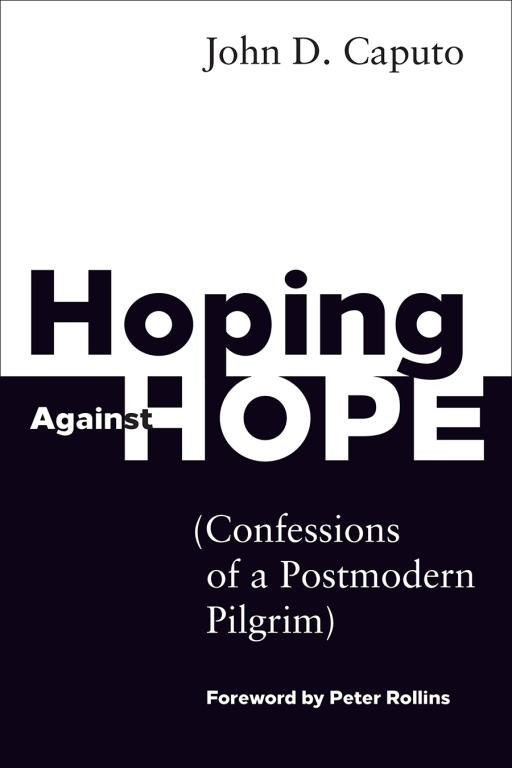 Looking back, the philosopher John Caputo (1940 – ) writes that some of his earliest, strongest, and most visceral memories as a child were looking up at the vast, starry night sky and feeling a creeping suspicion arise within him that, “No one knows we are here.” But he kept those doubts to himself since, as a pre-Vatican II Roman Catholic, he was taught that all the answers—and all the questions!—he needed to ask could be found in the Baltimore Catechism (Hoping Against Hope, 1-2).
But as he grew older, similar to the intersection of religion and philosophy that I described in yesterday’s post on Religion & Truth, Caputo’s first serious academic work was a comparative study of the German existentialist philosopher Martin Heidegger (1889-1976) and the 14th-century Christian mystic Meister Eckhart (26). An insight from that early work that stayed with Caputo decades later is a short verse quoted by Heidegger:
The rose is without why; it blossoms because it
blossoms;
It cares not for itself, asks not if it’s seen. (26)
For those of us drawn to the big questions —Who am I? What is the meaning of life? Why is there something rather than nothing? — What might a rose have to teach us (27-28)?
Keep in mind that first line of Heideggarian verse, “The rose is without why.” Caputo says that despite his childhood inkling of looking up and thinking, “No one knows we are here,” he says that if someone had told him then that there was no “why”—no absolute, unchanging reason or purpose for human existence—then he would have left religion immediately. **He had been taught that you behaved in order to be rewarded in the heaven and/or to avoid punishment in hell—that was the why (**69). But in the same way that Derrida riffed on both his Jewish heritage and Augustine’s Confessions to gesture toward a paradoxical, postmodern “Religion without Religion,” Caputo—who spent so much of his early life in Roman Catholic private school—has come to have a sense of what he calls “the emerging of a God who would have landed me in public school” (64).
As a philosopher, his starting point is the love of wisdom that we can speculate about based on what we have observed for ourselves. And for Caputo one consummate example is the “evidence of the rose” (107). From a certain point of view, one might suppose that it would make sense for nothing to have ever existed. Think about it: for anything to exist, there would need to be something pre-existing before that to create it, and something before that to create it, causing an infinite regression. (These are the sorts of things that young philosophy and religion majors talk about a 3:00 a.m. Full disclosure: it’s what they talk about at 3:00 p.m. too!) But it is not the case that nothing exists. Quite the opposite: the world — the universe— is a whirling, buzzing wondrous spectacle. (Did you see the recent photos of Jupiter from NASA’s Juno mission? Incredible!)
For Caputo, the “evidence of the rose” is the proof that there is not merely “not nothing,” but that the something of this world is so often breathtakingly beautiful, even as there is also immense pain and suffering. Caputo’s next step shifts from philosophy toward religion, which will be a step too far for some of you. But his intention is a Derridean “Religion without Religion” — a recapitulation of the “God” of his childhood, but with a critical “difference.” To adapt a famous quote from Derrida, if what you mean by the word “God” is an old white man in the sky—some combination of Santa Claus and Zeus—then both Derrida and Caputo would “rightly pass for an atheist.”
In that spirit, Caputo’s clever turn of phrase is that, “God does not exist. God insists” (114). Remember that he’s trying to take the inherited tradition that has built up around the word “God” in Western Civilization— then creatively extend it with a critical, postmodern difference/différance. So instead of asking the question of whether a Supreme Being with the name “God” exists, Caputo would instead invite us to open ourselves to the possibility that there is an “event” that is “getting itself done under that name” God (118). This event is more subjective than objective, more experiential than intellectual, more a verb than a noun, more becoming than being.
Let me give you another repetition with a critical difference, this time on that young Caputo who grew up looking up at the night sky with a closely guarded secret of wondering that perhaps “No one knows we are here.” He grew up to have a two sons. When his older son with seven, they were watching tv and a beloved character on that show died. He son turned to him and asked, “Dad, does everyone die?” Caputo confesses that, “His question threw me into a panic. I wanted to disappear into thin air, even though, in a way, that was my field of specialization!” He writes,
I did not say I have spent my life starting into this abyss, that when he heard me upstairs tying in my study, that is what I was writing about. I have never written about anything else than death, God and death, whatever difference between those two spectral companions may turn out to be, if there is any difference at all.
Eventually, in response to his son’s question, “Dad, does everyone die?” he managed to say one word “Yes.” But in the way of young children, another question followed: “Everyone?” Caputo says: “I could feel his reply rising from a disbelief that an abyss so immense and inescapable could be so commonplace. My God, was there no way out of this question, no way to escape from this room?” Eventually Caputo writes, that he said, “‘Yes,’ still keeping my composure, but knowing that his life was about to change” (156).
Here in the early twenty-first century, we know that this blue marble on which we find ourselves — floating in orbit amidst the inky blackness of space around our fiery sun—this planet is not the center of the universe. We are merely the third rock from the sun. We are but a tiny part of a much larger universe story that has been evolving for more than 13.8 billion years, across more than two trillion galaxies. But Caputo’s “religion of the rose” invites us to consider that so much beauty is nonetheless possible. Like a rose, anything we create or achieve (individually or collectively) will not last forever, but that makes it all the more valuable and precious in the meantime (182). May we embrace, cherish, and celebrate one another and this life in time that we do have together on this Earth.
Normally, I might end at this point. But given the events of last week, there are a few more words that I feel compelled to add. President Trump’s announcement that he plans to withdraw the United States from the Paris climate accord is a world-historic act of hubris. In the scope of the known universe, this planet — and the biodiversity on it — are rare and precious. But here’s the truth, in the words of the contemporary environmental prophet Wendell Berry: “Whether we and our politicians know it or not, Nature is party to all our deals and decisions, and she has more votes, a longer memory, and a sterner sense of justice than we do.” Some cynical politicians, seeking their own short-term gain, may deny that climate change is real — they may try to convince us that climate science is “Fake News” or “Alternative Facts” — but as the science fiction writer Philip K. Dick used to say, “Reality is what doesn’t go away when you stop believing in it.” May we instead come as a species to respect the preciousness of this life and this world in all it’s beauty, fragility, and finitude—shown to us through the evidence of the rose.
For Further Study
-
- If you are interested in learning more about John Caputo’s “Philosophy of Religion,” the most accessible starting point is his philosophical autobiography Hoping Against Hope: Confessions of a Postmodern Pilgrim (Fortress Press, 2015).
- A more straightforward introduction to his philosophy that is still quite accessible is his book Truth: The Search for Wisdom in the Postmodern Age (Penguin Books, 2013).
- A more scholarly starting point for his philosophy (that remains fairly accessible, especially compared to many other philosophers) is The Insistence of God: A Theology of Perhaps (Indiana University Press, 2013).
The Rev. Dr. Carl Gregg is a certified spiritual director, a D.Min. graduate of San Francisco Theological Seminary, and the minister of the Unitarian Universalist Congregation of Frederick, Maryland. Follow him on Facebook (facebook.com/carlgregg) and Twitter (@carlgregg).
Learn more about Unitarian Universalism: http://www.uua.org/beliefs/principles
Previous Post

June 7, 2017
Religion & Truth
Next Post
June 14, 2017 Chögyam Trungpa & Pragmatic, Modern Meditation
Browse Our Archives
Select a Category Advent Anti-Racism Archaeology Atheism Baptism Best of the Year List Book Reviews Buddhism Catholicism Christian Education Church and State Church Planting Climate Change Conscientious Objection to War Creation Spirituality Death Penalty Didache Disability Rights Discernment Easter Ecology Emergent Church Movement Empire-Critical Ethics Evolution Feminist Theology Film Reviews Gandhi Gospel of Mark Gun Control Hinduism Immigration Reform Interfaith Islam JFK Judaism Jungian Spirituality Lectionary Commentary Lent Letters to the Editor LGBT Marriage MLK Multiculturalism Mysticism Nonviolent Activism Occupy Paganism (Earth-centered Religions) Parables Paul Pluralism Politics Process Theology Quantum Physics Requiescat In Pace Seminary and Divinity School Sermon Series Retrospective Sermons Spiritual Direction Spiritual Practices Stewardship (Fundraising) The Book of J The Wheel of the Year (Paganism) Theoblogger Challenge Triathlon Uncategorized Unitarian Universalism Worship Resources Youth Ministry
Select a Month July 2026 May 2026 March 2026 November 2025 October 2025 August 2025 February 2025 December 2024 October 2024 March 2024 January 2024 December 2023 November 2023 March 2023 February 2023 January 2023 December 2022 November 2022 August 2022 March 2022 February 2022 January 2022 December 2021 September 2021 August 2021 July 2021 June 2021 May 2021 February 2021 January 2021 December 2020 August 2020 June 2020 May 2020 April 2020 March 2020 February 2020 January 2020 December 2019 November 2019 October 2019 September 2019 July 2019 June 2019 March 2019 February 2019 January 2019 December 2018 November 2018 October 2018 September 2018 June 2018 May 2018 April 2018 March 2018 February 2018 January 2018 December 2017 November 2017 October 2017 September 2017 August 2017 July 2017 June 2017 May 2017 April 2017 March 2017 February 2017 January 2017 December 2016 November 2016 October 2016 September 2016 August 2016 June 2016 May 2016 April 2016 March 2016 February 2016 January 2016 December 2015 November 2015 October 2015 September 2015 August 2015 July 2015 June 2015 May 2015 April 2015 March 2015 February 2015 January 2015 December 2014 November 2014 October 2014 August 2014 July 2014 June 2014 May 2014 April 2014 March 2014 February 2014 January 2014 December 2013 November 2013 October 2013 September 2013 August 2013 July 2013 June 2013 May 2013 April 2013 March 2013 February 2013 January 2013 December 2012 November 2012 October 2012 September 2012 August 2012 July 2012 June 2012 May 2012 April 2012 March 2012 February 2012 January 2012 December 2011 November 2011 October 2011 September 2011 August 2011 July 2011 June 2011 May 2011 April 2011 March 2011 February 2011 January 2011 December 2010 November 2010 October 2010 August 2009 July 2009 May 2009
Follow Us!
TAKE THE
Religious Wisdom Quiz
True or False: The parable of the Prodigal Son appears only in Luke's Gospel.
Select your answer to see how you score.
FALSE TRUE
Related posts from Carl Gregg

Reading America at 250: A Nation Wrestles With...


Andrew Holocek on the Power of Darkness

The Stories That Shape Us: Myths, Archetypes, &...
TRENDING AT PATHEOS More Voices

Reading America at 250: A Nation Wrestles With...
As part of my own reflection on the 250th anniversary of the...

Whenever I am reading a book or listening to an argument, I...

President Trump Ban Animal Torture Videos on Facebook
Call for Stricter Regulations of Animal Abuse Content on Facebook Although President...

Draft Amendments to Address Ritual Abuse in New...
The proposed changes would make it illegal for individuals in domestic partnerships...

How Bans on LGBTQ+ Student Clubs Threaten Religious...
On June 20, 2025, the State of Texas passed Senate Bill 12....

The Truth About the Gen Z Revival
This past year, there has been a lot of media buzz surrounding...
view all More Voices blogs
Ad-Free & Subscriber Log-In Subscription Support
- About Us
- 2026 Calendar
- Videos
- Podcasts
- Library of World Religions
- Faith In Media Tracker
- Advertise With Us
- Write for Us
- Privacy Policy
- Terms of Service
- Do Not Sell My Data
- Contact Us
- Radiant Digital
- Manage Newsletter Subscriptions
- Unsubscribe From Notifications
- Sitemap
Copyright 2008-2026, Patheos. All rights reserved.
Subscription Support Ad-Free & Subscriber Log-In
Follow Patheos