
BuddhistCatholicContemplativeEvangelicalGeneral ChristianHinduJewishLatter-day SaintMuslimNew VisionsProgressive Christian
Beliefs
- Buddhist
- Catholic
- Contemplative
- Evangelical
- General Christian
- Hindu
- Jewish
- Latter-day Saint
- More Voices
- Muslim
- New Visions
- Pagan
- Progressive Christian
Topics
- Religion News
- Food and Religion
- Sports and Religion
- Religious Art
- Religious Music and Entertainment
- Religious Events
- History and Religion
- Style and Religion
- Politics and Religion
- Women in Religion
- Recreation Outdoors and Religion
- Business Finance and Religion
- Careers Workplace and Religion
- Education and Religion
- Family Parenting and Religion
- Health Fitness and Religion
- Home and Religion
- Relationships and Religion
- Technology and Religion
- Travel and Religion
Columnists
- Buddhist Columnists
- Business Finance and Religion Columnists
- Careers Workplace and Religion Columnists
- Catholic Columnists
- Contemplative Columnists
- Education and Religion Columnists
- Evangelists Columnists
- Family Parenting and Religion Columnists
- General Christian Columnists
- Health Fitness and Religion Columnists
- Hindu Columnists
- History and Religion Columnists
- Home and Religion Columnists
- Jewish Columnists
- More Voices Columnists
- Latter Day Columnists
- Muslim Columnists
- New Visions Columnists
- Nonreligious Columnists
- Pagan Columnists
- Politics and Religion Columnists
- Progressive Columnists
- Recreation Outdoors and Religion Columnists
- Relationships and Religion Columnists
- Religion News Columnists
- Religious Art Columnists
- Religious Events Columnists
- Religious Music and Entertainment Columnists
- Sports and Religion Columnists
- Style and Religion Columnists
- Technology and Religion Columnists
- Travel and Religion Columnists
- Women in Religion Columnists
Resource Library
- 2026 Calendar
- Library of World Religions
- The 100 Most Holy Places on Earth
- Patheos Answers
- Podcasts
- Videos
- Faith Leaders Database
- Anglican Episcopalian
- Bahai
- Baptist
- Buddhism
- Christianity
- Confucianism
- Eastern Orthodoxy
- Hinduism
- Holiness and Pentecostal
- ISKCON
- Islam
- Judaism
- Lutheran
- Methodist
- The Church of Jesus Christ of Latter-day Saints
- New Age
- Paganism
- Presbytarian and Reformed
- Protestantism
- Religion Behind the Scenes
- Roman Catholic
- Scientology
- Shia Islam
- Sikhism
- Sufism
- Sunni Islam
- Taoism
- Zen
- See all religions
Research Tools
 Ad-Free & Subscriber Log-In Subscription Support
Ad-Free & Subscriber Log-In Subscription Support
Follow Patheos 

- Trending:
- Forgiveness
- |
- Marriage
- |
- Consciousness
- |
- Death Penalty
- |
- Election
- |
- Halloween

- Home
- More Voices
- How to Move from Secondhand Theology to Firsthand Spiritual Experience
How to Move from Secondhand Theology to Firsthand Spiritual Experience
Last updated on: July 6, 2017 at 12:14 pm by Carl Gregg
How to Move from Secondhand Theology to Firsthand Spiritual Experience 2017-07-06T12:14:22-04:00 Carl Gregg
Patheos Explore the world's faith through different perspectives on religion and spirituality! Patheos has the views of the prevalent religions and spiritualities of the world.
(This post is a continuation from my post yesterday on Countercultural Spirituality, Then & Now.)
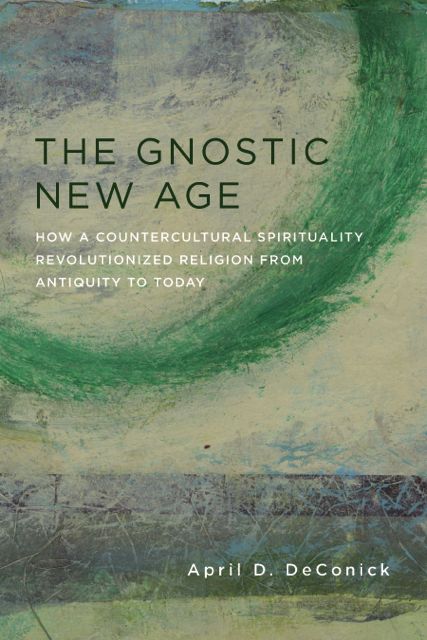 Long before the hippies of the 1960s, the ancient Gnostics were developing a counterculture, which one historian of the period has described as “any figure or movement that privileges non-intellective knowledge and personal visions of truth over cultural constitutions of knowledge” (283). But I don’t want to jump straight from the Gnostics to the hippies. DeConick has also traced four other major “Gnostic awakenings.”
During the medieval period, groups such as the Paulicians, Bogomils, and Cathars had a transgressive emphasis on trusting one’s personal spiritual experiences more than inherited orthodox teachings (347). Each flourished for a time, then faded in influence—although later Gnostic groups often drew inspiration from these earlier examples of Gnostic spirituality.
And just as a rediscovery of Greco-Roman philosophy and culture helped bring about the Renaissance, that same rediscovery of ancient text included some Gnostic texts, which led to a second Gnostic reawakening.
A third major Gnostic reawakening happened during the nineteenth century as figures from the Transcendentalist Movement—such as Ralph Waldo Emerson, Margaret Fuller, and Henry David Thoreau —began reading widely in the world’s religious traditions as well as being attentive to their own firsthand experience. Consider this opening paragraph from Emerson’s breakout book, Nature:
Our age is retrospective. It builds the sepulchres of the fathers. It writes biographies, histories, and criticism. The foregoing generations beheld God and nature face to face; we, through their eyes. Why should not we also enjoy an original relation to the universe? Why should not we have a poetry and philosophy of insight and not of tradition, and a religion by revelation to us, and not the history of theirs? …Why should we grope among the dry bones of the past, or put the living generation into masquerade out of its faded wardrobe? The sun shines to-day also. There is more wool and flax in the fields. There are new lands, new men, new thoughts. Let us demand our own works and laws and worship.
This third Gnostic awakening can be traced all the way through landmark modern figures such as Carl Jung, who wrote extensively about his firsthand spiritual experiences (348-349).
Finally, we can trace a fourth Gnostic awakening, starting with the discovery of the Nag Hammadi manuscripts in 1945 and continuing through today. Polls continue to show the growing influence of the so-called “Spiritual But Not Religious,” who are seeking authentic spiritual experience, not merely secondhand theology. And in this day and age, one of the exciting promises of movements like Unitarian Universalism is the opportunity to build a beloved community that is both spiritual and religious—a religious institution that is committed to honoring the value of each person’s firsthand experience. Indeed, in good Transcendentalist fashion, the first of the UU Six Sources is “Direct experience of that transcending mystery and wonder, affirmed in all cultures, which moves us to a renewal of the spirit and an openness to the forces which create and uphold life”—which we balance with our Fifth Source, “Humanist teachings which counsel us to heed the guidance of reason and the results of science, and warn us against idolatries of the mind and spirit.”
Before concluding, there is one other aspect of DeConick’s book that I particularly appreciate. She explores some of the ways that Gnostic themes are present in many popular films from Star Trek: The Final Frontier to Avatar to the more avant-garde cinema of Darren Aronofsky’s Pi. To briefly describe three examples in more detail, the 1999 film The Matrix has a classic Gnostic scene in which the protagonist Neo (an anagram for “One”) is offered a choice by a stranger named Morpheus:
You take the blue pill—the story ends, you wake up in your bed and believe whatever you want to believe. You take the red pill—you stay in Wonderland, and I show you how deep the rabbit hole goes. Remember: all I’m offering is the truth.
The red pill is an allusion to the red apple that the serpent offered Eve. And the “truth” to which Morpheus refers is a type of Gnostic knowledge. After swallowing the red pill, Neo wakes up
only to discover himself suffocating in a goo-lined pod. Like an infant struggling out of the womb, Neo pushes through the fluid and his cords are cut by Morpheus. He is the initiate faced with a new reality. The terms of this new birth are so immense that Neo immediately vomits. He is greeted by Morpheus and company, “Welcome to the real world.” (19-21, 50)
That scene is classic Gnosticism: discovering a deeper reality beneath the surface—the simulacrum—of what you thought was reality.
Another modern Gnostic parable is the Jim Carrey film The Truman Show. Just as the ancient Gnostics discovered “cracks” in the Bible that were clues about a larger reality behind “God” as described in the Bible, in the film Truman begins to notice clues that something is amiss about his life. Indeed, it turns out that he’s a reality tv star—and everyone is in on the deception except him. Discovering the truth allows him to escape from the TV set that he thought was reality into the larger real world (51-52, 67).
A final example is the film Pleasantville. This movie is particularly Gnostic because the mother in the show, Betty, begins to awaken from a “black & white” reality into the real world of full color when she suddenly becomes more conscious of her sexuality and realizes that she’s been following a lot of unnecessary rules. Likewise, “Mr. Johnson, the owner of the local soda shop [realizes that] what really brings him joy is painting…. He turns from black and white into color as he takes up some brushes and begins to paint oversized nudes of Betty in cubist style on his windows” (295-296).
Some of the Gnostic parallels here go back to Genesis 3, and the many layers of meaning around the word knowledge/gnosis/γνῶσις. You may have heard the phrase, “She knew him in the biblical sense,” meaning “carnal knowledge,” embodied knowledge. Note that immediately after Adam and Eve are banished from the Garden for eating from the tree of the knowledge of good and evil, we read in the next verse that, “the man knew his wife Eve, and she conceived and bore Cain.” The same Hebrew word for knowledge (*yada/*דעת) is used both for the tree of the knowledge of good and evil as well as for Adam knowing his wife Eve in such a way that a baby was born nine months later. There are deep linguistic, archetypal, and existential connections between knowledge and sexuality. Remember that Gnostic adage: “Eve Was Framed, the Serpent Was Right!“
The overall point is that Gnosticism—both ancient and modern—is an invitation to question secondhand religious traditions that have been handed down to you. It is a challenge to test religious claims in the crucible of your own firsthand experiences, critically examined. What do you know to be true because you have experienced it for yourself?
The Rev. Dr. Carl Gregg is a certified spiritual director, a D.Min. graduate of San Francisco Theological Seminary, and the minister of the Unitarian Universalist Congregation of Frederick, Maryland. Follow him on Facebook (facebook.com/carlgregg) and Twitter (@carlgregg).
Learn more about Unitarian Universalism: http://www.uua.org/beliefs/principles
Previous Post

May 10, 2017
Countercultural Spirituality, Then & Now
Next Post
May 16, 2017 Mary Moody Emerson: Ralph Waldo’s “First & Best Teacher”
Browse Our Archives
Select a Category Advent Anti-Racism Archaeology Atheism Baptism Best of the Year List Book Reviews Buddhism Catholicism Christian Education Church and State Church Planting Climate Change Conscientious Objection to War Creation Spirituality Death Penalty Didache Disability Rights Discernment Easter Ecology Emergent Church Movement Empire-Critical Ethics Evolution Feminist Theology Film Reviews Gandhi Gospel of Mark Gun Control Hinduism Immigration Reform Interfaith Islam JFK Judaism Jungian Spirituality Lectionary Commentary Lent Letters to the Editor LGBT Marriage MLK Multiculturalism Mysticism Nonviolent Activism Occupy Paganism (Earth-centered Religions) Parables Paul Pluralism Politics Process Theology Quantum Physics Requiescat In Pace Seminary and Divinity School Sermon Series Retrospective Sermons Spiritual Direction Spiritual Practices Stewardship (Fundraising) The Book of J The Wheel of the Year (Paganism) Theoblogger Challenge Triathlon Uncategorized Unitarian Universalism Worship Resources Youth Ministry
Select a Month July 2026 May 2026 March 2026 November 2025 October 2025 August 2025 February 2025 December 2024 October 2024 March 2024 January 2024 December 2023 November 2023 March 2023 February 2023 January 2023 December 2022 November 2022 August 2022 March 2022 February 2022 January 2022 December 2021 September 2021 August 2021 July 2021 June 2021 May 2021 February 2021 January 2021 December 2020 August 2020 June 2020 May 2020 April 2020 March 2020 February 2020 January 2020 December 2019 November 2019 October 2019 September 2019 July 2019 June 2019 March 2019 February 2019 January 2019 December 2018 November 2018 October 2018 September 2018 June 2018 May 2018 April 2018 March 2018 February 2018 January 2018 December 2017 November 2017 October 2017 September 2017 August 2017 July 2017 June 2017 May 2017 April 2017 March 2017 February 2017 January 2017 December 2016 November 2016 October 2016 September 2016 August 2016 June 2016 May 2016 April 2016 March 2016 February 2016 January 2016 December 2015 November 2015 October 2015 September 2015 August 2015 July 2015 June 2015 May 2015 April 2015 March 2015 February 2015 January 2015 December 2014 November 2014 October 2014 August 2014 July 2014 June 2014 May 2014 April 2014 March 2014 February 2014 January 2014 December 2013 November 2013 October 2013 September 2013 August 2013 July 2013 June 2013 May 2013 April 2013 March 2013 February 2013 January 2013 December 2012 November 2012 October 2012 September 2012 August 2012 July 2012 June 2012 May 2012 April 2012 March 2012 February 2012 January 2012 December 2011 November 2011 October 2011 September 2011 August 2011 July 2011 June 2011 May 2011 April 2011 March 2011 February 2011 January 2011 December 2010 November 2010 October 2010 August 2009 July 2009 May 2009
Follow Us!
TAKE THE
Religious Wisdom Quiz
How many commandments were written on stone tablets?
Select your answer to see how you score.
Ten Thirteen Twelve Seven
Related posts from Carl Gregg

Reading America at 250: A Nation Wrestles With...


Andrew Holocek on the Power of Darkness

The Stories That Shape Us: Myths, Archetypes, &...
TRENDING AT PATHEOS More Voices

Reading America at 250: A Nation Wrestles With...
As part of my own reflection on the 250th anniversary of the...

Whenever I am reading a book or listening to an argument, I...

President Trump Ban Animal Torture Videos on Facebook
Call for Stricter Regulations of Animal Abuse Content on Facebook Although President...

Draft Amendments to Address Ritual Abuse in New...
The proposed changes would make it illegal for individuals in domestic partnerships...

How Bans on LGBTQ+ Student Clubs Threaten Religious...
On June 20, 2025, the State of Texas passed Senate Bill 12....

The Truth About the Gen Z Revival
This past year, there has been a lot of media buzz surrounding...
view all More Voices blogs
Ad-Free & Subscriber Log-In Subscription Support
- About Us
- 2026 Calendar
- Videos
- Podcasts
- Library of World Religions
- Faith In Media Tracker
- Advertise With Us
- Write for Us
- Privacy Policy
- Terms of Service
- Do Not Sell My Data
- Contact Us
- Radiant Digital
- Manage Newsletter Subscriptions
- Unsubscribe From Notifications
- Sitemap
Copyright 2008-2026, Patheos. All rights reserved.
Subscription Support Ad-Free & Subscriber Log-In
Follow Patheos