
BuddhistCatholicContemplativeEvangelicalGeneral ChristianHinduJewishLatter-day SaintMuslimNew VisionsProgressive Christian
Beliefs
- Buddhist
- Catholic
- Contemplative
- Evangelical
- General Christian
- Hindu
- Jewish
- Latter-day Saint
- More Voices
- Muslim
- New Visions
- Pagan
- Progressive Christian
Topics
- Religion News
- Food and Religion
- Sports and Religion
- Religious Art
- Religious Music and Entertainment
- Religious Events
- History and Religion
- Style and Religion
- Politics and Religion
- Women in Religion
- Recreation Outdoors and Religion
- Business Finance and Religion
- Careers Workplace and Religion
- Education and Religion
- Family Parenting and Religion
- Health Fitness and Religion
- Home and Religion
- Relationships and Religion
- Technology and Religion
- Travel and Religion
Columnists
- Buddhist Columnists
- Business Finance and Religion Columnists
- Careers Workplace and Religion Columnists
- Catholic Columnists
- Contemplative Columnists
- Education and Religion Columnists
- Evangelists Columnists
- Family Parenting and Religion Columnists
- General Christian Columnists
- Health Fitness and Religion Columnists
- Hindu Columnists
- History and Religion Columnists
- Home and Religion Columnists
- Jewish Columnists
- More Voices Columnists
- Latter Day Columnists
- Muslim Columnists
- New Visions Columnists
- Nonreligious Columnists
- Pagan Columnists
- Politics and Religion Columnists
- Progressive Columnists
- Recreation Outdoors and Religion Columnists
- Relationships and Religion Columnists
- Religion News Columnists
- Religious Art Columnists
- Religious Events Columnists
- Religious Music and Entertainment Columnists
- Sports and Religion Columnists
- Style and Religion Columnists
- Technology and Religion Columnists
- Travel and Religion Columnists
- Women in Religion Columnists
Resource Library
- 2026 Calendar
- Library of World Religions
- The 100 Most Holy Places on Earth
- Patheos Answers
- Podcasts
- Videos
- Faith Leaders Database
- Anglican Episcopalian
- Bahai
- Baptist
- Buddhism
- Christianity
- Confucianism
- Eastern Orthodoxy
- Hinduism
- Holiness and Pentecostal
- ISKCON
- Islam
- Judaism
- Lutheran
- Methodist
- The Church of Jesus Christ of Latter-day Saints
- New Age
- Paganism
- Presbytarian and Reformed
- Protestantism
- Religion Behind the Scenes
- Roman Catholic
- Scientology
- Shia Islam
- Sikhism
- Sufism
- Sunni Islam
- Taoism
- Zen
- See all religions
Research Tools
 Ad-Free & Subscriber Log-In Subscription Support
Ad-Free & Subscriber Log-In Subscription Support
Follow Patheos 

- Trending:
- Forgiveness
- |
- Marriage
- |
- Consciousness
- |
- Death Penalty
- |
- Election
- |
- Halloween

- Home
- More Voices
- Mary Moody Emerson: Ralph Waldo’s “First & Best Teacher”
Mary Moody Emerson: Ralph Waldo’s “First & Best Teacher”
Last updated on: May 16, 2017 at 10:32 am by Carl Gregg
Mary Moody Emerson: Ralph Waldo’s “First & Best Teacher” 2017-05-16T10:32:26-04:00 Carl Gregg
Patheos Explore the world's faith through different perspectives on religion and spirituality! Patheos has the views of the prevalent religions and spiritualities of the world.
Mary Moody Emerson (1774-1863) was Ralph Waldo Em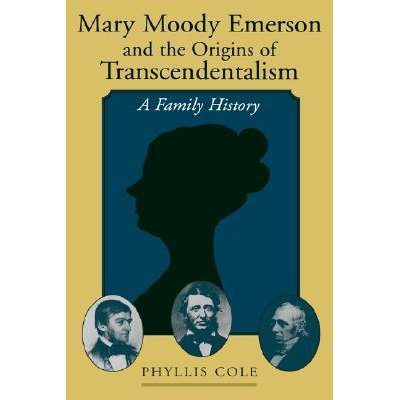 erson’s aunt, whom he called his “earliest and best teacher.” I’ll be drawing from a landmark biography written in 1998 (Oxford University Press) by an English and Women’s Studies professor named Phyllis Cole, which helped further raise awareness about Mary’s influence on Waldo’s life. I will follow Cole’s choice to break the scholarly convention of referring to Ralph Waldo by his last name “Emerson” and of “Aunt Mary” in relationship to him—and will instead refer to both by their first names (vi).
“A full generation before Waldo’s early manifestos, Mary’s Almanack was claiming a life of solitude and an experience of God through nature and the imagination. Her letters then formed the matrix of his thought, both early in life and through the years of his landmark literary utterance” (v). However, prior to the influence of Second Wave Feminism in the 1960s, which led to a revolution in women’s studies, Mary’s influence on Waldo had not been extensively explored. Emerson himself “partially acknowledged” his intellectual debt to Mary, but the full depth of his debt has become increasingly apparent in recent studies of Mary’s Almanack, her decades-long personal journal, begun at age twenty (93). The Almanack was thought lost or destroyed, but in 1981 Dr. Cole rediscovered it in a box of uncatalogued Emerson family papers in the Harvard University Library (v):
Constructed from letter paper and bound with thread, the Almanacks are hand-made booklets…running to over one thousand pages, and they display multiple genres, including letters…spiritual diaries, and original compositions; their content, however, largely consists of commonplace book quotations from and commentary on her extensive reading. Although Mary published essays during her lifetime, these miscellaneous Almanacks represent her most experimental expressions as a writer.
She often shared pieces of her Almanacks with friends, and there are even periodic notes to “any Nephew who may read this.” Her Almanacks are in the process of being published online in free digital edition.
Waldo’s own extensive journals include significant sections in which he transcribed letters from Mary and excerpts from her Almanacks that she let him borrow. Indeed, there were many occasions in which he begged her to share more of her Almanacks with him (9). And in 1837, the year after he published his breakthrough essay “Nature,” he listed Mary in his journal as one of his “seven more vital ‘benefactors’” (9).
There are also multiple instances in which Emerson published revised versions of pieces of Mary’s writings—which was often “cryptic” and “fragmentary”—without attribution of his intellectual debt to her (9, 164). One of the most ironic examples is from a passage in his 1859 essay “Culture” about solitude. In writing about the virtues of being alone, he was drawing directly from his relationship with his aunt, the opposite of solitude. Moreover, the wisdom was from her direct experience of solitude, not his own. “Because Mary had been unwilling or unable to publish, her words did not to him count as written text, but occupied the category of ‘living wit,’ like conversation, protected by no authorial right” that Waldo recognized (181). There is much more to say here about how Waldo’s writings about self-reliance also “forgot to mention that he depended daily upon his wife, his mother, three servants, and a gardener,” but I can get to that in an eventual post about him (Brock and Parker 33).
There is also much more to say about Mary’s legacy, but before continuing on that track, allow me to share some of the details of her life. She was born in Concord, Massachusetts in 1774, two years before the American Revolutionary War (57). To give you only one example of how remarkable her feminist independence was, given the patriarchal home into which she was born, she writes of the following as of one of her earliest childhood memories:
I remember my Father’s punishing me once. I was two years old and when I came into his study I wouldn’t make my curtsey…so he whipped me. Mother came in and asked why he had punished me. He said, ‘Because she wouldn’t make her duty on coming into the room.’ ‘What! Whip a child two years old for that!’ My Father said, ‘My dear, since you have interfered I must whip her again,’ and he did.” (69)
Mary’s father died the same year as this incident from an illness. Her mother, struggling to care for five children alone sent Mary to live with various relatives during her childhood (83). This early distance from her family of origin increased Mary’s independence, although there were also times when the distance caused her sorrow (83).
As Mary began to come into her own, she never expressed romantic interests (93). And she turned down at least two enviable marriage proposals (101). Mary wrote of feeling “sick” in regard to the thought of marriage, and stuck to a “permanent vow of non-compliance” (101).
She was drawn instead to independence. And although she only had a few months of formal schooling, she cultivated a lifelong journey of self-directed learning. Fortunately she had access to an excellent public library, and read widely, including many cutting-edge books at the time on theological liberalism (95). She also loved poetry, particularly Milton and Wordsworth (96, 152).
To give you a taste of her writing style, she wrote about her favorite poets that
Solitude which to people, not talented to deviate from the beaten track (which is the safeguard of mediocrity) without offending, is to learning and talents the only sure labyrinth (though sometimes gloomy) to form the eagle wings which will bear one farther than suns and stars. (178)
Her writing style is idiosyncratic and somewhat difficult to follow, but it also reflects her peculiar genius and the originality of her insights.
(I will say more later this week in a second part of this post on “The Legacy of Mary Moody Emerson.”)
The Rev. Dr. Carl Gregg is a certified spiritual director, a D.Min. graduate of San Francisco Theological Seminary, and the minister of the Unitarian Universalist Congregation of Frederick, Maryland. Follow him on Facebook (facebook.com/carlgregg) and Twitter (@carlgregg).
Learn more about Unitarian Universalism: http://www.uua.org/beliefs/principles
Previous Post

May 11, 2017
How to Move from Secondhand Theology to Firsthand Spiritual Experience
Next Post
May 18, 2017 The Legacy of Mary Moody Emerson
Browse Our Archives
Select a Category Advent Anti-Racism Archaeology Atheism Baptism Best of the Year List Book Reviews Buddhism Catholicism Christian Education Church and State Church Planting Climate Change Conscientious Objection to War Creation Spirituality Death Penalty Didache Disability Rights Discernment Easter Ecology Emergent Church Movement Empire-Critical Ethics Evolution Feminist Theology Film Reviews Gandhi Gospel of Mark Gun Control Hinduism Immigration Reform Interfaith Islam JFK Judaism Jungian Spirituality Lectionary Commentary Lent Letters to the Editor LGBT Marriage MLK Multiculturalism Mysticism Nonviolent Activism Occupy Paganism (Earth-centered Religions) Parables Paul Pluralism Politics Process Theology Quantum Physics Requiescat In Pace Seminary and Divinity School Sermon Series Retrospective Sermons Spiritual Direction Spiritual Practices Stewardship (Fundraising) The Book of J The Wheel of the Year (Paganism) Theoblogger Challenge Triathlon Uncategorized Unitarian Universalism Worship Resources Youth Ministry
Select a Month July 2026 May 2026 March 2026 November 2025 October 2025 August 2025 February 2025 December 2024 October 2024 March 2024 January 2024 December 2023 November 2023 March 2023 February 2023 January 2023 December 2022 November 2022 August 2022 March 2022 February 2022 January 2022 December 2021 September 2021 August 2021 July 2021 June 2021 May 2021 February 2021 January 2021 December 2020 August 2020 June 2020 May 2020 April 2020 March 2020 February 2020 January 2020 December 2019 November 2019 October 2019 September 2019 July 2019 June 2019 March 2019 February 2019 January 2019 December 2018 November 2018 October 2018 September 2018 June 2018 May 2018 April 2018 March 2018 February 2018 January 2018 December 2017 November 2017 October 2017 September 2017 August 2017 July 2017 June 2017 May 2017 April 2017 March 2017 February 2017 January 2017 December 2016 November 2016 October 2016 September 2016 August 2016 June 2016 May 2016 April 2016 March 2016 February 2016 January 2016 December 2015 November 2015 October 2015 September 2015 August 2015 July 2015 June 2015 May 2015 April 2015 March 2015 February 2015 January 2015 December 2014 November 2014 October 2014 August 2014 July 2014 June 2014 May 2014 April 2014 March 2014 February 2014 January 2014 December 2013 November 2013 October 2013 September 2013 August 2013 July 2013 June 2013 May 2013 April 2013 March 2013 February 2013 January 2013 December 2012 November 2012 October 2012 September 2012 August 2012 July 2012 June 2012 May 2012 April 2012 March 2012 February 2012 January 2012 December 2011 November 2011 October 2011 September 2011 August 2011 July 2011 June 2011 May 2011 April 2011 March 2011 February 2011 January 2011 December 2010 November 2010 October 2010 August 2009 July 2009 May 2009
Follow Us!
TAKE THE
Religious Wisdom Quiz
What symbol is most commonly associated with Christianity worldwide?
Select your answer to see how you score.
The fish The lamb The dove The cross
Related posts from Carl Gregg

Reading America at 250: A Nation Wrestles With...


Andrew Holocek on the Power of Darkness

The Stories That Shape Us: Myths, Archetypes, &...
TRENDING AT PATHEOS More Voices

Reading America at 250: A Nation Wrestles With...
As part of my own reflection on the 250th anniversary of the...

Whenever I am reading a book or listening to an argument, I...

President Trump Ban Animal Torture Videos on Facebook
Call for Stricter Regulations of Animal Abuse Content on Facebook Although President...

Draft Amendments to Address Ritual Abuse in New...
The proposed changes would make it illegal for individuals in domestic partnerships...

How Bans on LGBTQ+ Student Clubs Threaten Religious...
On June 20, 2025, the State of Texas passed Senate Bill 12....

The Truth About the Gen Z Revival
This past year, there has been a lot of media buzz surrounding...
view all More Voices blogs
Ad-Free & Subscriber Log-In Subscription Support
- About Us
- 2026 Calendar
- Videos
- Podcasts
- Library of World Religions
- Faith In Media Tracker
- Advertise With Us
- Write for Us
- Privacy Policy
- Terms of Service
- Do Not Sell My Data
- Contact Us
- Radiant Digital
- Manage Newsletter Subscriptions
- Unsubscribe From Notifications
- Sitemap
Copyright 2008-2026, Patheos. All rights reserved.
Subscription Support Ad-Free & Subscriber Log-In
Follow Patheos