
BuddhistCatholicContemplativeEvangelicalGeneral ChristianHinduJewishLatter-day SaintMuslimNew VisionsProgressive Christian
Beliefs
- Buddhist
- Catholic
- Contemplative
- Evangelical
- General Christian
- Hindu
- Jewish
- Latter-day Saint
- More Voices
- Muslim
- New Visions
- Pagan
- Progressive Christian
Topics
- Religion News
- Food and Religion
- Sports and Religion
- Religious Art
- Religious Music and Entertainment
- Religious Events
- History and Religion
- Style and Religion
- Politics and Religion
- Women in Religion
- Recreation Outdoors and Religion
- Business Finance and Religion
- Careers Workplace and Religion
- Education and Religion
- Family Parenting and Religion
- Health Fitness and Religion
- Home and Religion
- Relationships and Religion
- Technology and Religion
- Travel and Religion
Columnists
- Buddhist Columnists
- Business Finance and Religion Columnists
- Careers Workplace and Religion Columnists
- Catholic Columnists
- Contemplative Columnists
- Education and Religion Columnists
- Evangelists Columnists
- Family Parenting and Religion Columnists
- General Christian Columnists
- Health Fitness and Religion Columnists
- Hindu Columnists
- History and Religion Columnists
- Home and Religion Columnists
- Jewish Columnists
- More Voices Columnists
- Latter Day Columnists
- Muslim Columnists
- New Visions Columnists
- Nonreligious Columnists
- Pagan Columnists
- Politics and Religion Columnists
- Progressive Columnists
- Recreation Outdoors and Religion Columnists
- Relationships and Religion Columnists
- Religion News Columnists
- Religious Art Columnists
- Religious Events Columnists
- Religious Music and Entertainment Columnists
- Sports and Religion Columnists
- Style and Religion Columnists
- Technology and Religion Columnists
- Travel and Religion Columnists
- Women in Religion Columnists
Resource Library
- 2026 Calendar
- Library of World Religions
- The 100 Most Holy Places on Earth
- Patheos Answers
- Podcasts
- Videos
- Faith Leaders Database
- Anglican Episcopalian
- Bahai
- Baptist
- Buddhism
- Christianity
- Confucianism
- Eastern Orthodoxy
- Hinduism
- Holiness and Pentecostal
- ISKCON
- Islam
- Judaism
- Lutheran
- Methodist
- The Church of Jesus Christ of Latter-day Saints
- New Age
- Paganism
- Presbytarian and Reformed
- Protestantism
- Religion Behind the Scenes
- Roman Catholic
- Scientology
- Shia Islam
- Sikhism
- Sufism
- Sunni Islam
- Taoism
- Zen
- See all religions
Research Tools
 Ad-Free & Subscriber Log-In Subscription Support
Ad-Free & Subscriber Log-In Subscription Support
Follow Patheos 

- Trending:
- Forgiveness
- |
- Marriage
- |
- Consciousness
- |
- Death Penalty
- |
- Election
- |
- Halloween

- Home
- More Voices
- The Legacy of Mary Moody Emerson
The Legacy of Mary Moody Emerson
Last updated on: May 18, 2017 at 9:50 am by Carl Gregg
The Legacy of Mary Moody Emerson 2017-05-16T11:15:09-04:00 Carl Gregg
Patheos Explore the world's faith through different perspectives on religion and spirituality! Patheos has the views of the prevalent religions and spiritualities of the world.
This post is a continuation of my previous post on Mary Moody Emerson: Ralph Waldo’s “First & Best Teacher”
Mary’s independence kept her from being fully comfortable in 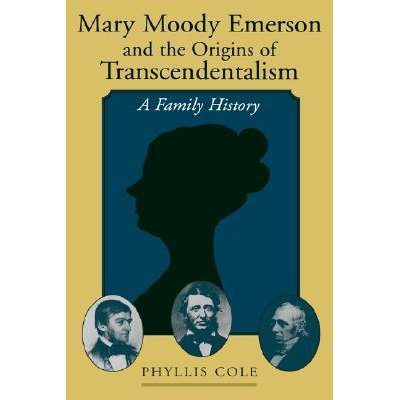 either the traditional orthodox camp or the new more progressive Transcendentalist movement of her nephew. She was too innovative and free-spirited to be fully comfortable among Calvinists, but there were aspects of traditional Christian theology that she continued to value that kept her from fully embracing her nephew’s Transcendentalism. In many ways, “she belonged to both sides and neither” (102). This dynamic contributed to a growing divide between Mary and Waldo. But even as the two were never as close in later years as they were in Waldo’s childhood and young adulthood, her Almanack continued to influence him (201-205).
I’ll share just one famous story from near the end of Mary’s life. One evening, Bronson Alcott was hosting a conversation on the topic of “Private Life” at Waldo’s house, while Waldo was away lecturing. Among those present in addition to Mary were Henry David Thoreau, his sister Sophia, and other usual suspects from Transcendentalist circles. When one man in attendance proceeded to hijack the conversation and pontificate about moral relativism in a way such that neither Alcott nor Thoreau could mitigate, Mary intervened. Here’s a description of what ensued, as recorded by the journalist Franklin Sanborn, who was also part of Transcendentalist circles:
Rising from her chair at the west side of the room, and turning her oddly-garnished head toward the south side, where the offender smilingly sat, she clasped her little wrinkled hands and raised them toward the black band over her left temple (a habit she had when deeply moved), and began her answer to those doctrines of Satan, as she thought of them. She expressed her amazement that any man should denounce the Moral Law—the only tie of society, except religion, to which, she saw, the speaker made no claim. She referred him to his Bible and to Dr. [Samuel] Clarke (one of her great authorities from childhood) and she denounced him personally in the most racy terms. She did not cross the room and shake him, as some author, not an eye-witness has fancied—but she retained her position, sat down quietly when she had finished, and was complimented by the smiling [target of her words], who then perhaps for the first time had felt the force of her untaught rhetoric. (294-5)
She may have been unschooled in formal rhetoric, but a lifetime of independent inquiry, reading and conversation had made her a formidable intellectual interlocutor.
In her final years, Mary become increasingly involved in the Abolitionist movement. Both the anti-slavery movement and women’s leadership in that movement gave her new hope for an increasingly equal role for women in the future (268). And although Mary grew increasingly ill, she was likely well enough on New Year’s Day 1863 to comprehend the sea change of President Lincoln’s Emancipation Proclamation taking effect. Mary died a few months later on May 1, 1863 at the age of 88 (305).
Six years after Mary’s death, when Waldo himself was sixty-five and near the end of his public speaking career, one of the last lectures he ever wrote was in her honor. He titled it “Amita,” which is Latin for “aunt.” (3-4). Years earlier he had written a series of biographical essays on Representative Men, meaning exemplary archetypes of their time and place. At that time, all his examples were famous European men. With “Amita,” he expanded his scope to include Mary:
It is a representative life, such as could hardly have appeared out of New England; of an age now past, and of which I think no types survive. Perhaps I deceive myself and overestimate its interest. It has to me a value like that which many readers find in Madam Guyon, in Rahel [Varnhagen], in Eugénie de Guérin, but it is purely original and hardly admits of a duplicate. Then it is a fruit of Calvinism and New England, and marks the precise time when the power of the old creed yielded to the influence of modern science and humanity. (3)
Here we see Waldo putting Mary in the same class as three famous independent, intellectual women: a heretical French mystic, a German-Jewish letter-writer and saloniste, and another French mystic known—as Mary was—primarily through her journals and letters.
And Waldo was far from Mary’s only public admirer. Elizabeth Peabody also expressed her esteem for Mary. Elizabeth both celebrated that Waldo had extended the Emersonian talent inherited from his aunt, and lamented that Mary’s talent remained buried in many ways due to her gender. In 1910, a young Virginia Woolf, only in her late twenties at the time, also became aware of Mary’s genius and influence on Waldo. Woolf incorporated this insight in her study of the “Creative life and domestic contraction of women” (6-7).
On this week following Mother’s Day, the life of Mary Moody Emerson is an invitation to honor those of our foremothers who taught us to question received tradition and to pay attention to the wisdom of our own firsthand experience.
The Rev. Dr. Carl Gregg is a certified spiritual director, a D.Min. graduate of San Francisco Theological Seminary, and the minister of the Unitarian Universalist Congregation of Frederick, Maryland. Follow him on Facebook (facebook.com/carlgregg) and Twitter (@carlgregg).
Learn more about Unitarian Universalism: http://www.uua.org/beliefs/principles
Previous Post

May 16, 2017
Mary Moody Emerson: Ralph Waldo’s “First & Best Teacher”
Next Post
May 22, 2017 The Spirituality of Twin Peaks
Browse Our Archives
Select a Category Advent Anti-Racism Archaeology Atheism Baptism Best of the Year List Book Reviews Buddhism Catholicism Christian Education Church and State Church Planting Climate Change Conscientious Objection to War Creation Spirituality Death Penalty Didache Disability Rights Discernment Easter Ecology Emergent Church Movement Empire-Critical Ethics Evolution Feminist Theology Film Reviews Gandhi Gospel of Mark Gun Control Hinduism Immigration Reform Interfaith Islam JFK Judaism Jungian Spirituality Lectionary Commentary Lent Letters to the Editor LGBT Marriage MLK Multiculturalism Mysticism Nonviolent Activism Occupy Paganism (Earth-centered Religions) Parables Paul Pluralism Politics Process Theology Quantum Physics Requiescat In Pace Seminary and Divinity School Sermon Series Retrospective Sermons Spiritual Direction Spiritual Practices Stewardship (Fundraising) The Book of J The Wheel of the Year (Paganism) Theoblogger Challenge Triathlon Uncategorized Unitarian Universalism Worship Resources Youth Ministry
Select a Month July 2026 May 2026 March 2026 November 2025 October 2025 August 2025 February 2025 December 2024 October 2024 March 2024 January 2024 December 2023 November 2023 March 2023 February 2023 January 2023 December 2022 November 2022 August 2022 March 2022 February 2022 January 2022 December 2021 September 2021 August 2021 July 2021 June 2021 May 2021 February 2021 January 2021 December 2020 August 2020 June 2020 May 2020 April 2020 March 2020 February 2020 January 2020 December 2019 November 2019 October 2019 September 2019 July 2019 June 2019 March 2019 February 2019 January 2019 December 2018 November 2018 October 2018 September 2018 June 2018 May 2018 April 2018 March 2018 February 2018 January 2018 December 2017 November 2017 October 2017 September 2017 August 2017 July 2017 June 2017 May 2017 April 2017 March 2017 February 2017 January 2017 December 2016 November 2016 October 2016 September 2016 August 2016 June 2016 May 2016 April 2016 March 2016 February 2016 January 2016 December 2015 November 2015 October 2015 September 2015 August 2015 July 2015 June 2015 May 2015 April 2015 March 2015 February 2015 January 2015 December 2014 November 2014 October 2014 August 2014 July 2014 June 2014 May 2014 April 2014 March 2014 February 2014 January 2014 December 2013 November 2013 October 2013 September 2013 August 2013 July 2013 June 2013 May 2013 April 2013 March 2013 February 2013 January 2013 December 2012 November 2012 October 2012 September 2012 August 2012 July 2012 June 2012 May 2012 April 2012 March 2012 February 2012 January 2012 December 2011 November 2011 October 2011 September 2011 August 2011 July 2011 June 2011 May 2011 April 2011 March 2011 February 2011 January 2011 December 2010 November 2010 October 2010 August 2009 July 2009 May 2009
Follow Us!
TAKE THE
Religious Wisdom Quiz
How many commandments were written on stone tablets?
Select your answer to see how you score.
Ten Thirteen Twelve Seven
Related posts from Carl Gregg

Reading America at 250: A Nation Wrestles With...


Andrew Holocek on the Power of Darkness

The Stories That Shape Us: Myths, Archetypes, &...
TRENDING AT PATHEOS More Voices

Reading America at 250: A Nation Wrestles With...
As part of my own reflection on the 250th anniversary of the...

Whenever I am reading a book or listening to an argument, I...

President Trump Ban Animal Torture Videos on Facebook
Call for Stricter Regulations of Animal Abuse Content on Facebook Although President...

Draft Amendments to Address Ritual Abuse in New...
The proposed changes would make it illegal for individuals in domestic partnerships...

How Bans on LGBTQ+ Student Clubs Threaten Religious...
On June 20, 2025, the State of Texas passed Senate Bill 12....

The Truth About the Gen Z Revival
This past year, there has been a lot of media buzz surrounding...
view all More Voices blogs
Ad-Free & Subscriber Log-In Subscription Support
- About Us
- 2026 Calendar
- Videos
- Podcasts
- Library of World Religions
- Faith In Media Tracker
- Advertise With Us
- Write for Us
- Privacy Policy
- Terms of Service
- Do Not Sell My Data
- Contact Us
- Radiant Digital
- Manage Newsletter Subscriptions
- Unsubscribe From Notifications
- Sitemap
Copyright 2008-2026, Patheos. All rights reserved.
Subscription Support Ad-Free & Subscriber Log-In
Follow Patheos