
BuddhistCatholicContemplativeEvangelicalGeneral ChristianHinduJewishLatter-day SaintMuslimNew VisionsProgressive Christian
Beliefs
- Buddhist
- Catholic
- Contemplative
- Evangelical
- General Christian
- Hindu
- Jewish
- Latter-day Saint
- More Voices
- Muslim
- New Visions
- Pagan
- Progressive Christian
Topics
- Religion News
- Food and Religion
- Sports and Religion
- Religious Art
- Religious Music and Entertainment
- Religious Events
- History and Religion
- Style and Religion
- Politics and Religion
- Women in Religion
- Recreation Outdoors and Religion
- Business Finance and Religion
- Careers Workplace and Religion
- Education and Religion
- Family Parenting and Religion
- Health Fitness and Religion
- Home and Religion
- Relationships and Religion
- Technology and Religion
- Travel and Religion
Columnists
- Buddhist Columnists
- Business Finance and Religion Columnists
- Careers Workplace and Religion Columnists
- Catholic Columnists
- Contemplative Columnists
- Education and Religion Columnists
- Evangelists Columnists
- Family Parenting and Religion Columnists
- General Christian Columnists
- Health Fitness and Religion Columnists
- Hindu Columnists
- History and Religion Columnists
- Home and Religion Columnists
- Jewish Columnists
- More Voices Columnists
- Latter Day Columnists
- Muslim Columnists
- New Visions Columnists
- Nonreligious Columnists
- Pagan Columnists
- Politics and Religion Columnists
- Progressive Columnists
- Recreation Outdoors and Religion Columnists
- Relationships and Religion Columnists
- Religion News Columnists
- Religious Art Columnists
- Religious Events Columnists
- Religious Music and Entertainment Columnists
- Sports and Religion Columnists
- Style and Religion Columnists
- Technology and Religion Columnists
- Travel and Religion Columnists
- Women in Religion Columnists
Resource Library
- 2026 Calendar
- Library of World Religions
- The 100 Most Holy Places on Earth
- Patheos Answers
- Podcasts
- Videos
- Faith Leaders Database
- Anglican Episcopalian
- Bahai
- Baptist
- Buddhism
- Christianity
- Confucianism
- Eastern Orthodoxy
- Hinduism
- Holiness and Pentecostal
- ISKCON
- Islam
- Judaism
- Lutheran
- Methodist
- The Church of Jesus Christ of Latter-day Saints
- New Age
- Paganism
- Presbytarian and Reformed
- Protestantism
- Religion Behind the Scenes
- Roman Catholic
- Scientology
- Shia Islam
- Sikhism
- Sufism
- Sunni Islam
- Taoism
- Zen
- See all religions
Research Tools
 Ad-Free & Subscriber Log-In Subscription Support
Ad-Free & Subscriber Log-In Subscription Support
Follow Patheos 

- Trending:
- Forgiveness
- |
- Marriage
- |
- Consciousness
- |
- Death Penalty
- |
- Election
- |
- Halloween

- Home
- More Voices
- What Protests Do (& Don’t) Accomplish
What Protests Do (& Don’t) Accomplish
Last updated on: April 13, 2017 at 9:56 pm by Carl Gregg
What Protests Do (& Don’t) Accomplish 2017-04-13T21:56:08-04:00 Carl Gregg
Patheos Explore the world's faith through different perspectives on religion and spirituality! Patheos has the views of the prevalent religions and spiritualities of the world.
On Saturday, January 21, five 56-passenger buses—carrying 280 people—departed the parking lot of the congregation where I serve as minister for the Women’s March on Washington: an unforgettable day of peaceful protest amidst an estimated 500,000 people in the streets of D.C. If you add in all the sister marches, the total rises to more than 3 million people acting for peace and justice.
I am grateful for the opportunity to have attended the march, but as successful as the #WomensMarch was on many levels, it is also important to reflect on what it did and did not accomplish from a strategic perspective. It did not change any laws or result in regime change. It did, however, help many people feel less isolated and alone. And it gave many people—who had little or no previous political activism—a taste of what it feels like to act for peace and justice. That first step may well be related to a sustained increase in activism in recent days.
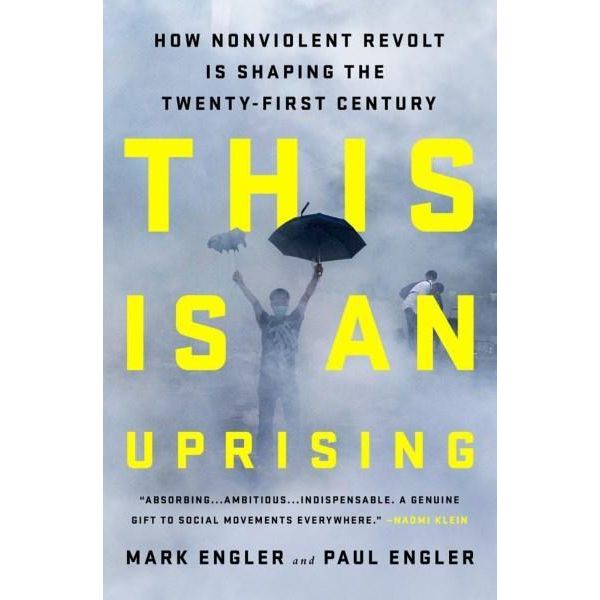 Around the time of the #WomensMarch, I shared that two of the books I am finding most helpful for such a time as this were:
- This Is an Uprising: How Nonviolent Revolt Is Shaping the Twenty-First Century by Mark Engler and Paul Engler
- The End of Protest by Micah White.
Drawing insights from these books, I would like to invite us to reflect on what history has shown us about what does and does not work in creating social change.
Looking backward, history is often taught in a way that makes events seem inevitable—whereas at the time, the future was unclear to everyone involved. History can also be taught in a way that focuses on a few major turning points and leaders instead of trying to trace the ten thousand or more people and events that are the messy, complex reality behind any event.
When many of us remember The Rev. Dr. Martin Luther King, Jr., for example, some of the first events that come to mind are often the ways he helped lead the Civil Rights Movement to great victories in Montgomery and Selma. But celebrating only the highlights covers over all the years of organizing in between, when success was far from assured.
The Selma to Montgomery marches in March 1965, catalyzed the Voting Rights Act. But if we turn back the clock a little more than two years, the path to victory was not yet in sight: “In January 1963, Martin Luther King, Jr. had just turned thirty-four. It had been seven years since the success of the 1956 Montgomery Bus Boycott.” Moreover, they had just received a demoralizing defeat in Albany (Engler x-xi).
So one lesson is perseverance. We need resistance and resilience for the long haul: the struggle for peace and justice is often measured in years, not hours or days. At the same time, we should keep in mind the saying that, “One definition of insanity is to keep doing the same thing and expecting a different result.” We should continually discern the best methods for our time, energy, and resources.
Two major categories of social change are:
- community organizing, which is focused on building long-term institutional structures that can leverage their constituencies to create change and
- disruptive uprisings—short-term mass protests demanding immediate change (47).
Both approaches have their strengths and weaknesses.
A prime example of the long-term, network-building approach is Saul Alinsky (1909 – 1972), as represented in his classic book Rules for Radicals: A Practical Primer for Realistic Radicals. It was written in 1971, the year before he died tragically of a heart attack at age 63, but it contains much hard-won wisdom from his years of experience. “Like organizers in the labor movement, Alinsky’s approach focused on person-by-person recruitment, careful leadership development, and the creation of institutional bodies that could leverage the power of their members over time” (32). He was always looking for the next step in achieving concrete, measurable change.
The other major type of short-term mass protest and disruptive uprising is embodied in examples like the #WomensMarch — or even more extended examples like the Arab Spring and #OccupyWallStreet. Each of these uprisings were inspiring, but it is also important to consider the longterm results:
by summer 2013 it had become evident that the Arab Spring uprisings [which had begun in December 2010] had failed to produce democracy anywhere except where they began, in Tunisia. Egypt’s first democratic government had been overthrown in a military coup that was ostensibly popularly supported. Syria had descended into a brutal and protracted civil war…. And Libya has simply fragmented; it has two mutually hostile elected governments, one in Tripoli and one in Tobruk, while various militias control different sectors of the country.
Or to consider #OccupyWallStreet, there were some positive unintended consequences, but it did not achieve its original goals:
Occupy demonstrated the efficacy of using social memes to quickly spread a movement, shifted the political debate on the fair distribution of wealth, trained a new generation of activists who went on to be the base for movements ranging from campus fossil fuel divestment to Black Lives Matter…. But Occupy did not bring an end to the influence of money on democracy, overthrow the corporatocracy of the 1 percent or solve income inequality (White 26)
The overall lesson is not the false dichotomy of choosing between either short-term mass protest or long-term community organizing, but strategically using the various available methods. So if you are interested, consider attending one of the upcoming mass protests in D.C. such as the #ScienceMarch or the #ClimateMarch. But I also encourage you to consider getting involved in a movement networking for longterm change on an issue or issues you are passionate about.
(I will continue this thread tomorrow in a post on “What Happens If We Withdraw Our Consent to Be Governed?”)
The Rev. Dr. Carl Gregg is a certified spiritual director, a D.Min. graduate of San Francisco Theological Seminary, and the minister of the Unitarian Universalist Congregation of Frederick, Maryland. Follow him on Facebook (facebook.com/carlgregg) and Twitter (@carlgregg).
Learn more about Unitarian Universalism: http://www.uua.org/beliefs/principles
Previous Post

April 6, 2017
A Spiritual Practice for Responding to Relentless Bad News
Next Post
April 13, 2017 What Happens If We Withdraw Our Consent to Be Governed?
Browse Our Archives
Select a Category Advent Anti-Racism Archaeology Atheism Baptism Best of the Year List Book Reviews Buddhism Catholicism Christian Education Church and State Church Planting Climate Change Conscientious Objection to War Creation Spirituality Death Penalty Didache Disability Rights Discernment Easter Ecology Emergent Church Movement Empire-Critical Ethics Evolution Feminist Theology Film Reviews Gandhi Gospel of Mark Gun Control Hinduism Immigration Reform Interfaith Islam JFK Judaism Jungian Spirituality Lectionary Commentary Lent Letters to the Editor LGBT Marriage MLK Multiculturalism Mysticism Nonviolent Activism Occupy Paganism (Earth-centered Religions) Parables Paul Pluralism Politics Process Theology Quantum Physics Requiescat In Pace Seminary and Divinity School Sermon Series Retrospective Sermons Spiritual Direction Spiritual Practices Stewardship (Fundraising) The Book of J The Wheel of the Year (Paganism) Theoblogger Challenge Triathlon Uncategorized Unitarian Universalism Worship Resources Youth Ministry
Select a Month July 2026 May 2026 March 2026 November 2025 October 2025 August 2025 February 2025 December 2024 October 2024 March 2024 January 2024 December 2023 November 2023 March 2023 February 2023 January 2023 December 2022 November 2022 August 2022 March 2022 February 2022 January 2022 December 2021 September 2021 August 2021 July 2021 June 2021 May 2021 February 2021 January 2021 December 2020 August 2020 June 2020 May 2020 April 2020 March 2020 February 2020 January 2020 December 2019 November 2019 October 2019 September 2019 July 2019 June 2019 March 2019 February 2019 January 2019 December 2018 November 2018 October 2018 September 2018 June 2018 May 2018 April 2018 March 2018 February 2018 January 2018 December 2017 November 2017 October 2017 September 2017 August 2017 July 2017 June 2017 May 2017 April 2017 March 2017 February 2017 January 2017 December 2016 November 2016 October 2016 September 2016 August 2016 June 2016 May 2016 April 2016 March 2016 February 2016 January 2016 December 2015 November 2015 October 2015 September 2015 August 2015 July 2015 June 2015 May 2015 April 2015 March 2015 February 2015 January 2015 December 2014 November 2014 October 2014 August 2014 July 2014 June 2014 May 2014 April 2014 March 2014 February 2014 January 2014 December 2013 November 2013 October 2013 September 2013 August 2013 July 2013 June 2013 May 2013 April 2013 March 2013 February 2013 January 2013 December 2012 November 2012 October 2012 September 2012 August 2012 July 2012 June 2012 May 2012 April 2012 March 2012 February 2012 January 2012 December 2011 November 2011 October 2011 September 2011 August 2011 July 2011 June 2011 May 2011 April 2011 March 2011 February 2011 January 2011 December 2010 November 2010 October 2010 August 2009 July 2009 May 2009
Follow Us!
TAKE THE
Religious Wisdom Quiz
Seek the Lord, all you humble of the land. Seek righteousness, seek what else?
Select your answer to see how you score.
Justice Mercy Humility Peace
Related posts from Carl Gregg

Reading America at 250: A Nation Wrestles With...


Andrew Holocek on the Power of Darkness

The Stories That Shape Us: Myths, Archetypes, &...
TRENDING AT PATHEOS More Voices

Reading America at 250: A Nation Wrestles With...
As part of my own reflection on the 250th anniversary of the...

Whenever I am reading a book or listening to an argument, I...

President Trump Ban Animal Torture Videos on Facebook
Call for Stricter Regulations of Animal Abuse Content on Facebook Although President...

Draft Amendments to Address Ritual Abuse in New...
The proposed changes would make it illegal for individuals in domestic partnerships...

How Bans on LGBTQ+ Student Clubs Threaten Religious...
On June 20, 2025, the State of Texas passed Senate Bill 12....

The Truth About the Gen Z Revival
This past year, there has been a lot of media buzz surrounding...
view all More Voices blogs
Ad-Free & Subscriber Log-In Subscription Support
- About Us
- 2026 Calendar
- Videos
- Podcasts
- Library of World Religions
- Faith In Media Tracker
- Advertise With Us
- Write for Us
- Privacy Policy
- Terms of Service
- Do Not Sell My Data
- Contact Us
- Radiant Digital
- Manage Newsletter Subscriptions
- Unsubscribe From Notifications
- Sitemap
Copyright 2008-2026, Patheos. All rights reserved.
Subscription Support Ad-Free & Subscriber Log-In
Follow Patheos