
BuddhistCatholicContemplativeEvangelicalGeneral ChristianHinduJewishLatter-day SaintMuslimNew VisionsProgressive Christian
Beliefs
- Buddhist
- Catholic
- Contemplative
- Evangelical
- General Christian
- Hindu
- Jewish
- Latter-day Saint
- More Voices
- Muslim
- New Visions
- Pagan
- Progressive Christian
Topics
- Religion News
- Food and Religion
- Sports and Religion
- Religious Art
- Religious Music and Entertainment
- Religious Events
- History and Religion
- Style and Religion
- Politics and Religion
- Women in Religion
- Recreation Outdoors and Religion
- Business Finance and Religion
- Careers Workplace and Religion
- Education and Religion
- Family Parenting and Religion
- Health Fitness and Religion
- Home and Religion
- Relationships and Religion
- Technology and Religion
- Travel and Religion
Columnists
- Buddhist Columnists
- Business Finance and Religion Columnists
- Careers Workplace and Religion Columnists
- Catholic Columnists
- Contemplative Columnists
- Education and Religion Columnists
- Evangelists Columnists
- Family Parenting and Religion Columnists
- General Christian Columnists
- Health Fitness and Religion Columnists
- Hindu Columnists
- History and Religion Columnists
- Home and Religion Columnists
- Jewish Columnists
- More Voices Columnists
- Latter Day Columnists
- Muslim Columnists
- New Visions Columnists
- Nonreligious Columnists
- Pagan Columnists
- Politics and Religion Columnists
- Progressive Columnists
- Recreation Outdoors and Religion Columnists
- Relationships and Religion Columnists
- Religion News Columnists
- Religious Art Columnists
- Religious Events Columnists
- Religious Music and Entertainment Columnists
- Sports and Religion Columnists
- Style and Religion Columnists
- Technology and Religion Columnists
- Travel and Religion Columnists
- Women in Religion Columnists
Resource Library
- 2026 Calendar
- Library of World Religions
- The 100 Most Holy Places on Earth
- Patheos Answers
- Podcasts
- Videos
- Faith Leaders Database
- Anglican Episcopalian
- Bahai
- Baptist
- Buddhism
- Christianity
- Confucianism
- Eastern Orthodoxy
- Hinduism
- Holiness and Pentecostal
- ISKCON
- Islam
- Judaism
- Lutheran
- Methodist
- The Church of Jesus Christ of Latter-day Saints
- New Age
- Paganism
- Presbytarian and Reformed
- Protestantism
- Religion Behind the Scenes
- Roman Catholic
- Scientology
- Shia Islam
- Sikhism
- Sufism
- Sunni Islam
- Taoism
- Zen
- See all religions
Research Tools
 Ad-Free & Subscriber Log-In Subscription Support
Ad-Free & Subscriber Log-In Subscription Support
Follow Patheos 

- Trending:
- Forgiveness
- |
- Marriage
- |
- Consciousness
- |
- Death Penalty
- |
- Election
- |
- Halloween

- Home
- More Voices
- What Comes After Buddhism?
What Comes After Buddhism?
Last updated on: March 2, 2017 at 9:36 am by Carl Gregg
What Comes After Buddhism? 2017-03-02T09:36:43-05:00 Carl Gregg
Patheos Explore the world's faith through different perspectives on religion and spirituality! Patheos has the views of the prevalent religions and spiritualities of the world.
My tradition of Unitarian Universalism is known for seeking wisdom from all the world’s religions, balanced with the insights of modern science. But in the nineteenth century, most Unitarian and Universalist congregations were not open to the world’s religions equally. Rather, they were often among the most liberal Christian congregations of their time. Compared to most other Christian traditions, nineteenth-century Unitarian and Universalist did tend to allow congregants more room to question traditional dogma, and there was often more emphasis on following Jesus’s ethics rather than worshipping him. But within most historically Unitarian or Universalist congregations, it was well into the twentieth-century before Christianity became “one among many” world religions, rather than “the one” most important religion. And while there is plenty of room within the big tent of Unitarian Universalism to identify as a UU Christian (among many other possible dual identities), there is also a sense in which Unitarian Universalism is one example of what can come “after Christianity.” Likewise, there is a sense in which Ethical Humanism is an example of what can come “after Judaism.”
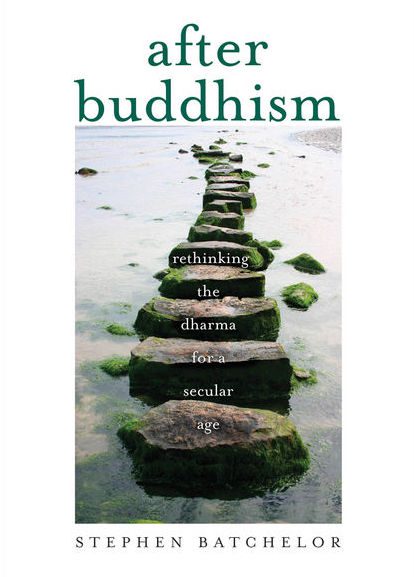 While both traditional Judaism and Christianity are also very much still around, I have been thinking recently about the various trajectories that religious traditions can take, while reading the Buddhist teacher and scholar Stephen Batchelor’s latest book After Buddhism: Rethinking the Dharma for a Secular Age**.** In the spirit of full disclosure, it’s a fairly academic book, published by Yale University Press. So although there is a lot I appreciate about Batchelor’s approach, be forewarned that the book is not the most accessible for newcomers to Buddhism.
From a more positive light, Batchelor’s new book is a synthesis of the perspective he has been working out through more than thirty years of Buddhist scholarship (ix). In 1983, he published his first book, Alone With Others: An Existential Approach to Buddhism. During the intervening three decades some of his other books include The Faith to Doubt: Glimpses of Buddhist Uncertainty, Buddhism Without Beliefs: A Contemporary Guide to Awakening, and Confession of a Buddhist Atheist. The driving question he has carried through his more than three decades of publications has been “What does it mean to practice the dharma of the Buddha in the context of modernity?” (ix).
And just as a modern, secular, Enlightenment perspective once led Christians on a Quest for the Historical Jesus, so too a modern, secular, Enlightenment perspective has led Batchelor and others on a Quest for the Historical Buddha. Buddha, of course, is not the birth name of a historical figure. Just as Christ is not Jesus’s last name (it’s a title meaning “anointed one”) and Gandhi’s real name is Mohandas not Mahatma (a title meaning “Great Soul”), so too Buddha is a title meaning “Awakened One.” The historical Buddha’s name was Siddhartha Gautama, who lived in ancient India c. 480 – c. 400 BCE (x). One aspect of the Quest for the Historical Buddha is seeking to remove the accretions of dogma and tradition that have evolved over the years to uncover the actual teachings of the historical Buddha (ix).
So what do you find if you go back to the earliest Buddhist texts such as the Pali Canon? Similar to early Christianity, you find some surprisingly egalitarian passages—that all people, men or women, lay or ordained, are all equal. I am not trying to say that either early Buddhism or early Christianity correspond precisely to twenty-first century understandings of gender as a social construction, but in both cases some of the most patriarchal passages seemed to have been added after the founder’s death by followers who became orthodox hardliners (12-13).
All that being said, here’s the much more radical implication that can follow from the question “What does it mean to practice the dharma of the Buddha in the context of modernity?” It can mean that although one continues to be interested in the quest for discovering what the historical Buddha actually said and did, one may decide that even if archeologists somehow discovered tomorrow that Siddhartha Gautama was an unrepentant male chauvinist, one would maintain a commitment to gender equality in one’s own contemporary Buddhist practice.
Tomorrow, I will say more in a follow-up post on “From ‘Buddhist Secularity’ to ‘Secular Buddhism.’“
The Rev. Dr. Carl Gregg is a certified spiritual director, a D.Min. graduate of San Francisco Theological Seminary, and the minister of the Unitarian Universalist Congregation of Frederick, Maryland. Follow him on Facebook (facebook.com/carlgregg) and Twitter (@carlgregg).
Learn more about Unitarian Universalism: http://www.uua.org/beliefs/principles
Previous Post

February 24, 2017
Why Harriet Tubman Still Matters Today
Next Post
March 2, 2017 From “Buddhist Secularity” to “Secular Buddhism”
Browse Our Archives
Select a Category Advent Anti-Racism Archaeology Atheism Baptism Best of the Year List Book Reviews Buddhism Catholicism Christian Education Church and State Church Planting Climate Change Conscientious Objection to War Creation Spirituality Death Penalty Didache Disability Rights Discernment Easter Ecology Emergent Church Movement Empire-Critical Ethics Evolution Feminist Theology Film Reviews Gandhi Gospel of Mark Gun Control Hinduism Immigration Reform Interfaith Islam JFK Judaism Jungian Spirituality Lectionary Commentary Lent Letters to the Editor LGBT Marriage MLK Multiculturalism Mysticism Nonviolent Activism Occupy Paganism (Earth-centered Religions) Parables Paul Pluralism Politics Process Theology Quantum Physics Requiescat In Pace Seminary and Divinity School Sermon Series Retrospective Sermons Spiritual Direction Spiritual Practices Stewardship (Fundraising) The Book of J The Wheel of the Year (Paganism) Theoblogger Challenge Triathlon Uncategorized Unitarian Universalism Worship Resources Youth Ministry
Select a Month July 2026 May 2026 March 2026 November 2025 October 2025 August 2025 February 2025 December 2024 October 2024 March 2024 January 2024 December 2023 November 2023 March 2023 February 2023 January 2023 December 2022 November 2022 August 2022 March 2022 February 2022 January 2022 December 2021 September 2021 August 2021 July 2021 June 2021 May 2021 February 2021 January 2021 December 2020 August 2020 June 2020 May 2020 April 2020 March 2020 February 2020 January 2020 December 2019 November 2019 October 2019 September 2019 July 2019 June 2019 March 2019 February 2019 January 2019 December 2018 November 2018 October 2018 September 2018 June 2018 May 2018 April 2018 March 2018 February 2018 January 2018 December 2017 November 2017 October 2017 September 2017 August 2017 July 2017 June 2017 May 2017 April 2017 March 2017 February 2017 January 2017 December 2016 November 2016 October 2016 September 2016 August 2016 June 2016 May 2016 April 2016 March 2016 February 2016 January 2016 December 2015 November 2015 October 2015 September 2015 August 2015 July 2015 June 2015 May 2015 April 2015 March 2015 February 2015 January 2015 December 2014 November 2014 October 2014 August 2014 July 2014 June 2014 May 2014 April 2014 March 2014 February 2014 January 2014 December 2013 November 2013 October 2013 September 2013 August 2013 July 2013 June 2013 May 2013 April 2013 March 2013 February 2013 January 2013 December 2012 November 2012 October 2012 September 2012 August 2012 July 2012 June 2012 May 2012 April 2012 March 2012 February 2012 January 2012 December 2011 November 2011 October 2011 September 2011 August 2011 July 2011 June 2011 May 2011 April 2011 March 2011 February 2011 January 2011 December 2010 November 2010 October 2010 August 2009 July 2009 May 2009
Follow Us!
TAKE THE
Religious Wisdom Quiz
What was the capacity of a bath?
Select your answer to see how you score.
10 liters 30 liters 22 liters 15 liters
Related posts from Carl Gregg

Reading America at 250: A Nation Wrestles With...


Andrew Holocek on the Power of Darkness

The Stories That Shape Us: Myths, Archetypes, &...
TRENDING AT PATHEOS More Voices

Reading America at 250: A Nation Wrestles With...
As part of my own reflection on the 250th anniversary of the...

Whenever I am reading a book or listening to an argument, I...

President Trump Ban Animal Torture Videos on Facebook
Call for Stricter Regulations of Animal Abuse Content on Facebook Although President...

Draft Amendments to Address Ritual Abuse in New...
The proposed changes would make it illegal for individuals in domestic partnerships...

How Bans on LGBTQ+ Student Clubs Threaten Religious...
On June 20, 2025, the State of Texas passed Senate Bill 12....

The Truth About the Gen Z Revival
This past year, there has been a lot of media buzz surrounding...
view all More Voices blogs
Ad-Free & Subscriber Log-In Subscription Support
- About Us
- 2026 Calendar
- Videos
- Podcasts
- Library of World Religions
- Faith In Media Tracker
- Advertise With Us
- Write for Us
- Privacy Policy
- Terms of Service
- Do Not Sell My Data
- Contact Us
- Radiant Digital
- Manage Newsletter Subscriptions
- Unsubscribe From Notifications
- Sitemap
Copyright 2008-2026, Patheos. All rights reserved.
Subscription Support Ad-Free & Subscriber Log-In
Follow Patheos