
BuddhistCatholicContemplativeEvangelicalGeneral ChristianHinduJewishLatter-day SaintMuslimNew VisionsProgressive Christian
Beliefs
- Buddhist
- Catholic
- Contemplative
- Evangelical
- General Christian
- Hindu
- Jewish
- Latter-day Saint
- More Voices
- Muslim
- New Visions
- Pagan
- Progressive Christian
Topics
- Religion News
- Food and Religion
- Sports and Religion
- Religious Art
- Religious Music and Entertainment
- Religious Events
- History and Religion
- Style and Religion
- Politics and Religion
- Women in Religion
- Recreation Outdoors and Religion
- Business Finance and Religion
- Careers Workplace and Religion
- Education and Religion
- Family Parenting and Religion
- Health Fitness and Religion
- Home and Religion
- Relationships and Religion
- Technology and Religion
- Travel and Religion
Columnists
- Buddhist Columnists
- Business Finance and Religion Columnists
- Careers Workplace and Religion Columnists
- Catholic Columnists
- Contemplative Columnists
- Education and Religion Columnists
- Evangelists Columnists
- Family Parenting and Religion Columnists
- General Christian Columnists
- Health Fitness and Religion Columnists
- Hindu Columnists
- History and Religion Columnists
- Home and Religion Columnists
- Jewish Columnists
- More Voices Columnists
- Latter Day Columnists
- Muslim Columnists
- New Visions Columnists
- Nonreligious Columnists
- Pagan Columnists
- Politics and Religion Columnists
- Progressive Columnists
- Recreation Outdoors and Religion Columnists
- Relationships and Religion Columnists
- Religion News Columnists
- Religious Art Columnists
- Religious Events Columnists
- Religious Music and Entertainment Columnists
- Sports and Religion Columnists
- Style and Religion Columnists
- Technology and Religion Columnists
- Travel and Religion Columnists
- Women in Religion Columnists
Resource Library
- 2026 Calendar
- Library of World Religions
- The 100 Most Holy Places on Earth
- Patheos Answers
- Podcasts
- Videos
- Faith Leaders Database
- Anglican Episcopalian
- Bahai
- Baptist
- Buddhism
- Christianity
- Confucianism
- Eastern Orthodoxy
- Hinduism
- Holiness and Pentecostal
- ISKCON
- Islam
- Judaism
- Lutheran
- Methodist
- The Church of Jesus Christ of Latter-day Saints
- New Age
- Paganism
- Presbytarian and Reformed
- Protestantism
- Religion Behind the Scenes
- Roman Catholic
- Scientology
- Shia Islam
- Sikhism
- Sufism
- Sunni Islam
- Taoism
- Zen
- See all religions
Research Tools
 Ad-Free & Subscriber Log-In Subscription Support
Ad-Free & Subscriber Log-In Subscription Support
Follow Patheos 

- Trending:
- Forgiveness
- |
- Marriage
- |
- Consciousness
- |
- Death Penalty
- |
- Election
- |
- Halloween

- Home
- More Voices
- The Legacy of Oliver Wendell Holmes, Jr. — for Today
The Legacy of Oliver Wendell Holmes, Jr. — for Today
Last updated on: March 26, 2017 at 2:28 pm by Carl Gregg
The Legacy of Oliver Wendell Holmes, Jr. — for Today 2017-03-26T14:28:52-04:00 Carl Gregg
Patheos Explore the world's faith through different perspectives on religion and spirituality! Patheos has the views of the prevalent religions and spiritualities of the world.
My tradition of Unitarian Universalism has a habit of making lists of famous UUs. As the saying goes, “We believe in deeds not creeds,” which 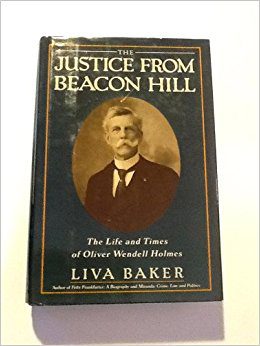 can prompt us to lift up the lives of our most exemplary ancestors. (Yes, there’s some pride in there as well about all the famous people from history who were Unitarians or Universalists.) So occasionally, I like to invite us to take a closer look at one of those names and consider just how UU were they? And what insights might their life have for us today regardless of whether one is UU? Drawing from Liva Baker’s biography The Justice from Beacon Hill: The Life and Times of Oliver Wendell Holmes (Harper Collins, 1991), I would like to invite us to reflect on the life and legacy of Oliver Wendell Holmes, Jr.
Holmes lived to be almost ninety-four years old. He was born on March 8, 1841 (two decades before the Civil War) and died on March 6, 1935 (a few years before the start of the Second World War). He is most famous for being a Supreme Court justice. On his ninetieth birthday—a little less than a year before he finally resigned his seat on the high court—he was hailed as “America’s most respected man of the law” and “the best company in Washington” (3).
And although in his day he became the Supreme Court justice whom a random citizen on the street might be most likely to remember the name of, it is interesting to note that, “Few Americans of stature have had less contact with the public. He was in fact a snob…. He did not participate in popular causes, and after he took his seat on the U.S. Supreme Court, he rarely made a public speech” (7). Part of what made him famous were memorable sayings like, “I really like paying taxes. It is buying civilization” (8). (Keep that pro-tax saying in mind. We’ll come back to it in my next post.)
For now, allow me to turn back the clock, trace some of the path that led to his renown—and consider some lessons we might learn along the way. From a UU perspective, it is interesting to note that Holmes’s grandfather, The Rev. Abiel Holmes, was a strict Calvinist who strongly disapproved of Unitarianism. Indeed, in 1829, First Church Cambridge, Massachusetts, fired him for refusing to exchange pulpits with theologically liberal preachers (29). Adding insult to injury, around that time, Oliver Wendell Holmes, Sr. (the father of the justice) had become a member of King’s Chapel in Boston, a Unitarian congregation that became famous in 1785 for removing all the trinitarian references to the Book of Common Prayer (31).
The father-son conflict between Abiel and Holmes, Sr. carried on into the next generation. When Holmes, Jr. said he was going to law school, his father told him “A lawyer cannot be a great man” (6). Later in life, when he was receiving all those ninetieth birthday honors, he still recalled the sting of those and other harsh remarks from his father and said, “I wish that my father could have listened tonight for only two or three minutes. Then I could have thumbed my nose at him” (7). (As the saying goes, “Sticks and stones can break my bones, but words…can really hurt me.”)
Holmes, Sr. was a professor at Harvard Medical School and a well-known poet. His literary connections meant that his son grew up around such luminaries as Longfellow, Emerson, Hawthorne, and Melville (15). (As the saying goes, “Alexander the Great may have accomplished a lot, but he did have Aristotle as his tutor!”) In Holmes’s case, “It mattered that his great-grandfather was Judge Oliver Wendell, his grandfathers were Judge Charles Jackson and the Reverend Abiel Holmes, and that his father was Dr. Oliver Wendell Holmes” (45). Indeed, it was Holmes, Sr. who literally coined the phrase “Boston Brahmin” (That’s how Boston elite they were!) All that being said, Holmes, Jr. was brought up to be a privileged Boston Brahmin in every way but one: his family of origin was not wealthy, but they did leverage their historic name and connections to provide cultural, educational, and vocational opportunities for the family (48).
My favorite story from Holmes’s childhood is that when he was enjoying all that praise at age ninety, “The daughter of a former neighbor recalled how her mother had disliked the ‘little Holmes boy’ because he hid behind trees, jumped out, and yelled ‘boo’ at her” (49). (The lesson here is watch what you do because people may remember it more than eight decades later!)
The young Holmes, of course, went to college at Harvard (72). But the first major turning point came when he was twenty. The Civil War started and he enlisted as a private in the Union Army (97). Fanny Dixon, who knew him before the war and was later married to him for nearly sixty years, said that his experience as a solider saved him from being a “coxcomb,” meaning “a vain and conceited man”—what was then called a “dandy” (105). Holmes fought in “most of the major campaigns in and around Virginia and Maryland except Gettysburg and was wounded three times, once almost mortally” (106). The number of casualties he saw impacted his lifelong work ethic and ambition. He said that, the “real anguish” is not hard work, but “never to have your opportunity” (160).
Turning to the question of just how Unitarian was this famous UU ancestor, both his family and Fanny’s family were at least nominally Unitarian. His parents had been married at the Unitarian King’s Chapel (39), and he had also been christened there as a child (47). But he and Fanny were marred in Christ Episcopal Church, Cambridge, which may have been because First Unitarian was in between ministers at the time (222). More tellingly, Fanny was known to have said, “In Boston one has to be something and Unitarian is the least you can be” (77).
In reading about Holmes’s life, the place where I see a UU perspective is much less in theology than in his willingness to take an unorthodox approach to the law. Three brief excerpts give a taste of his perspectives:
- “It is revolting to have no better reasons for a law than that it was laid down in the time of Henry IV. It is still more revolting if the grounds upon which it was laid down have vanished long since, and the rule simply persists from blind imitation of the past.” (The Path of the Law,” 1897)
- “Certitude is not the test of certainty. We have been cock-sure of many things that were not so.” (“Natural Law,” 1918)
- “An ideal system of law should draw its postulates and its legislative justification from science. As it is now, we rely upon tradition, or vague sentiment, or the fact that we never thought of any other way of doing things, as our only warrant for rules which we enforce with as much confidence as if they embodied revealed wisdom.” (“Learning and Science,” 1895)
He first began to articulate his jurisprudence in his landmark book The Common Law, which has been continuously in print since it was first published in 1881 (253).
After serving as a lawyer, Holmes was a professor at Harvard Law School for only a few months in 1883, when the opportunity to pursue his true ambition presented itself: a vacancy on the Massachusetts Supreme Court (265). As a judge, among his pet peeves were longwinded lawyers and judges who wrote lengthy opinions. His own opinions were often surprisingly concise. And if after a few minutes he had gotten the essence of a lawyer’s argument, he might seem to the lawyer to still be taking notes on the case when in fact he may well have begun writing a personal letter (274). Here you see traces of both his brilliance and his arrogance. That being said, “of 1,290 opinions he wrote for the count majority over the next twenty years; only one was reversed by the U.S. Supreme Court.” So maybe he was paying enough attention!
(In my next post on “What Legacy Are We Leaving? Reflections on Oliver Wendell Holmes, Jr.,” I will write about the legacy of Holmes’s time on the U.S. Supreme Court.)
The Rev. Dr. Carl Gregg is a certified spiritual director, a D.Min. graduate of San Francisco Theological Seminary, and the minister of the Unitarian Universalist Congregation of Frederick, Maryland. Follow him on Facebook (facebook.com/carlgregg) and Twitter (@carlgregg).
Learn more about Unitarian Universalism: http://www.uua.org/beliefs/principles
Next Post

March 26, 2017 What Legacy Are We Leaving? Reflections on Oliver Wendell Holmes, Jr.
Browse Our Archives
Select a Category Advent Anti-Racism Archaeology Atheism Baptism Best of the Year List Book Reviews Buddhism Catholicism Christian Education Church and State Church Planting Climate Change Conscientious Objection to War Creation Spirituality Death Penalty Didache Disability Rights Discernment Easter Ecology Emergent Church Movement Empire-Critical Ethics Evolution Feminist Theology Film Reviews Gandhi Gospel of Mark Gun Control Hinduism Immigration Reform Interfaith Islam JFK Judaism Jungian Spirituality Lectionary Commentary Lent Letters to the Editor LGBT Marriage MLK Multiculturalism Mysticism Nonviolent Activism Occupy Paganism (Earth-centered Religions) Parables Paul Pluralism Politics Process Theology Quantum Physics Requiescat In Pace Seminary and Divinity School Sermon Series Retrospective Sermons Spiritual Direction Spiritual Practices Stewardship (Fundraising) The Book of J The Wheel of the Year (Paganism) Theoblogger Challenge Triathlon Uncategorized Unitarian Universalism Worship Resources Youth Ministry
Select a Month July 2026 May 2026 March 2026 November 2025 October 2025 August 2025 February 2025 December 2024 October 2024 March 2024 January 2024 December 2023 November 2023 March 2023 February 2023 January 2023 December 2022 November 2022 August 2022 March 2022 February 2022 January 2022 December 2021 September 2021 August 2021 July 2021 June 2021 May 2021 February 2021 January 2021 December 2020 August 2020 June 2020 May 2020 April 2020 March 2020 February 2020 January 2020 December 2019 November 2019 October 2019 September 2019 July 2019 June 2019 March 2019 February 2019 January 2019 December 2018 November 2018 October 2018 September 2018 June 2018 May 2018 April 2018 March 2018 February 2018 January 2018 December 2017 November 2017 October 2017 September 2017 August 2017 July 2017 June 2017 May 2017 April 2017 March 2017 February 2017 January 2017 December 2016 November 2016 October 2016 September 2016 August 2016 June 2016 May 2016 April 2016 March 2016 February 2016 January 2016 December 2015 November 2015 October 2015 September 2015 August 2015 July 2015 June 2015 May 2015 April 2015 March 2015 February 2015 January 2015 December 2014 November 2014 October 2014 August 2014 July 2014 June 2014 May 2014 April 2014 March 2014 February 2014 January 2014 December 2013 November 2013 October 2013 September 2013 August 2013 July 2013 June 2013 May 2013 April 2013 March 2013 February 2013 January 2013 December 2012 November 2012 October 2012 September 2012 August 2012 July 2012 June 2012 May 2012 April 2012 March 2012 February 2012 January 2012 December 2011 November 2011 October 2011 September 2011 August 2011 July 2011 June 2011 May 2011 April 2011 March 2011 February 2011 January 2011 December 2010 November 2010 October 2010 August 2009 July 2009 May 2009
Follow Us!
TAKE THE
Religious Wisdom Quiz
Who said: "Anyone who listens to the word but does not do what it says is like someone who looks at his face in a mirror"?
Select your answer to see how you score.
Peter Paul James Jesus
Related posts from Carl Gregg

Reading America at 250: A Nation Wrestles With...


Andrew Holocek on the Power of Darkness

The Stories That Shape Us: Myths, Archetypes, &...
TRENDING AT PATHEOS More Voices

Reading America at 250: A Nation Wrestles With...
As part of my own reflection on the 250th anniversary of the...

Whenever I am reading a book or listening to an argument, I...

President Trump Ban Animal Torture Videos on Facebook
Call for Stricter Regulations of Animal Abuse Content on Facebook Although President...

Draft Amendments to Address Ritual Abuse in New...
The proposed changes would make it illegal for individuals in domestic partnerships...

How Bans on LGBTQ+ Student Clubs Threaten Religious...
On June 20, 2025, the State of Texas passed Senate Bill 12....

The Truth About the Gen Z Revival
This past year, there has been a lot of media buzz surrounding...
view all More Voices blogs
Ad-Free & Subscriber Log-In Subscription Support
- About Us
- 2026 Calendar
- Videos
- Podcasts
- Library of World Religions
- Faith In Media Tracker
- Advertise With Us
- Write for Us
- Privacy Policy
- Terms of Service
- Do Not Sell My Data
- Contact Us
- Radiant Digital
- Manage Newsletter Subscriptions
- Unsubscribe From Notifications
- Sitemap
Copyright 2008-2026, Patheos. All rights reserved.
Subscription Support Ad-Free & Subscriber Log-In
Follow Patheos