
BuddhistCatholicContemplativeEvangelicalGeneral ChristianHinduJewishLatter-day SaintMuslimNew VisionsProgressive Christian
Beliefs
- Buddhist
- Catholic
- Contemplative
- Evangelical
- General Christian
- Hindu
- Jewish
- Latter-day Saint
- More Voices
- Muslim
- New Visions
- Pagan
- Progressive Christian
Topics
- Religion News
- Food and Religion
- Sports and Religion
- Religious Art
- Religious Music and Entertainment
- Religious Events
- History and Religion
- Style and Religion
- Politics and Religion
- Women in Religion
- Recreation Outdoors and Religion
- Business Finance and Religion
- Careers Workplace and Religion
- Education and Religion
- Family Parenting and Religion
- Health Fitness and Religion
- Home and Religion
- Relationships and Religion
- Technology and Religion
- Travel and Religion
Columnists
- Buddhist Columnists
- Business Finance and Religion Columnists
- Careers Workplace and Religion Columnists
- Catholic Columnists
- Contemplative Columnists
- Education and Religion Columnists
- Evangelists Columnists
- Family Parenting and Religion Columnists
- General Christian Columnists
- Health Fitness and Religion Columnists
- Hindu Columnists
- History and Religion Columnists
- Home and Religion Columnists
- Jewish Columnists
- More Voices Columnists
- Latter Day Columnists
- Muslim Columnists
- New Visions Columnists
- Nonreligious Columnists
- Pagan Columnists
- Politics and Religion Columnists
- Progressive Columnists
- Recreation Outdoors and Religion Columnists
- Relationships and Religion Columnists
- Religion News Columnists
- Religious Art Columnists
- Religious Events Columnists
- Religious Music and Entertainment Columnists
- Sports and Religion Columnists
- Style and Religion Columnists
- Technology and Religion Columnists
- Travel and Religion Columnists
- Women in Religion Columnists
Resource Library
- 2026 Calendar
- Library of World Religions
- The 100 Most Holy Places on Earth
- Patheos Answers
- Podcasts
- Videos
- Faith Leaders Database
- Anglican Episcopalian
- Bahai
- Baptist
- Buddhism
- Christianity
- Confucianism
- Eastern Orthodoxy
- Hinduism
- Holiness and Pentecostal
- ISKCON
- Islam
- Judaism
- Lutheran
- Methodist
- The Church of Jesus Christ of Latter-day Saints
- New Age
- Paganism
- Presbytarian and Reformed
- Protestantism
- Religion Behind the Scenes
- Roman Catholic
- Scientology
- Shia Islam
- Sikhism
- Sufism
- Sunni Islam
- Taoism
- Zen
- See all religions
Research Tools
 Ad-Free & Subscriber Log-In Subscription Support
Ad-Free & Subscriber Log-In Subscription Support
Follow Patheos 

- Trending:
- Forgiveness
- |
- Marriage
- |
- Consciousness
- |
- Death Penalty
- |
- Election
- |
- Halloween

- Home
- More Voices
- What Legacy Are We Leaving? Reflections on Oliver Wendell Holmes, Jr.
What Legacy Are We Leaving? Reflections on Oliver Wendell Holmes, Jr.
Last updated on: March 26, 2017 at 2:00 pm by Carl Gregg
What Legacy Are We Leaving? Reflections on Oliver Wendell Holmes, Jr. 2017-03-25T12:38:27-04:00 Carl Gregg
Patheos Explore the world's faith through different perspectives on religion and spirituality! Patheos has the views of the prevalent religions and spiritualities of the world.
(This post is a continuation of my previous post on The Legacy of Oliver Wendell Holmes, Jr. — for Today.)
In 1902, President Theodore Roosevelt appointed Holmes to the United States Supreme Court. Despite Holmes’s accomplishments, the single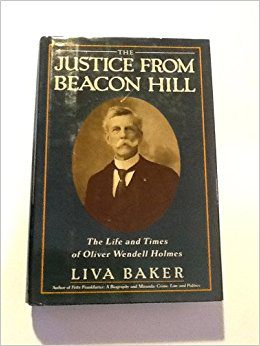 greatest factor that led to his Supreme Court appointment is that in the summer of 1884 Holmes had been one of the few people who publicly stood by his friend Henry Cabot Lodge during a political controversy. Although Holmes did not know it at the time, it turns out that, “Lodge never forgave an enemy, but he also never forgot a friend” (342). And two decades later, Lodge was the person Roosevelt trusted to recommend the best nominee for the high court (340).
Over time, Holmes has been increasingly remembered as a liberal jurist. People seem to remember what might be called “his civil libertarian outbursts,” but they were “in fact rarer and less libertarian than was often thought.” People also “seem to remember his support for legislation that promised social and economic reform,” but the truth is there were many other cases in which he was not particularly concerned with equality. “Holmes’s record in civil rights cases during his three decades on the Supreme Court was mixed but leaned toward support of Southern customs.” (386). And in general, his judgements were a little more favorable to [African-Americans] when civil rights were involved than when property rights were the issue” (386). It was said that, whereas his fellow Supreme Court Justice Louis Brandeis had “sympathy of the oppressed,” Holmes had “contempt for the oppressor” (588). And privately it was clear that Holmes never sought to be a hero to progressives; rather, his desire was to be well regarded as a philosopher of the law (508).
There is one final set of cases I should mention. World War I lasted a little more than four years from 1914 to 1918. Toward the end of the war in 1917, Congress passed the Espionage Act both to protect military secrets and to prevent “obstruction of military recruitment or operations.” A year later in 1918, Congress passed the Sedition Act aimed at suppressing any dissent to the war with heavy fines and years of jail time for “discouragement of recruiting” or “utterances of ‘disloyal or abusive language’ about the government, the conduct of the war, the Constitution, even the flag or uniform” (511).
Almost two thousand U.S. citizens were prosecuted under those two laws for “speeches, books, newspaper articles, and pamphlets,” although “one U.S. attorney estimated that at least 90 percent of alleged pro-German plots never existed” (512). Those were the circumstances in which Holmes in March 1919, writing for the unanimous justices in Schenck v. United States, penned some of history’s most famous words against free speech:
The most stringent protection of free speech would not protect a man in falsely shouting fire in a theater and causing a panic…. The question in every case is whether the words used are used in circumstances and are of such a nature as to create a clear and present danger that they will bring about the substantive evils that Congress has a right to prevent. It is a question of proximity and degree. (523-524)
And while I admire the brilliance of Holmes’s prose, I think he was wrong to criminalize U.S. citizens who were merely distributing fliers raising alternative perspectives to the loud drumbeat of war recruiting.
Fascinatingly, Holmes was also conflicted about his opinion in Schenck, and—in the wake of further study and debates with friends and colleagues—less than a year later in November 1919 he changed his mind. He wrote a dissent (joined by Brandeis) in Abrams v. United States that becomes one of the “most quoted justifications for freedom of expression in the English-speaking world”:
The ultimate good desired is better reached by free trade in ideas—that the best test of truth is the power of the thought to get itself accepted in the competition of the market…. We should be eternally vigilant against attempts to check the expression of opinions that we loathe and believe to be fraught with death, unless they so imminently threaten immediate interference with the lawful and pressing purpose of the law that an immediate check is required to save the country. (540)
As the fever of war began to break, Holmes’s reconsidered defense of free speech would come to have a “prominent place in American constitutional history” (547).
There is one other significant case that we have not addressed. Buck vs. Bell in 1927 is arguably the most egregiously wrong majority opinion Holmes ever wrote (598). But I am setting it aside because it will serve as a bridge to two posts planned for next week. For now, let us turn to the end of Holmes’s life.
In 1929, after almost sixty years of marriage, Holmes’s beloved Fanny died. Holmes was devastated. Fascinatingly, instead of a minister stepping in to help, Holmes’s fellow Unitarian on the Supreme Court, Chief Justice William Howard Taft made the memorial arrangements. Apparently, Taft “knew how to run a Unitarian funeral” (619). In between serving as the 27th President of the United States (1909 – 1913) and the 10th Chief Justice of the Supreme Court (1921-1930), Taft had been president of the Unitarian National Conference (1915-1925) and Vice-President of the American Unitarian Association (1916-1922). Needless to say, a future sermon on Taft is forthcoming.
But returning our focus to Holmes, in 1931, two years after Fanny’s death and less than two months before his ninety-first birthday, he finally resigned from the Supreme Court. In his final few years, he did not keep up with the business of the court (628). Instead, he kept himself occupied both with non-fiction (primarily philosophy and history) and with what he described as a new “consuming weakness” for detective novels, including Agatha Christie and Dashiell Hammett (640). On March 6, 1935, Oliver Wendell Homes, Jr. died of bronchial pneumonia, two days before what would have been his ninety-fourth birthday (642). His funeral was held on his birthday at All Souls’ Church, Unitarian in Washington, D.C. (643).
Now, I haven’t forgotten to come back to Holmes’s aphorism, “I really like paying taxes. It is buying civilization.” He wasn’t joking. He and Fanny never had children (227-230). So, “After making a few small bequests to the servants and his nephew, he left…a little more than a quarter of a million dollars—to the United States government without explanation.” Congress, of course, did what Congress does: they appointed a study committee which eventually recommended that the funds be used to produce a definitive multivolume history of the United States Supreme Court (642). To date, ten large volumes have been published with three additional volumes currently in the works to take the set through end of the Warren Court in 1969.
In reflecting on the life and legacy of Oliver Wendell Holmes, Jr., I have been inviting us to wrestle with some of the messiness and complexity that is the reality of his—or any other person’s—life. But despite his flaws (and with awareness of the number of times he helped perpetuate an unjust status quo through either his actions or inaction), there were times when Holmes acted significantly to help create a more just world—both in his own day and with ripples that continue even into our own time. And so, the question arises for us too: within our sphere of influence, how might we act for peace and justice in the days to come? What will our children, grandchildren, and great-grandchildren say about the legacy they inherit from us?
The Rev. Dr. Carl Gregg is a certified spiritual director, a D.Min. graduate of San Francisco Theological Seminary, and the minister of the Unitarian Universalist Congregation of Frederick, Maryland. Follow him on Facebook (facebook.com/carlgregg) and Twitter (@carlgregg).
Learn more about Unitarian Universalism: http://www.uua.org/beliefs/principles
Previous Post

March 25, 2017
The Legacy of Oliver Wendell Holmes, Jr. — for Today
Next Post
March 29, 2017 Eugenics, Then & Now: Immigration, Health Care, & Illiberal Progressives
Browse Our Archives
Select a Category Advent Anti-Racism Archaeology Atheism Baptism Best of the Year List Book Reviews Buddhism Catholicism Christian Education Church and State Church Planting Climate Change Conscientious Objection to War Creation Spirituality Death Penalty Didache Disability Rights Discernment Easter Ecology Emergent Church Movement Empire-Critical Ethics Evolution Feminist Theology Film Reviews Gandhi Gospel of Mark Gun Control Hinduism Immigration Reform Interfaith Islam JFK Judaism Jungian Spirituality Lectionary Commentary Lent Letters to the Editor LGBT Marriage MLK Multiculturalism Mysticism Nonviolent Activism Occupy Paganism (Earth-centered Religions) Parables Paul Pluralism Politics Process Theology Quantum Physics Requiescat In Pace Seminary and Divinity School Sermon Series Retrospective Sermons Spiritual Direction Spiritual Practices Stewardship (Fundraising) The Book of J The Wheel of the Year (Paganism) Theoblogger Challenge Triathlon Uncategorized Unitarian Universalism Worship Resources Youth Ministry
Select a Month July 2026 May 2026 March 2026 November 2025 October 2025 August 2025 February 2025 December 2024 October 2024 March 2024 January 2024 December 2023 November 2023 March 2023 February 2023 January 2023 December 2022 November 2022 August 2022 March 2022 February 2022 January 2022 December 2021 September 2021 August 2021 July 2021 June 2021 May 2021 February 2021 January 2021 December 2020 August 2020 June 2020 May 2020 April 2020 March 2020 February 2020 January 2020 December 2019 November 2019 October 2019 September 2019 July 2019 June 2019 March 2019 February 2019 January 2019 December 2018 November 2018 October 2018 September 2018 June 2018 May 2018 April 2018 March 2018 February 2018 January 2018 December 2017 November 2017 October 2017 September 2017 August 2017 July 2017 June 2017 May 2017 April 2017 March 2017 February 2017 January 2017 December 2016 November 2016 October 2016 September 2016 August 2016 June 2016 May 2016 April 2016 March 2016 February 2016 January 2016 December 2015 November 2015 October 2015 September 2015 August 2015 July 2015 June 2015 May 2015 April 2015 March 2015 February 2015 January 2015 December 2014 November 2014 October 2014 August 2014 July 2014 June 2014 May 2014 April 2014 March 2014 February 2014 January 2014 December 2013 November 2013 October 2013 September 2013 August 2013 July 2013 June 2013 May 2013 April 2013 March 2013 February 2013 January 2013 December 2012 November 2012 October 2012 September 2012 August 2012 July 2012 June 2012 May 2012 April 2012 March 2012 February 2012 January 2012 December 2011 November 2011 October 2011 September 2011 August 2011 July 2011 June 2011 May 2011 April 2011 March 2011 February 2011 January 2011 December 2010 November 2010 October 2010 August 2009 July 2009 May 2009
Follow Us!
TAKE THE
Religious Wisdom Quiz
Who said: "Anyone who listens to the word but does not do what it says is like someone who looks at his face in a mirror"?
Select your answer to see how you score.
Peter Paul James Jesus
Related posts from Carl Gregg

Reading America at 250: A Nation Wrestles With...


Andrew Holocek on the Power of Darkness

The Stories That Shape Us: Myths, Archetypes, &...
TRENDING AT PATHEOS More Voices

Reading America at 250: A Nation Wrestles With...
As part of my own reflection on the 250th anniversary of the...

Whenever I am reading a book or listening to an argument, I...

President Trump Ban Animal Torture Videos on Facebook
Call for Stricter Regulations of Animal Abuse Content on Facebook Although President...

Draft Amendments to Address Ritual Abuse in New...
The proposed changes would make it illegal for individuals in domestic partnerships...

How Bans on LGBTQ+ Student Clubs Threaten Religious...
On June 20, 2025, the State of Texas passed Senate Bill 12....

The Truth About the Gen Z Revival
This past year, there has been a lot of media buzz surrounding...
view all More Voices blogs
Ad-Free & Subscriber Log-In Subscription Support
- About Us
- 2026 Calendar
- Videos
- Podcasts
- Library of World Religions
- Faith In Media Tracker
- Advertise With Us
- Write for Us
- Privacy Policy
- Terms of Service
- Do Not Sell My Data
- Contact Us
- Radiant Digital
- Manage Newsletter Subscriptions
- Unsubscribe From Notifications
- Sitemap
Copyright 2008-2026, Patheos. All rights reserved.
Subscription Support Ad-Free & Subscriber Log-In
Follow Patheos