
BuddhistCatholicContemplativeEvangelicalGeneral ChristianHinduJewishLatter-day SaintMuslimNew VisionsProgressive Christian
Beliefs
- Buddhist
- Catholic
- Contemplative
- Evangelical
- General Christian
- Hindu
- Jewish
- Latter-day Saint
- More Voices
- Muslim
- New Visions
- Pagan
- Progressive Christian
Topics
- Religion News
- Food and Religion
- Sports and Religion
- Religious Art
- Religious Music and Entertainment
- Religious Events
- History and Religion
- Style and Religion
- Politics and Religion
- Women in Religion
- Recreation Outdoors and Religion
- Business Finance and Religion
- Careers Workplace and Religion
- Education and Religion
- Family Parenting and Religion
- Health Fitness and Religion
- Home and Religion
- Relationships and Religion
- Technology and Religion
- Travel and Religion
Columnists
- Buddhist Columnists
- Business Finance and Religion Columnists
- Careers Workplace and Religion Columnists
- Catholic Columnists
- Contemplative Columnists
- Education and Religion Columnists
- Evangelists Columnists
- Family Parenting and Religion Columnists
- General Christian Columnists
- Health Fitness and Religion Columnists
- Hindu Columnists
- History and Religion Columnists
- Home and Religion Columnists
- Jewish Columnists
- More Voices Columnists
- Latter Day Columnists
- Muslim Columnists
- New Visions Columnists
- Nonreligious Columnists
- Pagan Columnists
- Politics and Religion Columnists
- Progressive Columnists
- Recreation Outdoors and Religion Columnists
- Relationships and Religion Columnists
- Religion News Columnists
- Religious Art Columnists
- Religious Events Columnists
- Religious Music and Entertainment Columnists
- Sports and Religion Columnists
- Style and Religion Columnists
- Technology and Religion Columnists
- Travel and Religion Columnists
- Women in Religion Columnists
Resource Library
- 2026 Calendar
- Library of World Religions
- The 100 Most Holy Places on Earth
- Patheos Answers
- Podcasts
- Videos
- Faith Leaders Database
- Anglican Episcopalian
- Bahai
- Baptist
- Buddhism
- Christianity
- Confucianism
- Eastern Orthodoxy
- Hinduism
- Holiness and Pentecostal
- ISKCON
- Islam
- Judaism
- Lutheran
- Methodist
- The Church of Jesus Christ of Latter-day Saints
- New Age
- Paganism
- Presbytarian and Reformed
- Protestantism
- Religion Behind the Scenes
- Roman Catholic
- Scientology
- Shia Islam
- Sikhism
- Sufism
- Sunni Islam
- Taoism
- Zen
- See all religions
Research Tools
 Ad-Free & Subscriber Log-In Subscription Support
Ad-Free & Subscriber Log-In Subscription Support
Follow Patheos 

- Trending:
- Forgiveness
- |
- Marriage
- |
- Consciousness
- |
- Death Penalty
- |
- Election
- |
- Halloween

- Home
- More Voices
- Why It Matters that Harriet Tubman Will Be on the $20 Bill
Why It Matters that Harriet Tubman Will Be on the $20 Bill
Last updated on: February 24, 2017 at 9:15 am by Carl Gregg
Why It Matters that Harriet Tubman Will Be on the $20 Bill 2017-02-24T09:15:32-05:00 Carl Gregg
Patheos Explore the world's faith through different perspectives on religion and spirituality! Patheos has the views of the prevalent religions and spiritualities of the world.
The year 2020 will be the one-hundredth anniversary of the Nineteenth Amendment, which gave women the right to vote. To commemorate this occasion, the U.S. Treasury Department announced last year that in 2020, Andrew Jackson will be moved to the back of the $20 bill, and Harriet Tubman will be the new face on the front. This change means that African-Americans will appear on our currency for the first time in our nation’s history, and a woman will be featured for the first time in more than a century.
Regarding the significance of this change, there are “more than 8.5 billion $20 bills in circulation…. And the seven white men on the seven notes in general circulation were all dead by 1885…. More than half of American history has happened since.” There are other exciting changes coming as well, such as adding “images of Eleanor Roosevelt, Marian Anderson and Martin Luther King Jr. to the back of the $5, which has Abraham Lincoln on the front.” But for now, I would like to invite us to focus on how the life and legacy of Harriet Tubman can continue to inspire us today.
Everything I l learned in school about Harriet Tubman could fit in one sentence: she was a famous conductor on the Underground 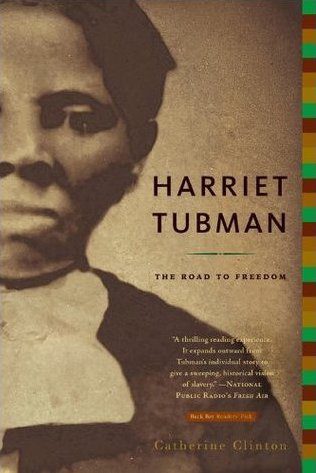 Railroad, who was known as a modern-day “Moses” for helping liberate so many enslaved people (85). The announcement that she will soon be featured on the $20 bill motivated me to learn more. In reading Catherine Clinton’s excellent 2004 biography Harriet Tubman: The Road to Freedom, the more I learned about Tubman, the more impressed I became.
For me, Harriet Tubman’s story hits close to home. I am in the middle of my fifth year serving a congregation in Frederick, Maryland, and Tubman was born only a little more than a hundred miles southeast, likely on the Brodess plantation near Bucktown, Maryland in Dorchester County on the Eastern Shore. Estimates of her birth year range from 1815 on her death certificate to 1820 on her gravestone to 1825, which was the year Harriet herself said she was born. In the broader sweep of history, she was born approximately two hundred years after the first enslaved Africans were sold at the Virginia colony of Jamestown in 1619. Frederick Douglass was her temporal and geographic contemporary, “born in 1818 on a plantation on Maryland’s Eastern Shore, near present-day Easton — less than thirty miles from Harriet Tubman’s own place of birth” (8). Tubman died around age 90 in 1913, the same year that Rosa Parks was born (220).
Tubman’s birth name was Araminta Ross, leading to the nickname “Minty.” She was one of the last of around a dozen children born to the enslaved couple Harriet Green and Benjamin Ross. Tubman’s grandmother was brought to America on a slave ship (5), and there are a number of indications that Tubman’s grandfather was a white man, the plantation owner Atthow Pattison (6).
When Araminta, the future Harriet Tubman, was five years old she was assigned to take care of the infant of a white woman in the neighborhood. Even though she wasn’t far from home, she had to live at her new master’s house full time, and was terribly homesick. Because she was so small, she had to sit on the floor to hold the baby. In addition to caring for an infant, she was given many other household chores, and “After a long day of doing her mistress’s bidding, the five-year-old Araminta remained on duty at night, instructed to rock the cradle constantly to prevent the baby from disturbing the master or mistress. If the baby wailed, this mistress did not go to comfort her child but instead lifted her hand to grab a small whip from its shelf — to punish her [enslaved] attendant for negligence.” Tubman had scars on her neck from these whippings for the rest of her life (17-18).
Even during this early period, Tubman sometimes resisted her oppressors. One account tells us of her biting her master’s knee. In this instance, her strategy paid off: “she was left alone in the future by this master” (19). She served a number of families in similar capacities through age twelve, when she became big enough for hard labor in the fields (18-20).
In another early sign of her bravery, Araminta blocked the path of an overseer seeking to whip an enslaved field hand, who had deserted his post. Tragically, a lead weight thrown at the deserter instead hit Araminta in the head, causing a serious wound. She slipped in and out of a “lethargic sleep” for weeks (22). And for the rest of her life, “she suffered from episodes that were likened to narcoleptic spells.” As frequently as several times a day, she would, without warning—no matter what she was doing—fall into a “stupor,” then a “deep slumber.” Soon she would rouse herself and carry on with whatever she was previously doing (29). Consider how impressive it is that the entire time she was leading many successful runs on the Underground Railroad, she was often suffering from narcoleptic episodes multiple times a day.
In 1844, when Araminta was in her early 20s, she married a free black man named John Tubman (24). Tubman was the family name of several wealthy white plantation owners in Cambridge, Maryland, and “Many blacks in the area were known by the name Tubman” (24). So Araminta received the last name Tubman from her husband, but Harriet was the name she chose for herself—in honor of her mother—when she reached freedom. Many enslaved people who escaped captivity chose new names for the pragmatic reason that it made it more difficult for fugitive slave catchers to track them (33).
There were many remarkable events to come in Tubman’s life, but her escape alone was remarkable. “The overwhelming majority of successful fugitives were men. But here was a girl in her twenties, venturing out of her home counties for the first time, hoping to make it to freedom on her own” (33-34). The ninety-mile journey from Maryland’s Eastern Shore to the Pennsylvania line “would have taken Tubman anywhere from ten days to three weeks on foot” (38). During her escape, one of the first people to help Tubman head in the direction of freedom was a white woman. This act of allyship was significant because aiding a fugitive slave was a crime with stiff penalties (35).
Tomorrow, in part two of this post on “Why Harriet Tubman Still Matters Today,” I will share more about Tubman’s life and how her legacy can continue to inspire us today.
The Rev. Dr. Carl Gregg is a certified spiritual director, a D.Min. graduate of San Francisco Theological Seminary, and the minister of the Unitarian Universalist Congregation of Frederick, Maryland. Follow him on Facebook (facebook.com/carlgregg) and Twitter (@carlgregg).
Learn more about Unitarian Universalism: http://www.uua.org/beliefs/principles
Previous Post

February 16, 2017
What If Darwin Rewrote the Declaration of Independence?
Next Post
February 24, 2017 Why Harriet Tubman Still Matters Today
Browse Our Archives
Select a Category Advent Anti-Racism Archaeology Atheism Baptism Best of the Year List Book Reviews Buddhism Catholicism Christian Education Church and State Church Planting Climate Change Conscientious Objection to War Creation Spirituality Death Penalty Didache Disability Rights Discernment Easter Ecology Emergent Church Movement Empire-Critical Ethics Evolution Feminist Theology Film Reviews Gandhi Gospel of Mark Gun Control Hinduism Immigration Reform Interfaith Islam JFK Judaism Jungian Spirituality Lectionary Commentary Lent Letters to the Editor LGBT Marriage MLK Multiculturalism Mysticism Nonviolent Activism Occupy Paganism (Earth-centered Religions) Parables Paul Pluralism Politics Process Theology Quantum Physics Requiescat In Pace Seminary and Divinity School Sermon Series Retrospective Sermons Spiritual Direction Spiritual Practices Stewardship (Fundraising) The Book of J The Wheel of the Year (Paganism) Theoblogger Challenge Triathlon Uncategorized Unitarian Universalism Worship Resources Youth Ministry
Select a Month July 2026 May 2026 March 2026 November 2025 October 2025 August 2025 February 2025 December 2024 October 2024 March 2024 January 2024 December 2023 November 2023 March 2023 February 2023 January 2023 December 2022 November 2022 August 2022 March 2022 February 2022 January 2022 December 2021 September 2021 August 2021 July 2021 June 2021 May 2021 February 2021 January 2021 December 2020 August 2020 June 2020 May 2020 April 2020 March 2020 February 2020 January 2020 December 2019 November 2019 October 2019 September 2019 July 2019 June 2019 March 2019 February 2019 January 2019 December 2018 November 2018 October 2018 September 2018 June 2018 May 2018 April 2018 March 2018 February 2018 January 2018 December 2017 November 2017 October 2017 September 2017 August 2017 July 2017 June 2017 May 2017 April 2017 March 2017 February 2017 January 2017 December 2016 November 2016 October 2016 September 2016 August 2016 June 2016 May 2016 April 2016 March 2016 February 2016 January 2016 December 2015 November 2015 October 2015 September 2015 August 2015 July 2015 June 2015 May 2015 April 2015 March 2015 February 2015 January 2015 December 2014 November 2014 October 2014 August 2014 July 2014 June 2014 May 2014 April 2014 March 2014 February 2014 January 2014 December 2013 November 2013 October 2013 September 2013 August 2013 July 2013 June 2013 May 2013 April 2013 March 2013 February 2013 January 2013 December 2012 November 2012 October 2012 September 2012 August 2012 July 2012 June 2012 May 2012 April 2012 March 2012 February 2012 January 2012 December 2011 November 2011 October 2011 September 2011 August 2011 July 2011 June 2011 May 2011 April 2011 March 2011 February 2011 January 2011 December 2010 November 2010 October 2010 August 2009 July 2009 May 2009
Follow Us!
TAKE THE
Religious Wisdom Quiz
Which parable tells of a shrewd manager who is commended for his cleverness?
Select your answer to see how you score.
The Wise Virgins The Lost Sheep The Good Samaritan The Unjust Steward
Related posts from Carl Gregg

Reading America at 250: A Nation Wrestles With...


Andrew Holocek on the Power of Darkness

The Stories That Shape Us: Myths, Archetypes, &...
TRENDING AT PATHEOS More Voices

Reading America at 250: A Nation Wrestles With...
As part of my own reflection on the 250th anniversary of the...

Whenever I am reading a book or listening to an argument, I...

President Trump Ban Animal Torture Videos on Facebook
Call for Stricter Regulations of Animal Abuse Content on Facebook Although President...

Draft Amendments to Address Ritual Abuse in New...
The proposed changes would make it illegal for individuals in domestic partnerships...

How Bans on LGBTQ+ Student Clubs Threaten Religious...
On June 20, 2025, the State of Texas passed Senate Bill 12....

The Truth About the Gen Z Revival
This past year, there has been a lot of media buzz surrounding...
view all More Voices blogs
Ad-Free & Subscriber Log-In Subscription Support
- About Us
- 2026 Calendar
- Videos
- Podcasts
- Library of World Religions
- Faith In Media Tracker
- Advertise With Us
- Write for Us
- Privacy Policy
- Terms of Service
- Do Not Sell My Data
- Contact Us
- Radiant Digital
- Manage Newsletter Subscriptions
- Unsubscribe From Notifications
- Sitemap
Copyright 2008-2026, Patheos. All rights reserved.
Subscription Support Ad-Free & Subscriber Log-In
Follow Patheos