
BuddhistCatholicContemplativeEvangelicalGeneral ChristianHinduJewishLatter-day SaintMuslimNew VisionsProgressive Christian
Beliefs
- Buddhist
- Catholic
- Contemplative
- Evangelical
- General Christian
- Hindu
- Jewish
- Latter-day Saint
- More Voices
- Muslim
- New Visions
- Pagan
- Progressive Christian
Topics
- Religion News
- Food and Religion
- Sports and Religion
- Religious Art
- Religious Music and Entertainment
- Religious Events
- History and Religion
- Style and Religion
- Politics and Religion
- Women in Religion
- Recreation Outdoors and Religion
- Business Finance and Religion
- Careers Workplace and Religion
- Education and Religion
- Family Parenting and Religion
- Health Fitness and Religion
- Home and Religion
- Relationships and Religion
- Technology and Religion
- Travel and Religion
Columnists
- Buddhist Columnists
- Business Finance and Religion Columnists
- Careers Workplace and Religion Columnists
- Catholic Columnists
- Contemplative Columnists
- Education and Religion Columnists
- Evangelists Columnists
- Family Parenting and Religion Columnists
- General Christian Columnists
- Health Fitness and Religion Columnists
- Hindu Columnists
- History and Religion Columnists
- Home and Religion Columnists
- Jewish Columnists
- More Voices Columnists
- Latter Day Columnists
- Muslim Columnists
- New Visions Columnists
- Nonreligious Columnists
- Pagan Columnists
- Politics and Religion Columnists
- Progressive Columnists
- Recreation Outdoors and Religion Columnists
- Relationships and Religion Columnists
- Religion News Columnists
- Religious Art Columnists
- Religious Events Columnists
- Religious Music and Entertainment Columnists
- Sports and Religion Columnists
- Style and Religion Columnists
- Technology and Religion Columnists
- Travel and Religion Columnists
- Women in Religion Columnists
Resource Library
- 2026 Calendar
- Library of World Religions
- The 100 Most Holy Places on Earth
- Patheos Answers
- Podcasts
- Videos
- Faith Leaders Database
- Anglican Episcopalian
- Bahai
- Baptist
- Buddhism
- Christianity
- Confucianism
- Eastern Orthodoxy
- Hinduism
- Holiness and Pentecostal
- ISKCON
- Islam
- Judaism
- Lutheran
- Methodist
- The Church of Jesus Christ of Latter-day Saints
- New Age
- Paganism
- Presbytarian and Reformed
- Protestantism
- Religion Behind the Scenes
- Roman Catholic
- Scientology
- Shia Islam
- Sikhism
- Sufism
- Sunni Islam
- Taoism
- Zen
- See all religions
Research Tools
 Ad-Free & Subscriber Log-In Subscription Support
Ad-Free & Subscriber Log-In Subscription Support
Follow Patheos 

- Trending:
- Forgiveness
- |
- Marriage
- |
- Consciousness
- |
- Death Penalty
- |
- Election
- |
- Halloween

- Home
- More Voices
- Why Harriet Tubman Still Matters Today
Why Harriet Tubman Still Matters Today
Last updated on: February 24, 2017 at 8:51 am by Carl Gregg
Why Harriet Tubman Still Matters Today 2017-02-23T22:11:58-05:00 Carl Gregg
Patheos Explore the world's faith through different perspectives on religion and spirituality! Patheos has the views of the prevalent religions and spiritualities of the world.
In my previous post on “Why It Matters that Harriet Tubman Will Be on the $20 Bill,” I wrote about Tubman’s early years. (Both posts are 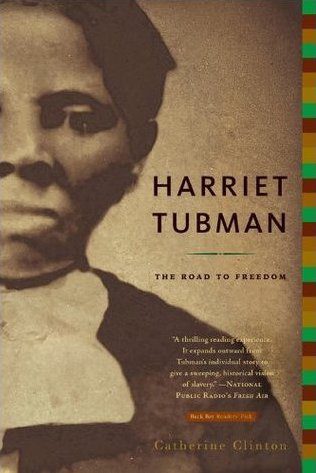 inspired by Catherine Clinton’s excellent 2004 biography Harriet Tubman: The Road to Freedom.) But history remembers Tubman—and the U.S. Treasury department chose her for the $20 bill—not merely for being an enslaved women who emancipated herself, but for her courage in repeatedly risking re-enslavement in order to free hundreds of other enslaved human beings (73). Moreover, although white northern males dominated the Abolitionist Movement, Tubman — a formerly enslaved black southern female with narcolepsy — personally led more than 300 enslaved people to freedom (77). As Tubman famously said near the end of her life, “I was conductor of the Underground Railroad for eight years, and I can say what most conductors can’t say — I never ran my train off the track and I never lost a passenger” (192).
The first time Tubman risked returning to slave territory was in December 1850. She was motivated to free her favorite niece and her niece’s children, who were scheduled for the auction block (80). In spring 1851, she risked a second trip to free one of her brothers, and she freed two other men at the same time (82). In fall 1851, her third trip was to persuade her husband to come with her—only to discover that in less than two years, not only was he with another woman, but that woman was pregnant. Harriet and John never had children together. Initially, she “thought she would go right in and make all the trouble she could,” but she changed her mind and decided “if he could do without her, she could do without him” (83).
Instead, she continued to be a conductor on the Underground Railroad:
She developed a pattern that allowed her to successfully ferry at least ten fugitives at a time at least once a year. She kept to the backroads and never traveled by day while in the “land of Egypt.” One admirer notes, “She always came in the winter, when the nights are long and dark, and people who have homes stay in them.” (85)
Since most enslaved people were given Sunday as a day off, Tubman would begin on a Saturday night, so that the fugitives would not be discovered until Monday morning, giving them a significant head start (90).
The accounts of her journeys make it clear that Tubman was not afraid to be authoritative when needed. She always carried a pistol, and on one occasion when someone in her group became nervous and wanted to return to the plantation, there was fear that he would endanger the whole group. The others tried to persuade him to keep going, but he refused to move forward any further. Tubman finally pulled out her gun, pointed it at his head, and said, “Move or die!” Fortunately, there’s a happy ending to this story: they all made it safely to Canada (90-91)!
Along these lines, longtime readers of this blog may recall that among the Secret Six who helped fund and supply John Brown’s 1859 raid on the federal armory at Harpers’ Ferry, five were Unitarians, and two were Unitarian ministers. Brown was so impressed with Harriet that he called her “General Tubman” and paid her “twenty-five dollars in gold to use to locate recruits for him in Canada” (129). Unfortunately instead of being able to aid Brown’s planning, Tubman fell ill in Massachusetts. In one of history’s unanswered question, we’ll never know how things might have gone differently if Tubman had been able to advise Brown based on the meticulous planning that led to her many successful raids—instead of Brown’s ill-planned impetuousness that got too many people needlessly killed (132-133).
Nicknames of “General Tubman” aside, Tubman did serve the Union cause during the Civil War. She “assisted the army with housing and hygiene for the hundreds and eventually thousands of contrabands who fled behind Union lines.” She covertly went into the Carolinas “within the theater of war to save the Union, under the auspices of the secretary of war” (193). And although it took thirty years, she succeeded in having her wartime contributions officially recognized in the Congressional Record. She was also rewarded with a long overdue government pension for her service (208-209).
I should also mention that although Tubman said that her first husband John Tubman “dropped out of [my] heart” after he chose another woman (84), Harriet never considered remarriage until John Tubman was tragically shot by a white man during an argument (198). A little more than a year after becoming (from her perspective) “a widow in the eyes of God,” she married Nelson Davis, a veteran from a black regiment in the Union army. When they wed in March of 1869, Tubman was around age 47, and Davis was age twenty-five, approximately two decades her junior (198). However, “by all accounts, the difference in their ages was insignificant to them” (199). They were married for nineteen years, and despite him being significantly younger, she outlived her second husband by more than two decades (205).
Even in her later years, she continued to work for social justice as the administrator of a home for elderly people of color who otherwise would not be able to afford somewhere to stay (209). But finally in March 1913, she succumbed to pneumonia (213). She was buried with military honors, and “Booker T. Washington, the most prominent race leader of his day, traveled to upstate New York to make the keynote address” (215).
In my tradition of Unitarian Universalism, the second of our Six Sources is the “Words and deeds of prophetic women and men which challenge us to confront powers and structures of evil with justice, compassion, and the transforming power of love.” So a few years from now in 2020, when you start seeing Harriet Tubman’s on the face of the $20 bill, may you be reminded each time that she is one in a long line of oppressed people throughout history who risked their lives to show that an “unjust law is no law at all.” In so many ways, she is one of a long line of women about whom it can be said, “She was warned. She was given an explanation. Nevertheless, she persisted.”
Before concluding, however, I want to invite us to consider how prophetic activists like Harriet Tubman from history can challenge and inspire us today to “confront powers and structures of evil with justice, compassion, and the transforming power of love” In that spirit, I invite you to reflect on this excerpt from the poem “If You Could” by Danny Bryck:
If you could go back you
would walk with Jesus
You would march with King
Maybe assassinate Hitler…
But people then, just like you
were baffled, had bills
to pay and…
were so desperate for normalcy
they made anything normal
The whole poem is worth reading in full. The point is that our time is now. Harriet Tubman rose up boldly and courageously in her time and place. But our context is here and now. May we each do our part—individually and collectively—to act for resistance and resilience in the face of today’s injustices.
The Rev. Dr. Carl Gregg is a certified spiritual director, a D.Min. graduate of San Francisco Theological Seminary, and the minister of the Unitarian Universalist Congregation of Frederick, Maryland. Follow him on Facebook (facebook.com/carlgregg) and Twitter (@carlgregg).
Learn more about Unitarian Universalism: http://www.uua.org/beliefs/principles
Previous Post

February 23, 2017
Why It Matters that Harriet Tubman Will Be on the $20 Bill
Next Post
March 1, 2017 What Comes After Buddhism?
Browse Our Archives
Select a Category Advent Anti-Racism Archaeology Atheism Baptism Best of the Year List Book Reviews Buddhism Catholicism Christian Education Church and State Church Planting Climate Change Conscientious Objection to War Creation Spirituality Death Penalty Didache Disability Rights Discernment Easter Ecology Emergent Church Movement Empire-Critical Ethics Evolution Feminist Theology Film Reviews Gandhi Gospel of Mark Gun Control Hinduism Immigration Reform Interfaith Islam JFK Judaism Jungian Spirituality Lectionary Commentary Lent Letters to the Editor LGBT Marriage MLK Multiculturalism Mysticism Nonviolent Activism Occupy Paganism (Earth-centered Religions) Parables Paul Pluralism Politics Process Theology Quantum Physics Requiescat In Pace Seminary and Divinity School Sermon Series Retrospective Sermons Spiritual Direction Spiritual Practices Stewardship (Fundraising) The Book of J The Wheel of the Year (Paganism) Theoblogger Challenge Triathlon Uncategorized Unitarian Universalism Worship Resources Youth Ministry
Select a Month July 2026 May 2026 March 2026 November 2025 October 2025 August 2025 February 2025 December 2024 October 2024 March 2024 January 2024 December 2023 November 2023 March 2023 February 2023 January 2023 December 2022 November 2022 August 2022 March 2022 February 2022 January 2022 December 2021 September 2021 August 2021 July 2021 June 2021 May 2021 February 2021 January 2021 December 2020 August 2020 June 2020 May 2020 April 2020 March 2020 February 2020 January 2020 December 2019 November 2019 October 2019 September 2019 July 2019 June 2019 March 2019 February 2019 January 2019 December 2018 November 2018 October 2018 September 2018 June 2018 May 2018 April 2018 March 2018 February 2018 January 2018 December 2017 November 2017 October 2017 September 2017 August 2017 July 2017 June 2017 May 2017 April 2017 March 2017 February 2017 January 2017 December 2016 November 2016 October 2016 September 2016 August 2016 June 2016 May 2016 April 2016 March 2016 February 2016 January 2016 December 2015 November 2015 October 2015 September 2015 August 2015 July 2015 June 2015 May 2015 April 2015 March 2015 February 2015 January 2015 December 2014 November 2014 October 2014 August 2014 July 2014 June 2014 May 2014 April 2014 March 2014 February 2014 January 2014 December 2013 November 2013 October 2013 September 2013 August 2013 July 2013 June 2013 May 2013 April 2013 March 2013 February 2013 January 2013 December 2012 November 2012 October 2012 September 2012 August 2012 July 2012 June 2012 May 2012 April 2012 March 2012 February 2012 January 2012 December 2011 November 2011 October 2011 September 2011 August 2011 July 2011 June 2011 May 2011 April 2011 March 2011 February 2011 January 2011 December 2010 November 2010 October 2010 August 2009 July 2009 May 2009
Follow Us!
TAKE THE
Religious Wisdom Quiz
What is the meaning of "Immanuel" in the prophecy of Isaiah?
Select your answer to see how you score.
God the Healer God with Us God Provides God the Redeemer
Related posts from Carl Gregg

Reading America at 250: A Nation Wrestles With...


Andrew Holocek on the Power of Darkness

The Stories That Shape Us: Myths, Archetypes, &...
TRENDING AT PATHEOS More Voices

Reading America at 250: A Nation Wrestles With...
As part of my own reflection on the 250th anniversary of the...

Whenever I am reading a book or listening to an argument, I...

President Trump Ban Animal Torture Videos on Facebook
Call for Stricter Regulations of Animal Abuse Content on Facebook Although President...

Draft Amendments to Address Ritual Abuse in New...
The proposed changes would make it illegal for individuals in domestic partnerships...

How Bans on LGBTQ+ Student Clubs Threaten Religious...
On June 20, 2025, the State of Texas passed Senate Bill 12....

The Truth About the Gen Z Revival
This past year, there has been a lot of media buzz surrounding...
view all More Voices blogs
Ad-Free & Subscriber Log-In Subscription Support
- About Us
- 2026 Calendar
- Videos
- Podcasts
- Library of World Religions
- Faith In Media Tracker
- Advertise With Us
- Write for Us
- Privacy Policy
- Terms of Service
- Do Not Sell My Data
- Contact Us
- Radiant Digital
- Manage Newsletter Subscriptions
- Unsubscribe From Notifications
- Sitemap
Copyright 2008-2026, Patheos. All rights reserved.
Subscription Support Ad-Free & Subscriber Log-In
Follow Patheos