
BuddhistCatholicContemplativeEvangelicalGeneral ChristianHinduJewishLatter-day SaintMuslimNew VisionsProgressive Christian
Beliefs
- Buddhist
- Catholic
- Contemplative
- Evangelical
- General Christian
- Hindu
- Jewish
- Latter-day Saint
- More Voices
- Muslim
- New Visions
- Pagan
- Progressive Christian
Topics
- Religion News
- Food and Religion
- Sports and Religion
- Religious Art
- Religious Music and Entertainment
- Religious Events
- History and Religion
- Style and Religion
- Politics and Religion
- Women in Religion
- Recreation Outdoors and Religion
- Business Finance and Religion
- Careers Workplace and Religion
- Education and Religion
- Family Parenting and Religion
- Health Fitness and Religion
- Home and Religion
- Relationships and Religion
- Technology and Religion
- Travel and Religion
Columnists
- Buddhist Columnists
- Business Finance and Religion Columnists
- Careers Workplace and Religion Columnists
- Catholic Columnists
- Contemplative Columnists
- Education and Religion Columnists
- Evangelists Columnists
- Family Parenting and Religion Columnists
- General Christian Columnists
- Health Fitness and Religion Columnists
- Hindu Columnists
- History and Religion Columnists
- Home and Religion Columnists
- Jewish Columnists
- More Voices Columnists
- Latter Day Columnists
- Muslim Columnists
- New Visions Columnists
- Nonreligious Columnists
- Pagan Columnists
- Politics and Religion Columnists
- Progressive Columnists
- Recreation Outdoors and Religion Columnists
- Relationships and Religion Columnists
- Religion News Columnists
- Religious Art Columnists
- Religious Events Columnists
- Religious Music and Entertainment Columnists
- Sports and Religion Columnists
- Style and Religion Columnists
- Technology and Religion Columnists
- Travel and Religion Columnists
- Women in Religion Columnists
Resource Library
- 2026 Calendar
- Library of World Religions
- The 100 Most Holy Places on Earth
- Patheos Answers
- Podcasts
- Videos
- Faith Leaders Database
- Anglican Episcopalian
- Bahai
- Baptist
- Buddhism
- Christianity
- Confucianism
- Eastern Orthodoxy
- Hinduism
- Holiness and Pentecostal
- ISKCON
- Islam
- Judaism
- Lutheran
- Methodist
- The Church of Jesus Christ of Latter-day Saints
- New Age
- Paganism
- Presbytarian and Reformed
- Protestantism
- Religion Behind the Scenes
- Roman Catholic
- Scientology
- Shia Islam
- Sikhism
- Sufism
- Sunni Islam
- Taoism
- Zen
- See all religions
Research Tools
 Ad-Free & Subscriber Log-In Subscription Support
Ad-Free & Subscriber Log-In Subscription Support
Follow Patheos 

- Trending:
- Forgiveness
- |
- Marriage
- |
- Consciousness
- |
- Death Penalty
- |
- Election
- |
- Halloween

- Home
- More Voices
- How to Excel at One Hard Thing in 2017
How to Excel at One Hard Thing in 2017
Last updated on: January 3, 2017 at 10:13 am by Carl Gregg
How to Excel at One Hard Thing in 2017 2017-01-03T10:13:06-05:00 Carl Gregg
Patheos Explore the world's faith through different perspectives on religion and spirituality! Patheos has the views of the prevalent religions and spiritualities of the world.
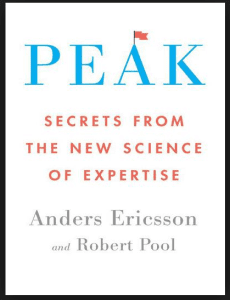 Anders Ericsson is a professor of psychology at Florida State University, who has spent decades studying how people become experts in various fields. He has published a fascinating book summarizing his findings titled Peak — referring to the process of reaching peak performance. Perhaps his most important insight is that the more he investigated people who supposedly had natural talent, the more convinced he became that intense, extended, deliberate practice is always required to develop extraordinary, peak performance (211).
For example, let’s take a closer look at the legend of Mozart. In 1763, Wolfgang Amadeus Mozart was only seven years old, but he was already wowing audiences in his hometown of Salzburg, Austria with his abilities on both the violin and various keyboard instruments. The young Mozart could also — without looking or even from another room — identify the precise note being played on any musical instrument. As if that wasn’t enough, he could also “identify the notes produced by anything that was sufficiently musical — the chime of a clock, the toll of a bell, the ah-choo of a sneeze.” Since even most adult, professional musicians do not have “perfect pitch,” this ability further contributed to the legend of the young Mozart as a prodigy born with preternatural gifts (xii).
We know today that approximately one in ten thousand people have “perfect pitch.” And until quite recently, it was thought that perfect pitch was an innate gift that a lucky few are born with. But then scientists began to notice intriguing patterns: you are much more likely to have perfect pitch if you either begin musical training when you are between three and five years old or if you grow up speaking a tonal language “in which the meaning of words is dependent on their pitch” — for example, Mandarin or Vietnamese (viii).
And here’s where it gets even more interesting. In 2014, a psychologist conducted an experiment of twenty-four children between the ages of two and six to see if it was possible to acquire perfect pitch. The children “were given four or five short training sessions per day, each lasting just a few minutes.” The sessions involved learning to identify various piano chords by their sound alone. Keep in mind that typically only one in every ten thousand people develop perfect pitch, but after 18 months or less, “every one of the children in the study had developed perfect pitch” (xiv). Current research shows that although it is possible for some adults to cultivate perfect pitch with a lot of effort (202), it is much easier for children younger than age six (xvii).
More generally, studies indicate that:
there are certain abilities that can only be developed, or that are more easily developed, before the age of six or twelve or eighteen. Still, both the brain and the body retain a great deal of adaptability throughout adulthood, and this adaptability makes it possible for adults, even older adults, to develop a wide variety of new capabilities with the right training. (xvii)
Science is showing us that the brain has a lot more plasticity throughout our lives than previously thought.
Diving deeper into the Mozart legend, in our globalized Internet age, we have access to something eighteenth-century Europeans did not. Childhood virtuosos like Mozart have expanded our awareness of what is possible, and we have developed increasingly sophisticated training programs as a result. In particular, since the mid-twentieth century, the Suzuki method has been regularly producing five- and six-year olds with remarkable musical abilities. And you can Google “YouTube videos of four-year-olds playing the violin and the piano with amazing facility” (212).
Mozart did not have the Suzuki method, but he did have a father who was an unfulfilled professional musician and who sought to live out his unfulfilled dreams through his children. Starting before age four, Mozart was being trained in music appreciation, how to play multiple instruments, and eventually how to compose music for multiple instruments. Music scholars have also shown that:
The claims of Mozart composing at six and eight years old are almost certainly overstated…. The early compositions Wolfgang supposedly wrote are actually in his father Leopold’s handwriting…. The piano concertos that Wolfgang [allegedly] “composed” at eleven…were all based on relatively unknown sonatas written by others…. The first serious compositions that we can attribute to Wolfgang Mozart with certainty were written when he was fifteen or sixteen — after more than a decade of serious practice under his father’s tutelage. (213-214)
Ericsson has found a similar dynamic with every child prodigy he has researched: there is always intense, deliberate practice in the background of children. They make advanced techniques look easy and appear to be naturally talented when we only see the performance and don’t see all the practice that made that performance possible (214).
Or to use an example from the world of sports, the Canadian hockey star Mario Lemieux was the youngest of three brothers and was taught to skate “almost from the time he could walk” (214-215). Indeed, there are many professional athletes who in moments of honesty will confess that they resent the perception that they have a “natural talent” because they know the thousands of hours they have spent honing their skills (xviii). Even studies of savants have shown that their extraordinary abilities — such as rapid calendar calculations — are “primarily acquired skills” from intensely focused practice over time. Those same savant-like skills have been replicated by training people in mental calculation methods for a relatively short amount of time (220-222).
Ericsson encapsulates the essential process for reaching peak performance as the “three Fs: Focus. Feedback. Fix it” (158). For example, I’m an amateur runner, and I often podcast or listen to music while running. According to Ericsson, if I wanted to reach peak performance, I would need to stop podcasting and instead focus the whole time on my stride, technique, and pace. I would need feedback from a running coach — and I would need to continuously fix my running accordingly (158). For better or worse, I’m content being an amateur runner. And it is important to be honest that due to finite time, it is not possible to become “the best” in every area of our lives simultaneously. A more realistic approach is to ask yourself if you might be inclined to become intentionally better in one or two particular areas in this season of your life.
The research from Ericsson and other scientists have shown that focused, deliberate practice — adjusted based on feedback from experts — can produce extraordinary results in a targeted area. But a lot of one’s success depends on learning the latest and most effective training techniques. Consider that the world record marathon time in 1908 — the fastest any human being had ever run 26.2 miles — would barely quality you to enter today’s Boston Marathon in the eighteen- to -thirty-four-year-old male category. The reason is that training techniques keep improving. Likewise, consider the increasingly complex gymnastic moves at the Olympics (moves that were once thought to be impossible), increasingly precise technical skills on musical instruments (resulting in performances that far exceed what previously were considered to be “definitive interpretations”), or increasingly long feats of memorization (such as “Rajveer Meena of India, who memorized the first 70,000 digits of pi — an accumulation that took him 24 hours and 4 minutes to recite”) (6-7).
Such fantastic levels of memorization are accomplished through sophisticated mnemonic devices that are widely accessible, depending on whether you are willing to put in the time and effort to learn them (101-102). The Guinness Book of World Records is filled with similarly amazing accomplishments. And it turns out that what you need to compete at that level is less natural ability and more a monomaniacal focus for an extended period of time.
On this whole topic of expertise, I should be sure to mention that back in 2008, Malcolm Galdwell’s book Outliers popularized a notion of the “ten-thousand-hour rule”: that you need to practice a skill approximately ten thousand hours to become an expert (109). It turns out it’s a little more complicated than that. Most importantly, Ericsson distinguishes between naïve practice and deliberate practice. Naïve practice is what I described earlier about my running hobby: unfocused, no feedback, and no fixing. I could log 10,000 hours at my current level of running of an hour a few times per week. A few decades later — which is how long it would take me to reach 10,000 hours — instead of becoming a world-class runner, I would likely be either close to the same level — or I may have declined in speed and performance due to aging (14).
To master a skill requires “well-defined, specific goals,” “focus,” “feedback,” and “getting out of one’s comfort zone” (15-17). Another major reason that you need to
put in ten thousand or more hours of practice to become one of the world’s best violinists or chess players or golfers is that the people you are being compared to or competing with have themselves put in ten thousand or more hours of practice. There is no point at which performance maxes out and additional practice does not lead to further improvement. (113)
And even if it’s too late for you to become the world’s absolute best at something, we have many examples of people in retirement excelling in fields that require highly refined skill (like karate, golf, or violin) without having ever done any of those activities previously (145-147, 178-179). It all depends on your goals and how you want to spend your time.
I should also add that for a confluence of reasons not all of us have the passion to pursue expertise in every possible area. I’m a decent pianist, guitarist, and triathlete, but I do not currently have the time and interest to pursue those skills at anywhere close to the time and energy I have invested and continue to invest in being a Unitarian Universalist minister. I enjoy music and athletics, but not at the same level as my interest and commitment to religion and spirituality.
Along the lines of cultivating expertise, Angela Duckworth, author of the book Grit, has a practice in her family called the “Hard Thing Rule.” Everyone — not only her children, but also she and her husband — have to maintain a commitment to one hard thing that requires “daily deliberate practice.” The corollary is that, “You can quit. But you can’t quit until the season is over, the tuition payment is up, or some other “natural” stopping point has arrived.” (Starting in high school, her children have to commit to their hard thing for at least two years.) The point is to cultivate perseverance in pursing goals — what Duckworth calls “grit.” Duckworth convincingly makes the case in her book that “grit” is almost always much more important than talent in long-term success.
If you are curious, Duckworth’s “hard thing” is psychological research (professionally) and yoga (personally). Her husband’s “hard thing” is “real estate development” (professionally) and running (personally). For one of her daughters, their hard thing is ballet — for the other, piano (241-242). For each of them, pursing a “hard thing” means not naïve practice that merely accumulates hours at a plateaued level, but a daily, deliberate practice of “focus, feedback, and fix it.”
Starting last year, my current “hard thing” is recommitting to a meditation practice. I was at a plateau in my meditation practice for many years. Then this summer, I went on an eight-day meditation retreat, I am meeting monthly with a meditation teacher for feedback, and I am meditating in a more focused way with new techniques I had not tried previously. At the same time that I am committing more fully to that “one hard thing,” there are many other hard things that I would like to do, but don’t currently have the bandwidth for: I’m not training for a triathlon. I’m not currently working on publishing my dissertation. But I am committed to the “hard thing” of getting increasingly skilled at being a UU minister (professionally) and at my meditation practice (personally).
What are the parallels in your life? Here on the first day of a new year, what are you feeling called to focus on with a more deliberate practice — or to let go of as a distraction in the past year? (An underappreciated part of achieving goals is not only taking on something new, but letting go of one or more other things to give yourself time and energy for what is most important to you.) As part of your discernment, notice if one of the following areas particularly resonates with you in this season of your life.
• Physical Wellness: When or how do you feel physically alive, your body skillfully engaged? What would you like to do to feel this way more often?
• Emotional Wellness: When or how do you feel emotionally engaged? Let yourself dream about something that would add more joy to your life.
• Intellectual Wellness: When or how does your mind feel energized, buzzing with electric vitality?
• Financial Wellness: What would help you feel more comfortable with your finances?
• Social Wellness: When or how do you feel connected to those you love and value?
• Vocational Wellness: When or how do you feel fulfilled and optimistic in your work?
• Spiritual Wellness: What individual or communal practice makes you feel more connected to your deepest self or to what we UUs call the Interdependent Web of All Existence.”
Looking back on 2016, is there something — a person, place, or habit — that has been a hindrance to you? Is there something that you feel called to let go of or say “no” to in the new year? And what intention do you want to set for 2017? What do you want to affirm or say “yes” to in this new year?
The Rev. Dr. Carl Gregg is a certified spiritual director, a D.Min. graduate of San Francisco Theological Seminary, and the minister of the Unitarian Universalist Congregation of Frederick, Maryland. Follow him on Facebook (facebook.com/carlgregg) and Twitter (@carlgregg).
Learn more about Unitarian Universalism: http://www.uua.org/beliefs/principles
Previous Post

December 31, 2016
Best of 2016: Books, Music, TV, & Podcasts
Browse Our Archives
Select a Category Advent Anti-Racism Archaeology Atheism Baptism Best of the Year List Book Reviews Buddhism Catholicism Christian Education Church and State Church Planting Climate Change Conscientious Objection to War Creation Spirituality Death Penalty Didache Disability Rights Discernment Easter Ecology Emergent Church Movement Empire-Critical Ethics Evolution Feminist Theology Film Reviews Gandhi Gospel of Mark Gun Control Hinduism Immigration Reform Interfaith Islam JFK Judaism Jungian Spirituality Lectionary Commentary Lent Letters to the Editor LGBT Marriage MLK Multiculturalism Mysticism Nonviolent Activism Occupy Paganism (Earth-centered Religions) Parables Paul Pluralism Politics Process Theology Quantum Physics Requiescat In Pace Seminary and Divinity School Sermon Series Retrospective Sermons Spiritual Direction Spiritual Practices Stewardship (Fundraising) The Book of J The Wheel of the Year (Paganism) Theoblogger Challenge Triathlon Uncategorized Unitarian Universalism Worship Resources Youth Ministry
Select a Month July 2026 May 2026 March 2026 November 2025 October 2025 August 2025 February 2025 December 2024 October 2024 March 2024 January 2024 December 2023 November 2023 March 2023 February 2023 January 2023 December 2022 November 2022 August 2022 March 2022 February 2022 January 2022 December 2021 September 2021 August 2021 July 2021 June 2021 May 2021 February 2021 January 2021 December 2020 August 2020 June 2020 May 2020 April 2020 March 2020 February 2020 January 2020 December 2019 November 2019 October 2019 September 2019 July 2019 June 2019 March 2019 February 2019 January 2019 December 2018 November 2018 October 2018 September 2018 June 2018 May 2018 April 2018 March 2018 February 2018 January 2018 December 2017 November 2017 October 2017 September 2017 August 2017 July 2017 June 2017 May 2017 April 2017 March 2017 February 2017 January 2017 December 2016 November 2016 October 2016 September 2016 August 2016 June 2016 May 2016 April 2016 March 2016 February 2016 January 2016 December 2015 November 2015 October 2015 September 2015 August 2015 July 2015 June 2015 May 2015 April 2015 March 2015 February 2015 January 2015 December 2014 November 2014 October 2014 August 2014 July 2014 June 2014 May 2014 April 2014 March 2014 February 2014 January 2014 December 2013 November 2013 October 2013 September 2013 August 2013 July 2013 June 2013 May 2013 April 2013 March 2013 February 2013 January 2013 December 2012 November 2012 October 2012 September 2012 August 2012 July 2012 June 2012 May 2012 April 2012 March 2012 February 2012 January 2012 December 2011 November 2011 October 2011 September 2011 August 2011 July 2011 June 2011 May 2011 April 2011 March 2011 February 2011 January 2011 December 2010 November 2010 October 2010 August 2009 July 2009 May 2009
Follow Us!
TAKE THE
Religious Wisdom Quiz
True or False: The Israelites crossed the Red Sea by boat.
Select your answer to see how you score.
TRUE FALSE
Related posts from Carl Gregg

Reading America at 250: A Nation Wrestles With...


Andrew Holocek on the Power of Darkness

The Stories That Shape Us: Myths, Archetypes, &...
TRENDING AT PATHEOS More Voices

Reading America at 250: A Nation Wrestles With...
As part of my own reflection on the 250th anniversary of the...

Whenever I am reading a book or listening to an argument, I...

President Trump Ban Animal Torture Videos on Facebook
Call for Stricter Regulations of Animal Abuse Content on Facebook Although President...

Draft Amendments to Address Ritual Abuse in New...
The proposed changes would make it illegal for individuals in domestic partnerships...

How Bans on LGBTQ+ Student Clubs Threaten Religious...
On June 20, 2025, the State of Texas passed Senate Bill 12....

The Truth About the Gen Z Revival
This past year, there has been a lot of media buzz surrounding...
view all More Voices blogs
Ad-Free & Subscriber Log-In Subscription Support
- About Us
- 2026 Calendar
- Videos
- Podcasts
- Library of World Religions
- Faith In Media Tracker
- Advertise With Us
- Write for Us
- Privacy Policy
- Terms of Service
- Do Not Sell My Data
- Contact Us
- Radiant Digital
- Manage Newsletter Subscriptions
- Unsubscribe From Notifications
- Sitemap
Copyright 2008-2026, Patheos. All rights reserved.
Subscription Support Ad-Free & Subscriber Log-In
Follow Patheos