
BuddhistCatholicContemplativeEvangelicalGeneral ChristianHinduJewishLatter-day SaintMuslimNew VisionsProgressive Christian
Beliefs
- Buddhist
- Catholic
- Contemplative
- Evangelical
- General Christian
- Hindu
- Jewish
- Latter-day Saint
- More Voices
- Muslim
- New Visions
- Pagan
- Progressive Christian
Topics
- Religion News
- Food and Religion
- Sports and Religion
- Religious Art
- Religious Music and Entertainment
- Religious Events
- History and Religion
- Style and Religion
- Politics and Religion
- Women in Religion
- Recreation Outdoors and Religion
- Business Finance and Religion
- Careers Workplace and Religion
- Education and Religion
- Family Parenting and Religion
- Health Fitness and Religion
- Home and Religion
- Relationships and Religion
- Technology and Religion
- Travel and Religion
Columnists
- Buddhist Columnists
- Business Finance and Religion Columnists
- Careers Workplace and Religion Columnists
- Catholic Columnists
- Contemplative Columnists
- Education and Religion Columnists
- Evangelists Columnists
- Family Parenting and Religion Columnists
- General Christian Columnists
- Health Fitness and Religion Columnists
- Hindu Columnists
- History and Religion Columnists
- Home and Religion Columnists
- Jewish Columnists
- More Voices Columnists
- Latter Day Columnists
- Muslim Columnists
- New Visions Columnists
- Nonreligious Columnists
- Pagan Columnists
- Politics and Religion Columnists
- Progressive Columnists
- Recreation Outdoors and Religion Columnists
- Relationships and Religion Columnists
- Religion News Columnists
- Religious Art Columnists
- Religious Events Columnists
- Religious Music and Entertainment Columnists
- Sports and Religion Columnists
- Style and Religion Columnists
- Technology and Religion Columnists
- Travel and Religion Columnists
- Women in Religion Columnists
Resource Library
- 2026 Calendar
- Library of World Religions
- The 100 Most Holy Places on Earth
- Patheos Answers
- Podcasts
- Videos
- Faith Leaders Database
- Anglican Episcopalian
- Bahai
- Baptist
- Buddhism
- Christianity
- Confucianism
- Eastern Orthodoxy
- Hinduism
- Holiness and Pentecostal
- ISKCON
- Islam
- Judaism
- Lutheran
- Methodist
- The Church of Jesus Christ of Latter-day Saints
- New Age
- Paganism
- Presbytarian and Reformed
- Protestantism
- Religion Behind the Scenes
- Roman Catholic
- Scientology
- Shia Islam
- Sikhism
- Sufism
- Sunni Islam
- Taoism
- Zen
- See all religions
Research Tools
 Ad-Free & Subscriber Log-In Subscription Support
Ad-Free & Subscriber Log-In Subscription Support
Follow Patheos 

- Trending:
- Forgiveness
- |
- Marriage
- |
- Consciousness
- |
- Death Penalty
- |
- Election
- |
- Halloween

- Home
- More Voices
- Top 10 Best Books Read in 2016
Top 10 Best Books Read in 2016
Last updated on: February 13, 2017 at 3:53 pm by Carl Gregg
Top 10 Best Books Read in 2016 2017-02-13T15:53:18-05:00 Carl Gregg
Patheos Explore the world's faith through different perspectives on religion and spirituality! Patheos has the views of the prevalent religions and spiritualities of the world.
The following are the top ten best books I’ve read since this time last year — in alphabetical order by the author’s last name because agonizing over a precise order would take all the fun out of remembering these books:
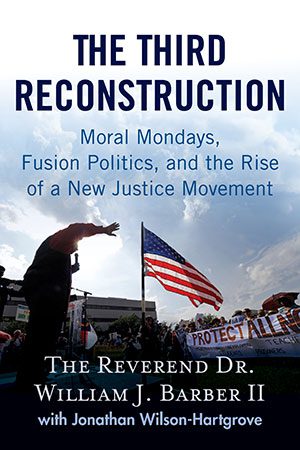 1. The Rev Dr. William J. Barber II and Jonathan Wilson-Hartgrove, The Third Reconstruction: How a Moral Movement Is Overcoming the Politics of Division and Fear (2016):
The first Reconstruction briefly flourished after Emancipation, and the second Reconstruction ushered in meaningful progress in the civil rights era. But both were met by ferocious reactionary measures that severely curtailed, and in many cases rolled back, racial and economic progress.. Rev. Barber writes movingly—and pragmatically—about how he laid the groundwork for a state-by-state movement that unites black, white, and brown, rich and poor, employed and unemployed, gay and straight, documented and undocumented, religious and secular. Only such a diverse fusion movement, Rev. Barber argues, can heal our nation’s wounds and produce public policy that is morally defensible, constitutionally consistent, and economically sane. The Third Reconstruction is both a blueprint for movement building and an inspiring call to action from the twenty-first century’s most effective grassroots organizer.
For more, see my post on “The Radical Martin Luther King, Jr.: Why We Need a Third Reconstruction in America.”
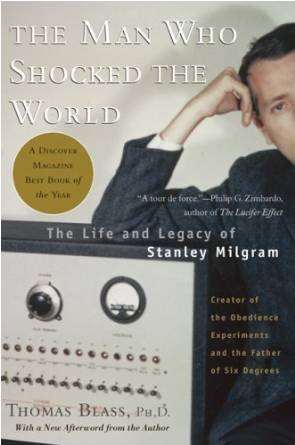 2. Thomas Blass, The Man Who Shocked The World: The Life and Legacy of Stanley Milgram (2008):
Creator of the famous Obedience Experiments and originator of the “six degrees of separation” theory, Milgram transformed our understanding of human nature and continues to be one of the most important figures in psychology and beyond. In this new paperback edition, Blass includes an afterword connecting Milgram’s theories to torture, war crimes, and Abu Ghraib.
In the wake of Trump’s election, this book has become all the more important to revisit. I also highly recommend another book that I read at the same time: The Lucifer Effect: Understanding How Good People Turn Evil by Philip Zimbardo (2009). For more on both of these books, see my post on Evil: Bad Apples or Bad Barrels?
3. Erwin Chemerinsky, The Case Against the Supreme Court (2015):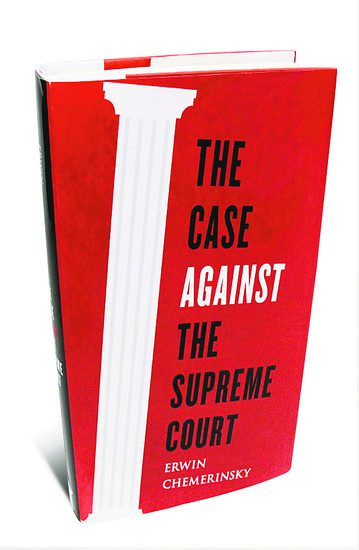
In this devastating book, “one of the shining lights of legal academia” (The New York Times) shows how, case by case, for over two centuries, the hallowed Court has been far more likely to uphold government abuses of power than to stop them. Drawing on a wealth of rulings, some famous, others little known, he reviews the Supreme Court’s historic failures in key areas, including the refusal to protect minorities, the upholding of gender discrimination, and the neglect of the Constitution in times of crisis, from World War I through 9/11. Chemerinsky has studied, taught, and practiced constitutional law for thirty years and has argued before the Supreme Court. With passion and eloquence, he advocates reforms that could make the system work better, and he challenges us to think more critically about the nature of the Court and the fallible men and women who sit on it.
This book is more important than ever in the wake of the Republican party cynically blocking President Obama’s nomination to replace Justice Scalia.
 4. Culadasa (John Yates, PhD), The Mind Illuminated: A Complete Meditation Guide Integrating Buddhist Wisdom and Brain Science (2015):
Providing step-by-step guidance for every stage of the meditation path, this uniquely comprehensive guide for a Western audience combines the wisdom from the teachings of the Buddha with the latest research in cognitive psychology and neuroscience. Clear and friendly, this in-depth practice manual builds on the nine-stage model of meditation originally articulated by the ancient Indian sage Asanga, crystallizing the entire meditative journey into 10 clearly-defined stages. The book also introduces a new and fascinating model of how the mind works, and uses illustrations and charts to help the reader work through each stage. This manual is an essential read for the beginner to the seasoned veteran of meditation and can be read from front to back, or used as a reference guide, choosing chapters as needed based on the current state of the reader’s practice.
For more, see my post on Beyond “McMindfulness”: How Not To Get Stuck in the Early Stages of Buddhist Meditation.
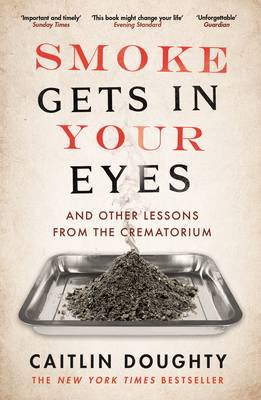 5. Caitlin Doughty, Smoke Gets in Your Eyes: And Other Lessons from the Crematory (2015):
Most people want to avoid thinking about death, but Caitlin Doughty―a twenty-something with a degree in medieval history and a flair for the macabre―took a job at a crematory, turning morbid curiosity into her life’s work. Thrown into a profession of gallows humor and vivid characters (both living and very dead), Caitlin learned to navigate the secretive culture of those who care for the deceased. An unusual coming-of-age story full of bizarre encounters and unforgettable scenes. She reveals the strange history of cremation and undertaking, marveling at bizarre and wonderful funeral practices from different cultures. Her eye-opening, candid, and often hilarious story is like going on a journey with your bravest friend to the cemetery at midnight. And she answers questions you didn’t know you had: Can you catch a disease from a corpse? How many dead bodies can you fit in a Dodge van? What exactly does a flaming skull look like? Honest and heartfelt, self-deprecating and ironic, Caitlin’s engaging style makes this otherwise taboo topic both approachable and engrossing. Now a licensed mortician with an alternative funeral practice, Caitlin argues that our fear of dying warps our culture and society, and she calls for better ways of dealing with death (and our dead).
For more, see my post on “None of Us Are Getting Out of This Alive”: How & Why to Have End-of-Life Conversations.
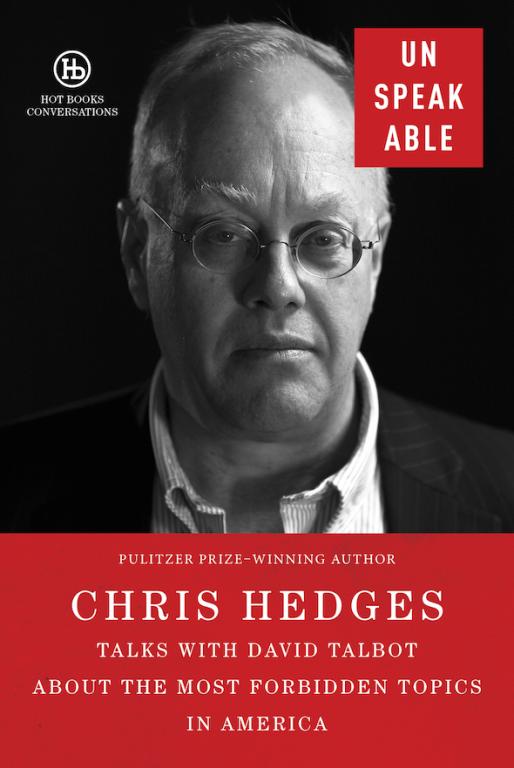 6. Chris Hedges, Unspeakable (2016):
Chris Hedges has been telling truth to (and against) power since his earliest days as a radical journalist. Like many of our most important thinkers, he has been relegated to the margins because of ideas deemed too radical—or true—for public consumption. He is an intellectual heir to American radical heroes such as Thomas Paine and Noam Chomsky, and is dedicated to reigniting a shared commitment to radical equality and honesty. He tackles the rise of a fascist right in support of Donald Trump, which advocates xenophobia and violence in a push for American totalitarianism. He rails against the posturing of inclusivity from establishment elites on both sides of the aisle, who post-Occupy-Wall-Street continue to advocate for policies that make America uninhabitable for all but the ultra-rich and, as lackeys for corporate interests, continue to expand income inequality in all directions. He tears into the contemporary glamorization of the military and the unchecked, unchallenged hawkishness that defines contemporary American foreign policy. Moreover, he shows his support for contemporary revolts against this twisted order—such as Black Lives Matter—that represent Americans refusing to take the destruction of their country lying down. He possesses a clear understanding of the challenges that lie before us, and has proven to be ahead of the curve time and again.
Chris Hedges does not pull punches about the potential of a “Trumpocalypse.” For a while now Hedges has been my plumb-line for a well-informed opinion for a reasonable best guess of a “worst-case” scenario might be — “worst case” along the lines of devolving into a Corporate Dystopia, not true “worst case” of Nuclear Apocalypse. I’ve been reading Hedges for years, and he is often too extreme for me in his cynicism even as he makes vitally important points a paragraph or so later. He is wicked smart, extremely experienced as a war correspondent, and has the courage of his convictions. I find reading him to be helpful in thinking through where the slippery slopes are. And although I do not agree with all that he says, in the wake of a coming Trump administration, his perspective seems more relevant than ever.
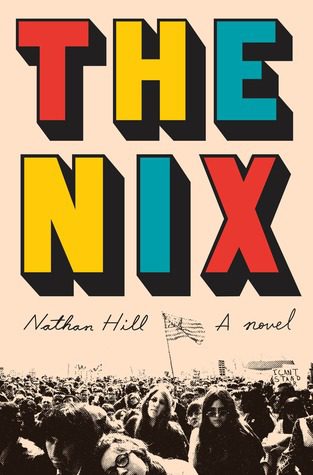 7. Nathan Hill, The Nix: A Novel (2016):
From the suburban Midwest to New York City to the 1968 riots that rocked Chicago and beyond, The Nix explores—with sharp humor and a fierce tenderness—the resilience of love and home, even in times of radical change. It’s 2011, and Samuel Andresen-Anderson—college professor, stalled writer—has a Nix of his own: his mother, Faye. He hasn’t seen her in decades, not since she abandoned the family when he was a boy. Now she’s re-appeared, having committed an absurd crime that electrifies the nightly news, beguiles the internet, and inflames a politically divided country. The media paints Faye as a radical hippie with a sordid past, but as far as Samuel knows, his mother was an ordinary girl who married her high-school sweetheart. Which version of his mother is true? Two facts are certain: she’s facing some serious charges, and she needs Samuel’s help. To save her, Samuel will have to embark on his own journey, uncovering long-buried secrets about the woman he thought he knew, secrets that stretch across generations and have their origin all the way back in Norway, home of the mysterious Nix.
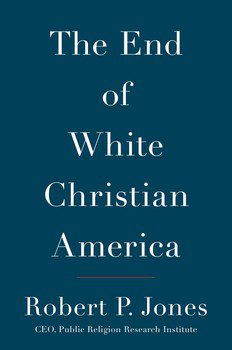 8. Robert P. Jones, The End of White Christian America (2016):
Robert P. Jones, CEO of the Public Religion Research Institute, spells out the profound political and cultural consequences of a new reality—that America is no longer a majority white Christian nation. “Quite possibly the most illuminating text for this election year” (The New York Times Book Review). For most of our nation’s history, White Christian America (WCA) set the tone for our national policy and shaped American ideals. But especially since the 1990s, WCA has steadily lost influence, following declines within both its mainline and evangelical branches. Today, America is no longer demographically or culturally a majority white, Christian nation. Drawing on more than four decades of polling data, The End of White Christian America explains and analyzes the waning vitality of WCA. Robert P. Jones argues that the visceral nature of today’s most heated issues—the vociferous arguments around same-sex marriage and religious and sexual liberty, the rise of the Tea Party following the election of our first black president, and stark disagreements between black and white Americans over the fairness of the criminal justice system—can only be understood against the backdrop of white Christians’ anxieties as America’s racial and religious topography shifts around them.
For more, see my post on “Understanding Trump Supporters: Reactions to the End of White Christian America.”
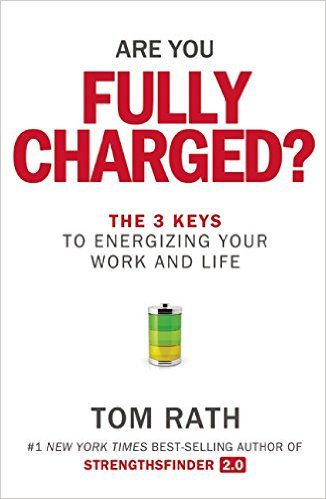 9. Tom Rath, Are You Fully Charged?: The 3 Keys to Energizing Your Work and Life (2015):
Rath’s latest international bestseller (over 6 million copies sold) reveals the three keys that matter most for our daily well-being, as well as our engagement in our work. Drawing on the latest and most practical research from business, psychology, and economics, this book focuses on changes we can make to create better days for ourselves and others. Are You Fully Charged? will challenge you to stop pursuing happiness and start creating meaning instead, lead you to rethink your daily interactions with the people who matter most, and show you how to put your own health first in order to be your best every day.
For more, see my post on How to Make & Keep Your New Year’s Resolutions: Tom Rath’s “Are You Fully Charged?”
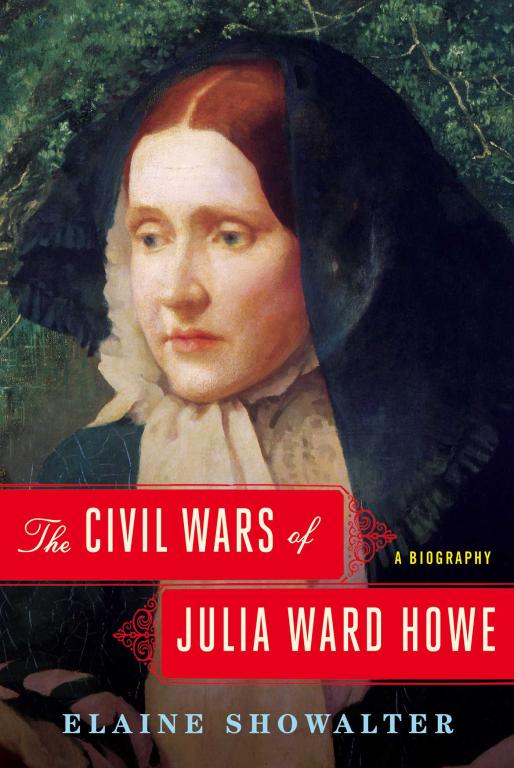 10.Elaine Showalter, The Civil Wars of Julia Ward Howe: A Biography (2016)
The first biography to reveal Julia Ward Howe—the author of The Battle Hymn of the Republic—as a feminist pioneer who fought her own battle for creative freedom and independence. Julia Ward (1819–1910) was a heiress and aspiring poet when she married Dr. Samuel Gridley Howe, an internationally-acclaimed pioneer in the education of the blind. Together the Howes knew many of the key figures of their era, from Charles Dickens to John Brown. But he also wasted her inheritance, isolated and discouraged her, and opposed her literary ambitions. Julia persisted, and continued to publish poems and plays while raising six children. Authorship of the Battle Hymn of the Republic made her celebrated and revered. But Julia was also continuing to fight a civil war at home; she became a pacifist, suffragist, and world traveler. She came into her own as a tireless campaigner for women’s rights and social reform. Esteemed author Elaine Showalter tells the story of Howe’s determined self-creation and brings to life the society she inhabited and the obstacles she overcame.
For more, see my post on “Julia Ward Howe: Founding Mothers of Unitarian Universalism.”
Previous Lists
The Rev. Dr. Carl Gregg is a certified spiritual director, a D.Min. graduate of San Francisco Theological Seminary, and the minister of the Unitarian Universalist Congregation of Frederick, Maryland. Follow him on Facebook (facebook.com/carlgregg) and Twitter (@carlgregg).
Learn more about Unitarian Universalism: http://www.uua.org/beliefs/principles
Previous Post

December 27, 2016
Reflections on Chrismukah (Christmas+Chanukah) in an Age of Trump
Next Post
December 28, 2016 Top 10 Best Albums Listened to in 2016
Browse Our Archives
Select a Category Advent Anti-Racism Archaeology Atheism Baptism Best of the Year List Book Reviews Buddhism Catholicism Christian Education Church and State Church Planting Climate Change Conscientious Objection to War Creation Spirituality Death Penalty Didache Disability Rights Discernment Easter Ecology Emergent Church Movement Empire-Critical Ethics Evolution Feminist Theology Film Reviews Gandhi Gospel of Mark Gun Control Hinduism Immigration Reform Interfaith Islam JFK Judaism Jungian Spirituality Lectionary Commentary Lent Letters to the Editor LGBT Marriage MLK Multiculturalism Mysticism Nonviolent Activism Occupy Paganism (Earth-centered Religions) Parables Paul Pluralism Politics Process Theology Quantum Physics Requiescat In Pace Seminary and Divinity School Sermon Series Retrospective Sermons Spiritual Direction Spiritual Practices Stewardship (Fundraising) The Book of J The Wheel of the Year (Paganism) Theoblogger Challenge Triathlon Uncategorized Unitarian Universalism Worship Resources Youth Ministry
Select a Month July 2026 May 2026 March 2026 November 2025 October 2025 August 2025 February 2025 December 2024 October 2024 March 2024 January 2024 December 2023 November 2023 March 2023 February 2023 January 2023 December 2022 November 2022 August 2022 March 2022 February 2022 January 2022 December 2021 September 2021 August 2021 July 2021 June 2021 May 2021 February 2021 January 2021 December 2020 August 2020 June 2020 May 2020 April 2020 March 2020 February 2020 January 2020 December 2019 November 2019 October 2019 September 2019 July 2019 June 2019 March 2019 February 2019 January 2019 December 2018 November 2018 October 2018 September 2018 June 2018 May 2018 April 2018 March 2018 February 2018 January 2018 December 2017 November 2017 October 2017 September 2017 August 2017 July 2017 June 2017 May 2017 April 2017 March 2017 February 2017 January 2017 December 2016 November 2016 October 2016 September 2016 August 2016 June 2016 May 2016 April 2016 March 2016 February 2016 January 2016 December 2015 November 2015 October 2015 September 2015 August 2015 July 2015 June 2015 May 2015 April 2015 March 2015 February 2015 January 2015 December 2014 November 2014 October 2014 August 2014 July 2014 June 2014 May 2014 April 2014 March 2014 February 2014 January 2014 December 2013 November 2013 October 2013 September 2013 August 2013 July 2013 June 2013 May 2013 April 2013 March 2013 February 2013 January 2013 December 2012 November 2012 October 2012 September 2012 August 2012 July 2012 June 2012 May 2012 April 2012 March 2012 February 2012 January 2012 December 2011 November 2011 October 2011 September 2011 August 2011 July 2011 June 2011 May 2011 April 2011 March 2011 February 2011 January 2011 December 2010 November 2010 October 2010 August 2009 July 2009 May 2009
Follow Us!
TAKE THE
Religious Wisdom Quiz
The light shines in the darkness, and the darkness has not ____ it.
Select your answer to see how you score.
Accepted Comprehended Extinguished Understood
Related posts from Carl Gregg

Reading America at 250: A Nation Wrestles With...


Andrew Holocek on the Power of Darkness

The Stories That Shape Us: Myths, Archetypes, &...
TRENDING AT PATHEOS More Voices

Reading America at 250: A Nation Wrestles With...
As part of my own reflection on the 250th anniversary of the...

Whenever I am reading a book or listening to an argument, I...

President Trump Ban Animal Torture Videos on Facebook
Call for Stricter Regulations of Animal Abuse Content on Facebook Although President...

Draft Amendments to Address Ritual Abuse in New...
The proposed changes would make it illegal for individuals in domestic partnerships...

How Bans on LGBTQ+ Student Clubs Threaten Religious...
On June 20, 2025, the State of Texas passed Senate Bill 12....

The Truth About the Gen Z Revival
This past year, there has been a lot of media buzz surrounding...
view all More Voices blogs
Ad-Free & Subscriber Log-In Subscription Support
- About Us
- 2026 Calendar
- Videos
- Podcasts
- Library of World Religions
- Faith In Media Tracker
- Advertise With Us
- Write for Us
- Privacy Policy
- Terms of Service
- Do Not Sell My Data
- Contact Us
- Radiant Digital
- Manage Newsletter Subscriptions
- Unsubscribe From Notifications
- Sitemap
Copyright 2008-2026, Patheos. All rights reserved.
Subscription Support Ad-Free & Subscriber Log-In
Follow Patheos