
BuddhistCatholicContemplativeEvangelicalGeneral ChristianHinduJewishLatter-day SaintMuslimNew VisionsProgressive Christian
Beliefs
- Buddhist
- Catholic
- Contemplative
- Evangelical
- General Christian
- Hindu
- Jewish
- Latter-day Saint
- More Voices
- Muslim
- New Visions
- Pagan
- Progressive Christian
Topics
- Religion News
- Food and Religion
- Sports and Religion
- Religious Art
- Religious Music and Entertainment
- Religious Events
- History and Religion
- Style and Religion
- Politics and Religion
- Women in Religion
- Recreation Outdoors and Religion
- Business Finance and Religion
- Careers Workplace and Religion
- Education and Religion
- Family Parenting and Religion
- Health Fitness and Religion
- Home and Religion
- Relationships and Religion
- Technology and Religion
- Travel and Religion
Columnists
- Buddhist Columnists
- Business Finance and Religion Columnists
- Careers Workplace and Religion Columnists
- Catholic Columnists
- Contemplative Columnists
- Education and Religion Columnists
- Evangelists Columnists
- Family Parenting and Religion Columnists
- General Christian Columnists
- Health Fitness and Religion Columnists
- Hindu Columnists
- History and Religion Columnists
- Home and Religion Columnists
- Jewish Columnists
- More Voices Columnists
- Latter Day Columnists
- Muslim Columnists
- New Visions Columnists
- Nonreligious Columnists
- Pagan Columnists
- Politics and Religion Columnists
- Progressive Columnists
- Recreation Outdoors and Religion Columnists
- Relationships and Religion Columnists
- Religion News Columnists
- Religious Art Columnists
- Religious Events Columnists
- Religious Music and Entertainment Columnists
- Sports and Religion Columnists
- Style and Religion Columnists
- Technology and Religion Columnists
- Travel and Religion Columnists
- Women in Religion Columnists
Resource Library
- 2026 Calendar
- Library of World Religions
- The 100 Most Holy Places on Earth
- Patheos Answers
- Podcasts
- Videos
- Faith Leaders Database
- Anglican Episcopalian
- Bahai
- Baptist
- Buddhism
- Christianity
- Confucianism
- Eastern Orthodoxy
- Hinduism
- Holiness and Pentecostal
- ISKCON
- Islam
- Judaism
- Lutheran
- Methodist
- The Church of Jesus Christ of Latter-day Saints
- New Age
- Paganism
- Presbytarian and Reformed
- Protestantism
- Religion Behind the Scenes
- Roman Catholic
- Scientology
- Shia Islam
- Sikhism
- Sufism
- Sunni Islam
- Taoism
- Zen
- See all religions
Research Tools
 Ad-Free & Subscriber Log-In Subscription Support
Ad-Free & Subscriber Log-In Subscription Support
Follow Patheos 

- Trending:
- Forgiveness
- |
- Marriage
- |
- Consciousness
- |
- Death Penalty
- |
- Election
- |
- Halloween

- Home
- More Voices
- The Meaning of Christmas: Resistance & Resilience–Then & Now
The Meaning of Christmas: Resistance & Resilience–Then & Now
Last updated on: December 28, 2016 at 1:55 pm by Carl Gregg
The Meaning of Christmas: Resistance & Resilience–Then & Now 2016-12-27T23:09:35-05:00 Carl Gregg
Patheos Explore the world's faith through different perspectives on religion and spirituality! Patheos has the views of the prevalent religions and spiritualities of the world.
The last few times Christmas Day fell on a Sunday were 1994, 2005, and 2011. You can mark your calendar for 2022 since it will happen next in six years — and then again in 2033, 2039, 2044, and 2050. In 2050, I realized I would be 72, so I stopped counting there. (I hope to retire at some point!)
Rewinding the clock back further to the original Christmas Day, we do not actually know the year much less the day on 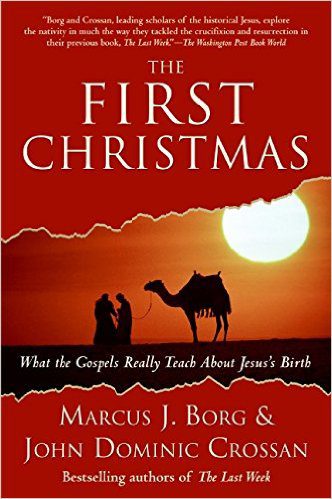 which Jesus was born. As the historical Jesus scholars Marcus Borg and John Dominic Crossan remind us in The First Christmas: What the Gospels Really Teach About Jesus’s Birth (HarperOne, 2007), “The date of December 25 was not decided upon until the middle of the 300s. Before then, Christians celebrated his birth at different times —including March, April, May, and November” (172). Birth records were not kept for Jesus or any other peasants born in the backwaters of Galilee more than two thousand years ago. We do, however, have vital records for some aristocrats such as Herod the Great (74/73 BCE – 4 BCE). And if there is any truth to the biblical claim that Herod was the ruler of Judea when Jesus was born, then we know that Jesus was born no later than 4 B.C.E., which is the year Herod died. So Jesus’s birth is often estimated to be sometime during 4-6 B.C.E., the final two years of Herod’s life (147-148).
Theses sorts of “historical-critical” questions related to the Quest for the Historical Jesus fascinate me. But I’m interested not only in whether the stories of Jesus’s birth are factual (the answer is—not so much), but also in the meaning and power of these stories — both then and now. Irrespective of whether all the details actually happened in history, there is often a reason these stories were told and retold — a reason that often has continuing relevance today (Borg and Crossan ix).
If you grew up with Christmas pageants — featuring children as white-robed angels and bathrobe-clad shepherds — then it can be surprising to read the Bible for yourself and discover that almost every Christmas pageant wildly conflates two significantly different versions of Jesus’s birth: one in the first two chapters of the Gospel according to Matthew and the other in the first two chapters of the Gospel according to Luke.
To briefly expand our frame of reference, it is interesting to note that, in contrast to Matthew and Luke who begin their Gospels with Jesus’s birth, the chronologically earlier Gospel of Mark begins with Jesus as an adult. The chronologically later Gospel of John begins before creation: “In the beginning was the Word, and the Word was with God, and the Word was God.” So counter-intuitively, the later the text was written chronologically, the farther back — and the more elevated — the claims being made about Jesus. Paul, our earliest written source for the Jesus tradition, writing only 20-30 years after Jesus’ death, mentions Jesus’s birth twice, but does not mention it as exceptional in any way — only that he was “descendent of David” (Romans 1:3) and “born of a woman” (Galatians 4:4). Mark, written approximately forty years after Jesus’s death starts his story with Jesus’ baptism as an adult. Writing approximately ten years after Mark, Matthew and Luke, start the story much earlier with Jesus’s birth. Writing yet another decade-or-so later John starts the story at creation (25-26).
There’s a lot more to say about all that, but for now to return our focus to Christmas, imagine that we were preparing to stage a Christmas pageant that was going to be based either on Matthew’s version exclusively or Luke’s version exclusively. Matthew, for example, is the only Gospel that has the story of Joseph’s dream warning the holy family to flee to Egypt. Matthew is also the only Gospel with magi bringing gifts. (Do you know the trick question about how many magi there were? There are three gifts; the number of magi are unknown. We only know there is more than one — because we are told there are magi plural, not a singular magus.)
Also, according to Matthew, Jesus is from Bethlehem, is born in Bethlehem, and relocates to Nazareth to escape Herod. It’s only in Luke that Jesus is from Nazareth, travels to Bethlehem for the census, and then returns to his hometown of Nazareth. Luke is also the only Gospel with shepherds or an angelic annunciation to Mary about Jesus’s miraculous conception. Another interesting distinction is that if you take out the genealogy of Jesus at the beginning of Matthew’s Gospel, his version of Jesus’s birth is only 31 verses — whereas Luke’s version is four times longer, weighing in at 131 verses.
So imagine “Act 1, Scene One” of a Matthew-only Pageant: we would open with Joseph as the main character. There would be “no story of the birth itself, no swaddling clothes, no stable, no manger, no angels singing to shepherds on the night of Jesus’ birth. All of these are from Luke” (5). Scene two would be the story of the Magi following the star and meeting King Herod. Next we’d have the Adoration of Magi presenting the gifts to Jesus, the flight to Egypt to escape Herod, Herod’s Slaughter of the Innocents, and finally the Return to Nazareth (6-8). Overall:
It’s surprising how little of Matthew’s birth story is about Jesus; Jesus is almost “off stage”…. There is no story of his circumcision, no story of him being blessed in the temple as an infant by Simeon and Anna, no story of him later at age twelve in the temple amazing the teachers with his wisdom. All of these are in Luke. Instead, the narrative dynamic of Matthew’s story focuses on Joseph and his dilemma and on Herod and his unsuccessful attempt to destroy Jesus. (9-10)
Conversely, if we were to stage a pageant based solely on Luke, then John the Baptizer’s parents, Zechariah and Elizabeth, would be major roles — as would women generally. Whereas in Matthew, Mary is “a completely passive figure, neither speaking nor receiving any revelation,” in Luke’s version, Mary is a main character and Joseph is “almost invisible” (20). Another distinguishing feature of Luke’s pageant would be music. Luke’s version is the only place we hear the Benedictus (sung by Zechariah), the Magnificat (sung by Mary), the Nunc Dimitis (sung by Simeon), and the heavenly chorus by the angels (21).
There is also a lot to say about the ways both of these birth narratives echo themes from the Hebrew Bible. Although there are many ways these birth narrative are made up, they were not made up out of thin air. Rather, they are a powerful recapitulation of themes from the Jewish Torah and Prophets — a result of reflecting on the life and teachings of Jesus in the context of Jewish oppression by the Roman Empire.
Most explicitly in Matthew, there are multiple ways that Jesus is symbolically presented as the new Moses — such that Herod (and Caesar) are cast as the new Pharaoh. In Exodus 1-2, Pharaoh plots to kill all newborn Jewish males. In Matthew 1-2, the same plot structure happens with Herod. Just as the Torah is traditionally known as the five books of Moses (Genesis, Exodus, Leviticus, and Numbers, Deuteronomy), it is no coincidence that in Matthew there are five divine dream, five scriptural fulfillments, five major addresses by Jesus (42-46). Similarly, the story of the Magi is inspired directly from the prophet Isaiah 60:6 (183). The larger hope is that Jesus might show a new way of resistance and resilience under the Roman Empire — just as Moses and Joshua had led the people from slavery under Pharaoh — and led them to liberate the Promised Land from the Canaanites many centuries earlier (ix-x).
Today these stories continue to point us to the ways that resistance and resilience can come from the most unlikely places — even in “a child, born in poverty and homelessness and among animals, to parents who would soon flee and become refugees in Egypt” (Rabbi Michael Lerner). And so this Christmas, what new life, what new hope is being be born in your life, in our life, or in the life of the world?
The Rev. Dr. Carl Gregg is a certified spiritual director, a D.Min. graduate of San Francisco Theological Seminary, and the minister of the Unitarian Universalist Congregation of Frederick, Maryland. Follow him on Facebook (facebook.com/carlgregg) and Twitter (@carlgregg).
Learn more about Unitarian Universalism: http://www.uua.org/beliefs/principles
Previous Post

December 28, 2016
Top 10 Best Albums Listened to in 2016
Next Post
December 29, 2016 Top 10 Best Netflix (+ Amazon Prime & HBO Now) Streamed in 2016
Browse Our Archives
Select a Category Advent Anti-Racism Archaeology Atheism Baptism Best of the Year List Book Reviews Buddhism Catholicism Christian Education Church and State Church Planting Climate Change Conscientious Objection to War Creation Spirituality Death Penalty Didache Disability Rights Discernment Easter Ecology Emergent Church Movement Empire-Critical Ethics Evolution Feminist Theology Film Reviews Gandhi Gospel of Mark Gun Control Hinduism Immigration Reform Interfaith Islam JFK Judaism Jungian Spirituality Lectionary Commentary Lent Letters to the Editor LGBT Marriage MLK Multiculturalism Mysticism Nonviolent Activism Occupy Paganism (Earth-centered Religions) Parables Paul Pluralism Politics Process Theology Quantum Physics Requiescat In Pace Seminary and Divinity School Sermon Series Retrospective Sermons Spiritual Direction Spiritual Practices Stewardship (Fundraising) The Book of J The Wheel of the Year (Paganism) Theoblogger Challenge Triathlon Uncategorized Unitarian Universalism Worship Resources Youth Ministry
Select a Month July 2026 May 2026 March 2026 November 2025 October 2025 August 2025 February 2025 December 2024 October 2024 March 2024 January 2024 December 2023 November 2023 March 2023 February 2023 January 2023 December 2022 November 2022 August 2022 March 2022 February 2022 January 2022 December 2021 September 2021 August 2021 July 2021 June 2021 May 2021 February 2021 January 2021 December 2020 August 2020 June 2020 May 2020 April 2020 March 2020 February 2020 January 2020 December 2019 November 2019 October 2019 September 2019 July 2019 June 2019 March 2019 February 2019 January 2019 December 2018 November 2018 October 2018 September 2018 June 2018 May 2018 April 2018 March 2018 February 2018 January 2018 December 2017 November 2017 October 2017 September 2017 August 2017 July 2017 June 2017 May 2017 April 2017 March 2017 February 2017 January 2017 December 2016 November 2016 October 2016 September 2016 August 2016 June 2016 May 2016 April 2016 March 2016 February 2016 January 2016 December 2015 November 2015 October 2015 September 2015 August 2015 July 2015 June 2015 May 2015 April 2015 March 2015 February 2015 January 2015 December 2014 November 2014 October 2014 August 2014 July 2014 June 2014 May 2014 April 2014 March 2014 February 2014 January 2014 December 2013 November 2013 October 2013 September 2013 August 2013 July 2013 June 2013 May 2013 April 2013 March 2013 February 2013 January 2013 December 2012 November 2012 October 2012 September 2012 August 2012 July 2012 June 2012 May 2012 April 2012 March 2012 February 2012 January 2012 December 2011 November 2011 October 2011 September 2011 August 2011 July 2011 June 2011 May 2011 April 2011 March 2011 February 2011 January 2011 December 2010 November 2010 October 2010 August 2009 July 2009 May 2009
Follow Us!
TAKE THE
Religious Wisdom Quiz
What meal did the Israelites eat before leaving Egypt?
Select your answer to see how you score.
Feast of Booths Firstfruits Passover Day of Atonement meal
Related posts from Carl Gregg

Reading America at 250: A Nation Wrestles With...


Andrew Holocek on the Power of Darkness

The Stories That Shape Us: Myths, Archetypes, &...
TRENDING AT PATHEOS More Voices

Reading America at 250: A Nation Wrestles With...
As part of my own reflection on the 250th anniversary of the...

Whenever I am reading a book or listening to an argument, I...

President Trump Ban Animal Torture Videos on Facebook
Call for Stricter Regulations of Animal Abuse Content on Facebook Although President...

Draft Amendments to Address Ritual Abuse in New...
The proposed changes would make it illegal for individuals in domestic partnerships...

How Bans on LGBTQ+ Student Clubs Threaten Religious...
On June 20, 2025, the State of Texas passed Senate Bill 12....

The Truth About the Gen Z Revival
This past year, there has been a lot of media buzz surrounding...
view all More Voices blogs
Ad-Free & Subscriber Log-In Subscription Support
- About Us
- 2026 Calendar
- Videos
- Podcasts
- Library of World Religions
- Faith In Media Tracker
- Advertise With Us
- Write for Us
- Privacy Policy
- Terms of Service
- Do Not Sell My Data
- Contact Us
- Radiant Digital
- Manage Newsletter Subscriptions
- Unsubscribe From Notifications
- Sitemap
Copyright 2008-2026, Patheos. All rights reserved.
Subscription Support Ad-Free & Subscriber Log-In
Follow Patheos