
BuddhistCatholicContemplativeEvangelicalGeneral ChristianHinduJewishLatter-day SaintMuslimNew VisionsProgressive Christian
Beliefs
- Buddhist
- Catholic
- Contemplative
- Evangelical
- General Christian
- Hindu
- Jewish
- Latter-day Saint
- More Voices
- Muslim
- New Visions
- Pagan
- Progressive Christian
Topics
- Religion News
- Food and Religion
- Sports and Religion
- Religious Art
- Religious Music and Entertainment
- Religious Events
- History and Religion
- Style and Religion
- Politics and Religion
- Women in Religion
- Recreation Outdoors and Religion
- Business Finance and Religion
- Careers Workplace and Religion
- Education and Religion
- Family Parenting and Religion
- Health Fitness and Religion
- Home and Religion
- Relationships and Religion
- Technology and Religion
- Travel and Religion
Columnists
- Buddhist Columnists
- Business Finance and Religion Columnists
- Careers Workplace and Religion Columnists
- Catholic Columnists
- Contemplative Columnists
- Education and Religion Columnists
- Evangelists Columnists
- Family Parenting and Religion Columnists
- General Christian Columnists
- Health Fitness and Religion Columnists
- Hindu Columnists
- History and Religion Columnists
- Home and Religion Columnists
- Jewish Columnists
- More Voices Columnists
- Latter Day Columnists
- Muslim Columnists
- New Visions Columnists
- Nonreligious Columnists
- Pagan Columnists
- Politics and Religion Columnists
- Progressive Columnists
- Recreation Outdoors and Religion Columnists
- Relationships and Religion Columnists
- Religion News Columnists
- Religious Art Columnists
- Religious Events Columnists
- Religious Music and Entertainment Columnists
- Sports and Religion Columnists
- Style and Religion Columnists
- Technology and Religion Columnists
- Travel and Religion Columnists
- Women in Religion Columnists
Resource Library
- 2026 Calendar
- Library of World Religions
- The 100 Most Holy Places on Earth
- Patheos Answers
- Podcasts
- Videos
- Faith Leaders Database
- Anglican Episcopalian
- Bahai
- Baptist
- Buddhism
- Christianity
- Confucianism
- Eastern Orthodoxy
- Hinduism
- Holiness and Pentecostal
- ISKCON
- Islam
- Judaism
- Lutheran
- Methodist
- The Church of Jesus Christ of Latter-day Saints
- New Age
- Paganism
- Presbytarian and Reformed
- Protestantism
- Religion Behind the Scenes
- Roman Catholic
- Scientology
- Shia Islam
- Sikhism
- Sufism
- Sunni Islam
- Taoism
- Zen
- See all religions
Research Tools
 Ad-Free & Subscriber Log-In Subscription Support
Ad-Free & Subscriber Log-In Subscription Support
Follow Patheos 

- Trending:
- Forgiveness
- |
- Marriage
- |
- Consciousness
- |
- Death Penalty
- |
- Election
- |
- Halloween

- Home
- More Voices
- What Would It Mean To Respect the Dignity of Every Person—Without Exception?
What Would It Mean To Respect the Dignity of Every Person—Without Exception?
Last updated on: October 4, 2016 at 8:45 am by Carl Gregg
What Would It Mean To Respect the Dignity of Every Person—Without Exception? 2016-10-03T22:24:32-04:00 Carl Gregg
Patheos Explore the world's faith through different perspectives on religion and spirituality! Patheos has the views of the prevalent religions and spiritualities of the world.
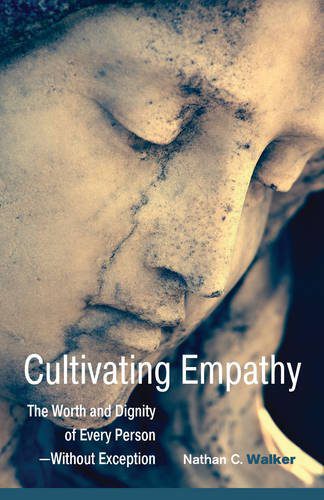 I recently finished reading a provocative new book by Nathan Walker titled Cultivating Empathy: The Worth and Dignity of Every Person — Without Exception. Nate invites us to experiment with our moral imagination: “the ability to anticipate or project oneself into the middle of a moral dilemma or conflict and understand all the points of view.” Note that, “Understanding does not necessarily mean agreement” (xvii-xviii).
Consider the experience of Ruby Bridges (1954-). In 1960, when she was six-years-old, she was the first black child to integrate an all-white school in New Orleans. That same year, a child psychologist interviewed her several times. He was stunned at her moral imagination — her ability to empathize with the people who were threatening and taunting her. When the psychologist skeptically asked, “You felt sorry for them?” She responded, “Well, don’t you think they need feeling sorry for?” (xvii)?
The opposite of empathy and the moral imagination is xenophobia: “fear of the strange, foreign, or unfamiliar.” In place of the word xenophobia, Nate proposes the simpler term other-ize, meaning to make a person or group seem like an “other,” different from us, and one of “them.” And he cites seven ways that people often “otherize” instead of practicing empathy and the moral imagination. We can:
- Demonize – treating the other as someone to be feared and eliminated if possible.
- Romanticize – treating the other as far superior to ourselves
- Colonize – treating the other as inferior
- Generalize – treating the other as a non-individual
- Trivialize – ignoring what makes the other disturbingly different.
- Homogenize – claiming there really is no difference
- Vaporize – refusing to acknowledge the presence of the other at all. (xix)
Looking back on your life, which of those approaches have been most (or least) tempting to you, which ones have you been on the receiving end of, and which ones do you witness most frequently in our world today?
There are many examples in Nate’s book of struggling to be our best selves (when we are relaxed, well rested, and most able to empathize and practice the moral imagination) and to overcome our worst selves (when we are under stress and sometimes succumb to the temptation to otherize those around us). For now, I will limit myself to two examples, and as I share them, I invite you to consider parallels in your own life.
Nate calls the first episode, “Meeting the One Percent.” He and his partner Vikram had arrived an hour and a half early to get a good seat at a highly anticipated lecture at a nearby university (1). Not long before the lecture was to begin, Vikram went to the bathroom. After he was gone, a woman approached his seat, and picked up Vikram’s coat. Nate turned and said, “I’m sorry, that’s reserved. He’s in the bathroom.” But she sat down anyway. He repeated himself, but she stared straight ahead, ignoring him, and passed Vikram’s coat to her husband, who dropped it on the floor.
About that time, he spotted Vikram returning down the aisle, and said, “Look, he’s right there.” Her response was, “We sponsored this event.” In the midst of this stressful situation, let’s just say that Nate’s best self did not emerge. He began speaking loudly in an attempt to publicly shame her, and concluded by saying, “You must be someone really important. Are you famous? If not, let me help you be.” He took a photo of her with his phone, and said, “I’ll label this one Entitlement.” As the light dimmed in the theater, Nate and Vikram managed to find a seat at the back (3).
Reflecting later, he realized that two days before in his Sunday sermon he had preached: “When we feel the impulse to be enraged, we must accept the invitation to be empathetic and no longer make people the object of our aggression” (2). It turns out, the moral imagination is easier said than done!
By no means, however, am I saying that we should be doormats when we encounter injustice. Rather, the invitation is to become more conscious of the temptation to otherize in times of stress or conflict — demonizing the other, treating them as inferior, generalizing them in ways that ignore the reasons that may have led to them behave badly on this occasion.
And here’s an even more important twist. In addition to the intrinsic value of recognizing each person’s inherent worth and dignity, there is also extrinsic value to practicing the moral imagination. Nate, for example, found that as long as he continued to otherize this woman, he remained obsessed about her in an unhealthy way: rehearsing the story to everyone he met and showing them the picture he took. For him, one step in moving on was deleting the picture (5-6).
He also realized in retrospect that his righteous anger at her was amplified because this episode happened during the crackdowns on the #OccupyWallStreet protesters, which left Nate predisposed to anger not at the rich generally, but at those who seemed both rich and selfish. In contrast to his angry shaming of this woman, speaking from his best self, Nate has written:
I once believed that it was powerful to condemn wrongdoers. I believe it right to tear down another’s unexamined assumptions and to vaporize those whose presence was not worthy of my attention. I believed that others were the cause of my aggression, others were to blame for my feelings of despair, disappointment, and righteous indignation…. I was doing justice…all while being an ass…. As Thich Nhat Hanh, a Zen Buddhist, once said, “I came to set the prisoner free only to realize the prisoner was me” (7-8).
What might it look like in the coming days and weeks — when we inevitably find ourselves stumbling into a conflict — to take a step back, use our moral imagination to consider where the other is coming from, and reflect on how our next words or actions might emerge from our best self?
That being said, we’ve already seen that Nate found it easier to preach this approach on Sunday than to live it Tuesday night in the theater. And for this second encounter, I want to complicate matters further with a story about Thích Nhất Hạnh (1926-), whose wisdom was the capstone of our first example. Hanh is one of our great living wisdom teachers, and was nominated by The Rev. Dr. Martin Luther King, Jr. for the Nobel Peace Prize. Yet, a few years ago when attending a retreat led by Hạnh, Nate was taken aback when he discovered that men and women were required to sit separately in the meditation hall (60).
As we have already seen, Nate is not a shy wallflower. So he respectfully and compassionately asked Hanh about the reasoning behind this gender separation which seems like an obvious contradiction to his teachings about interdependence and nonduality. Hanh replied, “Ask any woman and she will tell you she likes to be with other women…. It is not segregation” (65). In general, Hanh is a source of tremendous wisdom, insight, and experience. But on this point, he seems to be unwisely defending an antiquated, patriarchal practice using unconvincing, sexist reasoning (Walker 65).
At first Nate was wounded and disillusioned. But as he continued to practice empathy and moral imagination, he began to see that Hanh was not speaking from a vacuum. As wise as he is, he is also a product of his social location, as are we all. Nate writes:
I began to see Hanh as a continuation of his teachers. He is, after all, the forty-second patriarch of the Lâm Tế school of Zen Buddhism. I began to see my experience at this retreat as an intercultural encounter between a Vietnamese and an American; an intergenerational encounter between an eighty-three-year-old and a thirty-three-year-old; and an interreligious encounter between a Zen master and a Unitarian Universalist minister. (66)
And here’s the key point: “I began to see him as simply human. I was neither romanticizing him nor demonizing him.” We “otherize” people not only when we demonize, generalize, and trivialize — treating them as lesser than ourselves — but also when we romanticize them, treating them as superior to ourselves. What person or groups are you most likely to romanticize? How might your moral imagination help you more fully see the imperfect messiness that all human beings share?
For now, I’ll conclude with these words from Nate Walker’s book, Cultivating Empathy: The Worth and Dignity of Every Person — Without Exception:
It is possible for me to understand another person’s views…without necessarily agreeing with them or silencing my own voice. Understanding is a prerequisite for empathy…. This encounter becomes an ethical one when we use the moral imagination to see our shared humanity and dare to forge a new way of being with one another….
When we observe oppression, let us develop strategies that free not only the oppressed but also the oppressor. Let us remember that those who use their power to deny freedom to others are also imprisoned and are also worthy of care. Do not let their unjust actions inspire us to cruelty, or else we will soon become what we set out against….
Rather than shoving our foot on the oppressor’s neck, let us instead reach out a hand, offer a seat, and show them, and even ourselves, a new way of justice-making by collectively experimenting with the moral imagination.
I am grateful to be with you on the journey toward beloved community and collective liberation — in which we all get free.
The Rev. Dr. Carl Gregg is a trained spiritual director, a D.Min. graduate of San Francisco Theological Seminary, and the minister of the Unitarian Universalist Congregation of Frederick, Maryland. Follow him on Facebook (facebook.com/carlgregg) and Twitter (@carlgregg).
Learn more about Unitarian Universalism: http://www.uua.org/beliefs/principles
Previous Post

September 29, 2016
Challenging Trump's Islamophobia: Demagoguery & Democracy
Browse Our Archives
Select a Category Advent Anti-Racism Archaeology Atheism Baptism Best of the Year List Book Reviews Buddhism Catholicism Christian Education Church and State Church Planting Climate Change Conscientious Objection to War Creation Spirituality Death Penalty Didache Disability Rights Discernment Easter Ecology Emergent Church Movement Empire-Critical Ethics Evolution Feminist Theology Film Reviews Gandhi Gospel of Mark Gun Control Hinduism Immigration Reform Interfaith Islam JFK Judaism Jungian Spirituality Lectionary Commentary Lent Letters to the Editor LGBT Marriage MLK Multiculturalism Mysticism Nonviolent Activism Occupy Paganism (Earth-centered Religions) Parables Paul Pluralism Politics Process Theology Quantum Physics Requiescat In Pace Seminary and Divinity School Sermon Series Retrospective Sermons Spiritual Direction Spiritual Practices Stewardship (Fundraising) The Book of J The Wheel of the Year (Paganism) Theoblogger Challenge Triathlon Uncategorized Unitarian Universalism Worship Resources Youth Ministry
Select a Month July 2026 May 2026 March 2026 November 2025 October 2025 August 2025 February 2025 December 2024 October 2024 March 2024 January 2024 December 2023 November 2023 March 2023 February 2023 January 2023 December 2022 November 2022 August 2022 March 2022 February 2022 January 2022 December 2021 September 2021 August 2021 July 2021 June 2021 May 2021 February 2021 January 2021 December 2020 August 2020 June 2020 May 2020 April 2020 March 2020 February 2020 January 2020 December 2019 November 2019 October 2019 September 2019 July 2019 June 2019 March 2019 February 2019 January 2019 December 2018 November 2018 October 2018 September 2018 June 2018 May 2018 April 2018 March 2018 February 2018 January 2018 December 2017 November 2017 October 2017 September 2017 August 2017 July 2017 June 2017 May 2017 April 2017 March 2017 February 2017 January 2017 December 2016 November 2016 October 2016 September 2016 August 2016 June 2016 May 2016 April 2016 March 2016 February 2016 January 2016 December 2015 November 2015 October 2015 September 2015 August 2015 July 2015 June 2015 May 2015 April 2015 March 2015 February 2015 January 2015 December 2014 November 2014 October 2014 August 2014 July 2014 June 2014 May 2014 April 2014 March 2014 February 2014 January 2014 December 2013 November 2013 October 2013 September 2013 August 2013 July 2013 June 2013 May 2013 April 2013 March 2013 February 2013 January 2013 December 2012 November 2012 October 2012 September 2012 August 2012 July 2012 June 2012 May 2012 April 2012 March 2012 February 2012 January 2012 December 2011 November 2011 October 2011 September 2011 August 2011 July 2011 June 2011 May 2011 April 2011 March 2011 February 2011 January 2011 December 2010 November 2010 October 2010 August 2009 July 2009 May 2009
Follow Us!
TAKE THE
Religious Wisdom Quiz
What tax collector wrote a Gospel and was called by Jesus?
Select your answer to see how you score.
Matthew Luke Mark Barnabas
Related posts from Carl Gregg

Reading America at 250: A Nation Wrestles With...


Andrew Holocek on the Power of Darkness

The Stories That Shape Us: Myths, Archetypes, &...
TRENDING AT PATHEOS More Voices

Reading America at 250: A Nation Wrestles With...
As part of my own reflection on the 250th anniversary of the...

Whenever I am reading a book or listening to an argument, I...

President Trump Ban Animal Torture Videos on Facebook
Call for Stricter Regulations of Animal Abuse Content on Facebook Although President...

Draft Amendments to Address Ritual Abuse in New...
The proposed changes would make it illegal for individuals in domestic partnerships...

How Bans on LGBTQ+ Student Clubs Threaten Religious...
On June 20, 2025, the State of Texas passed Senate Bill 12....

The Truth About the Gen Z Revival
This past year, there has been a lot of media buzz surrounding...
view all More Voices blogs
Ad-Free & Subscriber Log-In Subscription Support
- About Us
- 2026 Calendar
- Videos
- Podcasts
- Library of World Religions
- Faith In Media Tracker
- Advertise With Us
- Write for Us
- Privacy Policy
- Terms of Service
- Do Not Sell My Data
- Contact Us
- Radiant Digital
- Manage Newsletter Subscriptions
- Unsubscribe From Notifications
- Sitemap
Copyright 2008-2026, Patheos. All rights reserved.
Subscription Support Ad-Free & Subscriber Log-In
Follow Patheos