
BuddhistCatholicContemplativeEvangelicalGeneral ChristianHinduJewishLatter-day SaintMuslimNew VisionsProgressive Christian
Beliefs
- Buddhist
- Catholic
- Contemplative
- Evangelical
- General Christian
- Hindu
- Jewish
- Latter-day Saint
- More Voices
- Muslim
- New Visions
- Pagan
- Progressive Christian
Topics
- Religion News
- Food and Religion
- Sports and Religion
- Religious Art
- Religious Music and Entertainment
- Religious Events
- History and Religion
- Style and Religion
- Politics and Religion
- Women in Religion
- Recreation Outdoors and Religion
- Business Finance and Religion
- Careers Workplace and Religion
- Education and Religion
- Family Parenting and Religion
- Health Fitness and Religion
- Home and Religion
- Relationships and Religion
- Technology and Religion
- Travel and Religion
Columnists
- Buddhist Columnists
- Business Finance and Religion Columnists
- Careers Workplace and Religion Columnists
- Catholic Columnists
- Contemplative Columnists
- Education and Religion Columnists
- Evangelists Columnists
- Family Parenting and Religion Columnists
- General Christian Columnists
- Health Fitness and Religion Columnists
- Hindu Columnists
- History and Religion Columnists
- Home and Religion Columnists
- Jewish Columnists
- More Voices Columnists
- Latter Day Columnists
- Muslim Columnists
- New Visions Columnists
- Nonreligious Columnists
- Pagan Columnists
- Politics and Religion Columnists
- Progressive Columnists
- Recreation Outdoors and Religion Columnists
- Relationships and Religion Columnists
- Religion News Columnists
- Religious Art Columnists
- Religious Events Columnists
- Religious Music and Entertainment Columnists
- Sports and Religion Columnists
- Style and Religion Columnists
- Technology and Religion Columnists
- Travel and Religion Columnists
- Women in Religion Columnists
Resource Library
- 2026 Calendar
- Library of World Religions
- The 100 Most Holy Places on Earth
- Patheos Answers
- Podcasts
- Videos
- Faith Leaders Database
- Anglican Episcopalian
- Bahai
- Baptist
- Buddhism
- Christianity
- Confucianism
- Eastern Orthodoxy
- Hinduism
- Holiness and Pentecostal
- ISKCON
- Islam
- Judaism
- Lutheran
- Methodist
- The Church of Jesus Christ of Latter-day Saints
- New Age
- Paganism
- Presbytarian and Reformed
- Protestantism
- Religion Behind the Scenes
- Roman Catholic
- Scientology
- Shia Islam
- Sikhism
- Sufism
- Sunni Islam
- Taoism
- Zen
- See all religions
Research Tools
 Ad-Free & Subscriber Log-In Subscription Support
Ad-Free & Subscriber Log-In Subscription Support
Follow Patheos 

- Trending:
- Forgiveness
- |
- Marriage
- |
- Consciousness
- |
- Death Penalty
- |
- Election
- |
- Halloween

- Home
- More Voices
- “None of Us Are Getting Out of This Alive”: How & Why to Have End-of-Life Conversations
“None of Us Are Getting Out of This Alive”: How & Why to Have End-of-Life Conversations
Last updated on: October 27, 2016 at 9:47 am by Carl Gregg
“None of Us Are Getting Out of This Alive”: How & Why to Have End-of-Life Conversations 2016-10-27T09:47:52-04:00 Carl Gregg
Patheos Explore the world's faith through different perspectives on religion and spirituality! Patheos has the views of the prevalent religions and spiritualities of the world.
Part of what it means to be human is to be aware of our mortality: to wrestle with the existential reality of “being alive and having to die.” As the saying goes, “Ultimately, none of us are getting out of this alive.” Realizing our finitude can be terrifying, but it can also be motivating. As Thoreau wrote in Walden: “I wished to live deliberately…and not, when I came to die, discover that I had not lived…. I wanted to live deep and suck out all the marrow of life.”
The temptation can be to repress thoughts of our mortality, but perpetually putting off end-of-life conversations 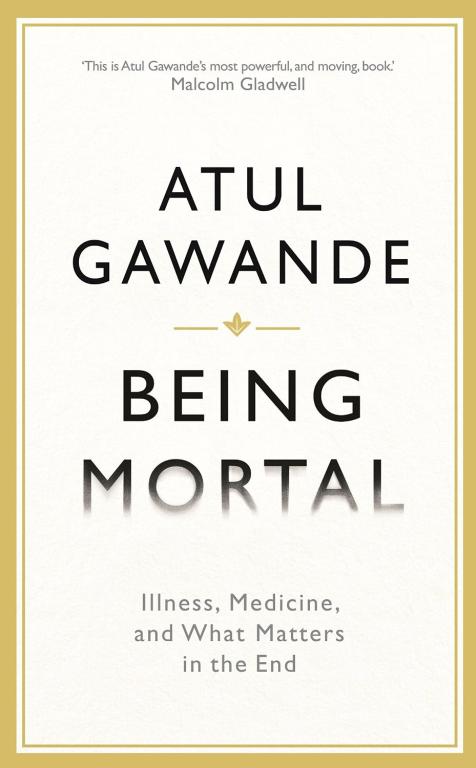 can have tragic consequences. The surgeon Atul Gawande tells the story of a patient who demanded, “Don’t you give up on me. You give me every chance I’ve got.” The will to live is often understandably strong, but with the advanced state of medicine, the desire to live at all costs can have unintended consequences. Gawande writes,
I believed then that [this patient] had chosen badly, and I still believe this. He chose badly…because the operation didn’t stand a chance of giving him what he really wanted: his continence, his strength, the life he had previously known. He was pursuing little more than a fantasy at the risk of a prolonged and terrible death — which is precisely what he got (5).
Those are hard words, but they call us to be more honest about life and death — with ourselves and with our loved ones. The success of Gawande’s book Being Mortal is one among many hopeful signs that our culture is slowly becoming more willing to confront, in a more mature way, the realities of death and dying.
I’ll leave to another day the philosophical discussion of whether we would want to live forever if that were an option. As Woody Allen said, “I don’t want to achieve immortality through my work; I want to achieve immortality through not dying. I don’t want to live on in the hearts of my countrymen; I want to live on in my apartment.” But since living forever on this earth is not an option, I would like to reflect on what is possible: ways of increasing your likelihood of “dying well” — what is sometimes called a “good enough death” (Neumann 210). Here’s one example of what a “good enough death” might look like:
being prepared to die, with my affairs in order, the good and bad messages delivered that need delivering. The good death means dying while I still have my mind sharp and aware; it also means dying without having to endure large amounts of suffering and pain. The good death means accepting death as inevitable, and not fighting it when the time comes.
That is, however, just one among many possibilities of what a “good death” might look like. In the end, “Your relationship to mortality is your own” (Doughty 222).
Historically speaking, humanity’s relationship to mortality has changed drastically over time. For much of human history, the life of our ancestors was one of “continual fear and danger of violent death, and the life of man, solitary, poor, nasty, brutish, and short” (Hobbes, Leviathan, XIII.9):
-
Around thirty thousand years ago, life expectancy was thirty…. It wasn’t until the development of agriculture, about ten thousand years ago, that things started to change. Soon after, people recognized that they got sick less often if they separated drinking water from sewage. In a relatively short time, the human race experienced a twenty-to-thirty-year gain in life expectancy.(Ellison 5)
-
When the first European settlers arrived [in North America], all they did was die. If it wasn’t starvation, the freezing cold, or battles with the Native people, it was influenza, diphtheria, dysentery, or smallpox that did them in. At the end of the first three years of the Jamestown settlement in Virginia, 440 of the original 500 settlers were dead…. If you were the mother with five children, you were lucky to have two of them live past the age of ten. (Doughty 30)
-
[Today] plagues, basic infections, and childhood diseases have, for the most part, been eradicated. We’ve added an additional thirty years to the human lifespan in the past century. In 1900, Americans could realistically expect to live to the age of forty-seven; by the 1930s, fifty-nine. By 2000, that age expectancy had reached nearly eighty. Infant mortality rates alone have dropped from fifty-six deaths per one thousand births in 1935 to seven per one thousand in 2000. (Neumann 8).
One of the most significant results of these changes is that today most of us in this country are around death much less frequently than ever before in human history. A few generations ago, dying at home, hosting a wake with a loved one’s body in your home, and burying one’s own dead was common. “As recently as 1945, most deaths occurred in the home. By the 1980s, just 17 percent did” (Gawande 6). And in recent decades, we’ve seen increasingly strong pushback against this trend of dying in hospitals such that, “by 2010, 45 percent of Americans died in hospice. More than half of them receiving hospice care at home” (Gawande 193).
It’s hard to overemphasize the significance and speed of these changes. We are still wrestling with how to live and die well with longer lifespans and advanced technology. To use a vivid image from Gawande, for most of human history, a person’s relationship to mortality over the course of their life looked like a cliff: you stayed at a plateau with death relatively distant until one day something tragic happened and you died quickly (Gawande 25). But for increasing numbers of us, modern medicine has made “shuffling off our mortal coil” more like an extended bumpy tumble down the mountain (Gawande 27). Or potentially worse a “long, slow fade” in which we approach death like an asymptotic curve in geometry, hovering just at the edge of mortality (Gawande 28).
In extreme cases such as Terry Schiavo or Karen Ann Quinlan, we can’t even agree on the definition of dying anymore. For the vast majority of human history, death meant “the almost simultaneous end of the heartbeat, breathing, and brain function.” But starting in the 1970s, technological innovations made it possible to “keep the lungs and heart functioning indefinitely” (Neumann 12, 100). That created a dilemma for some families because patients in a Persistent Vegetative State, even when the brain has atrophied to the point of only the brain stem remaining, can still “follow a regular sleep schedule, yawn, open their eyes, blink, and move their arms and legs” (132). They can appear alive, but there is no hope of sentience returning. Technology is forcing us to balance “life-sustaining measures” with “quality of life.”
Regarding how to make decisions toward the end of life, I would like to share three case studies that show the importance of having conversations in advance with our loved ones about what does and doesn’t makes life meaningful for them. In the first case, from Gawande’s Being Mortal, on the eve of a major surgery, a daughter is surprised when her dad says, “Well, if I’m able to eat chocolate ice cream and watch football on TV, then I’m willing to stay alive. I’m willing to go through a lot of pain if I have a shot at that.” The next day, the surgeon told her that she had three minutes to make a decision about whether to proceed after a spinal bleed had likely already made her father a quadriplegic. She was relieved that he had already made the decision himself. She asked, “If my father survives, will he still be able to eat chocolate ice cream and watch football on TV?” They said yes, and she told them to keep operating. She later realized that if she hadn’t forced herself to have that conversation with her father in advance, she would have let him go during surgery. As it turns out, he had significant quality of life for the next two years (183-184).
When Gawande faced a similar situation with his own father, his dad was clear that he was “more afraid of becoming quadriplegic than of dying.” So at a similarly crucial point, he asked the surgeon, “which posed the greater risk of his [father] becoming quadriplegic in the next couple months: stopping or proceeding? Stopping, he said, [would be the greater risk of paralysis]. We told him to proceed.” Again, it turned out to be the right choice. More importantly, it was his father’s own choice for himself (Gawande 213-215).
The third case is of a young athlete, scholar, and executive diagnosed with a terminal illness. His doctors were surprised that despite the high quality of life he had experienced prior to his diagnosis, the patient was clear that, “his final months (which had been characterized by relentless physical deterioration and considerable suffering) had been “the best year of my life” (Ellison 283). He would not have wanted to prematurely end his life because his physical decline had given him the opportunity to focus on repairing other aspects of his life. Quality of life can look like many different things to different people at different times.
If you haven’t had end-of-life conversations with your loved ones, I strongly recommend the simple guide available free from The Conversation Project (theconversationproject.org). Their poignant and provocative motto is “It’s always too soon before it’s too late.” The upcoming Thanksgiving and the winter holidays are a prime opportunity for such conversations when many families have time off together in person.
Relatedly, if you or your loved ones don’t have a will, living will, and power of attorney, I strongly urge you to take care of that soon — today or next week if possible. One good starting point for that process is called Five Wishes (agingwithdignity.org/five-wishes/about-five-wishes).
There’s a lot more to say about discerning and supporting end of life choices, including the need for death with dignity legislation. But I wanted to be sure to at least touch briefly on the shifts around what happens to our bodies on the other side of our mortality. As early as around 100,000 years ago, we have archeological evidence of Homo sapiens burying their dead “with purpose”: the bodies are buried in ritualized positions and with ritualized elements: “We cannot understand what these ancient people thought about death, the afterlife, or the corpse, but these clues tell us they did think about it” (Doherty 58).
The custom used to be a natural burial at home, but in the nineteenth century embalming practices became 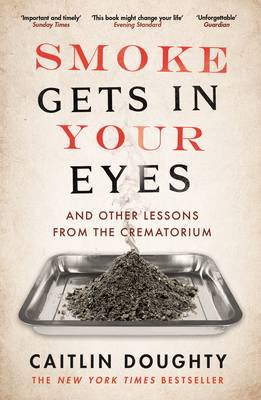 increasingly common along with skyrocketing costs of funerals that peaked particularly in the 1950s. A turning point came in 1963 for two reasons. One, Jessica Mitford published a bestselling exposé of the funeral industry titled The American Way of Death. That same year, Pope Paul VI overturned the Roman Catholic Church’s ban on cremation. “Rates of cremation have risen steadily in the years following Mitford’s book….” (Doughty 108): “In 2014, 44 percent of the country chose cremation, and it is estimated that by 2020 this will become the majority option” (Kendrick 181). (I should also note that instead of going back to The American Way of Death, the twenty-first century parallel that I would recommend is the excellent memoir Smoke Gets in Your Eyes: And Other Lessons from the Crematory by Caitlin Doughty.)
Currently my will, calls for me to be cremated. But I am less convinced than I once was that is the cleanest, simplest choice. On one hand, it is an improvement environmentally from filling the earth with concrete vaults and bodies full of toxic chemicals: the average “ten-acre cemetery contains enough coffin wood to build forty homes, and has enough toxic formalin to fill a backyard swimming pool…” (Kendrick 180). On the other hand, significant energy is required and hazardous emissions are released in the process of heating an oven to 1,800 degrees for four hours to turn a body to ashes (Kendrick 182).
I’m increasingly interested in the green burial movement in which bodies, without any chemical preparation, are buried in a simple cloth shroud. In some of these cemeteries, after a certain number of years, depending on local soil and weather conditions, that same spot would be free again for another person to be buried there. “The number of Green Burial Council approved providers in North America has grown from 1 in 2006, to more then 300 today.”
None of us knows what happens after we die, but in the short time we have in this life, may we continue strive to be kind to ourselves, to one another, and to this earth.
The Rev. Dr. Carl Gregg is a trained spiritual director, a D.Min. graduate of San Francisco Theological Seminary, and the minister of the Unitarian Universalist Congregation of Frederick, Maryland. Follow him on Facebook (facebook.com/carlgregg) and Twitter (@carlgregg).
Learn more about Unitarian Universalism: http://www.uua.org/beliefs/principles
Previous Post

October 25, 2016
Lessons from "Les Mis" in the Age of Trump
Next Post
November 1, 2016 “Witches of America”
Browse Our Archives
Select a Category Advent Anti-Racism Archaeology Atheism Baptism Best of the Year List Book Reviews Buddhism Catholicism Christian Education Church and State Church Planting Climate Change Conscientious Objection to War Creation Spirituality Death Penalty Didache Disability Rights Discernment Easter Ecology Emergent Church Movement Empire-Critical Ethics Evolution Feminist Theology Film Reviews Gandhi Gospel of Mark Gun Control Hinduism Immigration Reform Interfaith Islam JFK Judaism Jungian Spirituality Lectionary Commentary Lent Letters to the Editor LGBT Marriage MLK Multiculturalism Mysticism Nonviolent Activism Occupy Paganism (Earth-centered Religions) Parables Paul Pluralism Politics Process Theology Quantum Physics Requiescat In Pace Seminary and Divinity School Sermon Series Retrospective Sermons Spiritual Direction Spiritual Practices Stewardship (Fundraising) The Book of J The Wheel of the Year (Paganism) Theoblogger Challenge Triathlon Uncategorized Unitarian Universalism Worship Resources Youth Ministry
Select a Month July 2026 May 2026 March 2026 November 2025 October 2025 August 2025 February 2025 December 2024 October 2024 March 2024 January 2024 December 2023 November 2023 March 2023 February 2023 January 2023 December 2022 November 2022 August 2022 March 2022 February 2022 January 2022 December 2021 September 2021 August 2021 July 2021 June 2021 May 2021 February 2021 January 2021 December 2020 August 2020 June 2020 May 2020 April 2020 March 2020 February 2020 January 2020 December 2019 November 2019 October 2019 September 2019 July 2019 June 2019 March 2019 February 2019 January 2019 December 2018 November 2018 October 2018 September 2018 June 2018 May 2018 April 2018 March 2018 February 2018 January 2018 December 2017 November 2017 October 2017 September 2017 August 2017 July 2017 June 2017 May 2017 April 2017 March 2017 February 2017 January 2017 December 2016 November 2016 October 2016 September 2016 August 2016 June 2016 May 2016 April 2016 March 2016 February 2016 January 2016 December 2015 November 2015 October 2015 September 2015 August 2015 July 2015 June 2015 May 2015 April 2015 March 2015 February 2015 January 2015 December 2014 November 2014 October 2014 August 2014 July 2014 June 2014 May 2014 April 2014 March 2014 February 2014 January 2014 December 2013 November 2013 October 2013 September 2013 August 2013 July 2013 June 2013 May 2013 April 2013 March 2013 February 2013 January 2013 December 2012 November 2012 October 2012 September 2012 August 2012 July 2012 June 2012 May 2012 April 2012 March 2012 February 2012 January 2012 December 2011 November 2011 October 2011 September 2011 August 2011 July 2011 June 2011 May 2011 April 2011 March 2011 February 2011 January 2011 December 2010 November 2010 October 2010 August 2009 July 2009 May 2009
Follow Us!
TAKE THE
Religious Wisdom Quiz
Which Psalm contains "Create in me a clean heart, O God"?
Select your answer to see how you score.
Psalm 51 Psalm 33 Psalm 110 Psalm 70
Related posts from Carl Gregg

Reading America at 250: A Nation Wrestles With...


Andrew Holocek on the Power of Darkness

The Stories That Shape Us: Myths, Archetypes, &...
TRENDING AT PATHEOS More Voices

Reading America at 250: A Nation Wrestles With...
As part of my own reflection on the 250th anniversary of the...

Whenever I am reading a book or listening to an argument, I...

President Trump Ban Animal Torture Videos on Facebook
Call for Stricter Regulations of Animal Abuse Content on Facebook Although President...

Draft Amendments to Address Ritual Abuse in New...
The proposed changes would make it illegal for individuals in domestic partnerships...

How Bans on LGBTQ+ Student Clubs Threaten Religious...
On June 20, 2025, the State of Texas passed Senate Bill 12....

The Truth About the Gen Z Revival
This past year, there has been a lot of media buzz surrounding...
view all More Voices blogs
Ad-Free & Subscriber Log-In Subscription Support
- About Us
- 2026 Calendar
- Videos
- Podcasts
- Library of World Religions
- Faith In Media Tracker
- Advertise With Us
- Write for Us
- Privacy Policy
- Terms of Service
- Do Not Sell My Data
- Contact Us
- Radiant Digital
- Manage Newsletter Subscriptions
- Unsubscribe From Notifications
- Sitemap
Copyright 2008-2026, Patheos. All rights reserved.
Subscription Support Ad-Free & Subscriber Log-In
Follow Patheos