
BuddhistCatholicContemplativeEvangelicalGeneral ChristianHinduJewishLatter-day SaintMuslimNew VisionsProgressive Christian
Beliefs
- Buddhist
- Catholic
- Contemplative
- Evangelical
- General Christian
- Hindu
- Jewish
- Latter-day Saint
- More Voices
- Muslim
- New Visions
- Pagan
- Progressive Christian
Topics
- Religion News
- Food and Religion
- Sports and Religion
- Religious Art
- Religious Music and Entertainment
- Religious Events
- History and Religion
- Style and Religion
- Politics and Religion
- Women in Religion
- Recreation Outdoors and Religion
- Business Finance and Religion
- Careers Workplace and Religion
- Education and Religion
- Family Parenting and Religion
- Health Fitness and Religion
- Home and Religion
- Relationships and Religion
- Technology and Religion
- Travel and Religion
Columnists
- Buddhist Columnists
- Business Finance and Religion Columnists
- Careers Workplace and Religion Columnists
- Catholic Columnists
- Contemplative Columnists
- Education and Religion Columnists
- Evangelists Columnists
- Family Parenting and Religion Columnists
- General Christian Columnists
- Health Fitness and Religion Columnists
- Hindu Columnists
- History and Religion Columnists
- Home and Religion Columnists
- Jewish Columnists
- More Voices Columnists
- Latter Day Columnists
- Muslim Columnists
- New Visions Columnists
- Nonreligious Columnists
- Pagan Columnists
- Politics and Religion Columnists
- Progressive Columnists
- Recreation Outdoors and Religion Columnists
- Relationships and Religion Columnists
- Religion News Columnists
- Religious Art Columnists
- Religious Events Columnists
- Religious Music and Entertainment Columnists
- Sports and Religion Columnists
- Style and Religion Columnists
- Technology and Religion Columnists
- Travel and Religion Columnists
- Women in Religion Columnists
Resource Library
- 2026 Calendar
- Library of World Religions
- The 100 Most Holy Places on Earth
- Patheos Answers
- Podcasts
- Videos
- Faith Leaders Database
- Anglican Episcopalian
- Bahai
- Baptist
- Buddhism
- Christianity
- Confucianism
- Eastern Orthodoxy
- Hinduism
- Holiness and Pentecostal
- ISKCON
- Islam
- Judaism
- Lutheran
- Methodist
- The Church of Jesus Christ of Latter-day Saints
- New Age
- Paganism
- Presbytarian and Reformed
- Protestantism
- Religion Behind the Scenes
- Roman Catholic
- Scientology
- Shia Islam
- Sikhism
- Sufism
- Sunni Islam
- Taoism
- Zen
- See all religions
Research Tools
 Ad-Free & Subscriber Log-In Subscription Support
Ad-Free & Subscriber Log-In Subscription Support
Follow Patheos 

- Trending:
- Forgiveness
- |
- Marriage
- |
- Consciousness
- |
- Death Penalty
- |
- Election
- |
- Halloween

- Home
- More Voices
- Lessons from “Les Mis” in the Age of Trump
Lessons from “Les Mis” in the Age of Trump
Last updated on: October 25, 2016 at 10:44 am by Carl Gregg
Lessons from “Les Mis” in the Age of Trump 2016-10-25T10:44:08-04:00 Carl Gregg
Patheos Explore the world's faith through different perspectives on religion and spirituality! Patheos has the views of the prevalent religions and spiritualities of the world.
Les Misérables premiered on Broadway in 1987, after earlier versions in France and London. I first encountered 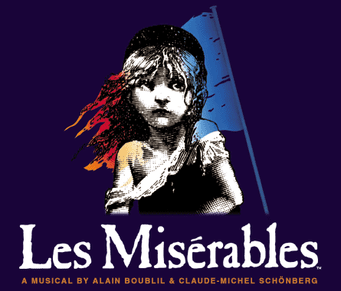 Les Mis in the early ‘90s. My church youth group took at trip to New York City that included seeing Les Mis. I had never paid attention to the musical before—other than seeing the ubiquitous t-shirts with the image of Cosette on the front. But after seeing the musical live in New York City, suddenly all of my peers were listening not only to the 1987 Original Broadway Cast recording, but also — if you were really cool — the 1989 3-CD Complete Symphonic Recording, featuring the entire score.
Perhaps because the musical’s title is often abbreviated — or because I never learned French — but it was a while before I appreciated that the full title of this musical, Les Misérables, literally translates as “The Miserable Ones.” More loosely translated, Les Misérables could be rendered as “The Poor Ones,” “The Wretched Poor,” “The Victims,” or “The Dispossessed.” I recently had the occasion to re-listen to “Les Mis” as part of a Music Sunday at the congregation where I serve as minister, and the musical led me to reflect anew about the desire for change that has emerged on both the left and right during this presidential election season.
Dorothy Day said that the problem is our “acceptance of this lousy, rotten system.” Part of what she meant is that we too often accept that the way things are is the way things have to be. The truth is that paradigms shift, revolutions happen, and things can, have, and will continue to change. In the U.S., we seek to use our democratic process to make the system less “lousy” and “rotten” and more “just.”
That word democracy combines two Greek roots: demos (meaning “people”) and kratos (meaning “power” or “rule”). So democracy literally means, “power to the people.” The opposite is an aristocracy (“rule by an elite.”) Or in a more extreme form: prior to the French Revolution, one person (the king) ruled by an absolute monarchy. And his tyranny inspired the French Revolutionary cry for “liberté, égalité, fraternité.” Challenging the “divine right of kings,” the people demanded liberty, equality, and a respect for our common humanity. That demand for social and economic justice echoes in the chorus “Do You Hear the People Sing?”
Perhaps the biggest misconception about the musical is that it is set during the French Revolution. La grande revolution started in 1789 and includes all those famous moments such as attacking the Bastille and Marie-Antoinette facing the guillotine. But the insurrection featured in the musical is the 1832 June Rebellion in Paris, more than three decades after the end of the French Revolution. Victor Hugo witnessed that 1832 insurrection personally: “He walked the streets of Paris, saw the barricades blocking his way at points, and had to take shelter from gunfire” (Robb 173-4).
In the end, the 1832 Paris Uprising was a failed revolution. Most of the insurrectionists, many of them young students, lost their lives in the struggle, but in the words of the poet Seamus Heaney:
once in a lifetime
The longed-for tidal wave
Of justice can rise up,
And hope and history rhyme.
So hope for a great sea-change
On the far side of revenge.
Believe that further shore
Is reachable from here.
Historically, we began to witness increasing “power to the people” with the 1688 Glorious Revolution in England, the 1776 American Revolution, and the 1789 French Revolution.
But it’s important to remember that many of our nation’s founders — those leaders of the American Revolution against the tyranny of the British monarchy— those same American revolutionaries were also wary of giving too much power to the people. To take just one example, we did not have a direct election of senators until 1912—well over a century after the Revolutionary War. Prior to the 14th Amendment, the senate was seen by our country’s elites as a necessary balance to the more volatile, directly-elected House of Representatives.
I noted earlier that word democracy (demos + kratos) means “people power.” A related word from the ancient Greek that is once again relevant in our current political landscape is demagoguery (demos + agein, “to lead”). A demagogue is someone who seeks to lead people by “manipulating popular prejudices, making false claims and promises, and building arguments based on emotion rather than reason.” So while “Les Mis” can lead us to get caught up in cheering the students bravely storming the barricades in the struggle of liberty, equality, and our common humanity, that same angry discontent can also be cynically enflamed into mob violence, which we’ve seen happening at political rallies in our own country.
Be wary of political leaders who seek liberty, equality, and humanity only for some and not for all, who seek to divide us against one another instead of affirming the worth and dignity of all. Can you hear the call to solidarity with all of humanity? Even when we are tempted to look away or move quickly past, do you hear them? Do you see them: the miserable ones of this earth, the dispossessed. Those who are longing to be free? “Do You Hear the People Sing?”
The author, educator, and activist Parker Palmer has written an important recent essay titled, “Will Fascism Trump Democracy?” He concluded with the final stanzas of a poem by W. H. Auden titled “September 1, 1939”: “That’s the date [less than 80 years ago] on which Germany invaded Poland, launching a war fueled by a fascism more virulent than most Americans imagined possible.” Auden’s poem was published the next year in 1940, but its words continue to resonate today. Reflecting on the unexpected rise of fascism in his day, Auden wrote:
All I have is a voice
To undo the folded lie,
The romantic lie in the brain
Of the sensual man-in-the-street
And the lie of Authority
Whose buildings grope the sky:
There is no such thing as the State
And no one exists alone;
Hunger allows no choice
To the citizen or the police;
We must love one another or die.
Do you hear the people sing?
Previous Post

October 18, 2016
Top 5 Words for Understanding Trump
Browse Our Archives
Select a Category Advent Anti-Racism Archaeology Atheism Baptism Best of the Year List Book Reviews Buddhism Catholicism Christian Education Church and State Church Planting Climate Change Conscientious Objection to War Creation Spirituality Death Penalty Didache Disability Rights Discernment Easter Ecology Emergent Church Movement Empire-Critical Ethics Evolution Feminist Theology Film Reviews Gandhi Gospel of Mark Gun Control Hinduism Immigration Reform Interfaith Islam JFK Judaism Jungian Spirituality Lectionary Commentary Lent Letters to the Editor LGBT Marriage MLK Multiculturalism Mysticism Nonviolent Activism Occupy Paganism (Earth-centered Religions) Parables Paul Pluralism Politics Process Theology Quantum Physics Requiescat In Pace Seminary and Divinity School Sermon Series Retrospective Sermons Spiritual Direction Spiritual Practices Stewardship (Fundraising) The Book of J The Wheel of the Year (Paganism) Theoblogger Challenge Triathlon Uncategorized Unitarian Universalism Worship Resources Youth Ministry
Select a Month July 2026 May 2026 March 2026 November 2025 October 2025 August 2025 February 2025 December 2024 October 2024 March 2024 January 2024 December 2023 November 2023 March 2023 February 2023 January 2023 December 2022 November 2022 August 2022 March 2022 February 2022 January 2022 December 2021 September 2021 August 2021 July 2021 June 2021 May 2021 February 2021 January 2021 December 2020 August 2020 June 2020 May 2020 April 2020 March 2020 February 2020 January 2020 December 2019 November 2019 October 2019 September 2019 July 2019 June 2019 March 2019 February 2019 January 2019 December 2018 November 2018 October 2018 September 2018 June 2018 May 2018 April 2018 March 2018 February 2018 January 2018 December 2017 November 2017 October 2017 September 2017 August 2017 July 2017 June 2017 May 2017 April 2017 March 2017 February 2017 January 2017 December 2016 November 2016 October 2016 September 2016 August 2016 June 2016 May 2016 April 2016 March 2016 February 2016 January 2016 December 2015 November 2015 October 2015 September 2015 August 2015 July 2015 June 2015 May 2015 April 2015 March 2015 February 2015 January 2015 December 2014 November 2014 October 2014 August 2014 July 2014 June 2014 May 2014 April 2014 March 2014 February 2014 January 2014 December 2013 November 2013 October 2013 September 2013 August 2013 July 2013 June 2013 May 2013 April 2013 March 2013 February 2013 January 2013 December 2012 November 2012 October 2012 September 2012 August 2012 July 2012 June 2012 May 2012 April 2012 March 2012 February 2012 January 2012 December 2011 November 2011 October 2011 September 2011 August 2011 July 2011 June 2011 May 2011 April 2011 March 2011 February 2011 January 2011 December 2010 November 2010 October 2010 August 2009 July 2009 May 2009
Follow Us!
TAKE THE
Religious Wisdom Quiz
True or False: Jonathan was David's best friend and King Saul's son.
Select your answer to see how you score.
FALSE TRUE
Related posts from Carl Gregg

Reading America at 250: A Nation Wrestles With...


Andrew Holocek on the Power of Darkness

The Stories That Shape Us: Myths, Archetypes, &...
TRENDING AT PATHEOS More Voices

Reading America at 250: A Nation Wrestles With...
As part of my own reflection on the 250th anniversary of the...

Whenever I am reading a book or listening to an argument, I...

President Trump Ban Animal Torture Videos on Facebook
Call for Stricter Regulations of Animal Abuse Content on Facebook Although President...

Draft Amendments to Address Ritual Abuse in New...
The proposed changes would make it illegal for individuals in domestic partnerships...

How Bans on LGBTQ+ Student Clubs Threaten Religious...
On June 20, 2025, the State of Texas passed Senate Bill 12....

The Truth About the Gen Z Revival
This past year, there has been a lot of media buzz surrounding...
view all More Voices blogs
Ad-Free & Subscriber Log-In Subscription Support
- About Us
- 2026 Calendar
- Videos
- Podcasts
- Library of World Religions
- Faith In Media Tracker
- Advertise With Us
- Write for Us
- Privacy Policy
- Terms of Service
- Do Not Sell My Data
- Contact Us
- Radiant Digital
- Manage Newsletter Subscriptions
- Unsubscribe From Notifications
- Sitemap
Copyright 2008-2026, Patheos. All rights reserved.
Subscription Support Ad-Free & Subscriber Log-In
Follow Patheos