
BuddhistCatholicContemplativeEvangelicalGeneral ChristianHinduJewishLatter-day SaintMuslimNew VisionsProgressive Christian
Beliefs
- Buddhist
- Catholic
- Contemplative
- Evangelical
- General Christian
- Hindu
- Jewish
- Latter-day Saint
- More Voices
- Muslim
- New Visions
- Pagan
- Progressive Christian
Topics
- Religion News
- Food and Religion
- Sports and Religion
- Religious Art
- Religious Music and Entertainment
- Religious Events
- History and Religion
- Style and Religion
- Politics and Religion
- Women in Religion
- Recreation Outdoors and Religion
- Business Finance and Religion
- Careers Workplace and Religion
- Education and Religion
- Family Parenting and Religion
- Health Fitness and Religion
- Home and Religion
- Relationships and Religion
- Technology and Religion
- Travel and Religion
Columnists
- Buddhist Columnists
- Business Finance and Religion Columnists
- Careers Workplace and Religion Columnists
- Catholic Columnists
- Contemplative Columnists
- Education and Religion Columnists
- Evangelists Columnists
- Family Parenting and Religion Columnists
- General Christian Columnists
- Health Fitness and Religion Columnists
- Hindu Columnists
- History and Religion Columnists
- Home and Religion Columnists
- Jewish Columnists
- More Voices Columnists
- Latter Day Columnists
- Muslim Columnists
- New Visions Columnists
- Nonreligious Columnists
- Pagan Columnists
- Politics and Religion Columnists
- Progressive Columnists
- Recreation Outdoors and Religion Columnists
- Relationships and Religion Columnists
- Religion News Columnists
- Religious Art Columnists
- Religious Events Columnists
- Religious Music and Entertainment Columnists
- Sports and Religion Columnists
- Style and Religion Columnists
- Technology and Religion Columnists
- Travel and Religion Columnists
- Women in Religion Columnists
Resource Library
- 2026 Calendar
- Library of World Religions
- The 100 Most Holy Places on Earth
- Patheos Answers
- Podcasts
- Videos
- Faith Leaders Database
- Anglican Episcopalian
- Bahai
- Baptist
- Buddhism
- Christianity
- Confucianism
- Eastern Orthodoxy
- Hinduism
- Holiness and Pentecostal
- ISKCON
- Islam
- Judaism
- Lutheran
- Methodist
- The Church of Jesus Christ of Latter-day Saints
- New Age
- Paganism
- Presbytarian and Reformed
- Protestantism
- Religion Behind the Scenes
- Roman Catholic
- Scientology
- Shia Islam
- Sikhism
- Sufism
- Sunni Islam
- Taoism
- Zen
- See all religions
Research Tools
 Ad-Free & Subscriber Log-In Subscription Support
Ad-Free & Subscriber Log-In Subscription Support
Follow Patheos 

- Trending:
- Forgiveness
- |
- Marriage
- |
- Consciousness
- |
- Death Penalty
- |
- Election
- |
- Halloween

- Home
- More Voices
- Beyond “McMindfulness”: How Not To Get Stuck in the Early Stages of Buddhist Meditation
Beyond “McMindfulness”: How Not To Get Stuck in the Early Stages of Buddhist Meditation
Last updated on: May 19, 2016 at 9:50 am by Carl Gregg
Beyond “McMindfulness”: How Not To Get Stuck in the Early Stages of Buddhist Meditation 2016-05-18T22:58:11-04:00 Carl Gregg
Patheos Explore the world's faith through different perspectives on religion and spirituality! Patheos has the views of the prevalent religions and spiritualities of the world.
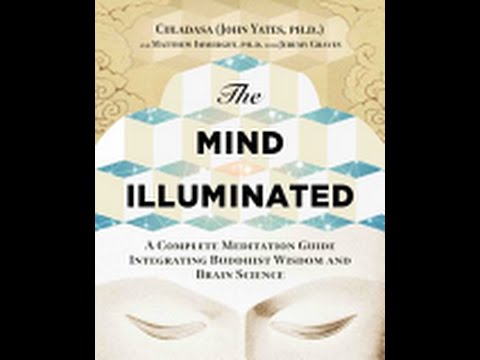 One of my new favorite books is The Mind Illuminated: A Complete Meditation Guide Integrating Buddhist Wisdom and Brain Science by John Yates, a former Ph.D. professor of neuroscience turned full-time meditation teacher under the name Culadasa (xi). What he does especially well is translate the traditional stages on the path to Buddhist Awakening into a clear, user-friendly manual with many helpful illustrations.
For each of the ten stages, there is an emphasis on best practices for that phase of your development. And although the book is almost five hundred pages long, you would need to read less than a hundred pages to cover the basic overview and the tips for the first few stages toward Buddhist Awakening.
Despite common misunderstandings, it’s important to emphasize that Buddhist Awakening is not about becoming perfect in all aspects of your life; rather, it is about experientially understanding certain aspects about the nature of reality. And those particular Buddhist insights about impermanence, interconnectedness, and the cessation of suffering are most likely to happen when the mind is in a state of tranquility. So all that time you are spending on your meditation cushion is about building the skills of concentration and mindfulness necessary to reach the tranquil state of mind needed to have insight into the nature of reality as it actually is (xix).
Now, here’s a twist: many popular mindfulness programs today do not talk about all that becomes possible at advanced stages of meditation. Rather, they seek to use a stripped down, selective version of Buddhism (sometimes called “McMindfulness”) to lower stress, strengthen focus, and increase productivity. All of those are potentially worthy goals, but it is interesting to note that one could practice McMindfulness for decades, get some real benefit from the practice, but never move out of stage two or three from a more traditional Buddhist perspective.
To trace a few of the highlights of the stages of insight, Stage One is simply about establishing a regular daily practice of at least twenty minutes a day—and ideally forty-five minutes a day—which is not an easy feat. (I would add that if you are finding yourself regularly experiencing the common problem of falling asleep during meditation, “Stage Zero” in your practice may be getting more sleep each night as a staging ground for pursuing the Buddhist path.)
Stage Two focuses on how to shorten the frequency of mind-wandering during meditation and how to sustain your attention on the breath. And one of the best tips I could pass along here is to be gentle with yourself when distractions inevitably arise. Instead of beating yourself up internally, simply note the distraction compassionately, practice gently letting it go, and return your attention to your breath.
As you continue to progress,
You have mastered Stage Three when forgetting and mind-wandering no longer occur, and the breath stays continually in conscious awareness…. The mind still roams, but it’s “tethered” to the meditation object, never getting too far away; the unconscious mental processes that sustain attention never entirely let go of the meditation object. Because attention no longer shifts automatically to objects of desire and aversion, you can purposely hold your attention on an emotionally neutral object like the breath for extended periods of time. (111)
“Continuous Attention to the Meditation Object” is the first of four traditional milestones on the path to Awakening, and it is the transition point from being a Novice Meditator to becoming a Skilled Meditator. The other three milestones are “Sustained Exclusive Focus of Attention,” “Effortless Stability of Attention,” and “Persistence of the Mental Qualities of Tranquility and Equanimity.”
What I most appreciate about Culadasa and other practitioners of what is sometimes called Pragmatic Buddhism is the emphasis that Buddhist Awakening is attainable not only by cloistered monks, but also by everyday people who work demanding jobs and have families. However, it does take time and commitment.
To give you a few parallel examples (and I would encourage you to relatedly think of similar examples in your own life), I find it pretty easy to run four miles twice/week with a third, longer run once/week. I’ve also successfully trained for a both a half marathon and a Sprint Triathlon. But I’ve failed twice in training for an Olympic Distance Triathlon. Both times, the twice/day trainings started taking up more time and energy than I was willing to expend about halfway through the four-month training period. I could have continued, but chose other priorities.
Similarly, I am a pretty good guitar player and semi-passable pianist. But my progress plateaued on each instrument in high school, when I was unwilling to keep ratcheting up the required periods of practice needed to improve. When the needed thirty minutes/day became an hour/day — with a projected 90 minutes to two-hours a day soon-to-be needed, I hit the eject button. That being said, I conversely want to emphasize how much is possible if you do choose to spend an hour a day on something you are passionate about, coupled with a weekly time of more intensive practice, and occasional (or annual) retreats of a week or more. And I’m not only talking about Buddhism. Your interest may be athletic or artistic, scholarly or pure fun. My point is to recognize the power of sustained commitment over a long period of time in the same direction.
Tolstoy’s War and Peace may be 1,200 pages, but if you read only 10 pages/day, you can finish it in four months. Likewise, progressing on the path toward mental tranquility and emotional equanimity is possible. When I meditate, I do sometimes wish that the timer would go-ahead-and-ring-already, so that I can go on to the next task in my schedule. But especially in our 24/7 world of constant connectivity, there are also times I look forward to meditation as a time to practice letting go of control and simply experience reality as it is with the arising and passing away of each next present moment. (I’ll also add that if sitting down for 45 minutes of counting your breath seems impossible, I recommend more active forms of contemplation such as Tai Chi, yoga, or walking the labyrinth.)
As one of my mentors used to say, “Practice may not make perfect, but it does make permanent”: whatever we practice becomes increasingly second nature to us. Practicing meditation literally changes your mind. In that spirit, may you be filled with loving-kindness. May you be peaceful and at ease. May you be well.
The Rev. Dr. Carl Gregg is a trained spiritual director, a D.Min. graduate of San Francisco Theological Seminary, and the minister of the Unitarian Universalist Congregation of Frederick, Maryland. Follow him on Facebook (facebook.com/carlgregg) and Twitter (@carlgregg).
Learn more about Unitarian Universalism: http://www.uua.org/beliefs/principles
Previous Post

May 10, 2016
Julia Ward Howe: Founding Mothers of Unitarian Universalism
Browse Our Archives
Select a Category Advent Anti-Racism Archaeology Atheism Baptism Best of the Year List Book Reviews Buddhism Catholicism Christian Education Church and State Church Planting Climate Change Conscientious Objection to War Creation Spirituality Death Penalty Didache Disability Rights Discernment Easter Ecology Emergent Church Movement Empire-Critical Ethics Evolution Feminist Theology Film Reviews Gandhi Gospel of Mark Gun Control Hinduism Immigration Reform Interfaith Islam JFK Judaism Jungian Spirituality Lectionary Commentary Lent Letters to the Editor LGBT Marriage MLK Multiculturalism Mysticism Nonviolent Activism Occupy Paganism (Earth-centered Religions) Parables Paul Pluralism Politics Process Theology Quantum Physics Requiescat In Pace Seminary and Divinity School Sermon Series Retrospective Sermons Spiritual Direction Spiritual Practices Stewardship (Fundraising) The Book of J The Wheel of the Year (Paganism) Theoblogger Challenge Triathlon Uncategorized Unitarian Universalism Worship Resources Youth Ministry
Select a Month July 2026 May 2026 March 2026 November 2025 October 2025 August 2025 February 2025 December 2024 October 2024 March 2024 January 2024 December 2023 November 2023 March 2023 February 2023 January 2023 December 2022 November 2022 August 2022 March 2022 February 2022 January 2022 December 2021 September 2021 August 2021 July 2021 June 2021 May 2021 February 2021 January 2021 December 2020 August 2020 June 2020 May 2020 April 2020 March 2020 February 2020 January 2020 December 2019 November 2019 October 2019 September 2019 July 2019 June 2019 March 2019 February 2019 January 2019 December 2018 November 2018 October 2018 September 2018 June 2018 May 2018 April 2018 March 2018 February 2018 January 2018 December 2017 November 2017 October 2017 September 2017 August 2017 July 2017 June 2017 May 2017 April 2017 March 2017 February 2017 January 2017 December 2016 November 2016 October 2016 September 2016 August 2016 June 2016 May 2016 April 2016 March 2016 February 2016 January 2016 December 2015 November 2015 October 2015 September 2015 August 2015 July 2015 June 2015 May 2015 April 2015 March 2015 February 2015 January 2015 December 2014 November 2014 October 2014 August 2014 July 2014 June 2014 May 2014 April 2014 March 2014 February 2014 January 2014 December 2013 November 2013 October 2013 September 2013 August 2013 July 2013 June 2013 May 2013 April 2013 March 2013 February 2013 January 2013 December 2012 November 2012 October 2012 September 2012 August 2012 July 2012 June 2012 May 2012 April 2012 March 2012 February 2012 January 2012 December 2011 November 2011 October 2011 September 2011 August 2011 July 2011 June 2011 May 2011 April 2011 March 2011 February 2011 January 2011 December 2010 November 2010 October 2010 August 2009 July 2009 May 2009
Follow Us!
TAKE THE
Religious Wisdom Quiz
What does "Eli" mean in Hebrew?
Select your answer to see how you score.
Strength in God My God Holy one The Lord saves
Related posts from Carl Gregg
Lodro Rinzler’s Millennial Hipster Buddhism

What Happens When You Immerse Yourself in the...
What Is “The Fourth Turning of Buddhism”?
Becoming a Buddha, not a Buddhist
TRENDING AT PATHEOS More Voices

Reading America at 250: A Nation Wrestles With...
As part of my own reflection on the 250th anniversary of the...

Whenever I am reading a book or listening to an argument, I...

President Trump Ban Animal Torture Videos on Facebook
Call for Stricter Regulations of Animal Abuse Content on Facebook Although President...

Draft Amendments to Address Ritual Abuse in New...
The proposed changes would make it illegal for individuals in domestic partnerships...

How Bans on LGBTQ+ Student Clubs Threaten Religious...
On June 20, 2025, the State of Texas passed Senate Bill 12....

The Truth About the Gen Z Revival
This past year, there has been a lot of media buzz surrounding...
view all More Voices blogs
Ad-Free & Subscriber Log-In Subscription Support
- About Us
- 2026 Calendar
- Videos
- Podcasts
- Library of World Religions
- Faith In Media Tracker
- Advertise With Us
- Write for Us
- Privacy Policy
- Terms of Service
- Do Not Sell My Data
- Contact Us
- Radiant Digital
- Manage Newsletter Subscriptions
- Unsubscribe From Notifications
- Sitemap
Copyright 2008-2026, Patheos. All rights reserved.
Subscription Support Ad-Free & Subscriber Log-In
Follow Patheos