
BuddhistCatholicContemplativeEvangelicalGeneral ChristianHinduJewishLatter-day SaintMuslimNew VisionsProgressive Christian
Beliefs
- Buddhist
- Catholic
- Contemplative
- Evangelical
- General Christian
- Hindu
- Jewish
- Latter-day Saint
- More Voices
- Muslim
- New Visions
- Pagan
- Progressive Christian
Topics
- Religion News
- Food and Religion
- Sports and Religion
- Religious Art
- Religious Music and Entertainment
- Religious Events
- History and Religion
- Style and Religion
- Politics and Religion
- Women in Religion
- Recreation Outdoors and Religion
- Business Finance and Religion
- Careers Workplace and Religion
- Education and Religion
- Family Parenting and Religion
- Health Fitness and Religion
- Home and Religion
- Relationships and Religion
- Technology and Religion
- Travel and Religion
Columnists
- Buddhist Columnists
- Business Finance and Religion Columnists
- Careers Workplace and Religion Columnists
- Catholic Columnists
- Contemplative Columnists
- Education and Religion Columnists
- Evangelists Columnists
- Family Parenting and Religion Columnists
- General Christian Columnists
- Health Fitness and Religion Columnists
- Hindu Columnists
- History and Religion Columnists
- Home and Religion Columnists
- Jewish Columnists
- More Voices Columnists
- Latter Day Columnists
- Muslim Columnists
- New Visions Columnists
- Nonreligious Columnists
- Pagan Columnists
- Politics and Religion Columnists
- Progressive Columnists
- Recreation Outdoors and Religion Columnists
- Relationships and Religion Columnists
- Religion News Columnists
- Religious Art Columnists
- Religious Events Columnists
- Religious Music and Entertainment Columnists
- Sports and Religion Columnists
- Style and Religion Columnists
- Technology and Religion Columnists
- Travel and Religion Columnists
- Women in Religion Columnists
Resource Library
- 2026 Calendar
- Library of World Religions
- The 100 Most Holy Places on Earth
- Patheos Answers
- Podcasts
- Videos
- Faith Leaders Database
- Anglican Episcopalian
- Bahai
- Baptist
- Buddhism
- Christianity
- Confucianism
- Eastern Orthodoxy
- Hinduism
- Holiness and Pentecostal
- ISKCON
- Islam
- Judaism
- Lutheran
- Methodist
- The Church of Jesus Christ of Latter-day Saints
- New Age
- Paganism
- Presbytarian and Reformed
- Protestantism
- Religion Behind the Scenes
- Roman Catholic
- Scientology
- Shia Islam
- Sikhism
- Sufism
- Sunni Islam
- Taoism
- Zen
- See all religions
Research Tools
 Ad-Free & Subscriber Log-In Subscription Support
Ad-Free & Subscriber Log-In Subscription Support
Follow Patheos 

- Trending:
- Forgiveness
- |
- Marriage
- |
- Consciousness
- |
- Death Penalty
- |
- Election
- |
- Halloween

- Home
- More Voices
- Beyoncé, Black Panthers, & W.E.B. Du Bois: Developing “Double Consciousness”
Beyoncé, Black Panthers, & W.E.B. Du Bois: Developing “Double Consciousness”
Last updated on: February 23, 2016 at 10:15 am by Carl Gregg
Beyoncé, Black Panthers, & W.E.B. Du Bois: Developing “Double Consciousness” 2016-02-23T10:15:11-05:00 Carl Gregg
Patheos Explore the world's faith through different perspectives on religion and spirituality! Patheos has the views of the prevalent religions and spiritualities of the world.
W.E.B. Du Bois (1868 – 1963) was the first African American to earn a doctorate 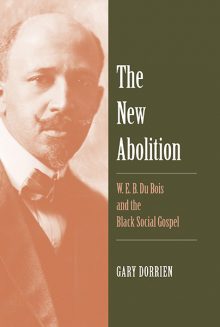 from Harvard University. He was one of the co-founders of the NAACP, the National Association for the Advancement of Colored People. And he was a fierce activist for racial equality for many decades. If you want to learn more about Du Bois, there is an excellent new book by Gary Dorrien titled The New Abolition W. E. B. Du Bois and the Black Social Gospel (Yale University Press, 2015).
But perhaps the best entry point into Du Bois’s life and thought is his own book The Souls of Black Folk. For now, I invite you to hear just one sample of his prose:
If in the heyday of the greatest of the world’s civilizations, it is possible for one people ruthlessly to steal another, drag them helpless across the water, enslave them, debauch them, and then slowly murder them by economic and social exclusion until they disappear from the face of the earth — if the consummation of such a crime be possible in the twentieth century, then our civilization is vain and the republic a mockery and a farce. (26)
Du Bois could write—powerfully and devastatingly—and these words remain relevant today in our age of the #BlackLivesMatter movement, well over a century after they were first published in Du Bois’s 1899 The Philadelphia Negro.
Another reason that Du Bois’s perspective continues to be relevant, especially to religious progressives, is that he had a strong skepticism toward religious orthodoxy. For instance, back in 1940, he did not hold back when delivering a commencement address at a historically Christian university: he called them out for “a childish belief in fairy tales, a word-of-mouth adherence to dogmas, and a certain sectarian exclusiveness.’” He criticized their teachings about Jesus as “a miserable apprehension of the teaching of Christ.”
At the same time, Du Bois, also had a
spiritual wellspring of his own, a keen appreciation of Jesus, and a lover’s quarrel with the black church. His writings were strewn with religious images and references throughout his career, even after he supposedly dropped religion for Marxism…. “Du Bois was not anti-religious; he was against faith used for fraud, belief used to bully, and Christianity when used to control….” (22-23)
Indeed, I suspect Du Bois would concur with Pope Francis’s blunt evaluation last week of Donald Trump’s position on immigration: “A person who thinks only about building walls, wherever they may be, and not building bridges, is not Christian.” Go, Pope Frank!
Returning to Du Bois, one of the many fascinating details about his life is that he died at age 95 on August 27, 1963, the same day that thousands of Americans were on their way to the March on Washington for Jobs and Freedom. In a symbolic passing of the torch, the day after Du Bois died, The Rev. Dr. Martin Luther King, Jr. took to the stage in front of the Lincoln Memorial to deliver his “I Have a Dream” speech.
Dr. King and the Civil Rights Movement did not emerge out of nowhere. King and many of his allies were part of a much larger black social gospel movement that started long before them (25) And it helps to step periodically out from the trenches of peace and justice work to take a longer view at how the work for peace and justice in one generation can lay the groundwork, often in unpredictable ways, for progress in the next generation.
When I first signed-up for an anti-racism workshop more than a decade ago, the “Continuum on Becoming an Anti-Racist, Multicultural Institution” was one of the parts of the training that most resonated with me. As with many open-minded, curious, progressive people, I found it relatively easy intellectually to begin to see the difference between individual racism (“personal prejudice”) and institutional racism—the more insidious systemic bias that is intricately woven into our criminal justice, employment, housing, healthcare, political and education systems, which privileges whites and discriminates against non-whites. Increasingly, I have become aware that changing the minds of individuals is an important first step in the long journey of dismantling such institutionalized racism.
Studying this continuum over time has led me to celebrate how far we have already come (thanks to Du Bois, King, and so many others), recognize how far we have to go, and see some steps needed to get there. Specifically, you’ll see on the continuum chart three paradigm shifts regarding racial and cultural differences: (1) experiencing differences negatively, (2) tolerating differences paternalistically, and (3) celebrating differences. As a native son of South Carolina, I know all too well the history of exclusive, officially segregated institutions — and their ongoing effects that continue into the present. We are right to celebrate that we have made significant progress on the continuum toward rectifying many obvious injustices.
That being said, it is important to recognize that progress along this continuum often happens not in a linear progression, but in a spiral that loops backward even as it moves forward. From that perspective, many of the “progressive” (but still majority-white) institutions of which I have been a part are what that continuum calls “An Awakening Institution” that is increasingly interested in “Anti-Racism Analytic Change.” This continuum invites us to see that two tests of whether those institutions are continuing to awaken are the following:
- Are we sponsoring programs of anti-racism training?
- Are we developing deeper understandings of accountability to oppressed communities?
If not, then these supposedly “progressive” institutions may well be going back to sleep.
The challenge is to admit that we often find ourselves in the messy middle. That confession is not about self-flagellation; it is about emboldening us to do what it takes to become a more inclusive, transformed institution. Looking at a few more of the bullet points on the continuum, it is impossible to say in advance what it would look like with any given institution to “Intentionally redefine, restructure, and act upon anti-racist perspective on all levels of [our] internal life and [our] relationships to the community” and “Audit and restructure all aspects of institutional life for full participation of people of color, including their worldview, culture, and lifestyles.” But in the words of one black liberation theologian, “Set your pace as if you are going to do [anti-racist] work for the rest of your life. There is joy in this work, because it enhances your humanity.”
This turning point from the messy middle of paternalistically tolerating differences (in intentional and unintentional ways) to authentically celebrating differences is another place where Dr. Du Bois can be a guide for us today. Du Bois wrote that living as a person of color in a white supremacist country has given people of color a “double consciousness” (30). There is a similar “double consciousness” from growing up female in a sexist culture; being in the closet for many Lesbian, Gay, Bisexual, and Transgender folk; or for people living with disabilities in an ableist society.
Du Bois wrote that his experience of double consciousness emerged from being forced to look at himself “through the eyes of others, of measuring one’s soul by the tape of a world that looks on in amused contempt and pity” (187). Du Bois’s transformative response was not to hide the Black part of his double consciousness, but instead to hold up cultural and racial differences in tension with one another. Memorably, in The Souls of Black Folk, Du Bois began “each chapter with double epigraphs pairing Negro spirituals with verses by Byron, Schiller, Whittier, Elizabeth Barrett Browning, Swinburne, Tennyson, and others” (208). In a racist, segregated society, Du Bois asserted the equivalency of Black culture with White European culture. (That’s one of many ways he helped set the stage for Dr. King.)
Today, this practice of “double consciousness” is called Intercultural Competency: the ability to move “in and out of different cultural worldviews,” build bridges between cultures, and integrate cross-cultural perspectives. People of color have long been forced to develop intercultural competency to survive amidst the white supremacist culture into which they were born. The challenge of becoming an anti-racist, multicultural institution is for those of us who have been “taught that we are white” to also increasingly develop the a “multiple consciousness” or intercultural competency. That doesn’t mean that we have to get rid of white European culture, but if we want to build a beloved community, we do have to be less of a white European monoculture — and instead embrace a multicultural pluralism in which European culture is one among many cultural differences that are celebrated.
To give you a recent example, I will start with two sentences you will rarely see from me:
- “Let’s talk about the Super Bowl.”
- “Let’s talk about Beyoncé”
In general, I’m not a big fan of either the Super Bowl or Beyoncé. But I’m very interested in Beyoncé’s performance at this year’s Super Bowl halftime show.
Super Bowl 50 was held in the San Francisco Bay Area, but it was not the 50th anniversary of the Super Bowl that Beyoncé was interested in celebrating. By outfitting her back-up dancers in black leather and Black Panther-style berets, Beyoncé reminded the nation that the Super Bowl stadium was less than an hour’s drive from Oakland, where 50 years ago the Black Panthers were formed. Backstage, her dancers were photographed with their fists raised in the black power salute and holding a sign that read “Justice 4 Mario Woods,” who in December was “shot more than 20 times” by police in San Francisco, with at least six shots hitting him in the back.
To set the stage for this demonstration, Beyonce released a powerful video the day before the Super Bowl titled “Formation.” Among the many powerful images, the most moving is of a young black boy wearing a hoodie while dancing in front of a line of white police officers in riot gear — invoking the memory of 17-year-old Trayvon Martin, who was murdered four years ago this coming Friday by a white neighborhood watch volunteer who perceived a young black-skinned male wearing a hoodie as life-threatening. Unlike what happened to Trayvon, when the young black child in the video throws up his hands at the end of his dance, the police officers raise their hands in the “hands up, don’t shoot” gesture — invoking the 2014 murder of Michael Brown in Ferguson, Missouri by a white police officer. The video then cuts to a wall of graffiti that says, “Stop shooting us.”
Through the lens of W.E.B. Du Bois, I invite you to consider that Beyoncé is challenging the Super Bowl audience to have a double consciousness in regard to race: to see the world more clearly by viewing it not only from a perspective of white privilege, but also from the Black experience of institutionalized racism. There is a lot more to say—from the unconscious (or perhaps conscious) racism behind the protests about President Obama’s right to nominate a new Supreme Court Justice, to the #OscarsSoWhite protest movement that will be coming to a head Sunday evening.
For now, I will close with these words from Peter Morales, the first Latino president of the Unitarian Universalist Association:
My dream…is that we confess that we do not have all the answers. We need to admit that this is hard work, that [cultivating anti-racism and multiculturalism] is as rigorous a spiritual discipline as we will encounter…. We not only have gifts to give each other, we are gifts to each other…. Our journey toward wholeness has just begun. We are not sure of the way. We have often lost our way in the past, believing our destination was in sight and easily reached. We were a bit arrogant and a bit naive. We are wiser now. We know we will not get there soon. And we know we need to walk together and walk humbly. Come. Let us make that journey together. One step at a time; paso por paso. Hand in hand; mano en mano. Come. Leave no one behind. Together, we can make this journey. Come. (405)
The Rev. Dr. Carl Gregg is a trained spiritual director, a D.Min. graduate of San Francisco Theological Seminary, and the minister of the Unitarian Universalist Congregation of Frederick, Maryland. Follow him on Facebook (facebook.com/carlgregg) and Twitter (@carlgregg).
Learn more about Unitarian Universalism: http://www.uua.org/beliefs/principles
Next Post

March 29, 2016 Remembering, Changing, Inventing: How Stories About Jesus Were Told
Browse Our Archives
Select a Category Advent Anti-Racism Archaeology Atheism Baptism Best of the Year List Book Reviews Buddhism Catholicism Christian Education Church and State Church Planting Climate Change Conscientious Objection to War Creation Spirituality Death Penalty Didache Disability Rights Discernment Easter Ecology Emergent Church Movement Empire-Critical Ethics Evolution Feminist Theology Film Reviews Gandhi Gospel of Mark Gun Control Hinduism Immigration Reform Interfaith Islam JFK Judaism Jungian Spirituality Lectionary Commentary Lent Letters to the Editor LGBT Marriage MLK Multiculturalism Mysticism Nonviolent Activism Occupy Paganism (Earth-centered Religions) Parables Paul Pluralism Politics Process Theology Quantum Physics Requiescat In Pace Seminary and Divinity School Sermon Series Retrospective Sermons Spiritual Direction Spiritual Practices Stewardship (Fundraising) The Book of J The Wheel of the Year (Paganism) Theoblogger Challenge Triathlon Uncategorized Unitarian Universalism Worship Resources Youth Ministry
Select a Month July 2026 May 2026 March 2026 November 2025 October 2025 August 2025 February 2025 December 2024 October 2024 March 2024 January 2024 December 2023 November 2023 March 2023 February 2023 January 2023 December 2022 November 2022 August 2022 March 2022 February 2022 January 2022 December 2021 September 2021 August 2021 July 2021 June 2021 May 2021 February 2021 January 2021 December 2020 August 2020 June 2020 May 2020 April 2020 March 2020 February 2020 January 2020 December 2019 November 2019 October 2019 September 2019 July 2019 June 2019 March 2019 February 2019 January 2019 December 2018 November 2018 October 2018 September 2018 June 2018 May 2018 April 2018 March 2018 February 2018 January 2018 December 2017 November 2017 October 2017 September 2017 August 2017 July 2017 June 2017 May 2017 April 2017 March 2017 February 2017 January 2017 December 2016 November 2016 October 2016 September 2016 August 2016 June 2016 May 2016 April 2016 March 2016 February 2016 January 2016 December 2015 November 2015 October 2015 September 2015 August 2015 July 2015 June 2015 May 2015 April 2015 March 2015 February 2015 January 2015 December 2014 November 2014 October 2014 August 2014 July 2014 June 2014 May 2014 April 2014 March 2014 February 2014 January 2014 December 2013 November 2013 October 2013 September 2013 August 2013 July 2013 June 2013 May 2013 April 2013 March 2013 February 2013 January 2013 December 2012 November 2012 October 2012 September 2012 August 2012 July 2012 June 2012 May 2012 April 2012 March 2012 February 2012 January 2012 December 2011 November 2011 October 2011 September 2011 August 2011 July 2011 June 2011 May 2011 April 2011 March 2011 February 2011 January 2011 December 2010 November 2010 October 2010 August 2009 July 2009 May 2009
Follow Us!
TAKE THE
Religious Wisdom Quiz
How many disciples did Jesus have?
Select your answer to see how you score.
Seven Thirty Twelve One hundred
Related posts from Carl Gregg

Reading America at 250: A Nation Wrestles With...


Andrew Holocek on the Power of Darkness

The Stories That Shape Us: Myths, Archetypes, &...
TRENDING AT PATHEOS More Voices

Reading America at 250: A Nation Wrestles With...
As part of my own reflection on the 250th anniversary of the...

Whenever I am reading a book or listening to an argument, I...

President Trump Ban Animal Torture Videos on Facebook
Call for Stricter Regulations of Animal Abuse Content on Facebook Although President...

Draft Amendments to Address Ritual Abuse in New...
The proposed changes would make it illegal for individuals in domestic partnerships...

How Bans on LGBTQ+ Student Clubs Threaten Religious...
On June 20, 2025, the State of Texas passed Senate Bill 12....

The Truth About the Gen Z Revival
This past year, there has been a lot of media buzz surrounding...
view all More Voices blogs
Ad-Free & Subscriber Log-In Subscription Support
- About Us
- 2026 Calendar
- Videos
- Podcasts
- Library of World Religions
- Faith In Media Tracker
- Advertise With Us
- Write for Us
- Privacy Policy
- Terms of Service
- Do Not Sell My Data
- Contact Us
- Radiant Digital
- Manage Newsletter Subscriptions
- Unsubscribe From Notifications
- Sitemap
Copyright 2008-2026, Patheos. All rights reserved.
Subscription Support Ad-Free & Subscriber Log-In
Follow Patheos