
BuddhistCatholicContemplativeEvangelicalGeneral ChristianHinduJewishLatter-day SaintMuslimNew VisionsProgressive Christian
Beliefs
- Buddhist
- Catholic
- Contemplative
- Evangelical
- General Christian
- Hindu
- Jewish
- Latter-day Saint
- More Voices
- Muslim
- New Visions
- Pagan
- Progressive Christian
Topics
- Religion News
- Food and Religion
- Sports and Religion
- Religious Art
- Religious Music and Entertainment
- Religious Events
- History and Religion
- Style and Religion
- Politics and Religion
- Women in Religion
- Recreation Outdoors and Religion
- Business Finance and Religion
- Careers Workplace and Religion
- Education and Religion
- Family Parenting and Religion
- Health Fitness and Religion
- Home and Religion
- Relationships and Religion
- Technology and Religion
- Travel and Religion
Columnists
- Buddhist Columnists
- Business Finance and Religion Columnists
- Careers Workplace and Religion Columnists
- Catholic Columnists
- Contemplative Columnists
- Education and Religion Columnists
- Evangelists Columnists
- Family Parenting and Religion Columnists
- General Christian Columnists
- Health Fitness and Religion Columnists
- Hindu Columnists
- History and Religion Columnists
- Home and Religion Columnists
- Jewish Columnists
- More Voices Columnists
- Latter Day Columnists
- Muslim Columnists
- New Visions Columnists
- Nonreligious Columnists
- Pagan Columnists
- Politics and Religion Columnists
- Progressive Columnists
- Recreation Outdoors and Religion Columnists
- Relationships and Religion Columnists
- Religion News Columnists
- Religious Art Columnists
- Religious Events Columnists
- Religious Music and Entertainment Columnists
- Sports and Religion Columnists
- Style and Religion Columnists
- Technology and Religion Columnists
- Travel and Religion Columnists
- Women in Religion Columnists
Resource Library
- 2026 Calendar
- Library of World Religions
- The 100 Most Holy Places on Earth
- Patheos Answers
- Podcasts
- Videos
- Faith Leaders Database
- Anglican Episcopalian
- Bahai
- Baptist
- Buddhism
- Christianity
- Confucianism
- Eastern Orthodoxy
- Hinduism
- Holiness and Pentecostal
- ISKCON
- Islam
- Judaism
- Lutheran
- Methodist
- The Church of Jesus Christ of Latter-day Saints
- New Age
- Paganism
- Presbytarian and Reformed
- Protestantism
- Religion Behind the Scenes
- Roman Catholic
- Scientology
- Shia Islam
- Sikhism
- Sufism
- Sunni Islam
- Taoism
- Zen
- See all religions
Research Tools
 Ad-Free & Subscriber Log-In Subscription Support
Ad-Free & Subscriber Log-In Subscription Support
Follow Patheos 

- Trending:
- Forgiveness
- |
- Marriage
- |
- Consciousness
- |
- Death Penalty
- |
- Election
- |
- Halloween

- Home
- More Voices
- The Radical Martin Luther King, Jr.: Why We Need a Third Reconstruction in America
The Radical Martin Luther King, Jr.: Why We Need a Third Reconstruction in America
Last updated on: January 18, 2016 at 9:38 am by Carl Gregg
The Radical Martin Luther King, Jr.: Why We Need a Third Reconstruction in America 2016-01-18T09:38:47-05:00 Carl Gregg
Patheos Explore the world's faith through different perspectives on religion and spirituality! Patheos has the views of the prevalent religions and spiritualities of the world.
The Rev. Dr. Martin Luther King, Jr. was only thirty-nine years old when he was murdered. If King were alive today, he would be celebrating his eighty-seventh birthday. His prophetic activism for peace and justice ended tragically early.
Looking back, less than five years passed from King’s famous “I Have a Dream” speech in 1963 to his assassination in 1968. Exactly one year to the day before he was killed, he preached a powerful and controversial sermon from the pulpit of Riverside Church in New York City titled “Beyond Vietnam: A Time to Break Silence.” And in the next year—that turned out to be the final one of his short life—he was organizing a “Poor People’s Campaign.” But neither that 1967 sermon against the War in Vietnam, nor his 1968 campaign for an “Economic and Social Bill of Rights” came out of nowhere. In many ways, the 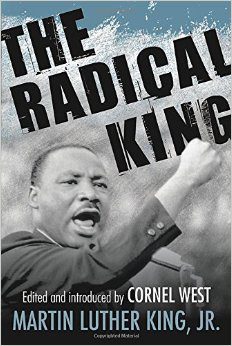 “Radical King” had been there for years (v). And if you are interested in going deeper, there is an excellent new collection of King’s speeches from Beacon Press titled The Radical King that is edited and introduced by Dr. Cornel West.
Significantly, radical doesn’t just mean extreme; it also has the connotation of getting to the root. King had long understood that racism is a symptom of deeper systemic problems — and that racial injustice is inextricably linked with materialism (economic injustice) and militarism (the misuse of blood and treasure—that should be used to support the common good—to instead support the Military Industrial Complex). He called racism, materialism, and militarism the “triple threats” to building the beloved community (91).
Relatedly, the context for King’s “I Have a Dream Speech” is often referred to as the “March on Washington.” But the full name, the “March on Washington for Jobs and Freedom,” is one of many signs that King had long been concerned with what he called the “inseparable twins” of racial and economic injustice (39). And in that 1967 sermon at Riverside Church, King spoke directly about how the funds for President Johnson’s War on Poverty had been diverted to War in Vietnam. In King’s words,
“I knew that America would never invest the necessary funds or energies in rehabilitation of its poor so long as adventures like Vietnam continued to draw men and skills and money like some demoniacal destructive suction tube. So I was increasingly compelled to see the war as an enemy of the poor and to attack it as such.” (103)
We have seen similar patterns of misappropriated resources and war profiteering repeated in recent years. Consider how much could have been accomplished if all the trillions of taxpayer dollars — not to mention lives, time, and energy — spent in the Iraq and Afghanistan Wars had instead been used on rebuilding infrastructure, improving education, and funding social program here at home (204).
Again, however, despite this new boldness at the end of King’s life, in many ways, “The Radical King” had been there for years. Dr. King’s courageous condemnation of the War in Vietnam emerged, among many influences, out of his training as a minister in the black prophetic tradition. Many of you will recall parallels to another sermon from the black prophetic tradition that drew controversy during President Obama’s first presidential campaign in 2008. After rehearsing a litany of American ethical failures from Japanese-American internment camps, to a history of racism, to all the civilians who have been killed as “collateral damage” by U.S. weapons, The Rev. Jeremiah Wright (President Obama’s former pastor at Trinity United Church of Christ in Chicago) said that we should sing not only “God Bless America,” but instead sometimes say, “God damn America…for killing innocent people…for treating our citizens as less than human.” Needless to say, that clip, taken out of its historical context, did not play well on Fox News.
I bring up that incident because on Thursday, April 4, 1968 — the same day in which Dr. King was later assassinated — he called Ebenezer Baptist Church in Atlanta, where he served as pastor, to say that the title for his Sunday sermon would be “Why America May Go to Hell” (ix). He was killed before he could preach that sermon. But as King had said in a speech less than two months earlier, “America, too, is going to hell if she doesn’t use her wealth. If American does not use her vast resources of wealth to end poverty and make it possible for all of God’s children to have the basic necessities of life, she, too, will go to hell” (248). In both cases, with both King and Wright, those strong words of dissent were spoken neither out of a hatred for America nor a disrespect the troops, but rather from a patriotic love that longs for America (including its military) to live up to its highest ideals, and to once again be known around the world not as a purveyor of “violence” but as an example of “revolution, freedom, and democracy” (211).
In this spirit of recognizing the “Radical King,” who sought to get to the root of the problem of systemic injustice, it is also vital to name that Dr. King’s “dream” is about so much more than electing our nation’s first black president. King’s dream of a Beloved Community is about organizing our society to recognize what my own tradition of Unitarian Universalism calls our First Principle, “The inherent worth and dignity of every person” — ultimately extending out to our Sixth Principle: “The goal of world community with peace, liberty, and justice for all.”
And at a time of increasing wealth inequality, when the word socialism is being resurrected, it’s significant to note that in 1966, when wealth inequality was much less extreme than it is today, Dr. King nevertheless said, “There must be a better distribution of wealth and maybe America must move toward a democratic socialism” (ix). Dr. King had first read Marx’s Das Kapital and The Communist Manifesto in 1949 — almost two decades before his death — during his break over the Christmas holidays (41). In reflecting on those books, King wrote:
Marx had revealed the danger of profit motive as the sole basis of an economic system: capitalism is always in danger of inspiring men to be more concerned about making a living than making a life. We are prone to judge success by the index of our salaries or the size of our automobiles, rather than by the quality of our service and relationship to humanity…. Insofar as Marx posited a metaphysical materialism, an ethical relativism, and a strangulating totalitarianism, I responded with an unambiguous “no”; but insofar as he pointed to weaknesses of traditional capitalism, contributed to the growth of a definite self-consciousness in the masses, and challenged the social conscience of the Christian churches, I responded with a definite “yes.” (43)
That’s similar to what I’ve posted about previously as an “Organic Marxism” for the twenty-first century: the need for a new “New Deal.”
And speaking of what it would look like to continue to turn King’s Dream into deeds, just this past March we celebrated the fiftieth anniversary of the Selma-to-Montgomery Marches. And when I think about the people carrying on King’s legacy today, one of the first names that comes to mind is The Rev. Dr. William Barber, leader of the Moral Mondays movement in North Carolina against voting rights restrictions.
Looking back two years earlier to 2013, when we celebrated the fiftieth anniversary of the March on Washington for Jobs and Freedom, Barber’s activism helped catalyze years of grassroots organizing to ensure that date was not merely about remembering the past: “Throughout the hot, wet summer of 2013, tens of thousands of people came for thirteen consecutive Moral Mondays. By the end of the legislative session, nearly a thousand people had been arrested in the largest wave of mass civil disobedience since the lunch counter sit-ins of 1960” (Barber x-xi).
Barber is convinced that we are in the midst of what could potentially be — what needs to be— a “Third Reconstruction” in our nation’s history. As some of you may recall from my election post back in November, there was a paradigm shift in our Constitutional framework in the wake of the Civil War:
The Thirteenth Amendment [of 1865] abolished slavery. The Fourteenth Amendment [of 1868] nationalized citizenship and made the federal government into the guarantor of American rights. And the Fifteenth Amendment [of 1870] gave all men the right to vote…. The total effect was…a revolution of national purposes and constitutional design — not simply a restoration of the Founders’ Union. (103)
Those changes were all a part of our First Reconstruction following the Civil War. However, even though President Lincoln’s 1863 Emancipation Proclamation freed the enslaved members of our country, a White Supremacist response led to racist lynch mobs and the founding of the KKK five years later in 1868. Moreover, to keep the now-freed people of color segregated, the White Supremacist backlash to the First Reconstruction was codified into Jim Crow laws, culminating in the 1896 Supreme Court case, Plessy v. Ferguson, which ruled “separate but equal” to be Constitutional.
After a century of segregation, the Civil Rights Movement led to a Second Reconstruction that started with 1954’s “Brown v. Board of Education” (which overturned Plessy v. Ferguson and ruled segregation in public education unconstitutional) and culminated in the Civil Rights Act of 1964 and the Voting Rights Act of 1965 (118-119).
Just as there was a White Supremacist backlash to the First Reconstruction (lynch mobs, the KKK, and segregation), there was also a White Supremacist reaction to the Second Reconstruction of the Civil Rights Movement. Over the past fifty years since the end of the Second Reconstruction, systemic racism has become less blatant, but increasingly insidious. And it will take nothing less than a Third Reconstruction to dismantle what has been called The New Jim Crow: Mass Incarceration in an Age of Colorblindness, a racially biased enforcement of our criminal justice system (xii – xiii). If you have not read The New Jim Crow by Michelle Alexander, I can’t recommend it highly enough.
For now, I’ll give just a few highlights about the New Jim Crow that show the need for a Third Reconstruction to live more fully into the promise of the American experiment. Consider, for example, that even though there are “nearly identical rates of illegal drug use among whites and blacks, only a single percentage point between them,” there is a much higher percentage of blacks prosecuted for drug use (264). “In some states, black men have been admitted to prison on drug charges at rates twenty to fifty times greater than those of white men” (7). As a result of this racial bias, “No other country in the world imprisons so many of its racial or ethnic minorities. The United States imprisons a larger percentage of its black population than South Africa did at the height of apartheid” (6). In this light, calling for a Third Reconstruction to make systemic changes is not hyperbolic: “Today there are more African-American adults under correctional control — in prison or jail, on probation or parole — than were enslaved in 1850, a decade before the Civil War began.”
Perversely, this biased use of the criminal justice system to insidiously enforce a New Jim Crow exploits a loophole in the 13th Amendment (which was part of the First Reconstruction). The 13th Amendment made slavery and involuntary servitude unconstitutional “except as a punishment for crime whereof the party shall have been duly convicted” (72). And as Michele Alexander’s book details,
Once you’re labeled a felon, the old forms of discrimination — employment discrimination, housing discrimination, denial of the right to vote, denial of educational opportunity, denial of food stamps and other public benefits, and exclusion from jury service — are suddenly legal. As a criminal, you have scarcely more rights, and arguably less respect, than a black man living in Alabama at the height of Jim Crow. We have not ended racial caste in America; we have merely redesigned it. (2)
This racist history is why it is important to build a movement not around #AllLivesMatter (although all lives certainly do matter), but around advocating, in particular, that #BlackLivesMatter — because black lives are the ones that have most often not mattered in our country’s history. And in seeking to carry on King’s legacy in 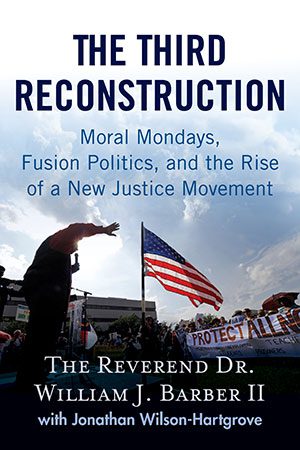 this age of needing a Third Reconstruction, Rev. Barber calls for a focus on protecting Voting Rights (a centerpiece of the Second Reconstruction), which have been eroding in recent years (58, 125). (For more, see Barber’s book The Third Reconstruction: Moral Mondays, Fusion Politics, and the Rise of a New Justice Movement.)
Accordingly, I was heartened to hear President Obama pick up on this theme in his final State of the Union address to counteract the baseless fear-mongering around non-existent “Voter Fraud,” which is a cynical attempt to suppress voter turnout among racial minorities and people who are poor. In the president’s words: “We’ve got to make it easier to vote, not harder. We need to modernize it for the way we live now. This is America: We want to make it easier for people to participate.” President Obama continued by name checking Dr. King explicitly: “Our brand of democracy is hard. But…[we are] inspired by those voices of fairness and vision, of grit and good humor and kindness…. Voices Dr. King believed would have the final word—voices of unarmed truth and unconditional love.”
For now, I’ll conclude with a quote from Chris Crass (a racial justice activist from mu own Unitarian Universalist tradition), who has been especially inspiring to me recently in seeking to model a way of carrying on the work of Dr. King today. For now, I’ll share with you just one passage from Crass’s book, Towards the “Other America”: Anti-Racist Resources for White People Taking Action for Black Lives Matter:
To become an anti-racist faith community, the key question, for a white / white majority community, is not, “How do we get people of color to join our faith community?” It is, “How can we make a prolonged, spirituality-rooted, engaged commitment to uprooting white supremacy within our community and take ongoing collective action to challenge it in society?
Our goal is not to have white people sit alongside a person of color so as to affirm that those white people aren’t racist. Our goal is to build and be part of a beloved community united to end structural oppression and unleash collective liberation in our congregations….schools, neighborhoods, workplaces, and throughout society….
My goal isn’t to be a great ally. My goal is the abolition of white supremacist capitalist patriarchy and the building up of a multiracial democracy with economic, gender and racial justice for all… (171-172).
The Rev. Dr. Carl Gregg is a trained spiritual director, a D.Min. graduate of San Francisco Theological Seminary, and the minister of the Unitarian Universalist Congregation of Frederick, Maryland. Follow him on Facebook (facebook.com/carlgregg) and Twitter (@carlgregg).
Learn more about Unitarian Universalism:
http://www.uua.org/beliefs/principles
Next Post

February 2, 2016 Rewatching “Groundhog Day” as a Spiritual Practice
Browse Our Archives
Select a Category Advent Anti-Racism Archaeology Atheism Baptism Best of the Year List Book Reviews Buddhism Catholicism Christian Education Church and State Church Planting Climate Change Conscientious Objection to War Creation Spirituality Death Penalty Didache Disability Rights Discernment Easter Ecology Emergent Church Movement Empire-Critical Ethics Evolution Feminist Theology Film Reviews Gandhi Gospel of Mark Gun Control Hinduism Immigration Reform Interfaith Islam JFK Judaism Jungian Spirituality Lectionary Commentary Lent Letters to the Editor LGBT Marriage MLK Multiculturalism Mysticism Nonviolent Activism Occupy Paganism (Earth-centered Religions) Parables Paul Pluralism Politics Process Theology Quantum Physics Requiescat In Pace Seminary and Divinity School Sermon Series Retrospective Sermons Spiritual Direction Spiritual Practices Stewardship (Fundraising) The Book of J The Wheel of the Year (Paganism) Theoblogger Challenge Triathlon Uncategorized Unitarian Universalism Worship Resources Youth Ministry
Select a Month July 2026 May 2026 March 2026 November 2025 October 2025 August 2025 February 2025 December 2024 October 2024 March 2024 January 2024 December 2023 November 2023 March 2023 February 2023 January 2023 December 2022 November 2022 August 2022 March 2022 February 2022 January 2022 December 2021 September 2021 August 2021 July 2021 June 2021 May 2021 February 2021 January 2021 December 2020 August 2020 June 2020 May 2020 April 2020 March 2020 February 2020 January 2020 December 2019 November 2019 October 2019 September 2019 July 2019 June 2019 March 2019 February 2019 January 2019 December 2018 November 2018 October 2018 September 2018 June 2018 May 2018 April 2018 March 2018 February 2018 January 2018 December 2017 November 2017 October 2017 September 2017 August 2017 July 2017 June 2017 May 2017 April 2017 March 2017 February 2017 January 2017 December 2016 November 2016 October 2016 September 2016 August 2016 June 2016 May 2016 April 2016 March 2016 February 2016 January 2016 December 2015 November 2015 October 2015 September 2015 August 2015 July 2015 June 2015 May 2015 April 2015 March 2015 February 2015 January 2015 December 2014 November 2014 October 2014 August 2014 July 2014 June 2014 May 2014 April 2014 March 2014 February 2014 January 2014 December 2013 November 2013 October 2013 September 2013 August 2013 July 2013 June 2013 May 2013 April 2013 March 2013 February 2013 January 2013 December 2012 November 2012 October 2012 September 2012 August 2012 July 2012 June 2012 May 2012 April 2012 March 2012 February 2012 January 2012 December 2011 November 2011 October 2011 September 2011 August 2011 July 2011 June 2011 May 2011 April 2011 March 2011 February 2011 January 2011 December 2010 November 2010 October 2010 August 2009 July 2009 May 2009
Follow Us!
TAKE THE
Religious Wisdom Quiz
Go to this tiny creature, you sluggard! Observe its ways and be wise, for it has no commander yet stores provisions. What industrious insect is this?
Select your answer to see how you score.
The bee The ant The spider The grasshopper
Related posts from Carl Gregg
What Ta-Nehisi Coates Taught Me About “People Who...
The Transient and the Permanent in Christianity: Theodore...

Did the Exodus Happen? And What It Means...
Why "Spiritual And Religious" Is More Radical Than...
TRENDING AT PATHEOS More Voices

Reading America at 250: A Nation Wrestles With...
As part of my own reflection on the 250th anniversary of the...

Whenever I am reading a book or listening to an argument, I...

President Trump Ban Animal Torture Videos on Facebook
Call for Stricter Regulations of Animal Abuse Content on Facebook Although President...

Draft Amendments to Address Ritual Abuse in New...
The proposed changes would make it illegal for individuals in domestic partnerships...

How Bans on LGBTQ+ Student Clubs Threaten Religious...
On June 20, 2025, the State of Texas passed Senate Bill 12....

The Truth About the Gen Z Revival
This past year, there has been a lot of media buzz surrounding...
view all More Voices blogs
Ad-Free & Subscriber Log-In Subscription Support
- About Us
- 2026 Calendar
- Videos
- Podcasts
- Library of World Religions
- Faith In Media Tracker
- Advertise With Us
- Write for Us
- Privacy Policy
- Terms of Service
- Do Not Sell My Data
- Contact Us
- Radiant Digital
- Manage Newsletter Subscriptions
- Unsubscribe From Notifications
- Sitemap
Copyright 2008-2026, Patheos. All rights reserved.
Subscription Support Ad-Free & Subscriber Log-In
Follow Patheos