
BuddhistCatholicContemplativeEvangelicalGeneral ChristianHinduJewishLatter-day SaintMuslimNew VisionsProgressive Christian
Beliefs
- Buddhist
- Catholic
- Contemplative
- Evangelical
- General Christian
- Hindu
- Jewish
- Latter-day Saint
- More Voices
- Muslim
- New Visions
- Pagan
- Progressive Christian
Topics
- Religion News
- Food and Religion
- Sports and Religion
- Religious Art
- Religious Music and Entertainment
- Religious Events
- History and Religion
- Style and Religion
- Politics and Religion
- Women in Religion
- Recreation Outdoors and Religion
- Business Finance and Religion
- Careers Workplace and Religion
- Education and Religion
- Family Parenting and Religion
- Health Fitness and Religion
- Home and Religion
- Relationships and Religion
- Technology and Religion
- Travel and Religion
Columnists
- Buddhist Columnists
- Business Finance and Religion Columnists
- Careers Workplace and Religion Columnists
- Catholic Columnists
- Contemplative Columnists
- Education and Religion Columnists
- Evangelists Columnists
- Family Parenting and Religion Columnists
- General Christian Columnists
- Health Fitness and Religion Columnists
- Hindu Columnists
- History and Religion Columnists
- Home and Religion Columnists
- Jewish Columnists
- More Voices Columnists
- Latter Day Columnists
- Muslim Columnists
- New Visions Columnists
- Nonreligious Columnists
- Pagan Columnists
- Politics and Religion Columnists
- Progressive Columnists
- Recreation Outdoors and Religion Columnists
- Relationships and Religion Columnists
- Religion News Columnists
- Religious Art Columnists
- Religious Events Columnists
- Religious Music and Entertainment Columnists
- Sports and Religion Columnists
- Style and Religion Columnists
- Technology and Religion Columnists
- Travel and Religion Columnists
- Women in Religion Columnists
Resource Library
- 2026 Calendar
- Library of World Religions
- The 100 Most Holy Places on Earth
- Patheos Answers
- Podcasts
- Videos
- Faith Leaders Database
- Anglican Episcopalian
- Bahai
- Baptist
- Buddhism
- Christianity
- Confucianism
- Eastern Orthodoxy
- Hinduism
- Holiness and Pentecostal
- ISKCON
- Islam
- Judaism
- Lutheran
- Methodist
- The Church of Jesus Christ of Latter-day Saints
- New Age
- Paganism
- Presbytarian and Reformed
- Protestantism
- Religion Behind the Scenes
- Roman Catholic
- Scientology
- Shia Islam
- Sikhism
- Sufism
- Sunni Islam
- Taoism
- Zen
- See all religions
Research Tools
 Ad-Free & Subscriber Log-In Subscription Support
Ad-Free & Subscriber Log-In Subscription Support
Follow Patheos 

- Trending:
- Forgiveness
- |
- Marriage
- |
- Consciousness
- |
- Death Penalty
- |
- Election
- |
- Halloween

- Home
- More Voices
- Top 10 Best Books Read in 2015
Top 10 Best Books Read in 2015
Last updated on: December 28, 2015 at 9:42 am by Carl Gregg
Top 10 Best Books Read in 2015 2015-12-28T09:42:03-05:00 Carl Gregg
Patheos Explore the world's faith through different perspectives on religion and spirituality! Patheos has the views of the prevalent religions and spiritualities of the world.
The following are the top ten best books I’ve read since this time last year, not the best books published in 2015. For those keeping track, five were published in 2015, four in 2014, and one in 2007. The list is also in alphabetical order by the author’s last name because agonizing over a precise order would take all the fun out of remembering these books:
1. Alison Bechdel, Fun Home: A Family Tragicomic (2007): All the adulation for the Broadway 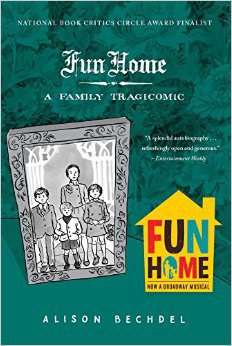 musical adaptation made me curious to read the original inspiration, and I’m glad I did:
A fresh and brilliantly told memoir from a cult favorite comic artist, marked by gothic twists, a family funeral home, sexual angst, and great books. This breakout book is a darkly funny family tale, pitch-perfectly illustrated with Bechdel’s sweetly gothic drawings.
2. Ta-Nehisi Coates, Between the World and Me (2015): Weighing in at less than 200 pages, Coates’ book is a brief, but devastatingly powerful and important book. A good introduction to why saying “Black Lives Matter” is necessary and “All Lives Matter” is insufficient:
Americans have built an empire on the idea of “race,” a falsehood that damages us all but falls most heavily on the bodies of black women and men—bodies exploited through slavery and segregation, and, today, threatened, locked up, and murdered out of all proportion. What is it like to inhabit a black body and find a way to live within it? And how can we all honestly reckon with this fraught history and free ourselves from its burden? Between the World and Me is Ta-Nehisi Coates’s attempt to answer these questions in a letter to his adolescent son.
For more, see my post on “What Ta-Nehisi Coates Taught Me About ‘People Who Believe They Are White’“
 3. Roxanne Dunbar-Ortiz, An Indigenous Peoples’ History of the United States (2015): The third book in Beacon Press’s significant ReVisioning American History series, preceded by the also excellent A Disability History of the United States (2013) and A Queer History of the United States (2012):
The first history of the United States told from the perspective of indigenous peoples. Today in the United States, there are more than five hundred federally recognized Indigenous nations comprising nearly three million people, descendants of the fifteen million Native people who once inhabited this land. The centuries-long genocidal program of the U.S. settler-colonial regimen has largely been omitted from history.
For more, see my post on Why “Columbus Day” Should Be “Indigenous People’s Day.”
4. Benjamin Hunnicutt, Free Time: The Forgotten American Dream (2014) – A vital historical account of the lost vision of the Labor Movement, and how we might reclaim our time: “Hunnicutt examines the way that progress, once defined as more of the good things in life as well as more free time to enjoy them, has come to be understood only as economic growth and more work, forevermore.” For more, see my post on Why a 40-Hour Work Week? (It’s Decreased Before. It Could Again.)
5. Maggie Nelson, The Argonauts (2015):
a genre-bending memoir…offering fresh, fierce, and timely thinking about desire, identity, and the limitations and possibilities of love and language. At its center is a romance: the story of the author’s relationship with the artist Harry Dodge. This story, which includes Nelson’s account of falling in love with Dodge, who is fluidly gendered, as well as her journey to and through a pregnancy, offers a firsthand account of the complexities and joys of (queer) family-making. Writing in the spirit of public intellectuals such as Susan Sontag and Roland Barthes, Nelson binds her personal experience to a rigorous exploration of what iconic theorists have said about sexuality, gender, and the vexed institutions of marriage and child-rearing. Nelson’s insistence on radical individual freedom and the value of caretaking becomes the rallying cry of this thoughtful, unabashed, uncompromising book.
6. Peter Singer, The Most Good You Can Do: How Effective Altruism Is Changing Ideas About Living Ethically (2015): Agree or disagree, Singer is always worth reading for his willingness to fully explore the implications of how rationality can lead us to live more moral lives:
Peter Singer’s books and ideas have been disturbing our complacency ever since the appearance of Animal Liberation…. Effective altruism is built upon the simple but profound idea that living a fully ethical life involves doing the “most good you can do.” Such a life requires an unsentimental view of charitable giving: to be a worthy recipient of our support, an organization must be able to demonstrate that it will do more good with our money or our time than other options open to us.
For more, see my post on Why Peter Singer Hates on Guide Dogs & the “Make-a-Wish” Foundation: Reflections on “The Most Good You Can Do.”
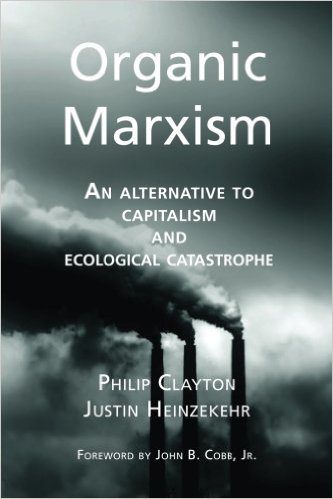 7. Philip Clayton and Justin Heinzekehr, Organic Marxism: An Alternative to Capitalism and Ecological Catastrophe (2014) – I’ve followed Clayton’s books on process theology for many years, and I was excited to find his latest work on politics and ethics: “This revolutionary book fuses the enduring legacy of socialism—government for the common good—with the best of the environmental movement and the newest insights from sustainability studies.” For more, see my post on “Do You Really Want to Know?” From Pope Francis & Kim Davis to Copernicus, Darwin, & Marx.
8. Paul Sabin, The Bet: Paul Ehrlich, Julian Simon, and Our Gamble over Earth’s Future (2014):
Using a highly publicized thousand-dollar wager made between two scholars as a narrative framework, this gem of a book elucidates the extreme polarity between those who believe human ingenuity can solve the world’s problems and those who foresee imminent doom. Sabin cleverly traces the ideological extremes through the careers of Paul Ehrlich, known for his warnings about explosive population growth, and his lesser known adversary Julian Simon, who advocated that technological advancement and market flexible would resolve threats of overpopulation. Sabin shows the evolution of both arguments through various presidencies.
For more, see my post on “Betting on Earth’s Future.”
9. Nell Zink, Mislaid: A Novel (2015): “A sharply observed, mordantly funny, and startlingly original novel from an exciting, unconventional new voice about the making and unmaking of the American family that lays bare all of our assumptions about race and racism, sexuality and desire.”
10. Paul Bogard, The End of Night: Searching for Natural Darkness in an Age of Artificial Light (2014) – This book is an inspiring call to action for reclaiming starry nights through practical steps for reducing light pollution:
A brilliantly starry night is one of nature’s most thrilling wonders. Yet in our world of nights as bright as day, most of us no longer experience true darkness. Eight out of ten Americans born today won’t ever live where they can see the Milky Way. And exposure to artificial light at night has been cited as a factor in health concerns ranging from poor sleep to cancer. Bogard travels the globe to find the night, blending personal narrative, natural history, health, science, and folklore to shed light on darkness. Showing exactly what we’ve lost, what we have left, and what we might hope to regain, he attempts nothing less than a restoration of how we see the spectacularly primal, wildly dark night sky.
For more, see my post on Why You Should See 2,700 (Not 12) Stars at Night: Reclaiming a Spirituality of Dark Skies.
Bonus
I’ve also recently been dipping my toes back into the world of comic books, and I’ve enjoyed in particular the work of Brian K. Vaughn in Y: The Last Man (a limited series now complete) and Saga (ongoing). I have also appreciated being able to catch up so easily with The Walking Dead through the Compendium editions. Of note, TWD comics are way ahead of the television series.
Feel free to share your favorite books of the past year in the comments section.
Previous Lists
The Rev. Dr. Carl Gregg is a trained spiritual director, a D.Min. graduate of San Francisco Theological Seminary, and the minister of the Unitarian Universalist Congregation of Frederick, Maryland. Follow him on Facebook (facebook.com/carlgregg) and Twitter (@carlgregg).
Learn more about Unitarian Universalism:
http://www.uua.org/beliefs/principles
Next Post

December 29, 2015 Top 10 Best Albums Listened to in 2015
Browse Our Archives
Select a Category Advent Anti-Racism Archaeology Atheism Baptism Best of the Year List Book Reviews Buddhism Catholicism Christian Education Church and State Church Planting Climate Change Conscientious Objection to War Creation Spirituality Death Penalty Didache Disability Rights Discernment Easter Ecology Emergent Church Movement Empire-Critical Ethics Evolution Feminist Theology Film Reviews Gandhi Gospel of Mark Gun Control Hinduism Immigration Reform Interfaith Islam JFK Judaism Jungian Spirituality Lectionary Commentary Lent Letters to the Editor LGBT Marriage MLK Multiculturalism Mysticism Nonviolent Activism Occupy Paganism (Earth-centered Religions) Parables Paul Pluralism Politics Process Theology Quantum Physics Requiescat In Pace Seminary and Divinity School Sermon Series Retrospective Sermons Spiritual Direction Spiritual Practices Stewardship (Fundraising) The Book of J The Wheel of the Year (Paganism) Theoblogger Challenge Triathlon Uncategorized Unitarian Universalism Worship Resources Youth Ministry
Select a Month July 2026 May 2026 March 2026 November 2025 October 2025 August 2025 February 2025 December 2024 October 2024 March 2024 January 2024 December 2023 November 2023 March 2023 February 2023 January 2023 December 2022 November 2022 August 2022 March 2022 February 2022 January 2022 December 2021 September 2021 August 2021 July 2021 June 2021 May 2021 February 2021 January 2021 December 2020 August 2020 June 2020 May 2020 April 2020 March 2020 February 2020 January 2020 December 2019 November 2019 October 2019 September 2019 July 2019 June 2019 March 2019 February 2019 January 2019 December 2018 November 2018 October 2018 September 2018 June 2018 May 2018 April 2018 March 2018 February 2018 January 2018 December 2017 November 2017 October 2017 September 2017 August 2017 July 2017 June 2017 May 2017 April 2017 March 2017 February 2017 January 2017 December 2016 November 2016 October 2016 September 2016 August 2016 June 2016 May 2016 April 2016 March 2016 February 2016 January 2016 December 2015 November 2015 October 2015 September 2015 August 2015 July 2015 June 2015 May 2015 April 2015 March 2015 February 2015 January 2015 December 2014 November 2014 October 2014 August 2014 July 2014 June 2014 May 2014 April 2014 March 2014 February 2014 January 2014 December 2013 November 2013 October 2013 September 2013 August 2013 July 2013 June 2013 May 2013 April 2013 March 2013 February 2013 January 2013 December 2012 November 2012 October 2012 September 2012 August 2012 July 2012 June 2012 May 2012 April 2012 March 2012 February 2012 January 2012 December 2011 November 2011 October 2011 September 2011 August 2011 July 2011 June 2011 May 2011 April 2011 March 2011 February 2011 January 2011 December 2010 November 2010 October 2010 August 2009 July 2009 May 2009
Follow Us!
TAKE THE
Religious Wisdom Quiz
What was the primary inheritance method in biblical times?
Select your answer to see how you score.
Firstborn son Equal division Youngest child Oldest daughter
Related posts from Carl Gregg

Best of 2015: Books, Music, TV, & Podcasts


Top 10 Best Albums Listened to in 2015

Best of 2014: Books, Music, Film, & Podcasts
TRENDING AT PATHEOS More Voices

Reading America at 250: A Nation Wrestles With...
As part of my own reflection on the 250th anniversary of the...

Whenever I am reading a book or listening to an argument, I...

President Trump Ban Animal Torture Videos on Facebook
Call for Stricter Regulations of Animal Abuse Content on Facebook Although President...

Draft Amendments to Address Ritual Abuse in New...
The proposed changes would make it illegal for individuals in domestic partnerships...

How Bans on LGBTQ+ Student Clubs Threaten Religious...
On June 20, 2025, the State of Texas passed Senate Bill 12....

The Truth About the Gen Z Revival
This past year, there has been a lot of media buzz surrounding...
view all More Voices blogs
Ad-Free & Subscriber Log-In Subscription Support
- About Us
- 2026 Calendar
- Videos
- Podcasts
- Library of World Religions
- Faith In Media Tracker
- Advertise With Us
- Write for Us
- Privacy Policy
- Terms of Service
- Do Not Sell My Data
- Contact Us
- Radiant Digital
- Manage Newsletter Subscriptions
- Unsubscribe From Notifications
- Sitemap
Copyright 2008-2026, Patheos. All rights reserved.
Subscription Support Ad-Free & Subscriber Log-In
Follow Patheos