
BuddhistCatholicContemplativeEvangelicalGeneral ChristianHinduJewishLatter-day SaintMuslimNew VisionsProgressive Christian
Beliefs
- Buddhist
- Catholic
- Contemplative
- Evangelical
- General Christian
- Hindu
- Jewish
- Latter-day Saint
- More Voices
- Muslim
- New Visions
- Pagan
- Progressive Christian
Topics
- Religion News
- Food and Religion
- Sports and Religion
- Religious Art
- Religious Music and Entertainment
- Religious Events
- History and Religion
- Style and Religion
- Politics and Religion
- Women in Religion
- Recreation Outdoors and Religion
- Business Finance and Religion
- Careers Workplace and Religion
- Education and Religion
- Family Parenting and Religion
- Health Fitness and Religion
- Home and Religion
- Relationships and Religion
- Technology and Religion
- Travel and Religion
Columnists
- Buddhist Columnists
- Business Finance and Religion Columnists
- Careers Workplace and Religion Columnists
- Catholic Columnists
- Contemplative Columnists
- Education and Religion Columnists
- Evangelists Columnists
- Family Parenting and Religion Columnists
- General Christian Columnists
- Health Fitness and Religion Columnists
- Hindu Columnists
- History and Religion Columnists
- Home and Religion Columnists
- Jewish Columnists
- More Voices Columnists
- Latter Day Columnists
- Muslim Columnists
- New Visions Columnists
- Nonreligious Columnists
- Pagan Columnists
- Politics and Religion Columnists
- Progressive Columnists
- Recreation Outdoors and Religion Columnists
- Relationships and Religion Columnists
- Religion News Columnists
- Religious Art Columnists
- Religious Events Columnists
- Religious Music and Entertainment Columnists
- Sports and Religion Columnists
- Style and Religion Columnists
- Technology and Religion Columnists
- Travel and Religion Columnists
- Women in Religion Columnists
Resource Library
- 2026 Calendar
- Library of World Religions
- The 100 Most Holy Places on Earth
- Patheos Answers
- Podcasts
- Videos
- Faith Leaders Database
- Anglican Episcopalian
- Bahai
- Baptist
- Buddhism
- Christianity
- Confucianism
- Eastern Orthodoxy
- Hinduism
- Holiness and Pentecostal
- ISKCON
- Islam
- Judaism
- Lutheran
- Methodist
- The Church of Jesus Christ of Latter-day Saints
- New Age
- Paganism
- Presbytarian and Reformed
- Protestantism
- Religion Behind the Scenes
- Roman Catholic
- Scientology
- Shia Islam
- Sikhism
- Sufism
- Sunni Islam
- Taoism
- Zen
- See all religions
Research Tools
 Ad-Free & Subscriber Log-In Subscription Support
Ad-Free & Subscriber Log-In Subscription Support
Follow Patheos 

- Trending:
- Forgiveness
- |
- Marriage
- |
- Consciousness
- |
- Death Penalty
- |
- Election
- |
- Halloween

- Home
- More Voices
- “The Peabody Sisters”
“The Peabody Sisters”
Last updated on: August 18, 2015 at 10:00 am by Carl Gregg
“The Peabody Sisters” 2015-08-17T19:21:31-04:00 Carl Gregg
Patheos Explore the world's faith through different perspectives on religion and spirituality! Patheos has the views of the prevalent religions and spiritualities of the world.
What stood out to me most from reading Megan Marshall’s The Peabody Sisters (a finalist for the 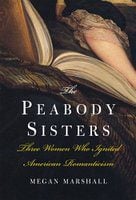 2006 Pulitzer Prize for Biography or Autobiography) were the sections about the oldest and longest-living of the three sisters, Elizabeth Palmer Peabody (1804 – 1894). But it is perhaps appropriate to begin with the Peabody Sisters’s own mother, Eliza, who strongly influenced her daughters. And whereas the lives of her daughters spanned almost the whole of the 1800s, Eliza came of age in the 1780s in the wake of the American War for Independence. And similar to “Rosie the Riveter” — that archetypal symbol of women who discovered they were more capable than was previously granted as they took jobs formerly reserved for males, while the men were overseas fighting WWII — a similar dynamic happened during the Revolutionary War: “for some daughters of independence — girls who, like Eliza, grew up as the children or sisters of soldiers, who helped run farms and businesses while the men of the family fought the war — power at home [after the war] was never quite enough” (15). Indeed, we have a letter that Eliza wrote to one of her daughters in which she laments having to wear “petticoats” and being limited to the domestic sphere. She writes of her aspirations to pursue a position of power such as Governor, alderman, judge, jury, senator, or representative,” but society did not yet allow women to shatter those glass ceilings (15).
Nevertheless, in an age when women were pressured to see “marrying well” as the highest possible female achievement, and were often taught that knowing how to “sew a shirt and bake a pudding” was their best route to getting their “Mrs. Degree,” Eliza helped give her daughters as good an education “as most college men” and brought them up to support themselves irrespective of whether they chose to marry (xvi). Indeed, Elizabeth, her mother’s namesake and the most independently and publicly-successful of three sisters, never married (xvi – xvii). And you can see Eliza’s vision for all her daughters in her choice to name them after “an English queen [Elizabeth], the Holy Mother [Mary], and the Greek word for wisdom [Sophia] (2).
Eliza Peabody was also an example for her daughters: “According to family lore, Eliza read through the entire set [of her family’s collection of Shakespeare folios] when she was only four” (22). Seeking to pass on her love of learning to her daughters at a time when “There was no college for women in the United States for another half century” (86), Eliza innovated where she could as a school teacher, structuring “her classroom on a stimulating mix of dramatic readings, lively conversation, and inventive writing exercises,” including readings by female intellectuals (82-83). The result was that the schools run by Eliza (and later by her daughters) were in many ways superior to the more rigid, traditional models open to boys and men. More broadly,
many of the most important curricula innovations of the nineteenth century were the products of women educators who were free to “experiment” in their schools for girls. It was in boys’ schools, both private and public, that rote learning, competition for class rank, and corporal punishment went largely unquestioned. (109)
Thanks to the Peabodys and other pathbreaking educators, we have a much more progressive and humane education system in our country today, even if we still have a long way to go!
And to bring in some of the web of connections to other Unitarian figures we have explored previously, the Peabody family’s physician and friend was Dr. Walter Channing, who was the “brother of the celebrated Unitarian minister William Ellery Channing” (15). Elizabeth first heard Ellery Channing preach in 1811, when she was only seven-years-old, and was enraptured by his sermons at even this early age (70-71). And as a result of Elizabeth’s exposure to the increasingly liberal theology of Channing and other similar ministers (who in the next decade would come to fully embrace a Unitarian position), Elizabeth often found herself even as a young child in heated theological arguments. But she refused to give in to pressure from other children and adults to accept a Calvinist theology: that some people were doomed to eternal punishment or that Jesus was divine and part of a Trinity. Instead, at age ten or eleven, she found herself insisting to children and adults around her that we all have the same freedom and capacity to be good that Jesus showed us was possible in the example of his own life (88-89). Her aunt tried to bribe her with “a piano and music lessons if she would promise to read only Calvinist works and study them;” this offer was a real temptation, but in resisting she found her resolve strengthened to not allow her search for truth to be restrained or censored. And as she read the writings of Unitarian forebears in Europe, she found what myself and many other students of UU history find: our own thoughts and inclinations are affirmed, strengthened, and clarified (90). Indeed, “All on her own, and by the age of thirteen, [Elizabeth] had followed a good portion of the course of study [that Channing] recommended for his graduate students in divinity at Harvard” (93).
Around this time Elizabeth’s parents made one last ditch effort to curb her increasingly liberal theology. They said she could choose for herself what to read if she would “read only the Bible for an entire summer; all commentaries, particularly Socinian ones, were banned.” (Faustus Socinus [1539-1604] was known for rejecting Arian Christianity and affirming the full humanity of Jesus.”) “And so, at thirteen, Elizabeth proceeded to read the New Testament through thirty times in three months, each time in reference to a different disputed point of doctrine.” But contrary to her parents’ hopes, Elizabeth emerged firmly convinced that “‘the distinctive doctrines of orthodoxy’ were ‘corruptions’ of true Christianity” (91).
That fall, a family friend who was impressed with Elizabeth’s learning invited her to visit her home in Boston for six weeks, so that each Sunday Elizabeth could hear Channing preach in his home pulpit, a UU congregation known today as the Arlington Street Church. In addition to meeting with Channing in person, what was even more influential on Elizabeth was sitting in on Channing’s facilitation of a women’s gospel discussion group. Despite Channing’s gentle encouragement, the women either sat in silence or struggled to articulate their thoughts. This dynamic was deeply disturbing to the thirteen-year-old Elizabeth. She left vowing “to be different herself, and to help other women learn to speak their minds” (92-93).
And in 1822, at age 18, Elizabeth did boldly move to Boston by herself to be a teacher (120). And when she sought out a Greek tutor to continue augmenting her education, she ended up meeting weekly with none other than a nineteen-year-old recent Harvard graduate named Ralph Waldo Emerson (125). She so impressed Emerson that when she sent for the bill, a message was sent in return that, “he had no bill to render, for he found he could teach me nothing” (132). Continuing the web of connections, when Elizabeth taught in Maine, her employer — who also invited her to be the only female member of their town’s metaphysical discussion group — had studied as a boy with Joseph Priestley (133-135).
But I do not mean to give the impression that Elizabeth only found encouragement along the way. To give you just one example of the sexism that Elizabeth had to overcome, the President of Harvard, whom she had encountered socially and who had often been encouraging, wrote her a letter with what he likely intended to be helpful advice—that she was at risk of becoming too smart in a way that would make her unattractive to male suitors (132).
Elizabeth, however, pressed on. And in 1825, almost a decade after first hearing Channing preach in his own congregation, she began weekly making the trips again on Sundays to hear him. And we have records that, “she listened so closely to his sermons that, with her powerful memory, she was able to return home and write them down almost verbatim” (159).
Over time, she connected with Channing, and began visiting him on Saturday afternoons (161-162). So at a time when Emerson and other soon-to-be Unitarian ministers were students at Harvard Divinity School, following “a reading list drawn up by Channing and listening to the eminent preacher’s sermons from the pew, it was Elizabeth who” was being personally mentored by Channing and dialoguing with him as he talked through ideas that he considered too radical to share with his congregation in sermons (162).
For a period of time, Elizabeth became extremely close to the whole Channing family. She would come home from school with their daughter, eat supper with the family, and take dictation and hand copy manuscripts for Channing often until late in the evening (176). In the summer of 1828, she spent a month on vacation with the family (176-177). Elizabeth did not take these opportunities for granted, and did not forget her vow to “pay it forward” and encourage other women to be more bold and engaged in pursuing self-fulfillment. She started hosting weekly conversations for women (166-167).
Elizabeth also became deeply involved in Bronson Alcott’s innovative Temple School for children. And although it only lasted three years (and Alcott never paid her much), their breakthrough methods at the school “of cultivating each student’s innate gifts would become the hallmark of progressive education in American for the next two centuries” (303, 326). Indeed, many of you will know the name of Bronson Alcott’s second daughter, Louisa May Alcott, who wrote Little Women. The next daughter, who was the basis for the character “Beth” in the novel, was named Elizabeth Peabody Alcott in honor of Bronson’s friend and colleague Elizabeth Peabody (317). But I should add that when Elizabeth eventually left the School, a disgruntled Bronson changed his daughter’s middle name to Sewall (325).
Eventually in 1840, in her mid-30s, she drew on her experience and connections up to that point and discerned that what she really wanted to do was “open a bookstore and circulating library specializing in books and journals imported from Europe: all the texts that had brought Transcendentalism into being, that fed it still, yet were so expensive and hard to find” (391). Keep in mind that at this time there were no bookstores specializing in foreign books and no female bookstore owners of any kind— at least none that Elizabeth or any of her friends had ever heard of (393).
This bookstore was also a gathering place for intellectual conversations. Elizabeth was both the first (and only) woman to host a meeting of the Transcendentalist Club (396). And Margaret Fuller held her ‘Conversations’ for women in the bookstore’s backroom (2). Through her bookstore, Elizabeth, herself “the author or translator of a half-dozen books, founder of her own magazine, and contributor to the liberal journals of the day” also became the publisher of “Nathaniel Hawthorne, William Ellery Channing, Theodore Parker, and Margaret Fuller — under her own imprint, ‘E.P. Peabody, Publisher’” (2-3)
Later in life, Elizabeth was inspired by the example she saw in Germany of kindergarten (literally “children’s garden”) — the concept revolutionary for the time of providing a formal nurturing educational environment for children younger than first grade. “When Elizabeth died in 1894, at almost ninety, she was widely celebrated as the founder of kindergartens in America” (452).
I have concentrated almost exclusively on Elizabeth Peabody, but if you explore more about the Peabody Sisters in Marshall’s excellent and worthwhile book you will find, in addition to many other fascinating details, that Mary (the second-born) was an important educator in her own right who often partnered with Elizabeth in projects. She married the politician and educational reformer Horace Mann (441). Sophia (the youngest sister) was a talented painter, who married Nathaniel Hawthorne, the novelist whose most well-known work is The Scarlet Letter (6-8).
What has resonated with you most from the lives of the Peabody Sisters?
What memories have been stirred up with you of those who in the broadest sense have midwifed or mothered you, and shaped the world for the better? Or perhaps most importantly, following their example, whom do you feel called to mentor, midwife, or mother?
The Rev. Dr. Carl Gregg is a trained spiritual director, a D.Min. graduate of San Francisco Theological Seminary, and the minister of the Unitarian Universalist Congregation of Frederick, Maryland. Follow him on Facebook (facebook.com/carlgregg) and Twitter (@carlgregg).
Learn more about Unitarian Universalism:
http://www.uua.org/beliefs/principles
Next Post

August 20, 2015 Equal Access: The Ongoing Struggle for Disability Rights
Browse Our Archives
Select a Category Advent Anti-Racism Archaeology Atheism Baptism Best of the Year List Book Reviews Buddhism Catholicism Christian Education Church and State Church Planting Climate Change Conscientious Objection to War Creation Spirituality Death Penalty Didache Disability Rights Discernment Easter Ecology Emergent Church Movement Empire-Critical Ethics Evolution Feminist Theology Film Reviews Gandhi Gospel of Mark Gun Control Hinduism Immigration Reform Interfaith Islam JFK Judaism Jungian Spirituality Lectionary Commentary Lent Letters to the Editor LGBT Marriage MLK Multiculturalism Mysticism Nonviolent Activism Occupy Paganism (Earth-centered Religions) Parables Paul Pluralism Politics Process Theology Quantum Physics Requiescat In Pace Seminary and Divinity School Sermon Series Retrospective Sermons Spiritual Direction Spiritual Practices Stewardship (Fundraising) The Book of J The Wheel of the Year (Paganism) Theoblogger Challenge Triathlon Uncategorized Unitarian Universalism Worship Resources Youth Ministry
Select a Month July 2026 May 2026 March 2026 November 2025 October 2025 August 2025 February 2025 December 2024 October 2024 March 2024 January 2024 December 2023 November 2023 March 2023 February 2023 January 2023 December 2022 November 2022 August 2022 March 2022 February 2022 January 2022 December 2021 September 2021 August 2021 July 2021 June 2021 May 2021 February 2021 January 2021 December 2020 August 2020 June 2020 May 2020 April 2020 March 2020 February 2020 January 2020 December 2019 November 2019 October 2019 September 2019 July 2019 June 2019 March 2019 February 2019 January 2019 December 2018 November 2018 October 2018 September 2018 June 2018 May 2018 April 2018 March 2018 February 2018 January 2018 December 2017 November 2017 October 2017 September 2017 August 2017 July 2017 June 2017 May 2017 April 2017 March 2017 February 2017 January 2017 December 2016 November 2016 October 2016 September 2016 August 2016 June 2016 May 2016 April 2016 March 2016 February 2016 January 2016 December 2015 November 2015 October 2015 September 2015 August 2015 July 2015 June 2015 May 2015 April 2015 March 2015 February 2015 January 2015 December 2014 November 2014 October 2014 August 2014 July 2014 June 2014 May 2014 April 2014 March 2014 February 2014 January 2014 December 2013 November 2013 October 2013 September 2013 August 2013 July 2013 June 2013 May 2013 April 2013 March 2013 February 2013 January 2013 December 2012 November 2012 October 2012 September 2012 August 2012 July 2012 June 2012 May 2012 April 2012 March 2012 February 2012 January 2012 December 2011 November 2011 October 2011 September 2011 August 2011 July 2011 June 2011 May 2011 April 2011 March 2011 February 2011 January 2011 December 2010 November 2010 October 2010 August 2009 July 2009 May 2009
Follow Us!
TAKE THE
Religious Wisdom Quiz
What was the name of the man who suffered great loss but remained faithful to God?
Select your answer to see how you score.
Noah Job Abraham Elijah
Related posts from Carl Gregg

Peak Spiritual Experiences, Psychedelics, & Consciousness Research
”Did God Have a Wife?”: Asherah, Heavenly Mother,...

"How the Founding Fathers Became Infallible and Our...

Vampires, Witches, & NPR: The Legacy of Margot...
TRENDING AT PATHEOS More Voices

Reading America at 250: A Nation Wrestles With...
As part of my own reflection on the 250th anniversary of the...

Whenever I am reading a book or listening to an argument, I...

President Trump Ban Animal Torture Videos on Facebook
Call for Stricter Regulations of Animal Abuse Content on Facebook Although President...

Draft Amendments to Address Ritual Abuse in New...
The proposed changes would make it illegal for individuals in domestic partnerships...

How Bans on LGBTQ+ Student Clubs Threaten Religious...
On June 20, 2025, the State of Texas passed Senate Bill 12....

The Truth About the Gen Z Revival
This past year, there has been a lot of media buzz surrounding...
view all More Voices blogs
Ad-Free & Subscriber Log-In Subscription Support
- About Us
- 2026 Calendar
- Videos
- Podcasts
- Library of World Religions
- Faith In Media Tracker
- Advertise With Us
- Write for Us
- Privacy Policy
- Terms of Service
- Do Not Sell My Data
- Contact Us
- Radiant Digital
- Manage Newsletter Subscriptions
- Unsubscribe From Notifications
- Sitemap
Copyright 2008-2026, Patheos. All rights reserved.
Subscription Support Ad-Free & Subscriber Log-In
Follow Patheos