
BuddhistCatholicContemplativeEvangelicalGeneral ChristianHinduJewishLatter-day SaintMuslimNew VisionsProgressive Christian
Beliefs
- Buddhist
- Catholic
- Contemplative
- Evangelical
- General Christian
- Hindu
- Jewish
- Latter-day Saint
- More Voices
- Muslim
- New Visions
- Pagan
- Progressive Christian
Topics
- Religion News
- Food and Religion
- Sports and Religion
- Religious Art
- Religious Music and Entertainment
- Religious Events
- History and Religion
- Style and Religion
- Politics and Religion
- Women in Religion
- Recreation Outdoors and Religion
- Business Finance and Religion
- Careers Workplace and Religion
- Education and Religion
- Family Parenting and Religion
- Health Fitness and Religion
- Home and Religion
- Relationships and Religion
- Technology and Religion
- Travel and Religion
Columnists
- Buddhist Columnists
- Business Finance and Religion Columnists
- Careers Workplace and Religion Columnists
- Catholic Columnists
- Contemplative Columnists
- Education and Religion Columnists
- Evangelists Columnists
- Family Parenting and Religion Columnists
- General Christian Columnists
- Health Fitness and Religion Columnists
- Hindu Columnists
- History and Religion Columnists
- Home and Religion Columnists
- Jewish Columnists
- More Voices Columnists
- Latter Day Columnists
- Muslim Columnists
- New Visions Columnists
- Nonreligious Columnists
- Pagan Columnists
- Politics and Religion Columnists
- Progressive Columnists
- Recreation Outdoors and Religion Columnists
- Relationships and Religion Columnists
- Religion News Columnists
- Religious Art Columnists
- Religious Events Columnists
- Religious Music and Entertainment Columnists
- Sports and Religion Columnists
- Style and Religion Columnists
- Technology and Religion Columnists
- Travel and Religion Columnists
- Women in Religion Columnists
Resource Library
- 2026 Calendar
- Library of World Religions
- The 100 Most Holy Places on Earth
- Patheos Answers
- Podcasts
- Videos
- Faith Leaders Database
- Anglican Episcopalian
- Bahai
- Baptist
- Buddhism
- Christianity
- Confucianism
- Eastern Orthodoxy
- Hinduism
- Holiness and Pentecostal
- ISKCON
- Islam
- Judaism
- Lutheran
- Methodist
- The Church of Jesus Christ of Latter-day Saints
- New Age
- Paganism
- Presbytarian and Reformed
- Protestantism
- Religion Behind the Scenes
- Roman Catholic
- Scientology
- Shia Islam
- Sikhism
- Sufism
- Sunni Islam
- Taoism
- Zen
- See all religions
Research Tools
 Ad-Free & Subscriber Log-In Subscription Support
Ad-Free & Subscriber Log-In Subscription Support
Follow Patheos 

- Trending:
- Forgiveness
- |
- Marriage
- |
- Consciousness
- |
- Death Penalty
- |
- Election
- |
- Halloween

- Home
- More Voices
- “What You Say Next Will Change Your World”: Practicing Nonviolent Communication
“What You Say Next Will Change Your World”: Practicing Nonviolent Communication
Last updated on: May 4, 2015 at 1:28 pm by Carl Gregg
“What You Say Next Will Change Your World”: Practicing Nonviolent Communication 2015-05-04T13:28:40-04:00 Carl Gregg
Patheos Explore the world's faith through different perspectives on religion and spirituality! Patheos has the views of the prevalent religions and spiritualities of the world.
Each year at the annual Unitarian Universalist General Assembly, one of highlights is always the Ware Lecture, which has been given since 1922. Past Ware Lecturers include Reinhold Niebuhr, Howard Thurman, Saul Alinsky, Kurt Vonnegut, Elaine Pagels, Mary Oliver, Karen Armstrong, and many other luminaries. If you are interested, you can read most of the archived transcripts online on the UUA’s website.
In 1966, The Rev. Dr. Martin Luther King, Jr. delivered a Ware Lecture titled “Don’t Sleep Through the Revolution,” which included these words to the gathered Unitarian Universalists:
there are some things in our nation and in our world to which I’m proud to be maladjusted. And I call upon you to be maladjusted and all people of good will to be maladjusted to these things until the good society is realized. I never intend to adjust myself to segregation and discrimination…. I never intend to adjust myself to economic conditions that will take necessities from the many to give luxuries to the few, and leave millions of people perishing on a lonely island of poverty in the midst of a vast ocean of prosperity…. Yes, I must confess that I believe firmly that our world is in dire need of a new organization – the International Association for the Advancement of Creative Maladjustment….
Today, almost five decades later, we are right to be maladjusted to a legal system that has failed to provide justice for Michael Brown, Tamir Rice, Eric Garner, and so many other people of color.
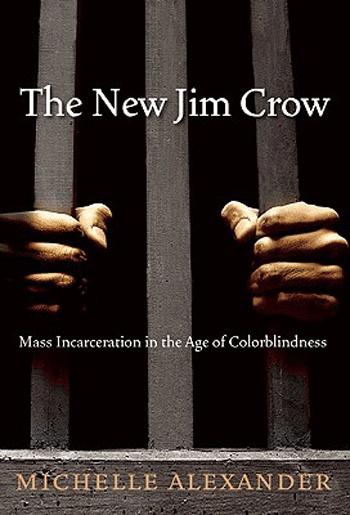 Relatedly, a colleague recently reminded me that as familiar as we are with the soaring rhetoric at the conclusion of Dr. King’s “I Have Dream” speech, most of us are much less familiar with rest of his speech that day, which includes this line: “We can never be satisfied as long as the Negro is the victim of the unspeakable horrors of police brutality.” (For more context on the strong parallels between the injustices that led to the Civil Rights Movements and our nation today, I strongly recommend Michele Alexander’s book The New Jim Crow: Mass Incarceration in an Age of Colorblindness.)
As some of you will recall, the forward to that important book is written by Dr. Cornel West, a contemporary prophetic voice for racial justice. In light of recent protests in Ferguson, Cleveland, New York City, and across our country, I was pleased to see that Dr. West will be the 2015 Ware Lecturer this June at the UUA General Assembly in Portland, Oregon. One of my favorite quotes from Cornel West is that “Justice is what love looks like in public.” Dr. West will likely invite us to reflect on what it means to be creatively maladjusted to injustice in the twenty-first century. We should never intend to adjust ourselves to conflicts between police and citizens that so quickly and unnecessarily escalate to the use of deadly force. Of course, the vast majority of police officers have good intentions, but they — like we — are caught in a broken system that is racially biased and that must be reformed.
Our second UU Principle calls for “Justice, equity and compassion in human relations.” And our second Source is the “Words and deeds of prophetic women and men which challenge us to confront powers and structures of evil with justice, compassion, and the transforming power of love.”
And while there are vital systemic changes we need to make reform our criminal justice system, in this post I  would like to share with you a framework for being creatively maladjusted to violence in your own life — a change we can begin to make immediately. The insights I would like to share are from the Center for Nonviolent Communication, founded by the psychologist Dr. Michael Rosenberg. My hope is to increase our awareness that when we find ourselves in conflict — or even when find ourselves responding with escalating violence to a situation, which can be verbal (such as raising our tone of voice) as well as physical, that we increasingly realize that there are healthier, more compassionate ways of being in the world for ourselves and for others.
The three main steps in Dr. Rosenberg’s method of Nonviolent Communication is:
Observe what is actually happening in a situation…without introducing any judgment or evaluation….
State how we feel when we observe this action….
Say what needs of ours are connected to the feelings we have identified. (6)
As you can perhaps guess, this process can seem easier in theory than it is to practice. Most of us have a lot of difficulty observing without judgement or evaluation, especially if the situation is a conflict in which we are deeply enmeshed. And not all of us are in touch with our feelings, much less experienced at identifying the deep, often unconscious needs, that are underneath our feelings and the source of our strong reactions to certain people and conflicts.
Rosenberg’s books such as Nonviolent Communication and Living Nonviolent Communication have many specific examples, but for now, I’ll limit myself to giving you three (30-31):
Observation with evaluation
Observation without evaluation
You are too generous
When I see you give all your money to others, I think you are being too generous
He procrastinates
I have only seen him study for exams the night before the test.
You never do what I want
The last three times I initiated an activity, you said you didn’t want to do it.
This first step of “Observation without Evaluation” is about slowing down, taking responsibility for specifically naming what we objectively observe — trying as much as possible to bracket out subjective evaluations — and restraining ourselves from imputing motives and judgements on people that may be false. After Freud, psychologist have shown that we are unconscious of many aspects of our own motivations. So, most assuredly, we do not know the full extent of what is going on inside another person. Moreover, Freud also cautioned us to be aware of the ways that we unconsciously project our own feelings and repressions onto other people. And if you notice yourself having an exaggerated reaction to someone, that’s often a red flag that something in your own shadow side is being triggered beyond anything that person is doing.
 One of Rosenberg’s best tips for taking responsibility for your subjective perspective is not only the classic advice of using “I-statements,” but also to make sure the pronoun “I” also follows the word “because.” For example, instead of saying, “I feel angry because you_______,” say, “I feel angry because I________” (P111). That is, I feel angry, not only because you are doing “x,” but also because I need to feel more appreciated/empowered/safe or because I need to feel less anxious/alone/overwhelmed, etc.
To help reach that point of insight, step two is to name the emotional elephant in the room. And if being in touch with your emotions is not your strong suit, you can go a long way in the right direction with what some psychologists call the four basic emotions. Look inside yourself and see if you are feeling mad, sad, glad, or bad. (Bad basically means scared…but scared doesn’t rhyme with mad, sad, and glad, so we say bad!)
I first learned a version of this practice more than a decade ago, and I have repeatedly experienced the palpable shift to a deeper register that can happen when communication moves from shouting interpretive judgements back and forth to naming the emotional elephants in the room. If even one person stops armoring themselves with defensive rationalizations and allows themselves to be vulnerable enough to name “I feel really scared” or “I feel really sad,” then there is an opening in which transformation suddenly has a chance to take place.
At this point, I should mention that my favorite part of Rosenberg’s middle step is his description of the ironically violent evolution many of us go through in becoming adept at emotional literacy. The most important part, of course, is the initial insight of realizing that you don’t have to be responsible for other people’s feelings. Rosenberg calls that insight liberation from “emotional slavery” (57). Unfortunately, with the zeal of the convert, many of us pass through an initial obnoxious stage in which you tend to hear not-quite-fully-nonviolent exchanges such as “That’s your problem! I’m not response for your feelings” (59)! Overtime, as we reach a healthier differentiation from others, we learn to express our emotional liberation more compassionately and from a place of inner freedom.
Now, I mentioned earlier that there is often a profound shift that happens when a conflict moves from interpretation to feelings. But to have the greatest chance of lasting change, you need the third and final step of naming the need underneath your feelings and at the root of the conflict. A classic example of why this final step is important is the spouse who asked her partner to spend less time at work: “Three weeks later, he responded by announcing that he signed up for a golf tournament!” She should’ve said, “I would like [you] to spend at least one evening a week at home…” (68). Or, “I’m feeling lonely, and I need us to spend more time together as a family.” Failing to articulate the underlying need often results in passive-aggression and miscommunication.
All this being said, if you begin experimenting with some of these techniques of Nonviolent Communication, you will find that it is most difficult to practice with those we are closest with (120). As in a proverb that is particularly resonate during the holidays, “Our families can most easily push our buttons because they are the ones that sewed the buttons on in the first place!” But naming our feelings and our underlying needs are important steps in working toward being, as Buddhists say, increasingly filled with loving-kindness, being peaceful and at ease in more times and more places.
And if you suddenly wake up in the midst of falling into a habitual pattern, especially with those you love, that is falling short of nonviolent communication, I invite you to stop and say to yourself “W.A.I.T.!” W.A.I.T. stands for “Why Am I Talking?!” Stop. Wait. Take a few breaths. Move away from the source of conflict if you need to. But then challenge yourself to be vulnerable enough to reengage and experiment with Nonviolent Communication: observing without judgement, naming the emotional elephant in the room, and looking inside yourself to discern the real need underlying the conflict (P112).
Even as we must continue the struggle to make systemic changes in our society, may we also make the changes we can within ourselves. In so doing, may we each do our part in hastening the day when we may lay down our burden, lay down our sword and shield, and study war no more.
*Most of the parenthetical citations are to Marshall Rosenberg’s 2003 book Nonviolent Communication (2nd Edition). The two with the letter “P” infant of the page number refer to his 2012 book Living Nonviolent Communication.
The Rev. Dr. Carl Gregg is a trained spiritual director, a D.Min. graduate of San Francisco Theological Seminary, and the minister of the Unitarian Universalist Congregation of Frederick, Maryland. Follow him on Facebook (facebook.com/carlgregg) and Twitter (@carlgregg).
Learn more about Unitarian Universalism:
http://www.uua.org/beliefs/principles
Previous Post

December 2, 2014
Top 10 Best Books Read in 2014
Next Post
December 10, 2014 New Lectionary Trilogy for Progressive Christians
Browse Our Archives
Select a Category Advent Anti-Racism Archaeology Atheism Baptism Best of the Year List Book Reviews Buddhism Catholicism Christian Education Church and State Church Planting Climate Change Conscientious Objection to War Creation Spirituality Death Penalty Didache Disability Rights Discernment Easter Ecology Emergent Church Movement Empire-Critical Ethics Evolution Feminist Theology Film Reviews Gandhi Gospel of Mark Gun Control Hinduism Immigration Reform Interfaith Islam JFK Judaism Jungian Spirituality Lectionary Commentary Lent Letters to the Editor LGBT Marriage MLK Multiculturalism Mysticism Nonviolent Activism Occupy Paganism (Earth-centered Religions) Parables Paul Pluralism Politics Process Theology Quantum Physics Requiescat In Pace Seminary and Divinity School Sermon Series Retrospective Sermons Spiritual Direction Spiritual Practices Stewardship (Fundraising) The Book of J The Wheel of the Year (Paganism) Theoblogger Challenge Triathlon Uncategorized Unitarian Universalism Worship Resources Youth Ministry
Select a Month July 2026 May 2026 March 2026 November 2025 October 2025 August 2025 February 2025 December 2024 October 2024 March 2024 January 2024 December 2023 November 2023 March 2023 February 2023 January 2023 December 2022 November 2022 August 2022 March 2022 February 2022 January 2022 December 2021 September 2021 August 2021 July 2021 June 2021 May 2021 February 2021 January 2021 December 2020 August 2020 June 2020 May 2020 April 2020 March 2020 February 2020 January 2020 December 2019 November 2019 October 2019 September 2019 July 2019 June 2019 March 2019 February 2019 January 2019 December 2018 November 2018 October 2018 September 2018 June 2018 May 2018 April 2018 March 2018 February 2018 January 2018 December 2017 November 2017 October 2017 September 2017 August 2017 July 2017 June 2017 May 2017 April 2017 March 2017 February 2017 January 2017 December 2016 November 2016 October 2016 September 2016 August 2016 June 2016 May 2016 April 2016 March 2016 February 2016 January 2016 December 2015 November 2015 October 2015 September 2015 August 2015 July 2015 June 2015 May 2015 April 2015 March 2015 February 2015 January 2015 December 2014 November 2014 October 2014 August 2014 July 2014 June 2014 May 2014 April 2014 March 2014 February 2014 January 2014 December 2013 November 2013 October 2013 September 2013 August 2013 July 2013 June 2013 May 2013 April 2013 March 2013 February 2013 January 2013 December 2012 November 2012 October 2012 September 2012 August 2012 July 2012 June 2012 May 2012 April 2012 March 2012 February 2012 January 2012 December 2011 November 2011 October 2011 September 2011 August 2011 July 2011 June 2011 May 2011 April 2011 March 2011 February 2011 January 2011 December 2010 November 2010 October 2010 August 2009 July 2009 May 2009
Follow Us!
TAKE THE
Religious Wisdom Quiz
What New Testament book is known for its chapter on charity?
Select your answer to see how you score.
Hebrews Romans Philippians 1 Corinthians
Related posts from Carl Gregg
Why Peter Singer Hates on Guide Dogs &...
“Unsanctifying Human Life”: Wrestling with Peter Singer’s Ethics

Letting Go of Fear & Celebrating Differences: Insights...

TRENDING AT PATHEOS More Voices

Reading America at 250: A Nation Wrestles With...
As part of my own reflection on the 250th anniversary of the...

Whenever I am reading a book or listening to an argument, I...

President Trump Ban Animal Torture Videos on Facebook
Call for Stricter Regulations of Animal Abuse Content on Facebook Although President...

Draft Amendments to Address Ritual Abuse in New...
The proposed changes would make it illegal for individuals in domestic partnerships...

How Bans on LGBTQ+ Student Clubs Threaten Religious...
On June 20, 2025, the State of Texas passed Senate Bill 12....

The Truth About the Gen Z Revival
This past year, there has been a lot of media buzz surrounding...
view all More Voices blogs
Ad-Free & Subscriber Log-In Subscription Support
- About Us
- 2026 Calendar
- Videos
- Podcasts
- Library of World Religions
- Faith In Media Tracker
- Advertise With Us
- Write for Us
- Privacy Policy
- Terms of Service
- Do Not Sell My Data
- Contact Us
- Radiant Digital
- Manage Newsletter Subscriptions
- Unsubscribe From Notifications
- Sitemap
Copyright 2008-2026, Patheos. All rights reserved.
Subscription Support Ad-Free & Subscriber Log-In
Follow Patheos