
BuddhistCatholicContemplativeEvangelicalGeneral ChristianHinduJewishLatter-day SaintMuslimNew VisionsProgressive Christian
Beliefs
- Buddhist
- Catholic
- Contemplative
- Evangelical
- General Christian
- Hindu
- Jewish
- Latter-day Saint
- More Voices
- Muslim
- New Visions
- Pagan
- Progressive Christian
Topics
- Religion News
- Food and Religion
- Sports and Religion
- Religious Art
- Religious Music and Entertainment
- Religious Events
- History and Religion
- Style and Religion
- Politics and Religion
- Women in Religion
- Recreation Outdoors and Religion
- Business Finance and Religion
- Careers Workplace and Religion
- Education and Religion
- Family Parenting and Religion
- Health Fitness and Religion
- Home and Religion
- Relationships and Religion
- Technology and Religion
- Travel and Religion
Columnists
- Buddhist Columnists
- Business Finance and Religion Columnists
- Careers Workplace and Religion Columnists
- Catholic Columnists
- Contemplative Columnists
- Education and Religion Columnists
- Evangelists Columnists
- Family Parenting and Religion Columnists
- General Christian Columnists
- Health Fitness and Religion Columnists
- Hindu Columnists
- History and Religion Columnists
- Home and Religion Columnists
- Jewish Columnists
- More Voices Columnists
- Latter Day Columnists
- Muslim Columnists
- New Visions Columnists
- Nonreligious Columnists
- Pagan Columnists
- Politics and Religion Columnists
- Progressive Columnists
- Recreation Outdoors and Religion Columnists
- Relationships and Religion Columnists
- Religion News Columnists
- Religious Art Columnists
- Religious Events Columnists
- Religious Music and Entertainment Columnists
- Sports and Religion Columnists
- Style and Religion Columnists
- Technology and Religion Columnists
- Travel and Religion Columnists
- Women in Religion Columnists
Resource Library
- 2026 Calendar
- Library of World Religions
- The 100 Most Holy Places on Earth
- Patheos Answers
- Podcasts
- Videos
- Faith Leaders Database
- Anglican Episcopalian
- Bahai
- Baptist
- Buddhism
- Christianity
- Confucianism
- Eastern Orthodoxy
- Hinduism
- Holiness and Pentecostal
- ISKCON
- Islam
- Judaism
- Lutheran
- Methodist
- The Church of Jesus Christ of Latter-day Saints
- New Age
- Paganism
- Presbytarian and Reformed
- Protestantism
- Religion Behind the Scenes
- Roman Catholic
- Scientology
- Shia Islam
- Sikhism
- Sufism
- Sunni Islam
- Taoism
- Zen
- See all religions
Research Tools
 Ad-Free & Subscriber Log-In Subscription Support
Ad-Free & Subscriber Log-In Subscription Support
Follow Patheos 

- Trending:
- Forgiveness
- |
- Marriage
- |
- Consciousness
- |
- Death Penalty
- |
- Election
- |
- Halloween

- Home
- More Voices
- Why Does Unitarian Universalism Have Such a Long Name?
Why Does Unitarian Universalism Have Such a Long Name?
Last updated on: May 4, 2015 at 1:21 pm by Carl Gregg
Why Does Unitarian Universalism Have Such a Long Name? 2015-05-04T13:21:49-04:00 Carl Gregg
Patheos Explore the world's faith through different perspectives on religion and spirituality! Patheos has the views of the prevalent religions and spiritualities of the world.
This post is the final entry in a four-part series on Unitarian Universalist history.
In part one, I explored the question, “Why Unitarianism?” The Unitarian half of Unitarian Universalism emerged out of the Protestant Reformation in the 1500s, and has roots stretching back to the beginning of the Jewish and Christian traditions. And, in short, my answer to “Why Unitarianism?” is that its foundation in six diverse sources makes it a religious movement that is particularly suited for the pluralistic, postmodern world in which we find ourselves in the early twenty-first century.
In part two, we turned to the question, “Why Universalism?” The Universalist half of UUism traces its origins to the 1700s in North America and England, as well as to early influences going back to the beginning of the Christian tradition. And whereas Unitarianism has sometimes led down a road to extreme Emersonian individualism, Universalism is about moving our of any particularity (including our own narcissism!) into universal relationship with all life. And although Universalism began with the teaching of universal salvation for all (as a rejection of the idea of a hell in a “next world”), it has evolved into a call to love the hell out of this world.
Last week, in part three on “The Secret Six,” I reflected on the history of nonviolent activism as well as the history of calling for the use of violence when deemed justified in Unitarian and Universalist history.
As the capstone to this series, I would like to explore the combined question “Why Unitarian 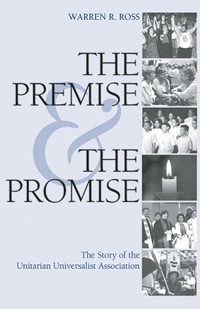 Universalism?” And from the perspective of today, more than fifty years have passed since the 1961 merger of the American Unitarian Association with the Universalist Church of America. Accordingly, for those of us who have only known the consolidated Unitarian Universalist Association, it can be unclear how and why UUs came to have a very long, ten-syllable name.
I have previously shared the famous joke about the difference between Unitarianism and Universalism: “The Universalists think that God is too good to damn them forever, the Unitarians think that they are too good to be damned forever” (Buehrens 228). Underneath that joke is the tension that there was a significant class divide between the Unitarians, whose ministers tended to come from a Harvard-educated upper-class, and the Universalists, whose ministers were frequently brilliant and charismatic, but often will little formal higher education.
But as early as the late 1850s — more than a century before the eventual consolidation — there were initial talks about a Unitarian-Universalist merger with the leadership of the two movements recognizing that what kept the two groups apart was “social” differences (Robinson 169-170). At the same time, what continued to draw the two groups together was that they were both theologically liberal.
And in the nineteenth-century, theological liberalism primarily meant a rejection of Calvinism. The most famous overview of what Calvinism entails uses the acronym T.U.L.I.P.:
Total Depravity (meaning that because of humanity’s Original Sin, we are totally depraved. There is nothing we humans can do to save ourselves, so we must rely on God’s grace alone)
Unconditional Election (being part of the saved/elect has nothing to do with humans meeting any condition; again, the choice and actions is totally up to God)
Limited Atonement (Jesus’ death on the cross was only for the elect, not for all humanity)
Irresistible Grace (the elect cannot resist or reject salvation from God)
Perseverance of the Saints (also known as “Once Saved Always Saved”)
I’ve taken the time to briefly describe Calvinism because, as I’ve been exploring in depth in a recent class on “Comparing Religions” in the congregation I serve, the best way of understanding almost anything is by comparison and contrast. As the saying goes about both languages and religions, “To know one is to know none” — that is, you don’t really understand even your own religious tradition until you have another one to compare it with. Likewise, I began to understand English grammar at a much deeper level when I began studying German, a common phenomenon that happens with learning a second language. Again, “to know one is to know none.”
In that vein, as with almost all human endeavors, Unitarianism and Universalism were not born in a vacuum. In particular, Unitarian and Universalist forebears learned to articulate what they aspired to be and do in opposition to Calvinism:
- Instead of “Total Depravity,” they taught the “inherent worth and dignity” of every human being. (That tenant remains the UU First Principle.)
- Instead of “Limited Atonement,” they taught that God’s love is for all. (That teaching was the basis of Universalism.)
- Instead of “Unconditional Election,” “Irresistible Grace” and “Perseverance of the Saints,” they emphasized the human freedom and human responsibility — that how we human use our free will matters and can change the world.
Over time, the Unitarians and the Universalists were brought together even more strongly as their theologically liberal rejection of Calvinism evolved into a robust religious pluralism that came to see the Christian tradition not as “The One” best religion, but as one valuable religious tradition among many others (169).
And although we know now how the story ends, if we take a step back and consider the century-long movement from the opening intimations in the late 1850s to the final consolidation in 1961, part of what kept the Unitarians and Universalists apart was the centrality of Liberal Christianity in Universalism and the growing strength of a science-based Humanism within Unitarianism. Indeed, there was a real possibility for a while of the Universalists moving in a more traditional direction to merge with Congregationalists, the progressive Christian denomination we know now as the United Church of Christ (172).
What eventually led the Universalists further leftward theologically toward to the Unitarians was that the Universalists were rejected in 1946 when they submitted an application to join the organization known today as the National Council of Churches (Howe 108-109). At the same time, there was a growing movement within Universalism to claim the full promise of that word “universal” as about recognizing the universal kinship of all human beings in this world and moving toward a universal world religion, drawn from many sources (111-112).
Nevertheless, the merger between the Unitarians and Universalists was almost derailed at the last minute by a controversy over a line in the proposed Purposes and Principles that referred to “our Judeo-Christian heritage,” which was problematic for individuals who did not identify with this heritage. This debate was in the midst of a five-hour joint session in which “nerves became frayed, and there were ‘frequent moments of great tensions’ and ‘intense differences of opinion’” (123). The day was saved when the more mutually agreeable language of “the Judeo-Christian heritage” was suggested (Robinson 174). This resolution showed, in the words of one historian, that “Unitarians had moved beyond their theist-humanist controversy of the 1920s and 1930s, [and] Universalists had moved beyond their exclusively Christian orientation. In the process both bodies had become more willing to accept diversity within their ranks” (Howe 125). Fifty years later, this trend of celebrating diversity has continued and is found in our Six Sources.
I should add, however, that despite all the similarities between the two traditions, that “the vs. our” controversy did expose a significant, if closing, gap between the Unitarians and Universalists, even as they were uniting. And there were other possible names that could have been chosen instead of the combined Unitarian Universalism, such as “The Universal Church” (Wright 98), “The United Liberal Church of America” (Robinson 167), and the “Free Church of America,” or the “Free Church Fellowship” (Wright 121). But that remaining gap between the two traditions is the primary reason that we inherited an unwieldy, ten-syllable name: neither the Unitarians nor the Universalists wanted to abandon their distinctive name. In particular, many Universalists (arguably with good reason) feared that their tradition would be “swallowed up” by the more numerous and influential Unitarians (Howe 120). Of particular offense, especially early on, was referring to Unitarian Universalists with the shorthand “Unitarians,” which was perceived as neglecting the Universalist half of our heritage. “At one time this practice became so common even at meetings of the UUA Board of Trustees that fines were imposed on any trustee who succumbed to it” (131).
Moving to the culmination of this gradual, century-long movement toward merger, some of you will recall from my last post that there was a famous conflict in the lead up to the U.S. involvement in World War I between former U.S. President and active Unitarian lay leader William Howard Taft with the Unitarian minister and pacifist John Hayes Holmes over whether the American Unitarian Association should publicly support the war effort. As you may remember, Holmes’ side overwhelmingly lost the vote, leading to him and his congregation leaving the Unitarian fold for a time.
In an interesting twist of history, a few decades later, at the worship service in May 1960 celebrating the Unitarians and Universalists both voting overwhelmingly to consolidate, it was John Haynes Holmes’ successor at the Community Church of New York, who preached the sermon at that celebratory worship service. That evening, two thousand Unitarians and Universalists came together for the first time as Unitarian Universalists and joined in this pledge:
We, Unitarians and Universalists, children of the Judeo-Christian heritage, inheritors of the wisdom of the universal prophets, eager to experience the insights of the great faiths of the world, open to all sources of inspiration, ancient and modern, determined to explore the boundless ocean of truth which lies about on every hand and on before, and welcoming into fellowship all [humanity] of whatever background of faith, here together on this night of Consolidation, conscious of the presence of the past, and of our urgent tasks, dedicate ourselves anew to the free and universal fellowship of all [humankind] that is the church to be. We declare our allegiance to the new Unitarian Universalism Association, and pledge our lives, our fortunes, and our faith to its high purpose and sure upbringing. (Howe 126)
But even before that pledge, the delegates present on that historic occasion said that the “emotional climax” came as the two groups first joined together for worship after the vote. As the two groups streamed into the sanctuary as an new uniting body, they sang the processional hymn, “As Tranquil Streams” over and over until everyone was joined together in the same room (Ross 23).
As with so many moments in history, the vote could have been otherwise. But in this case, years of work and hope resulted in inclusivity and unity. Our Sixth Principles holds up the lofty goal of “world community with peace, liberty, and justice for all,” but history shows us how difficult it was even for two theologically liberal denominations, with much in common, to merge. But we have to start somewhere.
As you read the lyrics, consider your response to the question “Why Unitarian Universalism?”:
As tranquil streams that meet and merge and flow as one to seek the sea, / Our kindred hearts and minds unite to build a church that shall be free.
Free from the bonds that bind the mind to narrow thought and lifeless creed; / Free from a social code that fails to serve the cause of human need:
A freedom that reveres the past, but trusts the dawning future more; / And bids the soul, in search of truth, adventure boldly and explore.
Prophetic church, the future waits your liberating ministry; / Go forward in the power of love, proclaim the truth that makes us free.
Sources
- John Buehrens, Universalists and Unitarians in America: A People’s History
- Charles Howe, The Larger Faith: A Short History of American Universalism
- David Robinson, The Unitarians and the Universalists
- Warren Ross, The Premise and the Promise: The Story of the Unitarian Universalist Association
- Conrad Wright, A Stream of Light: A Short History of American Unitarianism
The Rev. Dr. Carl Gregg is a trained spiritual director, a D.Min. graduate of San Francisco Theological Seminary, and the minister of the Unitarian Universalist Congregation of Frederick, Maryland. Follow him on Facebook (facebook.com/carlgregg) and Twitter (@carlgregg).
Learn more about Unitarian Universalism:
http://www.uua.org/beliefs/principles
Previous Post

August 7, 2014
The Secret Six: Violence & Nonviolence in Unitarianism & Universalism
Next Post
August 19, 2014 Tectonic Shifts in the Global Religious Landscape since WWI
Browse Our Archives
Select a Category Advent Anti-Racism Archaeology Atheism Baptism Best of the Year List Book Reviews Buddhism Catholicism Christian Education Church and State Church Planting Climate Change Conscientious Objection to War Creation Spirituality Death Penalty Didache Disability Rights Discernment Easter Ecology Emergent Church Movement Empire-Critical Ethics Evolution Feminist Theology Film Reviews Gandhi Gospel of Mark Gun Control Hinduism Immigration Reform Interfaith Islam JFK Judaism Jungian Spirituality Lectionary Commentary Lent Letters to the Editor LGBT Marriage MLK Multiculturalism Mysticism Nonviolent Activism Occupy Paganism (Earth-centered Religions) Parables Paul Pluralism Politics Process Theology Quantum Physics Requiescat In Pace Seminary and Divinity School Sermon Series Retrospective Sermons Spiritual Direction Spiritual Practices Stewardship (Fundraising) The Book of J The Wheel of the Year (Paganism) Theoblogger Challenge Triathlon Uncategorized Unitarian Universalism Worship Resources Youth Ministry
Select a Month July 2026 May 2026 March 2026 November 2025 October 2025 August 2025 February 2025 December 2024 October 2024 March 2024 January 2024 December 2023 November 2023 March 2023 February 2023 January 2023 December 2022 November 2022 August 2022 March 2022 February 2022 January 2022 December 2021 September 2021 August 2021 July 2021 June 2021 May 2021 February 2021 January 2021 December 2020 August 2020 June 2020 May 2020 April 2020 March 2020 February 2020 January 2020 December 2019 November 2019 October 2019 September 2019 July 2019 June 2019 March 2019 February 2019 January 2019 December 2018 November 2018 October 2018 September 2018 June 2018 May 2018 April 2018 March 2018 February 2018 January 2018 December 2017 November 2017 October 2017 September 2017 August 2017 July 2017 June 2017 May 2017 April 2017 March 2017 February 2017 January 2017 December 2016 November 2016 October 2016 September 2016 August 2016 June 2016 May 2016 April 2016 March 2016 February 2016 January 2016 December 2015 November 2015 October 2015 September 2015 August 2015 July 2015 June 2015 May 2015 April 2015 March 2015 February 2015 January 2015 December 2014 November 2014 October 2014 August 2014 July 2014 June 2014 May 2014 April 2014 March 2014 February 2014 January 2014 December 2013 November 2013 October 2013 September 2013 August 2013 July 2013 June 2013 May 2013 April 2013 March 2013 February 2013 January 2013 December 2012 November 2012 October 2012 September 2012 August 2012 July 2012 June 2012 May 2012 April 2012 March 2012 February 2012 January 2012 December 2011 November 2011 October 2011 September 2011 August 2011 July 2011 June 2011 May 2011 April 2011 March 2011 February 2011 January 2011 December 2010 November 2010 October 2010 August 2009 July 2009 May 2009
Follow Us!
TAKE THE
Religious Wisdom Quiz
What attitude does Jesus teach toward children?
Select your answer to see how you score.
Send them away Welcome them Teach them to fight Ignore them
Related posts from Carl Gregg

Peak Spiritual Experiences, Psychedelics, & Consciousness Research

"How the Founding Fathers Became Infallible and Our...

Vampires, Witches, & NPR: The Legacy of Margot...

“Do You Really Want to Know?” From Pope...
TRENDING AT PATHEOS More Voices

Reading America at 250: A Nation Wrestles With...
As part of my own reflection on the 250th anniversary of the...

Whenever I am reading a book or listening to an argument, I...

President Trump Ban Animal Torture Videos on Facebook
Call for Stricter Regulations of Animal Abuse Content on Facebook Although President...

Draft Amendments to Address Ritual Abuse in New...
The proposed changes would make it illegal for individuals in domestic partnerships...

How Bans on LGBTQ+ Student Clubs Threaten Religious...
On June 20, 2025, the State of Texas passed Senate Bill 12....

The Truth About the Gen Z Revival
This past year, there has been a lot of media buzz surrounding...
view all More Voices blogs
Ad-Free & Subscriber Log-In Subscription Support
- About Us
- 2026 Calendar
- Videos
- Podcasts
- Library of World Religions
- Faith In Media Tracker
- Advertise With Us
- Write for Us
- Privacy Policy
- Terms of Service
- Do Not Sell My Data
- Contact Us
- Radiant Digital
- Manage Newsletter Subscriptions
- Unsubscribe From Notifications
- Sitemap
Copyright 2008-2026, Patheos. All rights reserved.
Subscription Support Ad-Free & Subscriber Log-In
Follow Patheos