
BuddhistCatholicContemplativeEvangelicalGeneral ChristianHinduJewishLatter-day SaintMuslimNew VisionsProgressive Christian
Beliefs
- Buddhist
- Catholic
- Contemplative
- Evangelical
- General Christian
- Hindu
- Jewish
- Latter-day Saint
- More Voices
- Muslim
- New Visions
- Pagan
- Progressive Christian
Topics
- Religion News
- Food and Religion
- Sports and Religion
- Religious Art
- Religious Music and Entertainment
- Religious Events
- History and Religion
- Style and Religion
- Politics and Religion
- Women in Religion
- Recreation Outdoors and Religion
- Business Finance and Religion
- Careers Workplace and Religion
- Education and Religion
- Family Parenting and Religion
- Health Fitness and Religion
- Home and Religion
- Relationships and Religion
- Technology and Religion
- Travel and Religion
Columnists
- Buddhist Columnists
- Business Finance and Religion Columnists
- Careers Workplace and Religion Columnists
- Catholic Columnists
- Contemplative Columnists
- Education and Religion Columnists
- Evangelists Columnists
- Family Parenting and Religion Columnists
- General Christian Columnists
- Health Fitness and Religion Columnists
- Hindu Columnists
- History and Religion Columnists
- Home and Religion Columnists
- Jewish Columnists
- More Voices Columnists
- Latter Day Columnists
- Muslim Columnists
- New Visions Columnists
- Nonreligious Columnists
- Pagan Columnists
- Politics and Religion Columnists
- Progressive Columnists
- Recreation Outdoors and Religion Columnists
- Relationships and Religion Columnists
- Religion News Columnists
- Religious Art Columnists
- Religious Events Columnists
- Religious Music and Entertainment Columnists
- Sports and Religion Columnists
- Style and Religion Columnists
- Technology and Religion Columnists
- Travel and Religion Columnists
- Women in Religion Columnists
Resource Library
- 2026 Calendar
- Library of World Religions
- The 100 Most Holy Places on Earth
- Patheos Answers
- Podcasts
- Videos
- Faith Leaders Database
- Anglican Episcopalian
- Bahai
- Baptist
- Buddhism
- Christianity
- Confucianism
- Eastern Orthodoxy
- Hinduism
- Holiness and Pentecostal
- ISKCON
- Islam
- Judaism
- Lutheran
- Methodist
- The Church of Jesus Christ of Latter-day Saints
- New Age
- Paganism
- Presbytarian and Reformed
- Protestantism
- Religion Behind the Scenes
- Roman Catholic
- Scientology
- Shia Islam
- Sikhism
- Sufism
- Sunni Islam
- Taoism
- Zen
- See all religions
Research Tools
 Ad-Free & Subscriber Log-In Subscription Support
Ad-Free & Subscriber Log-In Subscription Support
Follow Patheos 

- Trending:
- Forgiveness
- |
- Marriage
- |
- Consciousness
- |
- Death Penalty
- |
- Election
- |
- Halloween

- Home
- More Voices
- Margaret Fuller: The Stories We Tell Matter
Margaret Fuller: The Stories We Tell Matter
Last updated on: May 4, 2015 at 1:18 pm by Carl Gregg
Margaret Fuller: The Stories We Tell Matter 2015-05-04T13:18:04-04:00 Carl Gregg
Patheos Explore the world's faith through different perspectives on religion and spirituality! Patheos has the views of the prevalent religions and spiritualities of the world.
The stories we tell matter. The stories that we choose to tell can be used to empower ourselves and others or they can be used to belittle and diminish. The stories we choose to tell can inspire us, expanding our minds and opening our hearts, or they can instill fear, scapegoating and demonizing others. And when I say that the stories we choose to tell matter, I use that word ‘choose’ intentionally. Because we can choose to tell a different story than the one we have inherited or have learned to tell about ourselves, others, and this world.
Byron Katie is a contemporary spiritual teacher, who uses a mediation technique called “The Work.” I have 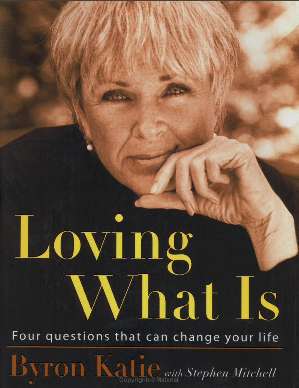 only read some basic materials about Katie and that was years ago, but the basic framework has stuck with me because it is such a simple, straightforward, and practical method for questioning the validity and helpfulness of the stories we tell ourselves.
Katie has designed a one-page “Judge-Your-Neighbor Worksheet,” which is a top contender for the easiest beginning to a spiritual practice I’ve ever heard. The “Judge-Your-Neighbor Worksheet” invites you reflect on a stressful situation in your life, then walks you through writing six statements about that stressful situation in response to prompts such as “who angers, confuses, or disappoints you, and why?” and “how do you want [the other person or people in this situation] to change?” These six statements help identify parts of the story you have learned to tell about yourself, others, and the world.
Once you have generated six simple statements about your stressful situation, you get to the heart of Katie’s approach called “The Work” in which you investigate each of those six simple statements using four questions:
- “Is it true?”
- “Can you absolutely know that it’s true?”
- “How do you react, what happens, when you believe that thought?” (
- “Who would you be without the thought?” I hear that question as asking, “What might change if you started telling a different story about yourself, others, and the world?”
The final part of her method has the greatest potential for transformation. For each of those six statements, she then challenges you to experiment with reversing your thought, “then find at least three specific, genuine examples of how each turnaround is true for you in this situation.”
Here’s one of the examples she gives. If the story you have been telling yourself is that Paul doesn’t listen to me about his health, then — despite all the ways in which that story is true — Katie’s method might lead you to consider all the ways in which it is at best a limited version of the truth. So turning around the story of “Paul doesn’t listen to me about his health”:
to the self. (I don’t listen to myself about my health.)
to the other. (I don’t listen to Paul about his health.)
to the opposite. (Paul does listen to me about his health.)
The stories we choose to tell matter. Yes, there may be truth in the story, “Paul doesn’t listen to me about his health,” but is that the best, only, or most helpful story to tell? Why are you fixating on telling that story over and over? How might that story be allowing you to avoid a story you need to tell about your self (“I don’t listen to myself about my health”)? How might that story be preventing you from hearing competing narratives (“I don’t listen to Paul about his health” and “Paul [sometimes] does listen to me about his health”).
The stories we choose to tell matter. I remember in the Southern Baptist Church of my childhood, not long after I had been baptized at age ten, there was an important congregational vote. Although I was young, I was eligible to cast a full vote because I was a baptized member of the congregation. This was the late 1980s in the midlands of South Carolina, toward the end of the Reagan Revolution in American politics. And the flashpoint in that congregational election was that for the first time in my church’s history a woman had been nominated to serve as a deacon.
I don’t recall hearing anything about the controversy in the weeks leading up to the vote, and I was a childcare volunteer that Sunday, so I was not in the main worship service. But when ballots were brought down for the childcare workers who were members to be able to vote, I remember people discussing whether it was okay to vote for a female deacon or not. I remember thinking, “Of course, women should be able to be deacons.” So I voted for her. The good news is that she won! The bad news is that may have been the peak of liberal progress in my childhood congregation.
But my point is that as a ten-year-old boy growing up in a Southern Baptist congregation in South Carolina, the stories that had shaped me — despite the ministerial staff being all white males — were of the strong women who raised me, organized congregational dinners, taught me Sunday School, and served in countless other vital ways that were essential to the congregation. When I overhead the discussion of whether a woman should be allowed to be a deacon, I didn’t understand the historical import of the question because I hadn’t yet learned about those parts of the apostle Paul’s story in which he allegedly says that “Women should be silent in church.” Maybe I hadn’t heard those stories because all my Sunday School teachers up until that point had been women! (Besides, I now know that in all likelihood those words were falsely attributed to Paul, and the historical Paul was much more of a mystic than a misogynist. Indeed, perhaps I’ll get around someday to posting about “Our Mother Saint Paul.” I’m not kidding.)
But for now my point is that no one is born sexist or homophobic anymore than someone is born racist. As the lyrics from South Pacific go, “You’ve got to be carefully taught. You’ve got to be taught before it’s too late, Before you are six or seven or eight, To hate all the people your relatives hate, You’ve got to be carefully taught!” As bumper stickers remind us, “Hate isn’t natural; it’s a lifestyle choice.” The stories we tell matter.
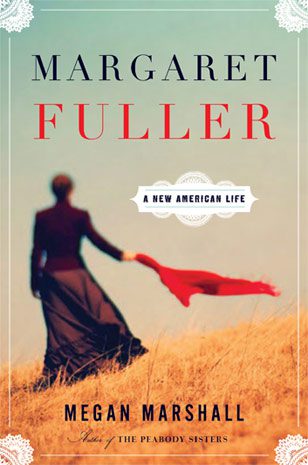 And it is an honor to tell you some of the story of Margaret Fuller. I can’t recall ever hearing her name growing up, but she is now one of my favorite founding mothers of what has come to be my chosen tradition of Unitarian Universalism. If you find yourself curious to learn more about Fuller, a great starting point is Megan Marshall’s recent biography titled Margaret Fuller: A New American Life, which I decided to read when I saw that a biography about a Unitarian woman from the nineteenth-century had made The New York Times’ list of “100 Notable Books of 2013.” Then I heard a few weeks ago that Marshall’s biography of Fuller had won the 2014 Pulitzer Prize in the category of Biography or Autobiography.
If you have not heard of Fuller previously that is both understandable and testament to the male bias in how history — our stories — have often been told. Marshall herself first became fascinated with Fuller through a women’s history class at Harvard. In an interview about winning the Pulitzer, Marshall said, “I thought of [Fuller] as very famous, but when I told people I was working on her biography, I got these blank looks. I felt it was absolutely a tragedy if people didn’t know about her.” And as much as I loved reading Marshall’s one-volume treatment of Fuller, I’m now eager to read Charles Capper’s two-volume biography of Fuller through Oxford University Press. And perhaps I’ll post more on Fuller in a few years as I learn more about her.
Capper writes that,
When I began researching my biography of Margaret Fuller, she had virtually vanished from history. Her works had been out of print for three-quarters of a century. Her papers were hidden away in archives. She rarely if ever appeared in dissertations or monographs…. What a difference a few decades make! …[S]he is now grouped with Emerson and Thoreau as the “big Transcendentalist three”…She is the focus every year of whole chapters in dozens of dissertations and monographs….
The difference, of course, was Second Wave Feminism in the 1960s and ‘70s, which helped begin to retrieve the stories of many female activists, innovators, and leaders, which had been too long neglected. In 2010, the 200th anniversary of Fuller’s birth was widely celebrated.
Fuller was born in 1810, and her father, Timothy Fuller, could have given the “Tiger Mom” Amy Chua a run for her money in the realm of aggressive parenting for gifted children. Timothy expected “as near perfection as possible” and had “‘absolutely no patience’ for mistakes” (6). Himself a Harvard graduate, Timothy started teaching Margaret Latin at age six, and required that she stay awake until he came home from work so that he could supervise her repeating back to him all that she had learned that day (6).
Margaret was raised not on Bible stories, but on the classic Greek and Roman myths, which would come to serve her well (53). And to give just one more example of her early education, at age fifteen, her custom was to “reading French and Italian on her own for several hours each day, morning classes in Greek — along with metaphysics, piano practice, regular walks, and evening journal writing” (33).
In her free time, even as a young child, she preferred the more active, rough and tumble games of boys, and described herself as a “child of masculine energy” (11). Today, of course, increasing numbers of people recognize that gender is a spectrum, but Margaret lived in the first-half of the 19th-century, an age of men in suits and women in puffy-sleeves and corsets (40).
The trajectory Margaret was expected to follow was earning her “Mrs. degree” and see “marrying well” as the height and “sole achievement” of her life. In contrast, her rigorous childhood education and natural aptitude inclined her to want to continue competing with the boys she always loved to play with. But societal attitude toward females meant that as her male childhood playmates went off to Harvard, Margaret found herself expected to tutor her younger siblings (41). Although denied the place that should have been hers as part of the Harvard class of 1829, Margaret did get permission to use the Harvard library to research her first book, and “did not allow the gawking undergraduates, who had never before seen a woman at work in their midst, to break her concentration” (xx). That book, Summer on the Lake, sold better than Emerson’s first book Nature (213).
In 1836, through her friendship with Ralph Waldo Emerson, Fuller was one a few select women invited to participate in the Transcendental Club, a meeting of like-minded intellectuals, who helped birth the Transcendentalist movement, which was influenced by individual spirituality over institutionalized religion, Romanticism, and Eastern religions (112-113).
And when the Transcendental Club started a journal called The Dial as a platform for promoting its ideas, Fuller volunteered to be the editor. Emerson “seconded her self-nomination” (146). Through her position at The Dial, Fuller became the twenty-three-year-old Henry David Thoreau’s first editor. Although she accepted one of the first poems he submitted for publication, she wrote in a rejection letter that, “she hoped to publish the essay eventually, but while it was ‘rich in thoughts,’ in its present form those thoughts ‘seem to me so out of their natural order, that I cannot read it through without pain’” (159). Margaret also used the The Dial as a platform to promote women’s equality (160).
And in 1839, she began hosting a series of weekly “Conversations” in Boston. In which women were invited to gather in a circle, engage in open discussion about the great questions (“What were we born to do?” “How shall we do it?”), and freely “state their doubts and difficulties” (132-134). As a basis for these conversations she drew from his classical childhood education: “stories of Greek and Roman vitality rather than to parables of Christian piety and submission” (133).
Margaret had taken a similar approach earlier as a teacher. She wanted other women to know the story of Arachne (“an ambitious young lady who wanted to weave as fine as the goddess Minerva” as well as the stories of “Daphne, Aspasia, Sappho, and Diotima. She required reading by women authors…. When reading Wordsworth, she singled out his poems about women” (110).
Margaret’s hope in her new venture of “Conversations” was to help women experience for themselves the power of the free-wheeling open discussions she had experienced as part of the Transcendental Club. She wrote that she hoped to bring women together “‘undefended by rouge or candlelight,’ dispense with the pointless, artificial conventions of feminine parlor chat — ‘digressing into personalities or commonplaces,’ in a word, gossip — and require instead a ‘simple and clear effort for expression.’” Just as she had been drawn to rough-and-tumble “boys games” as a child, as an adult she wanted women to join her in experiencing the heights of intellectual stimulation that some thought only men were capable of. And “Soon twenty-five women had brought ten-dollar tickets for an initial thirteen-week series; a rate of pay about two-third of Waldo Emerson’s take for a similar course of lectures” (135).
When asked about focusing her Conversations more on the abolition of slavery — remember that we are twenty years before the Civil War at this point — she replied that, “The Abolition cause commands my respect, as do all efforts to relieve and raise suffering human nature,” but her particular interest was expanding the Abolition movement from “the enfranchisement of the African only” (which came in 1870 with the 15th Amendment) to include woman’s suffrage (which did not come until fifty years later in 1920 with the 19th Amendment) (188). Fuller was unafraid to name the ways in the 19th-century that “women are slaves” first to their fathers and then to their husbands (188, 226).
But more radical than speaking boldly about women’s rights was the pamphlet she published in 1845 titled Women in the Nineteenth Century, which even negative reviewers agreed was “the first significant work to take ‘the liberal side in the question of “Women’s Rights” since the day of Mary Wollstonecraft,” who wrote A Vindication of the Rights of Woman fifty years earlier in 1792 (224). Fuller wrote, “We would have every arbitrary barrier thrown down. We would have every path laid open to Woman as freely as to Man” (230). And “There is no wholly masculine man, no purely feminine woman” (231).
By this time, Fuller had also been hired as literary editor of the New-York Tribune, a daily newspaper with more than thirty thousand subscribers (219). And when she traveled to Europe, she was allowed to continue her weekly column becoming “America’s first female foreign correspondent” (269). “Fuller would deliver thirty-seven letter dispatches to the front page of the New-York Tribune from 1846-1850.”
And although I have not had time to detail the heartbreaks and romantic ups and downs Margaret Fuller experienced in her life, it is essential to include that while in Rome (that city she had grown to love through her childhood education in the classics) she met Giovanni Ossoli (an Italian man aged twenty-seven to her thirty-seven), fell in love, had a child, and later married (307-308).
Tragically, Fuller, Ossoli, and their almost two-year-old son died in a shipwreck only 300 yards from the U.S. shore on their trip home from Europe (374). Fuller was only forty years old, and at the height of powers and potential. Immediately after her death, Emerson joined with others of her friends to write what became the first bestselling biography about her: The Memoirs of Margaret Fuller Ossoli.
The stories we tell matter. Too often our culture still tells the stories that Fuller advocated against in 19th-century of boys “can do it, if you only think so” and “Girls can’t do that” or “If she knows too much, she will never find a husband” (226). But even when we hear those stories, the invitation is to turn them around. Yes, the Southern Baptist congregation of my childhood sometimes told the stories of women’s inequality, but turn-it-around and there are countless stories of strong women who were leaders in and backbones of that congregation. Those stories need to be told even as we also advocate for greater gender equality in all areas of society.
What stories have you been telling that might benefit from some work or a new perspective?
Is the story true?
What is the deeper, fuller story underneath the story you have been telling?
How might you turn that story around?
We can choose to tell ourselves and future generations the stories of our forebears like Margaret Fuller, whose struggles and successes in the face of gender discrimination challenge us to advocate that “every arbitrary barrier thrown down” — in whatever form that may looks like in your life or the life of those you love — that each individual may have the freedom to reach her or his fullest potential. Margaret Fuller was rightly not satisfied to merely be free in her mind. She demanded that she and all people be free in action and in life. As she once wrote to Emerson regarding his proclivity to philosophize from his armchair, “O these tedious, tedious attempts to learn the universe by thought alone.” Or as she later said to him directly, “You are intellect, I am life” (182).
For Further Reading
“The Stories We Choose to Tell Matter: Highlights from Unitarian Universalist History,” available at http://www.patheos.com/blogs/carlgregg/2013/01/the-stories-we-choose-to-tell-matter-highlights-from-unitarian-universalist-history
The Rev. Dr. Carl Gregg is a trained spiritual director, a D.Min. graduate of San Francisco Theological Seminary, and the minister of the Unitarian Universalist Congregation of Frederick, Maryland. Follow him on Facebook (facebook.com/carlgregg) and Twitter (@carlgregg).
Learn more about Unitarian Universalism:
http://www.uua.org/beliefs/principles
Previous Post

June 16, 2014
"Feminist Masculinity and Father’s Day" #EachEveryWoman #AllMenCan
Next Post
June 19, 2014 "Fast Future: How the Millennial Generation Is Shaping Our World"
Browse Our Archives
Select a Category Advent Anti-Racism Archaeology Atheism Baptism Best of the Year List Book Reviews Buddhism Catholicism Christian Education Church and State Church Planting Climate Change Conscientious Objection to War Creation Spirituality Death Penalty Didache Disability Rights Discernment Easter Ecology Emergent Church Movement Empire-Critical Ethics Evolution Feminist Theology Film Reviews Gandhi Gospel of Mark Gun Control Hinduism Immigration Reform Interfaith Islam JFK Judaism Jungian Spirituality Lectionary Commentary Lent Letters to the Editor LGBT Marriage MLK Multiculturalism Mysticism Nonviolent Activism Occupy Paganism (Earth-centered Religions) Parables Paul Pluralism Politics Process Theology Quantum Physics Requiescat In Pace Seminary and Divinity School Sermon Series Retrospective Sermons Spiritual Direction Spiritual Practices Stewardship (Fundraising) The Book of J The Wheel of the Year (Paganism) Theoblogger Challenge Triathlon Uncategorized Unitarian Universalism Worship Resources Youth Ministry
Select a Month July 2026 May 2026 March 2026 November 2025 October 2025 August 2025 February 2025 December 2024 October 2024 March 2024 January 2024 December 2023 November 2023 March 2023 February 2023 January 2023 December 2022 November 2022 August 2022 March 2022 February 2022 January 2022 December 2021 September 2021 August 2021 July 2021 June 2021 May 2021 February 2021 January 2021 December 2020 August 2020 June 2020 May 2020 April 2020 March 2020 February 2020 January 2020 December 2019 November 2019 October 2019 September 2019 July 2019 June 2019 March 2019 February 2019 January 2019 December 2018 November 2018 October 2018 September 2018 June 2018 May 2018 April 2018 March 2018 February 2018 January 2018 December 2017 November 2017 October 2017 September 2017 August 2017 July 2017 June 2017 May 2017 April 2017 March 2017 February 2017 January 2017 December 2016 November 2016 October 2016 September 2016 August 2016 June 2016 May 2016 April 2016 March 2016 February 2016 January 2016 December 2015 November 2015 October 2015 September 2015 August 2015 July 2015 June 2015 May 2015 April 2015 March 2015 February 2015 January 2015 December 2014 November 2014 October 2014 August 2014 July 2014 June 2014 May 2014 April 2014 March 2014 February 2014 January 2014 December 2013 November 2013 October 2013 September 2013 August 2013 July 2013 June 2013 May 2013 April 2013 March 2013 February 2013 January 2013 December 2012 November 2012 October 2012 September 2012 August 2012 July 2012 June 2012 May 2012 April 2012 March 2012 February 2012 January 2012 December 2011 November 2011 October 2011 September 2011 August 2011 July 2011 June 2011 May 2011 April 2011 March 2011 February 2011 January 2011 December 2010 November 2010 October 2010 August 2009 July 2009 May 2009
Follow Us!
TAKE THE
Religious Wisdom Quiz
What city is known as the Holy City, sacred to Jews, Christians, and Muslims?
Select your answer to see how you score.
Athens Cairo Rome Jerusalem
Related posts from Carl Gregg

Peak Spiritual Experiences, Psychedelics, & Consciousness Research
”Did God Have a Wife?”: Asherah, Heavenly Mother,...

"How the Founding Fathers Became Infallible and Our...

Vampires, Witches, & NPR: The Legacy of Margot...
TRENDING AT PATHEOS More Voices

Reading America at 250: A Nation Wrestles With...
As part of my own reflection on the 250th anniversary of the...

Whenever I am reading a book or listening to an argument, I...

President Trump Ban Animal Torture Videos on Facebook
Call for Stricter Regulations of Animal Abuse Content on Facebook Although President...

Draft Amendments to Address Ritual Abuse in New...
The proposed changes would make it illegal for individuals in domestic partnerships...

How Bans on LGBTQ+ Student Clubs Threaten Religious...
On June 20, 2025, the State of Texas passed Senate Bill 12....

The Truth About the Gen Z Revival
This past year, there has been a lot of media buzz surrounding...
view all More Voices blogs
Ad-Free & Subscriber Log-In Subscription Support
- About Us
- 2026 Calendar
- Videos
- Podcasts
- Library of World Religions
- Faith In Media Tracker
- Advertise With Us
- Write for Us
- Privacy Policy
- Terms of Service
- Do Not Sell My Data
- Contact Us
- Radiant Digital
- Manage Newsletter Subscriptions
- Unsubscribe From Notifications
- Sitemap
Copyright 2008-2026, Patheos. All rights reserved.
Subscription Support Ad-Free & Subscriber Log-In
Follow Patheos