
BuddhistCatholicContemplativeEvangelicalGeneral ChristianHinduJewishLatter-day SaintMuslimNew VisionsProgressive Christian
Beliefs
- Buddhist
- Catholic
- Contemplative
- Evangelical
- General Christian
- Hindu
- Jewish
- Latter-day Saint
- More Voices
- Muslim
- New Visions
- Pagan
- Progressive Christian
Topics
- Religion News
- Food and Religion
- Sports and Religion
- Religious Art
- Religious Music and Entertainment
- Religious Events
- History and Religion
- Style and Religion
- Politics and Religion
- Women in Religion
- Recreation Outdoors and Religion
- Business Finance and Religion
- Careers Workplace and Religion
- Education and Religion
- Family Parenting and Religion
- Health Fitness and Religion
- Home and Religion
- Relationships and Religion
- Technology and Religion
- Travel and Religion
Columnists
- Buddhist Columnists
- Business Finance and Religion Columnists
- Careers Workplace and Religion Columnists
- Catholic Columnists
- Contemplative Columnists
- Education and Religion Columnists
- Evangelists Columnists
- Family Parenting and Religion Columnists
- General Christian Columnists
- Health Fitness and Religion Columnists
- Hindu Columnists
- History and Religion Columnists
- Home and Religion Columnists
- Jewish Columnists
- More Voices Columnists
- Latter Day Columnists
- Muslim Columnists
- New Visions Columnists
- Nonreligious Columnists
- Pagan Columnists
- Politics and Religion Columnists
- Progressive Columnists
- Recreation Outdoors and Religion Columnists
- Relationships and Religion Columnists
- Religion News Columnists
- Religious Art Columnists
- Religious Events Columnists
- Religious Music and Entertainment Columnists
- Sports and Religion Columnists
- Style and Religion Columnists
- Technology and Religion Columnists
- Travel and Religion Columnists
- Women in Religion Columnists
Resource Library
- 2026 Calendar
- Library of World Religions
- The 100 Most Holy Places on Earth
- Patheos Answers
- Podcasts
- Videos
- Faith Leaders Database
- Anglican Episcopalian
- Bahai
- Baptist
- Buddhism
- Christianity
- Confucianism
- Eastern Orthodoxy
- Hinduism
- Holiness and Pentecostal
- ISKCON
- Islam
- Judaism
- Lutheran
- Methodist
- The Church of Jesus Christ of Latter-day Saints
- New Age
- Paganism
- Presbytarian and Reformed
- Protestantism
- Religion Behind the Scenes
- Roman Catholic
- Scientology
- Shia Islam
- Sikhism
- Sufism
- Sunni Islam
- Taoism
- Zen
- See all religions
Research Tools
 Ad-Free & Subscriber Log-In Subscription Support
Ad-Free & Subscriber Log-In Subscription Support
Follow Patheos 

- Trending:
- Forgiveness
- |
- Marriage
- |
- Consciousness
- |
- Death Penalty
- |
- Election
- |
- Halloween

- Home
- More Voices
- The Life Tradition versus the Death Tradition in Christianity
The Life Tradition versus the Death Tradition in Christianity
Last updated on: May 4, 2015 at 1:13 pm by Carl Gregg
The Life Tradition versus the Death Tradition in Christianity 2015-05-04T13:13:41-04:00 Carl Gregg
Patheos Explore the world's faith through different perspectives on religion and spirituality! Patheos has the views of the prevalent religions and spiritualities of the world.
A man died. The people who knew him gathered to share memories. Finally, a portrait was commissioned. But as generations passed, the painting did not seem fine enough. The heirs of the portrait, who had become wealthy, created a new golden frame, immense, carved with motifs from the portrait and encrusted with jewels. People began to feel that the old portrait of that dark fellow with the haunting eyes pulled the effect down. As it began to peel from age, they extended the frame inward. One day the frame covered the whole canvas.
*—*Catherine Keller, On the Mystery: Discerning Divinity in Process, 133
This post is the third in a four-part series on “A Journey with Four Spiritual Guides: Krishna, Buddha, Jesus, and Ramakrishna.” One of the central points I made in the previous post was that the term Buddha is a title meaning “Awakened One.” And 2,500 years ago, the intention of the first Buddha, a human named Siddhartha Gautama, was not to make Buddhists, but to make more Buddhas — more “Awakened Ones,” who would experience, as he had, that there is a way of gaining liberation from suffering through what he called the Four Noble Truths and Eightfold Path. Keep that word path in mind because a similar dynamic happened with the historical Jesus, who did not intend to create Christians, a term that wasn’t coined until after Jesus’ death (Acts 11:26). Instead, the earliest followers of Jesus were called followers of “The Way” (Acts 9:2). The invitation of “Jesus as spiritual guide” is not about worshiping Jesus. Instead, it is about living in the world in a similar way to how he live: a way of generous, transformative, risky love. As in the opening “Parable about Jesus,” religious traditions over time can become ossified, self-interested institutions. But keep those words path and way in mind. They can help lead us back to the dynamic, beating heart of religious experience that helped found our various world religious traditions in the first place — inviting us to test and experience in the crucible of our own firsthand experience what Jesus, Buddha taught was possible to experience about ourselves, this world, and one another. Looking at the historical Jesus in particular, one complication of following the “Way” of Jesus is that if you try to get specific about who Jesus was, the competing narratives quickly become complex. Indeed, one of my favorite historical Jesus scholars, John Dominic Crossan has confessed that, “historical Jesus research is becoming something of a scholarly bad joke…[because of] the number of competent and even eminent scholars producing pictures of Jesus at wide variance with one another” (xxvii). Or as I saw on Twitter last week: “Somewhere between ‘The Passion of the Christ’ and ‘Life of Brian’ is the truth” of who Jesus actually was. The Southern Baptist Christianity of my childhood leaned more to The Passion of the Christ side of the equation: the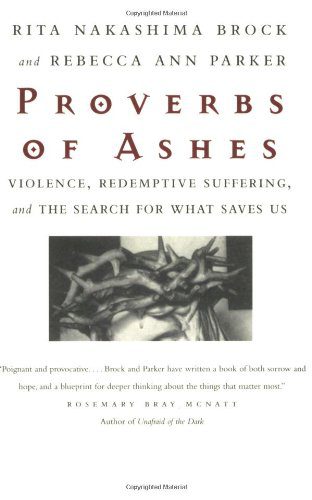 importance of believing that Jesus’ violent death was a necessary sacrifice for the forgiveness of humanity’s sins. This perspective has been criticized as Vampire Christianity: only wanting Jesus for his blood. All joking aside, I could not be more serious that there is a strong argument on the side of the contemporary theologians who argue that the idea of God accepting the violent death of God’s son as necessary for the salvation of humanity would be the equivalent of divine child abuse. And at the risk of oversimplification, I have come to appreciate the distinction some scholars make between “The Death Tradition” and “The Life Tradition” in Christianity. Both of these frameworks have been active and competing in Christianity for the past two thousand year. The Death Tradition emphasizes the need to believe in the saving power of Jesus’ violent death to determine whether one will end up in heaven or hell in the afterlife. The focus is more on Jesus’ death than his life and more on the next world instead of this world. A consummate example of “The Death Tradition” is the Nicene Creed, written three centuries after Jesus’ life, which asks Christians to confess their belief that Jesus: “came down from heaven, and was incarnate by the Holy Spirit of the virgin Mary, and was made man; and was crucified also for us under Pontius Pilate; He suffered and was buried; and the third day He rose again…..” Notice what is missing from that creed: Jesus’ life and teachings! It skips straight from his birth to his crucifixion. In essence, as I’ve heard it sometimes said, the entire Life Tradition is squeezed into a comma in the Nicene Creed! Turning our attention to the “Life Tradition,” this paradigm emphasizes the perennial wisdom in Jesus’ teachings and the radical risks he took during his life to defy corrupt religious authorities, challenge antiquated religious traditions, and be in solidarity with the marginalized. In my religious tradition, the Universalist half my Unitarian Universalist heritage grew out of the “Life Tradition” of Christianity. It began with rejecting the idea that anyone could be damed to hell for all eternity. Overtime, the emphasis shifted from teaching universal salvation in the next world to working for universal salvation for all people in this world. The bumper sticker version of contemporary Universalism is “Love the hell out of this world.” And given the prominence of the Death Tradition in Christian history, it is often important to emphasize that the Life Tradition has been present from the beginning. In the first chapter of Mark, the earliest canonical Gospel, verse fourteen says, “After John was arrested, Jesus came to Galilee, proclaiming the good news of God,and saying, ‘The time is fulfilled, and the kingdom of God has come near; repent, and believe in the good news.’” Jesus is not proclaiming the good news of his impending crucifixion so that his death may be an atoning sacrifice for humanity’s sins. Instead, at the beginning of the earliest recorded Gospel, Jesus is proclaiming the good news of the kingdom of God — a way of building a diverse community across traditional boundaries that Martin Luther King, Jr. called the “Beloved Community.” The Life Tradition emphasizes that Jesus did not want to die, but he was willing to live in such a “Way” that risked him being killed because he believed so passionately in working for greater social and economic justice. John Mabry, a theologian in the Life Tradition says it this way:
Rosa Parks is an imitator of Christ, not because she suffered for taking her stand (or keeping her seat, in her case), but because she had the courage to believe in her own dignity and fought for it in spite of the conflict that resulted. Nelson Mandela is an imitator of Christ, not because he suffered in prison, but because he held out for peace and justice, and led a nation to resurrection. In each case it is not the suffering that is redemptive, but the courage to pursue justice in the face of pain and evil. (129)
In contrast, the Death Tradition has often taught that Jesus not only had to die, but also had to suffer horribly to satisfy God’s wrath. To use an old Buddhist saying, “Don’t Mistake the Finger Pointing at the Moon for the Moon.” And the Death Tradition in Christianity has too often fixated on the person of Jesus and missed that the historical Jesus was always pointing beyond himself toward the one he called “God” and toward a subversive way of building community based on generosity, compassion, and justice instead of the Roman Empire’s model of hierarchy, dominance, and violence. Jesus’ life and teaching were pointing not to him as a single, male figure to be worshipped (a highly problematic notion in many ways!); he was pointing beyond himself to a way of building the Beloved Community. But that vision of building the Beloved Community is not easily realized then or now. One of the primary tools in following the way of Jesus (in doing what he did) is building community across socio-economic boundaries through eating meals with anyone: friends, enemies, or strangers. (A practice that came to be called the Lord’s Supper, Communion or Eucharist.) To give you a taste of what it might mean to following Jesus as a spiritual guide today, Crossan says:
Think, for a moment if beggars came to your door, of the difference between giving them some food to go, of inviting them into your kitchen for a meal, of bringing them into the dining room to eat in the evening with your family, or of having them come back on Saturday night for supper with a group of your friends. Think, again, if you were a large company’s CEO, of the difference between a cocktail party in the office for all the employees, a restaurant lunch for all the middle managers, or a private dinner party for your vice presidents in your own home. Those events are not just ones of eating together, of simple table fellowship, but are…a map of economic discrimination, social hierarchy, and political differentiation. (61)
And when you start transgressing those socio-economic norms, you risk getting into trouble. In Jesus’ case, his transgressions against the unjust status quo of his day eventually got him executed by the Roman powers that be. Likewise, individuals and groups who want to maintain the unjust status quo in our own day contributed to the deaths of contemporary Jesus-like figures from Gandhi to Oscar Romero to Martin Luther King, Jr. At the same time in talking about the “Way” of Jesus as spiritual guide, it is important to remember that neither Jesus, nor any of those figures I just mentioned were perfect. Despite all their wisdom, courage, and renown, they get it wrong sometimes too, like the rest of us humans. Most famously, there’s the story in Mark 7 in which Jesus refuses to heal the daughter of a Syrophoenician woman because she was Gentile instead of Jewish. Jesus’ heart is initially hardened toward her, and he says, “Let the children be fed first, for it is not fair to take the children’s food and throw it to the dogs.” (If you are wondering, yes, some commentators have said that Jesus is calling the woman a “bitch,” a female dog.) Fascinatingly, this Gentile woman rebukes Jesus, saying, “Sir, even the dogs under the table eat the children’s crumbs.” Jesus, moved by her boldness, heals her daughter. In the words of theologian Letty Russell, this episode is an example of Jesus getting “Caught with his compassion down” (162). Looking beyond the life of the historical Jesus, one of the many powerful examples of the Life Tradition in Christian history is St. Francis of Assisi, who in many ways was a thirteenth-century parallel of Jesus’ life in the first century — a life characterized by solidarity with the poor, generosity, and compassion. (And, yes, Francis was part of the Crusade; like Jesus, Francis too was not perfect.) And both fascinatingly and disturbingly, Francis’ legacy was corrupted in a way that parallels the development of the Death Tradition in the wake of Jesus’ death. As Kelly Johnson explores in her powerful book The Fear of Beggars: Stewardship and Poverty in Christian Ethics,
Francis’s Testament, circulated after his death, included a strongly worded call to the friars to remain poor and lowly, never to seek protection or privileges from the church hierarchy. Meanwhile Brother Elias was constructing in Assisi a basilica in Francis’s honor. Francis’s friend Hugolino, now Pope Gregory IX, intervened to clarify the Rule and to set the conscience of the order at ease with regard to the goods they used. (59)
And so began the series of compromises that allowed future generations to believe that neither Jesus nor Francis expected others to live as radically as these original founders had lived. When the opposite was the case. Both Jesus and Francis demonstrated with their lives the power of radical love and solidarity with the poor, and called others to do the same. And I wish I had time to elaborate on even the prominent times throughout the past two millennia of Christian history in which the Life Tradition has reasserted itself — and individuals and groups have radically followed the Way of Jesus in their own time and place. But, for now, to list a few examples in name only, we see the Life Tradition strongly in the fourth century with the desert Mothers and Fathers and the early monastic communities; in the Middle Ages with Waldensians, the Beguines, and the Franciscans; and today with the New Monastic Communities such as the Simple Way in Philadelphia, Church of the Sojourners in San Francisco, Rutba House in Durham, North Carolina, and the Open Door Community in Atlanta — as well as the L’Arche Communities founded by Jean Vanier, the Catholic Worker Houses founded by Dorothy Day, and the Christian Peacemaker Teams from the Mennonite Tradition. Of course, to the world’s surprise, we have seen strong themes of the Life Tradition most recently with Jorge Mario Bergoglio, beginning with his choice of the name Pope Francis. There have been 87 Roman Catholic pontiffs since Francis of Assisi’s death and canonization as a saint. And although Pope Francis I is, for the most part, towing the party line toward women and LGBT Christians, he is also standing much more strongly in the Life Tradition of Jesus and Francis in regard to the poor than many of his papal predecessors. To quote only a few brief passages from his recent 244-page apostolic exhortation, Francis has called the growing gap between the richest 1% and the rest of us a “new tyranny”:
- The worship of the ancient golden calf (cf. Ex 32:1-35) has returned in a new and ruthless guise in the idolatry of money and the dictatorship of an impersonal economy lacking a truly human purpose.
- It is vital that government leaders and financial leaders take heed and broaden their horizons, working to ensure that all citizens have dignified work, education and healthcare. [Sounds like John Fugelsang’s line that, “Obama is not a brown-skinned, anti-war, socialist who gives away free healthcare. You’re thinking of Jesus.”]
- Just as the commandment “Thou shalt not kill” sets a clear limit in order to safeguard the value of human life, today we also have to say “thou shalt not” to an economy of exclusion and inequality. Such an economy kills. How can it be that it is not a news item when an elderly homeless person dies of exposure, but it is news when the stock market loses two points?
- I prefer a Church which is bruised, hurting and dirty because it has been out on the streets, rather than a Church which is unhealthy from being confined and from clinging to its own security.
There are so many ways that the Jesus tradition has been manipulated, used, and abused. But Pope Francis is only the latest example on the world stage of how the “Way” of Jesus continues to be a source of wisdom, compassion, and life — of transformed life in this world through building a Beloved Community that loves the hell out of this world.
Notes
- “divine child abuse” — Rebecca Ann Parker and Rita Nakashima Brock, Proverbs of Ashes : Violence, Redemptive Suffering, and the Search for What Saves Us, 5.
- “Death Tradition” and “Life Tradition” — John Dominic Crossan, The Birth of Christianity: Discovering What Happened in the Years Immediately after the Execution of Jesus, 415, 572-3.
For Further Reading
- Rebecca Ann Parker and Rita Nakashima Brock, Proverbs of Ashes : Violence, Redemptive Suffering, and the Search for What Saves Us and Saving Paradise: How Christianity Traded Love of This World for Crucifixion and Empire.
- Marcus Borg, The Heart of Christianity: Rediscovering a Life of Faith.
- John Dominic Crossan, God and Empire: Jesus Against Rome, Then and Now.
The Rev. Dr. Carl Gregg is a trained spiritual director, a D.Min. graduate of San Francisco Theological Seminary, and the minister of the Unitarian Universalist Congregation of Frederick, Maryland. Follow him on Facebook (facebook.com/carlgregg) and Twitter (@carlgregg).
Learn more about Unitarian Universalism:
http://www.uua.org/beliefs/principles
Previous Post

March 11, 2014
Becoming a Buddha, not a Buddhist
Browse Our Archives
Select a Category Advent Anti-Racism Archaeology Atheism Baptism Best of the Year List Book Reviews Buddhism Catholicism Christian Education Church and State Church Planting Climate Change Conscientious Objection to War Creation Spirituality Death Penalty Didache Disability Rights Discernment Easter Ecology Emergent Church Movement Empire-Critical Ethics Evolution Feminist Theology Film Reviews Gandhi Gospel of Mark Gun Control Hinduism Immigration Reform Interfaith Islam JFK Judaism Jungian Spirituality Lectionary Commentary Lent Letters to the Editor LGBT Marriage MLK Multiculturalism Mysticism Nonviolent Activism Occupy Paganism (Earth-centered Religions) Parables Paul Pluralism Politics Process Theology Quantum Physics Requiescat In Pace Seminary and Divinity School Sermon Series Retrospective Sermons Spiritual Direction Spiritual Practices Stewardship (Fundraising) The Book of J The Wheel of the Year (Paganism) Theoblogger Challenge Triathlon Uncategorized Unitarian Universalism Worship Resources Youth Ministry
Select a Month July 2026 May 2026 March 2026 November 2025 October 2025 August 2025 February 2025 December 2024 October 2024 March 2024 January 2024 December 2023 November 2023 March 2023 February 2023 January 2023 December 2022 November 2022 August 2022 March 2022 February 2022 January 2022 December 2021 September 2021 August 2021 July 2021 June 2021 May 2021 February 2021 January 2021 December 2020 August 2020 June 2020 May 2020 April 2020 March 2020 February 2020 January 2020 December 2019 November 2019 October 2019 September 2019 July 2019 June 2019 March 2019 February 2019 January 2019 December 2018 November 2018 October 2018 September 2018 June 2018 May 2018 April 2018 March 2018 February 2018 January 2018 December 2017 November 2017 October 2017 September 2017 August 2017 July 2017 June 2017 May 2017 April 2017 March 2017 February 2017 January 2017 December 2016 November 2016 October 2016 September 2016 August 2016 June 2016 May 2016 April 2016 March 2016 February 2016 January 2016 December 2015 November 2015 October 2015 September 2015 August 2015 July 2015 June 2015 May 2015 April 2015 March 2015 February 2015 January 2015 December 2014 November 2014 October 2014 August 2014 July 2014 June 2014 May 2014 April 2014 March 2014 February 2014 January 2014 December 2013 November 2013 October 2013 September 2013 August 2013 July 2013 June 2013 May 2013 April 2013 March 2013 February 2013 January 2013 December 2012 November 2012 October 2012 September 2012 August 2012 July 2012 June 2012 May 2012 April 2012 March 2012 February 2012 January 2012 December 2011 November 2011 October 2011 September 2011 August 2011 July 2011 June 2011 May 2011 April 2011 March 2011 February 2011 January 2011 December 2010 November 2010 October 2010 August 2009 July 2009 May 2009
Follow Us!
TAKE THE
Religious Wisdom Quiz
What is the main theme of Galatians?
Select your answer to see how you score.
Love above faith Justification by faith Spiritual gifts Church discipline
Related posts from Carl Gregg

Peak Spiritual Experiences, Psychedelics, & Consciousness Research

"How the Founding Fathers Became Infallible and Our...

Vampires, Witches, & NPR: The Legacy of Margot...

“Do You Really Want to Know?” From Pope...
TRENDING AT PATHEOS More Voices

Reading America at 250: A Nation Wrestles With...
As part of my own reflection on the 250th anniversary of the...

Whenever I am reading a book or listening to an argument, I...

President Trump Ban Animal Torture Videos on Facebook
Call for Stricter Regulations of Animal Abuse Content on Facebook Although President...

Draft Amendments to Address Ritual Abuse in New...
The proposed changes would make it illegal for individuals in domestic partnerships...

How Bans on LGBTQ+ Student Clubs Threaten Religious...
On June 20, 2025, the State of Texas passed Senate Bill 12....

The Truth About the Gen Z Revival
This past year, there has been a lot of media buzz surrounding...
view all More Voices blogs
Ad-Free & Subscriber Log-In Subscription Support
- About Us
- 2026 Calendar
- Videos
- Podcasts
- Library of World Religions
- Faith In Media Tracker
- Advertise With Us
- Write for Us
- Privacy Policy
- Terms of Service
- Do Not Sell My Data
- Contact Us
- Radiant Digital
- Manage Newsletter Subscriptions
- Unsubscribe From Notifications
- Sitemap
Copyright 2008-2026, Patheos. All rights reserved.
Subscription Support Ad-Free & Subscriber Log-In
Follow Patheos