
BuddhistCatholicContemplativeEvangelicalGeneral ChristianHinduJewishLatter-day SaintMuslimNew VisionsProgressive Christian
Beliefs
- Buddhist
- Catholic
- Contemplative
- Evangelical
- General Christian
- Hindu
- Jewish
- Latter-day Saint
- More Voices
- Muslim
- New Visions
- Pagan
- Progressive Christian
Topics
- Religion News
- Food and Religion
- Sports and Religion
- Religious Art
- Religious Music and Entertainment
- Religious Events
- History and Religion
- Style and Religion
- Politics and Religion
- Women in Religion
- Recreation Outdoors and Religion
- Business Finance and Religion
- Careers Workplace and Religion
- Education and Religion
- Family Parenting and Religion
- Health Fitness and Religion
- Home and Religion
- Relationships and Religion
- Technology and Religion
- Travel and Religion
Columnists
- Buddhist Columnists
- Business Finance and Religion Columnists
- Careers Workplace and Religion Columnists
- Catholic Columnists
- Contemplative Columnists
- Education and Religion Columnists
- Evangelists Columnists
- Family Parenting and Religion Columnists
- General Christian Columnists
- Health Fitness and Religion Columnists
- Hindu Columnists
- History and Religion Columnists
- Home and Religion Columnists
- Jewish Columnists
- More Voices Columnists
- Latter Day Columnists
- Muslim Columnists
- New Visions Columnists
- Nonreligious Columnists
- Pagan Columnists
- Politics and Religion Columnists
- Progressive Columnists
- Recreation Outdoors and Religion Columnists
- Relationships and Religion Columnists
- Religion News Columnists
- Religious Art Columnists
- Religious Events Columnists
- Religious Music and Entertainment Columnists
- Sports and Religion Columnists
- Style and Religion Columnists
- Technology and Religion Columnists
- Travel and Religion Columnists
- Women in Religion Columnists
Resource Library
- 2026 Calendar
- Library of World Religions
- The 100 Most Holy Places on Earth
- Patheos Answers
- Podcasts
- Videos
- Faith Leaders Database
- Anglican Episcopalian
- Bahai
- Baptist
- Buddhism
- Christianity
- Confucianism
- Eastern Orthodoxy
- Hinduism
- Holiness and Pentecostal
- ISKCON
- Islam
- Judaism
- Lutheran
- Methodist
- The Church of Jesus Christ of Latter-day Saints
- New Age
- Paganism
- Presbytarian and Reformed
- Protestantism
- Religion Behind the Scenes
- Roman Catholic
- Scientology
- Shia Islam
- Sikhism
- Sufism
- Sunni Islam
- Taoism
- Zen
- See all religions
Research Tools
 Ad-Free & Subscriber Log-In Subscription Support
Ad-Free & Subscriber Log-In Subscription Support
Follow Patheos 

- Trending:
- Forgiveness
- |
- Marriage
- |
- Consciousness
- |
- Death Penalty
- |
- Election
- |
- Halloween

- Home
- More Voices
- “Seneca Falls, Selma, Stonewall”: Claiming Our Social Justice Story
“Seneca Falls, Selma, Stonewall”: Claiming Our Social Justice Story
Last updated on: February 3, 2014 at 11:18 am by Carl Gregg
“Seneca Falls, Selma, Stonewall”: Claiming Our Social Justice Story 2014-02-03T11:18:57-05:00 Carl Gregg
Patheos Explore the world's faith through different perspectives on religion and spirituality! Patheos has the views of the prevalent religions and spiritualities of the world.
Monday, January 21, 2013 was a High Holy Day in our nation’s “civil religion.” The second inauguration for our country’s first black president was itself highly symbolic, but that day in January had the additional symbolism of being both Martin Luther King, Jr. Day, and the anniversary month of Lincoln signing the Emancipation Proclamation.
What a stunning three-step sweep of history from President Lincoln’s 1863 executive order freeing all slaves, one hundred year later to Dr. King’s 1963 dream that, “one day this nation will rise up and live up to its creed, ‘We hold these truths to be self evident: that all men are created equal,’” fifty years later to 2013 and our nation’s first black president once again taking the oath of office of the President of the United States. 1863, 1963, 2013.
But despite this historic trajectory of progress, books like Michele Alexander’s The New Jim Crow: Mass Incarceration in an Age of Colorblindness, which I have posted about previously, remind us how far we have to go to achieve the freedom and equality promised in America’s founding ideals. Also, despite the knowledge four years later that President Obama was, in the end, only human like the rest of us with limitations and imperfections, still, on that day in January, only one year ago, the sense of historical connection was palpable: the movement from the end of the Civil War to the victories for Civil Rights to the pomp and circumstance of Civil Religion re-inaugurating our nation’s first black president.
And in President Obama’s Second Inaugural Address, one of the most memorable passages was the following words, which echo both Jefferson and King:
We, the people, declare today that the most evident of truths –- that all of us are created equal –- is the star that guides us still; just as it guided our forebears through Seneca Falls, and Selma, and Stonewall; just as it guided all those men and women, sung and unsung, who left footprints along this great Mall, to hear a preacher say that we cannot walk alone; to hear a King proclaim that our individual freedom is inextricably bound to the freedom of every soul on Earth.
And within that memorable passage, the part that strongly resonated with me and many others was our nation’s first black President inscribing into the annals of American history the formulation “Seneca Fall, Selma, Stonewall.”
It would have been enough to rest on the rich symbolism of the day alone. It would have been enough for President Obama to rest on the historic sweep from Jefferson to Lincoln to King to himself. It would have been enough to celebrate the re-election to the highest office in the land of an African-American named Barack Hussein Obama. But President Obama’s alliterative allusion to “Seneca Falls, Selma, and Stonewall” pointed beyond the significance embodied in his own person to the larger sweep of social justice movements in our country of which he is a part. Dr. Melissa Harris-Perry, an African-American political scientistic, pundit, and Unitarian Universalist, described the the importance this way, “When the president name-checked the watershed moments of the women’s rights, civil rights and LGBT equality movements, he offered a powerful moment of official recognition.”
Seneca Falls is a city in New York that was the site of an important early women’s-rights convention in 1848. Selma is a city in Alabama that was the beginning point of three attempted protest marches in 1965 for African-American voting rights, in which the nonviolent marchers were met with violent, brutal, and bloody opposition. And Stonewall, is Greenwich Village bar in New York City, where in 1969, members of the LGBT community rose up against the injustice of weekly police raids and launched the start of the modern fight for the LGBT rights in the U.S. Again, in President Obama’s words: “We, the people, declare today that the most evident of truths –- that all of us are created equal –- is the star that guides us still; just as it guided our forebears through Seneca Falls, and Selma, and Stonewall.”
The stories that we choose to tell matter. And seeing that story, the interconnected story of the struggle for human rights that spans Seneca Falls, Selma, and Stonewall — learning to see that story as our story, as a quintessential American story — fulfilling the Jeffersonian promise laid out in the Declaration of Independence, that’s a powerful and vital story for us to claim and learn to tell boldly. That social justice story can shape us, our society, and the society we hope to create for future generations.
For too long, however, a different story was told in our county. As Melissa Harris-Perry also notes:
Ralph Ellison described [the recognition issue for black Americans] as being an “invisible man.” [For women,] Betty Friedan lamented it as “the problem that has no name.” [LGBT] Americans have long identified it as “the closet.” In each case, the challenge is the same: a lack of fair and accurate recognition.
The official denials and delays that beset social justice movements make it all the more significant when official recognition comes, as in President Obama’s highlighting of Seneca Falls, Selma, and Stonewall as connected both to one another and to the ideals of liberty and equality that America at its best represents.
And I am intentionally writing this reflection at the beginning of the two month period of Black History month in February and Women’s History month in March. (And there is a growing movement to name October as LGBT History month.) And, as important as these interim steps are of having focal months for aspects of multiculturalism, the end goal is to fully integrate into our story of ourselves as a nation the that black history is American history, that women’s history is American history, that lesbian, gay, bisexual, and transgender history is American history. The hope is that the day will soon come when the stories of marginalized groups will be so woven into how we tell our story that there will be a greater sense of one, pluralistic, multicultural tapestry of American history. E pluribus unum (“out of many, one.”) But we’re not there yet.
For now, I suspect many Americans don’t know the history of Seneca Falls, Selma, and Stonewall. If you didn’t know the origins of one or more of those places, I invite you to respond not with shame at unlearned history, but in gratitude for a inaugural address — from the highest office in the land — that invites us to learn to better tell the robust, interconnected history of the struggle for social justice in this land.
As Dr. King challenged us to remember in his “Letter from a Birmingham Jail”: “Injustice anywhere is a threat to justice everywhere. We are caught in an inescapable network of mutuality, tied in a single garment of destiny. Whatever affects one directly, affects all indirectly.” In my tradition of Unitarian Universalism, our Seventh Principle calls this the “Interdependent Web of All Existence.”
From a related angle, as our First UU Principle reminds us, every person — no matter what — has “inherent worth and dignity.” (And for those of you who watched President Obama’s State of the Union address this past week, did you notice the line that sounded a lot like our UU First Principle: “We believe in the inherent dignity and equality of every human being, regardless of race or religion, creed or sexual orientation.”) The point is that knowing, claiming, and asserting each person’s inherent worth and dignity was at the heart of Seneca Falls, Selma, and Stonewall. It’s what fueled women, African-Americans, and LGBT folk — and so many other marginalized groups across history — to rise up and persevere against deadly, powerful opposition. They new deep within that they were right, that their inherent worth and dignity was being unjustly denied, and that system support that injustice was the part in the wrong.
And there are important ways in which these three social justice movements — for women’s rights, African-American civil rights, and LGBT equality — have interwoven and inspired one another. Consider Frederick Douglass, an African-American born into slavery in the early 19th-century, who escaped and became a leader, known for his skills at public speaking, in the abolitionist struggle. His eloquence and erudition were an embodied refutation of racial inferiority myths. And it would have been enough if Douglass had employed his considerable gifts solely to secure greater racial equality. But Douglass looked beyond his own self-interest to work for the freedom of all people.
To name one of many examples, Frederick Douglass was one of 31 men, who attended that early women’s rights convention in Seneca Falls, and he was the only man invited to speak. Later, near the end of his life he said, “When I ran away from slavery, it was for myself; when I advocated emancipation, it was for my people, but when I stood up for the rights of women, self was out of the questions, and I found a little nobility in the act.” Douglas’ witness reminds us that advocating for the inherent worth of dignity of every person is one of the most profound ways of experiencing that the claim of inherent worth and dignity applies to you as well.
Jumping ahead a century to 1970, Huey Newton, the African-American co-founder of the Black Panthers said, “When we have revolutionary conferences, rallies, and demonstrations there should be full participation of the gay liberation movement and the women’s liberation movement.”As one self-proclaimed Queer historian puts it, there is a clear resonance between “Gay is good” and “Black is beautiful.”Both were rhetorical flourishes used in speeches to succinctly encapsulate the shift in consciousness their respective social justice movements were seeking. Or to name a related link between the feminist and LGBT struggles, the popularity of the birth control pill in the 1960s “made the separation between sex and reproduction socially acceptable” and helped set the groundwork in public consciousness for LGBT rights.
The stories we choose to tell matter. And I hope it is clear by now that my motivation in unpacking President Obama’s line about “Seneca Falls, and Selma, and Stonewall” is that it is vitally important for us to learn to better tell our history in a way that highlights how social justice movements have worked together in coalitions, inspired one another, and laid the groundwork for future expanded visions of social justice.
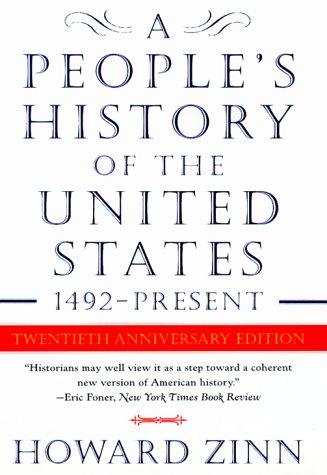 The stories we choose to tell matter. And the story of Seneca Falls, Selma, and Stonewall is not the story of U.S. history that I learned to tell growing up in South Carolina or that the one that I learned in my childhood church. It’s a story that I really learned to tell more robustly when a friend urged me to read Howard Zinn’s The People’s History of the United States, which tells “America’s story from the power of view — and in the words of — America’s women, factory workers, African Americans, Native Americans, working poor, and immigrant laborers.”
And in almost every case — from Seneca Falls to Selma to Stonewall and beyond — each of these marginalized groups was galvanized as its members came to more fully know, claim, and assert the inherent worth and dignity of every person. What could claim to be more American that the words of our Unitarian forbear Thomas Jefferson in our fledgling nation’s Declaration of Independence from the British monarchy:
We hold these truths to be self-evident, that all men are created equal, that they are endowed by their Creator with certain unalienable Rights, that among these are Life, Liberty and the pursuit of Happiness.–That to secure these rights, Governments are instituted among Men, deriving their just powers from the consent of the governed
And what could be more American than “we the people” rising up against any tyranny that denies each individual’s inherent worth and dignity? Too often liberals have ceded the ground of patriotism. Even if we rightly look beyond the historically-contingent borders of nation-states to a larger common humanity and “goal of world community,” we do a deep disservice if we neglect how deeply the whole American experiment is grounded in Liberal, Enlightenment values, of how deeply the American story, at its best, is precisely the story of freedom, liberty, and equality. It’s a story always waiting to be reclaimed and proclaimed.
As Dr. King said on behalf of the Civil Right movement in the wake of Rosa Parks’ arrest and in the midst of the Montgomery Bus Boycott, “If we are wrong, the Supreme court of this nation is wrong. If we are wrong, the Constitution of the United States is wrong. If we are wrong, God Almighty is wrong… If we are wrong justice is a lie.” King concluded, “Right here in Montgomery, when the history books are written in the future, somebody will have to say, ‘There lived a great people — a black people — who injected new meaning and dignity into the view of civilization.”King’s words apply equally to so many other movements, who have sought to inject increased meaning and dignity into our civilization as they have claimed for themselves and others their inherent worth as human beings.
At the same time, in our exploration of Seneca Falls, Selma, and Stonewall, I would be remiss if I failed name some of the times when the Civil Rights movement was sexist, when the women’s movement was heterosexist, or other combinations thereof. At that same meeting in which Dr. King spoke those resounding, prophet words in the wake of Rosa Parks’ arrest, a number of other African American men spoke, and Rosa Parks was recognized, but she was not invited to speak. As one biographer noted, “It was a male-dominated movement.”
Related to the sexist exclusion of women from the Civil Rights Movement’s leadership, one historian notes that in the decade before Stonewall,
Bayard Rustin, long-time advisor and mentor in nonviolence thinking to Martin Luther King, Jr. was a gay black man responsible for several major successes of the civil rights movement…. Rustin was deeply involved with the Montgomery bus boycott and then became chief organizer of the March on Washington, for which he was featured on the cover of Life in September 1963….
But even as MLK was writing to white moderates about “Why We Can’t Wait” in regard to racial justice, King was telling Rustin that gay rights had to wait for racial equality to come first. Ironically, at the same time, “Pauli Murray — the first African American female Episcopal priest…and a closeted lesbian — chastised Rustin and others for their exclusion of black women from the [March on Washington’s] speakers list.”
To name three more more brief examples:
- “Margaret Sanger…who was highly influential in forging a national movement for birth control and family planning, held racist, eugenicist views about nonwhite people.” Founder of the National Organization for Women,
- “Betty Friedan’s antilesbian sentiments were so present in NOW that a group of lesbians…formed the Lavender Menace.”
- And often the way the story of the Stonewall riots have been told has overlooked or covered-up that transgender folk played a major role in leading those riots that brought out at the Stonewall Inn. (That biased retelling is sometimes called “ciswashing stonewall,” from that word cisgender, which is the opposite of transgender.) As one book reviewer wrote, “the most audacious, energetic and enterprising of [the Stonewall] riot participants were the drag queens, homeless queer youths and other gender transgressors whose position on the farthest margins of society enabled their radical response to oppression.”
From Seneca Falls to Selma to Stonewall, we have seen times when oppressed groups have worked in opposition to one another and times when they have worked in coalition. The invitation is that the call for all of — in all the ways that we are powerful and in all the ways we feel powerful — to move beyond our own immediate interests and experience that we are deeply a part of the “Interdependent Web of All Existence.” Or in Dr. King’s words, “Injustice anywhere is a threat to justice everywhere. We are caught in an inescapable network of mutuality, tied in a single garment of destiny. Whatever affects one directly, affects all indirectly.” We all need each other as we continue in the struggle.
The dream of Seneca Falls continues in struggles such as the fight to end gender discrimination and ensure equal opportunity and equal pay.
The dream of Selma continues in struggles such as the fight to make the minimum wage a Living Wage and to end racial bias in our prisons. Indeed, next Saturday, February 8 many UUs are joining other secular and religious progressives in Raleigh, North Carolina to protest attacks on voting rights in what is being called the “Most Massive Moral Rally in the South Since Selma.”
And the dream of Stonewall continues here in Maryland where even as we celebrated the passage of same-sex marriage rights last year, the “The Fairness for All Marylanders Act,” which “would prohibit discrimination against transgender Marylanders in the areas of employment, housing, credit, and public accommodations” was stalled in committee. If you feel led to do so, you will be hearing about ways to help encourage the passage of that bill this year.
For now, I will end with this quote from the opening paragraph of the sermon my college Meg Riley preached last Sunday during the ordination of a new UU minister. Rev. Riley began:
Do not demand immediate results but rejoice that we are worthy to be entrusted with this great message,” wrote Olympia Brown, the first woman to be ordained by a denomination — the Universalists, in 1863. And we know that she did not demand immediate results, she who worked for women’s right to vote from girlhood and finally was able to cast a ballot in 1920 at age 85.
Seneca Falls, Selma, Stonewall. The struggle for justice continues today and into the future. I’m grateful to be on that journey with so many of you.
Notes
- The paragraph about Frederick Douglass’s role at Seneca Falls is drawn from Leslie Feinberg, TransLiberation: Beyond Pink or Blue, 51-52.
- The paragraph about Huey Newton is drawn from Feinberg, 123.
- “Gay is good” and “Black is beautiful” — Michael Bronski, A Queer History of the United States, 218-219.
- “made the separation between sex and reproduction socially acceptable” — Bronski, 207
- The two paragraphs on on Rosa Parks and Martin King is drawn from — Jeanne Theoharis, The Rebellious Life of Mrs. Rosa Parks, 92-3
- Bayard Rustin— Bronski, 203.
- Margaret Sanger — Bronski, 100.
- Betty Friedan — Bronski, 212.
For Further Reading
Sally McMillen, Seneca Falls and the Origins of the Women’s Rights Movement:
In the quiet town of Seneca Falls, New York, over the course of two days in July, 1848, a small group of women and men, led by Elizabeth Cady Stanton and Lucretia Mott, held a convention that would launch the women’s rights movement and change the course of history. In Seneca Falls and the Origins of the Women’s Rights Movement, Sally McMillen reveals, for the first time, the full significance of that revolutionary convention and the enormous changes it produced. The book covers 50 years of women’s activism, from 1840 to 1890, focusing on four extraordinary figures–Mott, Stanton, Lucy Stone, and Susan B. Anthony. McMillen tells the stories of their lives, how they came to take up the cause of women’s rights, the astonishing advances they made during their lifetimes, and the far-reaching effects of the work they did. At the convention they asserted full equality with men, argued for greater legal rights, greater professional and education opportunities, and the right to vote–ideas considered wildly radical at the time. Indeed, looking back at the convention two years later, Anthony called it “the grandest and greatest reform of all time.
Richard D. Leonard, Call to Selma: Eighteen Days of Witness:
In 1965 Rev. Martin Luther King appealed to clergy across the nation to come to Selma, Alabama, and join protestors in their struggle for voting rights. Reverend Richard Leonard, age 37, was Minister of education at the Community Church of New York [Unitarian Universalist] at the time he answered Dr. King’s call. Leonard’s journal, along with the recollections of others who shared the journey, presents Selma as a pivotal point in the advancement of civil rights.
David Carter, Stonewall: The Riots That Sparked the Gay Revolution:
While the centerpiece here is undoubtedly his hour-by-hour relating of the explosive June 1969 riots, Carter, an editor of Allen Ginsberg’s interviews, also provides an extended prelude that highlights the places, activists and others who come to play key roles. Carter’s beloved Greenwich Village and what he calls its “queer geography,” which enabled gay culture to form, flourish and consolidate itself, emerges as an inimitable, finely detailed hero. But for Carter, the most audacious, energetic and enterprising of riot participants were the drag queens, homeless queer youths and other gender transgressors whose position on the farthest margins of society enabled their radical response to oppression. What they and others managed to do, Carter renders with fresh care and enthusiasm, getting new quotes and offering unfamiliar perspectives, such as the Mafia’s role both as a patron of the gay scene in New York City (including the Stonewall Inn, which it owned and operated) and as a blackmailer of famous homosexuals. He ends appropriately with the emergence of the Gay Liberation Front and the Gay Activist Alliance, as well as the first gay pride parade, held in June 1970. While it may distract readers interested only in the story of gay liberation, Carter’s logistical history of what gay author Edmund White called “our Bastille Day” will become a permanent addition to the great histories of the civil rights era.
The Rev. Dr. Carl Gregg is a trained spiritual director, a D.Min. graduate of San Francisco Theological Seminary, and the minister of the Unitarian Universalist Congregation of Frederick, Maryland. Follow him on Facebook (facebook.com/carlgregg) and Twitter (@carlgregg).
Learn more about Unitarian Universalism:
http://www.uua.org/beliefs/principles
Previous Post

January 31, 2014
"Help, Thanks, Wow," Part 3 of 3
Next Post
February 10, 2014 Evolutionary Religion
Browse Our Archives
Select a Category Advent Anti-Racism Archaeology Atheism Baptism Best of the Year List Book Reviews Buddhism Catholicism Christian Education Church and State Church Planting Climate Change Conscientious Objection to War Creation Spirituality Death Penalty Didache Disability Rights Discernment Easter Ecology Emergent Church Movement Empire-Critical Ethics Evolution Feminist Theology Film Reviews Gandhi Gospel of Mark Gun Control Hinduism Immigration Reform Interfaith Islam JFK Judaism Jungian Spirituality Lectionary Commentary Lent Letters to the Editor LGBT Marriage MLK Multiculturalism Mysticism Nonviolent Activism Occupy Paganism (Earth-centered Religions) Parables Paul Pluralism Politics Process Theology Quantum Physics Requiescat In Pace Seminary and Divinity School Sermon Series Retrospective Sermons Spiritual Direction Spiritual Practices Stewardship (Fundraising) The Book of J The Wheel of the Year (Paganism) Theoblogger Challenge Triathlon Uncategorized Unitarian Universalism Worship Resources Youth Ministry
Select a Month July 2026 May 2026 March 2026 November 2025 October 2025 August 2025 February 2025 December 2024 October 2024 March 2024 January 2024 December 2023 November 2023 March 2023 February 2023 January 2023 December 2022 November 2022 August 2022 March 2022 February 2022 January 2022 December 2021 September 2021 August 2021 July 2021 June 2021 May 2021 February 2021 January 2021 December 2020 August 2020 June 2020 May 2020 April 2020 March 2020 February 2020 January 2020 December 2019 November 2019 October 2019 September 2019 July 2019 June 2019 March 2019 February 2019 January 2019 December 2018 November 2018 October 2018 September 2018 June 2018 May 2018 April 2018 March 2018 February 2018 January 2018 December 2017 November 2017 October 2017 September 2017 August 2017 July 2017 June 2017 May 2017 April 2017 March 2017 February 2017 January 2017 December 2016 November 2016 October 2016 September 2016 August 2016 June 2016 May 2016 April 2016 March 2016 February 2016 January 2016 December 2015 November 2015 October 2015 September 2015 August 2015 July 2015 June 2015 May 2015 April 2015 March 2015 February 2015 January 2015 December 2014 November 2014 October 2014 August 2014 July 2014 June 2014 May 2014 April 2014 March 2014 February 2014 January 2014 December 2013 November 2013 October 2013 September 2013 August 2013 July 2013 June 2013 May 2013 April 2013 March 2013 February 2013 January 2013 December 2012 November 2012 October 2012 September 2012 August 2012 July 2012 June 2012 May 2012 April 2012 March 2012 February 2012 January 2012 December 2011 November 2011 October 2011 September 2011 August 2011 July 2011 June 2011 May 2011 April 2011 March 2011 February 2011 January 2011 December 2010 November 2010 October 2010 August 2009 July 2009 May 2009
Follow Us!
TAKE THE
Religious Wisdom Quiz
What is the first book of the Bible?
Select your answer to see how you score.
Genesis Exodus Matthew Psalms
Related posts from Carl Gregg

Peak Spiritual Experiences, Psychedelics, & Consciousness Research

"How the Founding Fathers Became Infallible and Our...

Vampires, Witches, & NPR: The Legacy of Margot...

“Do You Really Want to Know?” From Pope...
TRENDING AT PATHEOS More Voices

Reading America at 250: A Nation Wrestles With...
As part of my own reflection on the 250th anniversary of the...

Whenever I am reading a book or listening to an argument, I...

President Trump Ban Animal Torture Videos on Facebook
Call for Stricter Regulations of Animal Abuse Content on Facebook Although President...

Draft Amendments to Address Ritual Abuse in New...
The proposed changes would make it illegal for individuals in domestic partnerships...

How Bans on LGBTQ+ Student Clubs Threaten Religious...
On June 20, 2025, the State of Texas passed Senate Bill 12....

The Truth About the Gen Z Revival
This past year, there has been a lot of media buzz surrounding...
view all More Voices blogs
Ad-Free & Subscriber Log-In Subscription Support
- About Us
- 2026 Calendar
- Videos
- Podcasts
- Library of World Religions
- Faith In Media Tracker
- Advertise With Us
- Write for Us
- Privacy Policy
- Terms of Service
- Do Not Sell My Data
- Contact Us
- Radiant Digital
- Manage Newsletter Subscriptions
- Unsubscribe From Notifications
- Sitemap
Copyright 2008-2026, Patheos. All rights reserved.
Subscription Support Ad-Free & Subscriber Log-In
Follow Patheos