
BuddhistCatholicContemplativeEvangelicalGeneral ChristianHinduJewishLatter-day SaintMuslimNew VisionsProgressive Christian
Beliefs
- Buddhist
- Catholic
- Contemplative
- Evangelical
- General Christian
- Hindu
- Jewish
- Latter-day Saint
- More Voices
- Muslim
- New Visions
- Pagan
- Progressive Christian
Topics
- Religion News
- Food and Religion
- Sports and Religion
- Religious Art
- Religious Music and Entertainment
- Religious Events
- History and Religion
- Style and Religion
- Politics and Religion
- Women in Religion
- Recreation Outdoors and Religion
- Business Finance and Religion
- Careers Workplace and Religion
- Education and Religion
- Family Parenting and Religion
- Health Fitness and Religion
- Home and Religion
- Relationships and Religion
- Technology and Religion
- Travel and Religion
Columnists
- Buddhist Columnists
- Business Finance and Religion Columnists
- Careers Workplace and Religion Columnists
- Catholic Columnists
- Contemplative Columnists
- Education and Religion Columnists
- Evangelists Columnists
- Family Parenting and Religion Columnists
- General Christian Columnists
- Health Fitness and Religion Columnists
- Hindu Columnists
- History and Religion Columnists
- Home and Religion Columnists
- Jewish Columnists
- More Voices Columnists
- Latter Day Columnists
- Muslim Columnists
- New Visions Columnists
- Nonreligious Columnists
- Pagan Columnists
- Politics and Religion Columnists
- Progressive Columnists
- Recreation Outdoors and Religion Columnists
- Relationships and Religion Columnists
- Religion News Columnists
- Religious Art Columnists
- Religious Events Columnists
- Religious Music and Entertainment Columnists
- Sports and Religion Columnists
- Style and Religion Columnists
- Technology and Religion Columnists
- Travel and Religion Columnists
- Women in Religion Columnists
Resource Library
- 2026 Calendar
- Library of World Religions
- The 100 Most Holy Places on Earth
- Patheos Answers
- Podcasts
- Videos
- Faith Leaders Database
- Anglican Episcopalian
- Bahai
- Baptist
- Buddhism
- Christianity
- Confucianism
- Eastern Orthodoxy
- Hinduism
- Holiness and Pentecostal
- ISKCON
- Islam
- Judaism
- Lutheran
- Methodist
- The Church of Jesus Christ of Latter-day Saints
- New Age
- Paganism
- Presbytarian and Reformed
- Protestantism
- Religion Behind the Scenes
- Roman Catholic
- Scientology
- Shia Islam
- Sikhism
- Sufism
- Sunni Islam
- Taoism
- Zen
- See all religions
Research Tools
 Ad-Free & Subscriber Log-In Subscription Support
Ad-Free & Subscriber Log-In Subscription Support
Follow Patheos 

- Trending:
- Forgiveness
- |
- Marriage
- |
- Consciousness
- |
- Death Penalty
- |
- Election
- |
- Halloween

- Home
- More Voices
- The Hunger Games, the Zombie Apocalypse, and the Meaning of Myths, Old and New
The Hunger Games, the Zombie Apocalypse, and the Meaning of Myths, Old and New
Last updated on: December 27, 2014 at 8:59 am by Carl Gregg
The Hunger Games, the Zombie Apocalypse, and the Meaning of Myths, Old and New 2014-12-27T08:59:02-05:00 Carl Gregg
Patheos Explore the world's faith through different perspectives on religion and spirituality! Patheos has the views of the prevalent religions and spiritualities of the world.
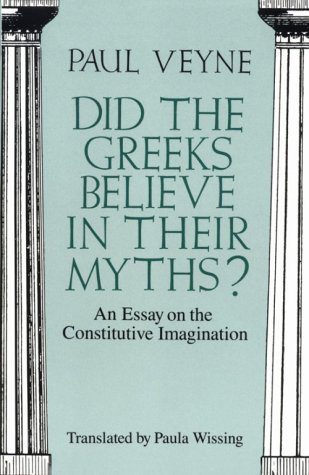
The Greek’s accepted their myths as true in the sense that they were not doubted, but they were not
accepted in the way that everyday reality is…. A Greek conventionally put the gods “in heaven,” but he would have been astounded to actually see them in the sky. He would have been no less astounded if someone using time in its literal sense, told him that Hephaestus had just remarried or that Athena had aged a great deal lately. Then he would have realized that in his own eyes mythic time had only a vague analogy with daily temporality; he would have thought that a kind of lethargy had always kept him from recognizing that difference….
They did and they did not believe in their myths, since “the coexistence of contradictory truths in the same mind is nonetheless a universal fact.” Consider that we know that the earth goes around the sun and not vice versa — but to what extent does this knowledge manage to shape our own perceptions? Do we not, despite what we “know,” actually experience sunrise as the sun rising over our stationary world? How many of us watch the dawn and think of what is happening in terms of the earth’s movement around the sun?
— Paul Veyne, Did the Greeks Believe in Their Myths?
Related to the historicity of Greek myths, similar questions can be fruitfully explored regarding the Bible. And one of my favorite resources along these lines is the book Old Testament Parallels, which highlights Ancient Near Eastern stories that preceded or were contemporary to the stories found in the Hebrew Bible, such as the parallels to the Garden of Eden and Noah’s Flood stories in the Epic of Gilgamesh, which was a likely source of those biblical stories.
The effect of learning about these antecedents to the Bible was captured satirically by the The Onion a few years ago in an article titled, “Sumerians Look On In Confusion As God Creates World”:
Lord God, Creator of All, caught thousands of Sumerian farmers and mathematicians somewhat off guard. Members of the earth’s earliest known civilization, the Sumerians, looked on in shock and confusion some 6,000 years ago as God, the Lord Almighty, created Heaven and Earth. “I do not understand,” reads an ancient line of pictographs depicting the sun, the moon, water, and a Sumerian who appears to be scratching his head. “A booming voice is saying, ‘Let there be light,’ but there is already light. It is saying, ‘Let the earth bring forth grass,’ but I am already standing on grass.”
I should clarify that my intention in sharing that story is not to mock people’s beliefs either then or now, but it is to create cognitive dissonance.
I should also hasten to add here at the outset that although there is much more to say, the conclusion I have reached for myself in regard to myths then and now is that we tell contemporary myths for similar reasons to why our ancestors told myths in their day: both to entertain and to make meaning.
Relatedly,one of the biggest mistakes we sometimes make is to view ancient people as stupid for telling or believing what appear to us as stupid stories. Instead, both ancient and modern people are less stupid than they are tribalistic and polemical. A polemic is an argument that tries to show why one side is right and the the other side is wrong. And both then and now, we human beings have a tendency to cling to people who are like us and to tell stories that legitimate our worldview. (You need do nothing more than flip back and forth between Fox News and MSNBC to see that overarching mythic, tribalistic, and polemic world views and approaches continue to operate strongly today.) And that’s precisely what the ancient Hebrew people (and Christian and Egyptian and Sumerian and other people groups) were often doing with their myths: telling stories that sought to create meaning often in ways that were intentionally exclusionary of competing world views. Biblical scholar John Dominic Crossan says it this way: “We began to think that ancient peoples told dumb, literal stories that we were now smart enough to recognize as such. Not quite.>Those ancient people told smart, metaphorical stories that we were now dumb enough to take literally. Enlightenment, yes, but Endarkenment also” (148). The opportunity then in our postmodern age — on the other side of modernistic rationalism — is perhaps to reclaim these stories not on a literal level, but on the archetypal level for the deep truths they can reveal to us about the human condition.
Next, keeping these insights about ancient myths in mind, I would like to shift our attention to some contemporary myths. Just as I have come to believe that it is mistaken to dismiss ancient myths as “dumb literal stories,” it is likewise mistaken to see many contemporary fictions as “just dumb entertainment.” Lying just below the surface of many of our contemporary myths are profound truths about the human condition. For this morning, I would like to concentrate to two specific examples, The Hunger Games trilogy and the explosion of Zombie stories in recent years.
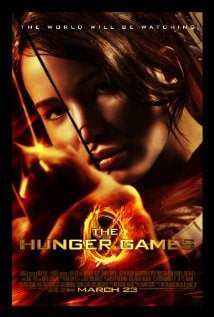 The first Hunger Games book was published in 2008, and since then both the books and films have gone on to early many millions of dollars. The trilogy centers around the story of Katniss Everdeen, a teenage girl in a post-apocalyptic version of our own society. From the ruins of war and environmental catastrophe, a super-weathly elite lives in the Capital, and rules with an iron fist over the impoverished masses, who have been divided into 12 Districts for easier crowd control. Each year the Capital demands that one boy and one girl from each district be chosen by lots both as tribute to the Capital and as a reminder that any rebellion by the masses against the Capital will be met with the direst consequences. The two tributes from each district are then forced to fight to the death in a highly celebrated and televised event known as The Hunger Games from which only one winner emerges from the 24 tributes.
I started paying more attention to the Hunger Games phenomenon when the first film was released in March 2012. Keep in mind that when myself and millions of others saw that film in the theater, the Occupy Wall Street protests had started only months earlier in September 2011, protesting the wealth gap in our nation and rallying behind the phrase, “We are the 99%.”
Although the whole idea of our children being taken from us as tributes to a wealthy elite seems rightly horrific, consider that District 12 (where Katniss, our protagonist, is from) is set in the coal mining region of our current Appalachia, not far from here. And the difference in opportunities for a child growing up in Manhattan among the wealthy elites and a child growing up in Appalachia, the Louisiana Delta, or other impoverished regions of our country, while not as epically heinous as the Hunger Games do call us to question the inequalities that we permit to exist in our own society.
And while The Hunger Games can be viewed as simply young adult entertainment, the author Suzanne Collins is well aware of the parallels she is drawing to our current society. One of the clearest examples that she has given her post-apocalyptic vision of our North America the name Panem. To acknowledge the explicit allusion, Collins puts the following exchange in the series’ third volume, which is set during a rebellion by the impoverished Districts against the wealthy Capital elites:
“[Panem et Circenses] is a saying from thousands of years ago, written in a language called Latin about a place called Rome. [It] translates into ‘Bread and Circuses.’ The writer was saying that in return for full bellies and entertainment, his people had given up their political responsibilities and therefore their power…. So that’s what the districts are for. To provide bread and circuses…. And as long as that kept rolling in, the Capitol could control its little empire. Right now, it can provide neither. (223-224)
For me, this historical parallel raises the question of how the Occupy Wall Street movement might have been different if they had somehow been able to sabotage cable television and or related entertainment sources at the same time. Would more people have paid attention to the protests if we hadn’t had TV and social media to placate and distract us? Relatedly, Collins has said in interviews that The Hunger Games novels were inspired as she flipped channels between “mindless reality TV show game and coverage of the start of the Iraq War.” And over the course of her trilogy, Collins provides some fascinating explorations of both the power and the pitfalls of protesting against the powers that be.
In going further, I want to beware of spoilers, but allow me to give a few examples. Given the ubiquity of trailers for the second film that feature Katniss, I don’t think I’m giving much away by saying that Katniss and Peeta, the two tributes from District 12 in the first film both survive the Hunger Games, even though the Capital demands that there must be only one survivor. But what’s fascinating, as well as deeply resonate with the theatrical tactics of Occupy Wall Street movement, is the way Katniss employs drama and visual theater to shame the game makers in the Capitol on national live television into letting she and Peeta live, lest they become martyrs that inspire a mass uprising.
And the second installment of the book and film pickup on the other side of that moment which is the exact opposite of happily ever after. As theologian Julie Clawson writes, “unless [Katniss] can convince the Districts that her act…was done only out of love for Peeta (and not as resistance of the Capital), everyone she loves will get hurt.” And as Katniss becomes more bold in her activism against and begins to join the resistance against the Capital more directly, the fascinating — and I would add deeply true and realistic twist — is that the resistance to the fascist leadership in the Capital begins to ironically look more and more like everything she hated about the Capital in the first place. As Audre Lorde, the self-described “black, lesbian, mother, warrior, poet” titled her famous essay, “The Master’s Tools Will Never Dismantle the Master’s House.” The master’s tools are only good for establishing a new master (or a new Pharaoh to invoke the old myths) and, of course, a new oppressed (“slave”) class.
And, at this point, I really want to tell you the true act of shocking subversion that Katniss does in the final book to try and prevent a new master from being set-up in place of the old President of the Capital — as well as the tragedy that gives her the courage to do so — but I’ll restrain myself. Ultimately, my point is that The Hunger Games is a fascinating contemporary myth about the power and hazards of a resistance movement (such as Occupy Wall Street) against injustice and wealth inequality. And there are many fascinating aspects such as how an act of kindness — putting flowers on the body of a young black girl who is killed in the Hunger Games — transforms her death from either victimhood or tragedy and into martyrdom, which inspires the resistance.
As the President of the Capital says in the first film, “[Hope] is the only thing stronger than fear. A little hope is effective. A lot of hope is dangerous. Spark is fine, as long as it’s contained.” Or as I heard Wendell Berry, one of our contemporary prophets, say in an interview last weekend at the American Academy of Religion annual meeting, “Hope is a virtue.” There’s a lot of wisdom in those four words: “Hope is a virtue.” Hope reminds us that the word doesn’t have to be this way. We can create change. And although the struggle for social justice is far from done, the steps that have been made even in the past 100 years for race, gender, and sexual equality, gives me hope that change is possible too in regard to class inequality.
And I’m very interested in the ways that contemporary myths such as The Hunger Games are planting seeds in the minds of current and future generation that could come into fruition in future justice work. But there is no assurance that The Hunger Games will inspire concrete acts of social justice. It could stay at the level of mere entertainment. You need look no further than CoverGirl and Subway to see the way that The Hunger Games mythos is has also been commodified for corporate profit. The “CoverGirl Capitol Collection” seeks to convince young women to buy their products to dress up like the wealthy elite in the Capital. CoverGirl, I assume, is hoping you won’t notice that they are inviting your children to pretend they are the clueless, consumerist crowds who are placated by the fascist spectacle of poor children being forced to kill other poor children for entertainment and societal oppression in a futuristic reenactment of ancient Rome’s “Bread and Circuses.”
In another exercise in intentionally missing the point to increase profits, Subway is promoting four new sandwiches in its “Fiery Footlong Collection,” which it claims was inspired by the second Hunger Games film’s title “Catching Fire.” Now, I like spicy food, and these sandwiches may well be delicious, but I can’t help, but find them in bad taste. The film is about the plight of starving and oppressed peasants being forced to kill each other for sport, and your restaurant franchise is free associating from the film’s title “Catching Fire” — and the series’ title “Hunger Games” — to promote a spicy set of sandwiches?
But the fact that Subway is likely selling more sandwiches as a result of this ad campaign allows me a tragic segue to our society’s current fascination on both film and television with the Zombie Apocalypse. The segue from Subway is, of course, that clearly one mythic aspect of the Zombie archetype is a representation of the mindless consuming hordes, who consume one thing after another until finally our whole consumerist society is itself consumed.
More importantly I don’t think it is a coincidence that both Hunger Games and Zombies are hugely popular right now, and both are post-apocalyptic dystopias. How much different are these dystopic visions of society than the technological utopias that came out of the 60s such as Star Trek? Barely underneath the surface of our technology-infused society is the repressed knowledge that in many cases our smart phones are the products of sweatshops and the anxiety that we are losing the land-based survivalist knowledge our ancestors had of how to grow our own food (and that we may no longer be able to do if we lost electricity long term).
Zombies also represent our fear of “the other” — those outside our tribe, or the “Barbarians at the gate” in ancients Rome. And the current popularity of post-apocalyptic dystopias are, thus, also about our need to explore what might happen on the other side of what could be a very real climate apocalypse in our future. And that we’ll never get to the imagined future reality of Star Trek’s 23rd-century if our species doesn’t survive until the 23rd century. And learning to better explore and articulate the underlying meaning of our contemporary myths could be vitally important in harnessing their meaning in the work of social justice before it is too late.
In that spirit, I will end with another quote from Wendell Berry. In that same interview that I saw with him last weekend, the interviewer asked him to read his poem “The Peace of Wild Things.” It goes like this:
When despair for the world grows in me
and I wake in the night at the least sound
in fear of what my life and my children’s lives may be,
I go and lie down where the wood drake
rests in his beauty on the water, and the great heron feeds.
I come into the peace of wild things
who do not tax their lives with forethought
of grief. I come into the presence of still water.
And I feel above me the day-blind stars
waiting with their light. For a time
I rest in the grace of the world, and am free.
After reading those beautiful words, Berry surprised both the interviewer and the audience by confessing that he regrets writing part of that poem: the part in which he refers to the animals as “wild things.” He says that the more he thought about that poem and the more he has watched animals in the meantime, he has come to see that the animals are “not ‘wild’; they are conducting domestic life, and see us as wild. Animals see us as wild, out of control, lacking in compassion.” Berry then concluded with three words: “They are right.”
So I invite you to consider. What stories are we telling about ourselves? And how are those stories shaping our society and the future society in which our children, grandchildren, and great-grandchildren will live?
If we are to live into more of a utopia than a dystopia, any changes that would make enough of a difference must be systemic not merely individual. Are our contemporary myths merely fodder to sell more make-up and fast food sandwiches, or might we — while there is still time — claim and act on the deeper meaning of our modern myths? The needed change will require work more like the grassroots organizing of the Occupy Wall Street movement and certainly require more than simply buying a ticket to or a copy of The Hunger Games. The stories we choose to tell are important, but so is the decision of whether or not to structure our society more justly and equitably as a result. The choice — at least for now — is ours.
For Further Reading
Nathan Schneider, Thank You, Anarchy: Notes from the Occupy Apocalypse.
The Rev. Dr. Carl Gregg is a trained spiritual director, a D.Min. graduate of San Francisco Theological Seminary, and the minister of the Unitarian Universalist Congregation of Frederick, Maryland. Follow him on Facebook (facebook.com/carlgregg) and Twitter (@carlgregg).
Learn more about Unitarian Universalism:
http://www.uua.org/beliefs/principles
Previous Post

December 5, 2013
Top 10 Best Albums Listened to in 2013
Next Post
December 8, 2013 Top 10 “Netflix Instant” Streamed in 2013
Browse Our Archives
Select a Category Advent Anti-Racism Archaeology Atheism Baptism Best of the Year List Book Reviews Buddhism Catholicism Christian Education Church and State Church Planting Climate Change Conscientious Objection to War Creation Spirituality Death Penalty Didache Disability Rights Discernment Easter Ecology Emergent Church Movement Empire-Critical Ethics Evolution Feminist Theology Film Reviews Gandhi Gospel of Mark Gun Control Hinduism Immigration Reform Interfaith Islam JFK Judaism Jungian Spirituality Lectionary Commentary Lent Letters to the Editor LGBT Marriage MLK Multiculturalism Mysticism Nonviolent Activism Occupy Paganism (Earth-centered Religions) Parables Paul Pluralism Politics Process Theology Quantum Physics Requiescat In Pace Seminary and Divinity School Sermon Series Retrospective Sermons Spiritual Direction Spiritual Practices Stewardship (Fundraising) The Book of J The Wheel of the Year (Paganism) Theoblogger Challenge Triathlon Uncategorized Unitarian Universalism Worship Resources Youth Ministry
Select a Month July 2026 May 2026 March 2026 November 2025 October 2025 August 2025 February 2025 December 2024 October 2024 March 2024 January 2024 December 2023 November 2023 March 2023 February 2023 January 2023 December 2022 November 2022 August 2022 March 2022 February 2022 January 2022 December 2021 September 2021 August 2021 July 2021 June 2021 May 2021 February 2021 January 2021 December 2020 August 2020 June 2020 May 2020 April 2020 March 2020 February 2020 January 2020 December 2019 November 2019 October 2019 September 2019 July 2019 June 2019 March 2019 February 2019 January 2019 December 2018 November 2018 October 2018 September 2018 June 2018 May 2018 April 2018 March 2018 February 2018 January 2018 December 2017 November 2017 October 2017 September 2017 August 2017 July 2017 June 2017 May 2017 April 2017 March 2017 February 2017 January 2017 December 2016 November 2016 October 2016 September 2016 August 2016 June 2016 May 2016 April 2016 March 2016 February 2016 January 2016 December 2015 November 2015 October 2015 September 2015 August 2015 July 2015 June 2015 May 2015 April 2015 March 2015 February 2015 January 2015 December 2014 November 2014 October 2014 August 2014 July 2014 June 2014 May 2014 April 2014 March 2014 February 2014 January 2014 December 2013 November 2013 October 2013 September 2013 August 2013 July 2013 June 2013 May 2013 April 2013 March 2013 February 2013 January 2013 December 2012 November 2012 October 2012 September 2012 August 2012 July 2012 June 2012 May 2012 April 2012 March 2012 February 2012 January 2012 December 2011 November 2011 October 2011 September 2011 August 2011 July 2011 June 2011 May 2011 April 2011 March 2011 February 2011 January 2011 December 2010 November 2010 October 2010 August 2009 July 2009 May 2009
Follow Us!
TAKE THE
Religious Wisdom Quiz
Peter was staying where when he saw the vision of the great sheet with all the animals?
Select your answer to see how you score.
Bethabara With Cornelius With Simon the Tanner Joppa
Related posts from Carl Gregg

"How the Founding Fathers Became Infallible and Our...

Letting Go of Fear & Celebrating Differences: Insights...

The Transient and the Permanent in Christianity: Theodore...
TRENDING AT PATHEOS More Voices

Reading America at 250: A Nation Wrestles With...
As part of my own reflection on the 250th anniversary of the...

Whenever I am reading a book or listening to an argument, I...

President Trump Ban Animal Torture Videos on Facebook
Call for Stricter Regulations of Animal Abuse Content on Facebook Although President...

Draft Amendments to Address Ritual Abuse in New...
The proposed changes would make it illegal for individuals in domestic partnerships...

How Bans on LGBTQ+ Student Clubs Threaten Religious...
On June 20, 2025, the State of Texas passed Senate Bill 12....

The Truth About the Gen Z Revival
This past year, there has been a lot of media buzz surrounding...
view all More Voices blogs
Ad-Free & Subscriber Log-In Subscription Support
- About Us
- 2026 Calendar
- Videos
- Podcasts
- Library of World Religions
- Faith In Media Tracker
- Advertise With Us
- Write for Us
- Privacy Policy
- Terms of Service
- Do Not Sell My Data
- Contact Us
- Radiant Digital
- Manage Newsletter Subscriptions
- Unsubscribe From Notifications
- Sitemap
Copyright 2008-2026, Patheos. All rights reserved.
Subscription Support Ad-Free & Subscriber Log-In
Follow Patheos