
BuddhistCatholicContemplativeEvangelicalGeneral ChristianHinduJewishLatter-day SaintMuslimNew VisionsProgressive Christian
Beliefs
- Buddhist
- Catholic
- Contemplative
- Evangelical
- General Christian
- Hindu
- Jewish
- Latter-day Saint
- More Voices
- Muslim
- New Visions
- Pagan
- Progressive Christian
Topics
- Religion News
- Food and Religion
- Sports and Religion
- Religious Art
- Religious Music and Entertainment
- Religious Events
- History and Religion
- Style and Religion
- Politics and Religion
- Women in Religion
- Recreation Outdoors and Religion
- Business Finance and Religion
- Careers Workplace and Religion
- Education and Religion
- Family Parenting and Religion
- Health Fitness and Religion
- Home and Religion
- Relationships and Religion
- Technology and Religion
- Travel and Religion
Columnists
- Buddhist Columnists
- Business Finance and Religion Columnists
- Careers Workplace and Religion Columnists
- Catholic Columnists
- Contemplative Columnists
- Education and Religion Columnists
- Evangelists Columnists
- Family Parenting and Religion Columnists
- General Christian Columnists
- Health Fitness and Religion Columnists
- Hindu Columnists
- History and Religion Columnists
- Home and Religion Columnists
- Jewish Columnists
- More Voices Columnists
- Latter Day Columnists
- Muslim Columnists
- New Visions Columnists
- Nonreligious Columnists
- Pagan Columnists
- Politics and Religion Columnists
- Progressive Columnists
- Recreation Outdoors and Religion Columnists
- Relationships and Religion Columnists
- Religion News Columnists
- Religious Art Columnists
- Religious Events Columnists
- Religious Music and Entertainment Columnists
- Sports and Religion Columnists
- Style and Religion Columnists
- Technology and Religion Columnists
- Travel and Religion Columnists
- Women in Religion Columnists
Resource Library
- 2026 Calendar
- Library of World Religions
- The 100 Most Holy Places on Earth
- Patheos Answers
- Podcasts
- Videos
- Faith Leaders Database
- Anglican Episcopalian
- Bahai
- Baptist
- Buddhism
- Christianity
- Confucianism
- Eastern Orthodoxy
- Hinduism
- Holiness and Pentecostal
- ISKCON
- Islam
- Judaism
- Lutheran
- Methodist
- The Church of Jesus Christ of Latter-day Saints
- New Age
- Paganism
- Presbytarian and Reformed
- Protestantism
- Religion Behind the Scenes
- Roman Catholic
- Scientology
- Shia Islam
- Sikhism
- Sufism
- Sunni Islam
- Taoism
- Zen
- See all religions
Research Tools
 Ad-Free & Subscriber Log-In Subscription Support
Ad-Free & Subscriber Log-In Subscription Support
Follow Patheos 

- Trending:
- Forgiveness
- |
- Marriage
- |
- Consciousness
- |
- Death Penalty
- |
- Election
- |
- Halloween

- Home
- More Voices
- Living the Questions
Living the Questions
Last updated on: November 22, 2013 at 2:56 pm by Carl Gregg
Living the Questions 2013-11-22T14:56:09-05:00 Carl Gregg
Patheos Explore the world's faith through different perspectives on religion and spirituality! Patheos has the views of the prevalent religions and spiritualities of the world.
One of my professors used to say that his favorite time of the year was the last week of each semester. He called it “A Time of Great Synthesis.” He said he could almost feel it in the air: the energy of students preparing for final papers and exams, striving to weave all the disparate strands of knowledge learned during the term into a coherent tapestry. At the time, I used to sometimes roll my eyes when he would say things like that because I was wearily in the midst of studying. At the same time, I knew he was right. Integration is hard work, but it’s essential for transforming mere data, facts, and information into wisdom.
And I tried in last week’s post on “Lost Christianities and Banned Books of the Bible,” to distill the core lessons from the 9 hours I have spent lecturing about that topic at Frederick Community College this fall. This week, I want to make a similar effort in regard to the 10-week class I have been facilitating this fall in my congregation on “Building Your Own Theology.” Before that class began, I posted back in early September on “Building Your Own Theology,” and this current post is a sequel of sorts more than two months later.
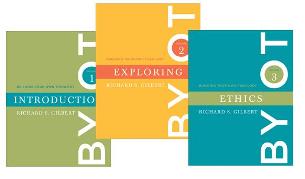 The goal of the “Building Your Own Theology” curriculum is to work on articulating what you believe (and why) in conversation both with other religious liberals as well as with theologians, philosophers, and other thinkers throughout history. And one goal of this post is to perhaps inspire readers of this blog to do some reflection and perhaps even some writing of your own about what you believe and why.
Accordingly, perhaps the most important point to make about building a twenty-first century progressive theology relates to what is known as the “Liberal Turn in Theology.” The Liberal Turn in theology is the move from a theology constrained by tradition, hierarchy, and community to a theology that views reason, feelings, and experience as equally legitimate sources for theological reflection. So instead of being expected to belief a doctrine or dogma because “it (allegedly) has always been that way,” because a religious leaders tell you so, or because “that’s what everyone else thinks,” liberal theology insists that human reason and logic as well as individual feelings and experiences — what you know to be true because you have experienced it in the crucible of your own firsthand experience — are centrally important in building a theology that has relevance and integrity.
And although the prospect of building your own theology can be liberating and exhilarating, the actual process of deconstructing obsolete beliefs and reconstructing a new framework for beliefs and practices is hard work. A “Do-It-Yourself” theology can be most worthwhile, but the challenge is (as the old saying goes) to ensure that the freedom liberalism gives us leaves us genuinely set free from the oppressive parts of our past and not just cast adrift.
I will offer, as a way of getting starting, the three questions that we invited all members of the Building Your Own Theology class to respond to in our first session:
What are some significant religious beliefs you cherish?
What are some significant religious beliefs from your personal history that you have rejected?
What are some religious issues with which you are currently struggling and would like to explore?
Those three questions alone can get you a long way into the process of building your own theology. I should perhaps also add that “building your own theology” is process that is potentially worth engaging at different points in your life — perhaps at least every decade or in the wake of major life changes.
In that spirit, I love the passage from poet Rainer Maria Rilke’s Letters to a Young Poet in which he offers these words of wisdom:
Do not now seek the answers which cannot be given you because you would not be able to live them. And the point is, to live everything. Live in the questions now. Perhaps you will gradually, without noticing it, live along some distant day into the answer.
I appreciate these word both because of the honesty that we will never have all the answers from our finite human perspective as well as the insistence on action not just abstract theories.
Accordingly, I will readily admit that I do not have all the answers, and I fully expect that my theology will evolve further as I continue to “live the questions.” Nevertheless, after facilitating ten sessions of Building Your Own Theology, I would like to share with you some of the cornerstones of my current credo, which is a work still under construction:
I believe that behavior is believable, often much more so than words.
I believe in cultivating firsthand religious experience, in exploring what we can know in the crucible of our own direct experience.
I believe that our talk about “the divine,” “the sacred,” or simply “reality” must be informed by the best of twenty-first century knowledge, not only the best of sources such as process, feminist, and liberation theologies, but also of quantum physics, Big History, and Deep Time.
I believe that there is no perfect past to which we can return because “Eden” never existed in the first place, but stories of exemplary lives and communities — as well as myths and archetypes — can still inspire us to live bolder, more beautiful, inclusive, and transformative lives.
I believe there is no single, perfect way to live in the present, but we can fine pragmatic touchstones at the intersection of tradition, reason, and experience.
I believe there is no perfect utopia ahead of us in the future, but that we can still freely choose love, solidarity, and hope. And in so doing can make a difference in this world, improving the lives of ourselves and others.
As I said, I don’t have all the answers, but those are some of ways I am currently living the questions.
In the closing session for the Building Your Own Theology class, one of the final reflection questions asked about the significance of the theology that we had spent the past few weeks articulating:
How does the theology you have built “interfere” with your life? (What difference does it make in the way you live? What are the main obstacles in living your convictions? What concrete steps might you take to bring your life into line with your theology? What will you do differently because of Building Your Own Theology?)
One of the ways my theology interferes with my life is that it calls me out of myself, and continually challenges me to join with others in making this world a better place for all people.
And although I do believe that building your own theology can be a constructive, helpful practice, ultimately Unitarian Universalism is a big tent movement that explicitly makes room for drawing from six diverse sources in shaping communal life together. And recognizing our theological diversity, we like to remind ourselves that, “You don’t have to believe alike to love alike.”
And despite the diverse theologies that we are continually building and re-building, we also emphasize that, in the end, our bias is on “Deeds not creeds”: on concrete actions of working for justice, standing on the side of love, and building the Beloved Community.
The Rev. Dr. Carl Gregg is a trained spiritual director, a D.Min. graduate of San Francisco Theological Seminary, and the minister of the Unitarian Universalist Congregation of Frederick, Maryland. Follow him on Facebook (facebook.com/carlgregg) and Twitter (@carlgregg).
Learn more about Unitarian Universalism:
http://www.uua.org/beliefs/principles
Previous Post

November 21, 2013
JFK, Sorenson, and Unitarian Universalism
Next Post
December 3, 2013 Top 10 Best Books Read in 2013
Browse Our Archives
Select a Category Advent Anti-Racism Archaeology Atheism Baptism Best of the Year List Book Reviews Buddhism Catholicism Christian Education Church and State Church Planting Climate Change Conscientious Objection to War Creation Spirituality Death Penalty Didache Disability Rights Discernment Easter Ecology Emergent Church Movement Empire-Critical Ethics Evolution Feminist Theology Film Reviews Gandhi Gospel of Mark Gun Control Hinduism Immigration Reform Interfaith Islam JFK Judaism Jungian Spirituality Lectionary Commentary Lent Letters to the Editor LGBT Marriage MLK Multiculturalism Mysticism Nonviolent Activism Occupy Paganism (Earth-centered Religions) Parables Paul Pluralism Politics Process Theology Quantum Physics Requiescat In Pace Seminary and Divinity School Sermon Series Retrospective Sermons Spiritual Direction Spiritual Practices Stewardship (Fundraising) The Book of J The Wheel of the Year (Paganism) Theoblogger Challenge Triathlon Uncategorized Unitarian Universalism Worship Resources Youth Ministry
Select a Month July 2026 May 2026 March 2026 November 2025 October 2025 August 2025 February 2025 December 2024 October 2024 March 2024 January 2024 December 2023 November 2023 March 2023 February 2023 January 2023 December 2022 November 2022 August 2022 March 2022 February 2022 January 2022 December 2021 September 2021 August 2021 July 2021 June 2021 May 2021 February 2021 January 2021 December 2020 August 2020 June 2020 May 2020 April 2020 March 2020 February 2020 January 2020 December 2019 November 2019 October 2019 September 2019 July 2019 June 2019 March 2019 February 2019 January 2019 December 2018 November 2018 October 2018 September 2018 June 2018 May 2018 April 2018 March 2018 February 2018 January 2018 December 2017 November 2017 October 2017 September 2017 August 2017 July 2017 June 2017 May 2017 April 2017 March 2017 February 2017 January 2017 December 2016 November 2016 October 2016 September 2016 August 2016 June 2016 May 2016 April 2016 March 2016 February 2016 January 2016 December 2015 November 2015 October 2015 September 2015 August 2015 July 2015 June 2015 May 2015 April 2015 March 2015 February 2015 January 2015 December 2014 November 2014 October 2014 August 2014 July 2014 June 2014 May 2014 April 2014 March 2014 February 2014 January 2014 December 2013 November 2013 October 2013 September 2013 August 2013 July 2013 June 2013 May 2013 April 2013 March 2013 February 2013 January 2013 December 2012 November 2012 October 2012 September 2012 August 2012 July 2012 June 2012 May 2012 April 2012 March 2012 February 2012 January 2012 December 2011 November 2011 October 2011 September 2011 August 2011 July 2011 June 2011 May 2011 April 2011 March 2011 February 2011 January 2011 December 2010 November 2010 October 2010 August 2009 July 2009 May 2009
Follow Us!
TAKE THE
Religious Wisdom Quiz
What does the name "Samuel" mean?
Select your answer to see how you score.
Gifted by God Sent by God Heard by God Saved by God
Related posts from Carl Gregg

Peak Spiritual Experiences, Psychedelics, & Consciousness Research

"How the Founding Fathers Became Infallible and Our...

Vampires, Witches, & NPR: The Legacy of Margot...

“Do You Really Want to Know?” From Pope...
TRENDING AT PATHEOS More Voices

Reading America at 250: A Nation Wrestles With...
As part of my own reflection on the 250th anniversary of the...

Whenever I am reading a book or listening to an argument, I...

President Trump Ban Animal Torture Videos on Facebook
Call for Stricter Regulations of Animal Abuse Content on Facebook Although President...

Draft Amendments to Address Ritual Abuse in New...
The proposed changes would make it illegal for individuals in domestic partnerships...

How Bans on LGBTQ+ Student Clubs Threaten Religious...
On June 20, 2025, the State of Texas passed Senate Bill 12....

The Truth About the Gen Z Revival
This past year, there has been a lot of media buzz surrounding...
view all More Voices blogs
Ad-Free & Subscriber Log-In Subscription Support
- About Us
- 2026 Calendar
- Videos
- Podcasts
- Library of World Religions
- Faith In Media Tracker
- Advertise With Us
- Write for Us
- Privacy Policy
- Terms of Service
- Do Not Sell My Data
- Contact Us
- Radiant Digital
- Manage Newsletter Subscriptions
- Unsubscribe From Notifications
- Sitemap
Copyright 2008-2026, Patheos. All rights reserved.
Subscription Support Ad-Free & Subscriber Log-In
Follow Patheos