
BuddhistCatholicContemplativeEvangelicalGeneral ChristianHinduJewishLatter-day SaintMuslimNew VisionsProgressive Christian
Beliefs
- Buddhist
- Catholic
- Contemplative
- Evangelical
- General Christian
- Hindu
- Jewish
- Latter-day Saint
- More Voices
- Muslim
- New Visions
- Pagan
- Progressive Christian
Topics
- Religion News
- Food and Religion
- Sports and Religion
- Religious Art
- Religious Music and Entertainment
- Religious Events
- History and Religion
- Style and Religion
- Politics and Religion
- Women in Religion
- Recreation Outdoors and Religion
- Business Finance and Religion
- Careers Workplace and Religion
- Education and Religion
- Family Parenting and Religion
- Health Fitness and Religion
- Home and Religion
- Relationships and Religion
- Technology and Religion
- Travel and Religion
Columnists
- Buddhist Columnists
- Business Finance and Religion Columnists
- Careers Workplace and Religion Columnists
- Catholic Columnists
- Contemplative Columnists
- Education and Religion Columnists
- Evangelists Columnists
- Family Parenting and Religion Columnists
- General Christian Columnists
- Health Fitness and Religion Columnists
- Hindu Columnists
- History and Religion Columnists
- Home and Religion Columnists
- Jewish Columnists
- More Voices Columnists
- Latter Day Columnists
- Muslim Columnists
- New Visions Columnists
- Nonreligious Columnists
- Pagan Columnists
- Politics and Religion Columnists
- Progressive Columnists
- Recreation Outdoors and Religion Columnists
- Relationships and Religion Columnists
- Religion News Columnists
- Religious Art Columnists
- Religious Events Columnists
- Religious Music and Entertainment Columnists
- Sports and Religion Columnists
- Style and Religion Columnists
- Technology and Religion Columnists
- Travel and Religion Columnists
- Women in Religion Columnists
Resource Library
- 2026 Calendar
- Library of World Religions
- The 100 Most Holy Places on Earth
- Patheos Answers
- Podcasts
- Videos
- Faith Leaders Database
- Anglican Episcopalian
- Bahai
- Baptist
- Buddhism
- Christianity
- Confucianism
- Eastern Orthodoxy
- Hinduism
- Holiness and Pentecostal
- ISKCON
- Islam
- Judaism
- Lutheran
- Methodist
- The Church of Jesus Christ of Latter-day Saints
- New Age
- Paganism
- Presbytarian and Reformed
- Protestantism
- Religion Behind the Scenes
- Roman Catholic
- Scientology
- Shia Islam
- Sikhism
- Sufism
- Sunni Islam
- Taoism
- Zen
- See all religions
Research Tools
 Ad-Free & Subscriber Log-In Subscription Support
Ad-Free & Subscriber Log-In Subscription Support
Follow Patheos 

- Trending:
- Forgiveness
- |
- Marriage
- |
- Consciousness
- |
- Death Penalty
- |
- Election
- |
- Halloween

- Home
- More Voices
- A Spirituality of Stability
A Spirituality of Stability
Last updated on: December 27, 2014 at 9:05 am by Carl Gregg
A Spirituality of Stability 2014-12-27T09:05:05-05:00 Carl Gregg
Patheos Explore the world's faith through different perspectives on religion and spirituality! Patheos has the views of the prevalent religions and spiritualities of the world.
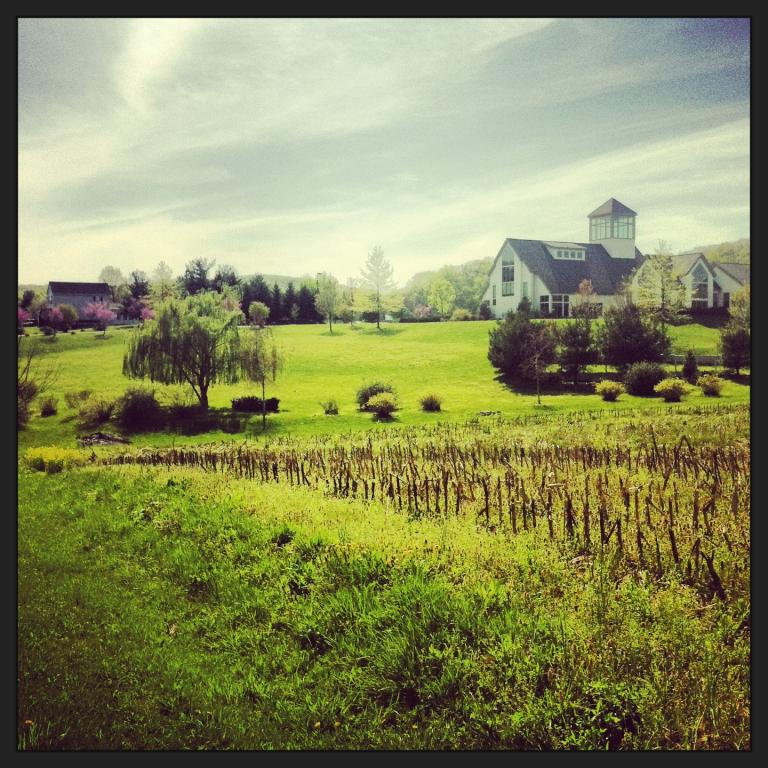
Photo Credit: Carl Gregg
The congregation where I serve as minister recently celebrated the 10th anniversary of our building dedication. This occasion was significant for many reason including that for the previous 42 years of this congregation’s history, they were a semi-nomadic people without a permanent home. This anniversary has inspired me to reflect on what it can mean to practice an intentional spirituality of stability — in our spiritual communities, with our families, even at work.
Speaking personally, the group that has taught me the most about a spirituality of stability are Benedictine monks. During the same years that my current congregation was searching for the property on which it now stand, constructing its building, and moving in, I was spending a few weeks each summer visiting various intentional communities, including the Abbey of Gethsemane in Kentucky (where Thomas Merton was just another monk known as Father Louie), Koinonia Farms in Georgia, and the Monastery of Christ in the Desert in New Mexico. Part of why I was drawn to visit that New Mexico monastery, in particular, is its remoteness. It is located at the end of Forest Service Road 151, which the monks affectionately call their “13-mile driveway,” a winding, steep, narrow dirt road.
When many people think of monks, they often think of vows of poverty and chastity. And those vows are no small matters. But what I learned from spending time among these monks was less about poverty and chastity and more about the less famous Benedictine vow of stability — of committing oneself to a lifetime at one monastery, on one particular piece of land, and with one particular community of monks.
Relatedly, many people associate monasticism with an escape from the world. But every monk I’ve ever talked to will tell you that monks are human beings, just like the rest of us. And all the petty annoyances, frailties, and foibles of our fellow human beings are present in monasteries, just like everywhere else. The difference, however, is that the monastic ideal, at its best, includes a commitment to stability: to working out a life of mercy, forgiveness, and compassion not in the abstract but with a particular group of brothers or sisters, in one place, for the long haul.
I remember after I finished graduate school, got my first full-time job, and discovered unexpectedly after about a year or so that I had saved enough money for a downpayment on a house. (Keep in mind that housing prices are significantly lower in northeast Louisiana than in D.C. Metro and other similar real estate markets!) Owning a home was wonderful in many ways, but I was also shocked by the amount of work it took to keep the house and lawn in order, as well as the amount of money and time required for maintenance. At the same time, there is an intimacy that develops from caring for a piece of land over time that I never felt toward my apartment, which not only I did I not own, but also had to expend almost no energy to maintain. (Any problem was usually solved with a quick call to the apartment manager.) I could make similar analogies to marriage. Dating vs. marriage, renting an apartment vs. buying a house can be all the difference in the world: in sickness and in health, in plenty and in want, in joy and in sorrow.
And, yes, I will grant that there are strong arguments for renting in some circumstances, just as there are times when divorce is the best option. But on the occasion of anniversaries of building dedications, invite us to reflect on the transformation that can come from spending a long time in one good place.
One minister tells a story of a family joining a congregation that was known to emphasize being a supportive, caring community. This family had relocated specifically to be near this congregation about which they had heard such wonderful reports. But after a year — despite having many significant, good, and welcoming experiences — the father of the family confessed to one of the ministers that, “he wasn’t sure that he was experiencing the community his family had expected. Frankly, [they] had hoped for more.” The minister listened to this man’s story, then asked a simple question, “Remind me how long you have been members of this congregation?” The man answered, “About a year.” The minister replied, “Then I guess you’ve got about a year’s worth of community. Stay another year and you’ll have two years worth. Stay thirty and you might find some of what you’re looking for.”
That story reminds me that Rev. Fred Muir will soon celebrate his thirtieth year as minister of the UU Church of Annapolis. Fred is a well known and respected minister in Unitarian Universalism on the continental level, and surely he could’ve easily moved to an allegedly “bigger and better” congregation at some point — likely at multiple points — during the past thirty years. But for whatever confluence of reasons he stayed. And from what I have seen, the stability of Fred’s presence is part of what has allowed that congregation to grow and take risks for social justice (particularly regarding antiracism and multiculturalism) that might not otherwise have been possible without his long tenure.
What are some parallels in your life —
to people, places, and groups you have committed to over a long time?
What has (or might) become possible as trust grows and intimacy deepens over time?
Reflecting on Fred’s ministry in Annapolis reminds me of two similar, connected stories. The first is from the author Wendell Berry, who as he became more famous, could’ve moved almost anywhere in the world, but he has chosen a life of stability, farming one particular plot of land in Kentucky. He writes:
During the last 17 years . . . I have been working at the restoration of a once exhausted hillside. Its scars are now healed over, though still visible, and this year it has provided abundant pasture, more than in any year since we have owned it. But to make it as good as it is now has taken 17 years. If I had been a millionaire or if my family had been starving, it would still have taken 17 years. It can be better than it is now, but that will take longer. For it to live fully in its own responsibility, as it did before bad use ran it down, may take hundreds of years.
The parallel story is from my friend Kyle Childress, who (like Fred Muir in Annapolis) has committed to a longterm pastorate to a relatively small congregation in Nacogdoches, Texas. Reflected on the meaning of Wendell Berry’s words for him and his congregation, Kyle writes:
We all have [members of our congregations] whose lives are deeply scarred by bitterness, anger, hurt, abuse, disease and death. Add to that the deep scarring caused by war, consumer capitalism, nationalism and racism…. For [love, mercy, and compassion] to grow and heal such worn-out, eroded lives takes patient, long-suffering, detailed work. It takes time to cultivate the traits of peacemaking, forgiveness, reconciliation, and love where previously violence, mistrust and fear were the norms.
I invite you to considerwhat in your life might be possible through an intentional practice of stability: from a commitment over many decades to a particular group of people, to a particular place?
There are new potentialities that open up from spending a long time in one good place — as trust grows and intimacy deepens — that aren’t possible at first. Consider for example this wisdom from some of the desert mothers and fathers, who helped inspire St. Benedict of Nursia (c. 480-543), the founder of the Benedictine Order: “In whatever place you find yourself, do not easily leave it.” And “If a trail comes upon you in the place where you live, do not leave that place when the trail comes. Wherever you go, you will find that what you are running from is ahead of you.” Turning to our own day, Jon Kabat-Zinn, who teaches Mindfulness-Based Stress Reduction, says it this way in the title of one of his books: Wherever You Go, There You Are.
Wherever we go, we bring along our issues, our baggage, our neuroses. In contrast, a spirituality of stability invites us to stay for a long time in one good place, to work out our issues in the company of a supportive network that can only be built over time. And although I will be the first to admit that some people, communities, and places are more toxic than helpful, there are many good people and places out there. And in our transient, globalized, instant-satisfaction age of designed obsolescence, there is a transformative power of committing to a long time in one good place, among good people — allowing yourself to know and be known. And ten years into our life together in this building is an opportunity to reflect and recommit to an intentional spirituality of stability and all that it makes possible.
And the fruit that can be borne out of a spirituality of stability is why I told the search committee that helped bring me to my current congregation more than a year ago that I have all intentions of staying at the Unitarian Universalist Congregation of Frederick at least 7-10 years. I’m open to staying longer, but I can’t even begin to see more than a decade into the future. And I feel like I am safe in saying that a little more than a year in, the congregation feels more stable to me than when I arrived. And as we become even more centered and stable as a congregation, my hope is that we will be able to reach out to the community more fully and robustly from a place of confident stability and steady generosity that will allow us to take informed risks for love, inclusivity, and justice.

Photo credit: Carl Gregg
As an aside, on of my favorite parts of our building and grounds is the 13-circuit labyrinth emblazoned on the courtyard lawn between this sanctuary and our chapel. Contemplative labyrinths like this one don’t have a minotaur at the center, and are not a maze. They have a “unicursal” design of one-way in and one-way out. That design in which there is no way to get lost is a beautiful symbol for a spirituality of stability. Walking the labyrinth is an invitation to recommit to living more deeply and fully in the life that you already have.
And in the spirit of how much is possible by committing to a long time to this good place, I’ll conclude with this pledge that is adapted from one a congregation in Ohio uses to help describe how each one of us contributes to what this place is and can become:
My [congregation] is composed of people like me. I help make it what it is. It will be friendly, if I am. It will be [kind, forgiving, and welcoming], if I am. Its [seats] will be filled if I help fill them. It will do great work, if I work. It will make generous gifts to many causes, if I am a generous giver. It will bring others into its worship, if I invite them and bring them It will be a [congregation] of loyalty and love, of fearlessness and faith, of compassion, charity and mercy, if I who make it what it is, am filled with these things. Therefore, I dedicate myself to the task of being all things that I want my [spiritual home] to be.
Notes
1 “Stay thirty and you might find some of what you’re looking for” — Jonathan Wilson-Hartgrove*,* The Wisdom of Stability: Rooting Faith in a Mobile Culture, 19.
2 Wendell Berry and Kyle Childress, “Good Work: Learning About Ministry from Wendell Berry,”Christian Century (March 8, 2005), 29.
3 The quotes from the Desert Ammas and Abbas (“mothers and fathers”) is from Jonathan Wilson-Hartgrove*,* The Wisdom of Stability: Rooting Faith in a Mobile Culture, 35
4 I heard the term “Social Profit” at the New Church Leadership Institute (August 10 – 14, 2010) in Decatur, Georgia. My notes seem to indicate that the speaker was from Cone Communications (http://www.conecomm.com/).
5 The adapted pledge is from St. Mary Magdalene Catholic Church in Willowick, Ohio, available at http://www.dioceseofcleveland.org/stewardship/stewardship_docs/SMM_FebruaryStewardshipNewsletter2010.pdf.
The Rev. Dr. Carl Gregg is a trained spiritual director, a D.Min. graduate of San Francisco Theological Seminary, and the minister of the Unitarian Universalist Congregation of Frederick, Maryland. Follow him on Facebook (facebook.com/carlgregg) and Twitter (@carlgregg).
Learn more about Unitarian Universalism:
http://www.uua.org/beliefs/principles
Previous Post

September 30, 2013
Interspirituality: Experiencing the Heart of the World's Religions
Browse Our Archives
Select a Category Advent Anti-Racism Archaeology Atheism Baptism Best of the Year List Book Reviews Buddhism Catholicism Christian Education Church and State Church Planting Climate Change Conscientious Objection to War Creation Spirituality Death Penalty Didache Disability Rights Discernment Easter Ecology Emergent Church Movement Empire-Critical Ethics Evolution Feminist Theology Film Reviews Gandhi Gospel of Mark Gun Control Hinduism Immigration Reform Interfaith Islam JFK Judaism Jungian Spirituality Lectionary Commentary Lent Letters to the Editor LGBT Marriage MLK Multiculturalism Mysticism Nonviolent Activism Occupy Paganism (Earth-centered Religions) Parables Paul Pluralism Politics Process Theology Quantum Physics Requiescat In Pace Seminary and Divinity School Sermon Series Retrospective Sermons Spiritual Direction Spiritual Practices Stewardship (Fundraising) The Book of J The Wheel of the Year (Paganism) Theoblogger Challenge Triathlon Uncategorized Unitarian Universalism Worship Resources Youth Ministry
Select a Month July 2026 May 2026 March 2026 November 2025 October 2025 August 2025 February 2025 December 2024 October 2024 March 2024 January 2024 December 2023 November 2023 March 2023 February 2023 January 2023 December 2022 November 2022 August 2022 March 2022 February 2022 January 2022 December 2021 September 2021 August 2021 July 2021 June 2021 May 2021 February 2021 January 2021 December 2020 August 2020 June 2020 May 2020 April 2020 March 2020 February 2020 January 2020 December 2019 November 2019 October 2019 September 2019 July 2019 June 2019 March 2019 February 2019 January 2019 December 2018 November 2018 October 2018 September 2018 June 2018 May 2018 April 2018 March 2018 February 2018 January 2018 December 2017 November 2017 October 2017 September 2017 August 2017 July 2017 June 2017 May 2017 April 2017 March 2017 February 2017 January 2017 December 2016 November 2016 October 2016 September 2016 August 2016 June 2016 May 2016 April 2016 March 2016 February 2016 January 2016 December 2015 November 2015 October 2015 September 2015 August 2015 July 2015 June 2015 May 2015 April 2015 March 2015 February 2015 January 2015 December 2014 November 2014 October 2014 August 2014 July 2014 June 2014 May 2014 April 2014 March 2014 February 2014 January 2014 December 2013 November 2013 October 2013 September 2013 August 2013 July 2013 June 2013 May 2013 April 2013 March 2013 February 2013 January 2013 December 2012 November 2012 October 2012 September 2012 August 2012 July 2012 June 2012 May 2012 April 2012 March 2012 February 2012 January 2012 December 2011 November 2011 October 2011 September 2011 August 2011 July 2011 June 2011 May 2011 April 2011 March 2011 February 2011 January 2011 December 2010 November 2010 October 2010 August 2009 July 2009 May 2009
Follow Us!
TAKE THE
Religious Wisdom Quiz
What city is known as the Holy City, sacred to Jews, Christians, and Muslims?
Select your answer to see how you score.
Athens Cairo Rome Jerusalem
Related posts from Carl Gregg

What Do We Mean We When Say, “Building...

Margaret Fuller: The Stories We Tell Matter
"Feminist Masculinity and Father’s Day" #EachEveryWoman #AllMenCan
TRENDING AT PATHEOS More Voices

Reading America at 250: A Nation Wrestles With...
As part of my own reflection on the 250th anniversary of the...

Whenever I am reading a book or listening to an argument, I...

President Trump Ban Animal Torture Videos on Facebook
Call for Stricter Regulations of Animal Abuse Content on Facebook Although President...

Draft Amendments to Address Ritual Abuse in New...
The proposed changes would make it illegal for individuals in domestic partnerships...

How Bans on LGBTQ+ Student Clubs Threaten Religious...
On June 20, 2025, the State of Texas passed Senate Bill 12....

The Truth About the Gen Z Revival
This past year, there has been a lot of media buzz surrounding...
view all More Voices blogs
Ad-Free & Subscriber Log-In Subscription Support
- About Us
- 2026 Calendar
- Videos
- Podcasts
- Library of World Religions
- Faith In Media Tracker
- Advertise With Us
- Write for Us
- Privacy Policy
- Terms of Service
- Do Not Sell My Data
- Contact Us
- Radiant Digital
- Manage Newsletter Subscriptions
- Unsubscribe From Notifications
- Sitemap
Copyright 2008-2026, Patheos. All rights reserved.
Subscription Support Ad-Free & Subscriber Log-In
Follow Patheos