
BuddhistCatholicContemplativeEvangelicalGeneral ChristianHinduJewishLatter-day SaintMuslimNew VisionsProgressive Christian
Beliefs
- Buddhist
- Catholic
- Contemplative
- Evangelical
- General Christian
- Hindu
- Jewish
- Latter-day Saint
- More Voices
- Muslim
- New Visions
- Pagan
- Progressive Christian
Topics
- Religion News
- Food and Religion
- Sports and Religion
- Religious Art
- Religious Music and Entertainment
- Religious Events
- History and Religion
- Style and Religion
- Politics and Religion
- Women in Religion
- Recreation Outdoors and Religion
- Business Finance and Religion
- Careers Workplace and Religion
- Education and Religion
- Family Parenting and Religion
- Health Fitness and Religion
- Home and Religion
- Relationships and Religion
- Technology and Religion
- Travel and Religion
Columnists
- Buddhist Columnists
- Business Finance and Religion Columnists
- Careers Workplace and Religion Columnists
- Catholic Columnists
- Contemplative Columnists
- Education and Religion Columnists
- Evangelists Columnists
- Family Parenting and Religion Columnists
- General Christian Columnists
- Health Fitness and Religion Columnists
- Hindu Columnists
- History and Religion Columnists
- Home and Religion Columnists
- Jewish Columnists
- More Voices Columnists
- Latter Day Columnists
- Muslim Columnists
- New Visions Columnists
- Nonreligious Columnists
- Pagan Columnists
- Politics and Religion Columnists
- Progressive Columnists
- Recreation Outdoors and Religion Columnists
- Relationships and Religion Columnists
- Religion News Columnists
- Religious Art Columnists
- Religious Events Columnists
- Religious Music and Entertainment Columnists
- Sports and Religion Columnists
- Style and Religion Columnists
- Technology and Religion Columnists
- Travel and Religion Columnists
- Women in Religion Columnists
Resource Library
- 2026 Calendar
- Library of World Religions
- The 100 Most Holy Places on Earth
- Patheos Answers
- Podcasts
- Videos
- Faith Leaders Database
- Anglican Episcopalian
- Bahai
- Baptist
- Buddhism
- Christianity
- Confucianism
- Eastern Orthodoxy
- Hinduism
- Holiness and Pentecostal
- ISKCON
- Islam
- Judaism
- Lutheran
- Methodist
- The Church of Jesus Christ of Latter-day Saints
- New Age
- Paganism
- Presbytarian and Reformed
- Protestantism
- Religion Behind the Scenes
- Roman Catholic
- Scientology
- Shia Islam
- Sikhism
- Sufism
- Sunni Islam
- Taoism
- Zen
- See all religions
Research Tools
 Ad-Free & Subscriber Log-In Subscription Support
Ad-Free & Subscriber Log-In Subscription Support
Follow Patheos 

- Trending:
- Forgiveness
- |
- Marriage
- |
- Consciousness
- |
- Death Penalty
- |
- Election
- |
- Halloween

- Home
- More Voices
- A Whirlwind Tour of Liberal Religious History: The 18th and 19th Century
A Whirlwind Tour of Liberal Religious History: The 18th and 19th Century
Last updated on: December 27, 2014 at 9:18 am by Carl Gregg
A Whirlwind Tour of Liberal Religious History: The 18th and 19th Century 2014-12-27T09:18:56-05:00 Carl Gregg
Patheos Explore the world's faith through different perspectives on religion and spirituality! Patheos has the views of the prevalent religions and spiritualities of the world.
This post is the second in a series of at least five posts on Unitarian Universalist history in preparation for a course I’m auditing in January on “Unitarian Universalist History & Polity” with The Rev. Dr. Nicole Kirk. For those following along as I seek formal fellowship with the Unitarian Universalist Association, you may be interested to see the full Ministerial Fellowship Committee “Required Reading List” and “Encouraged Reading List and Resources.”
My previous post on “The Radical Reformation” covered highlights from the 16th and 17th century. The first assigned reading in this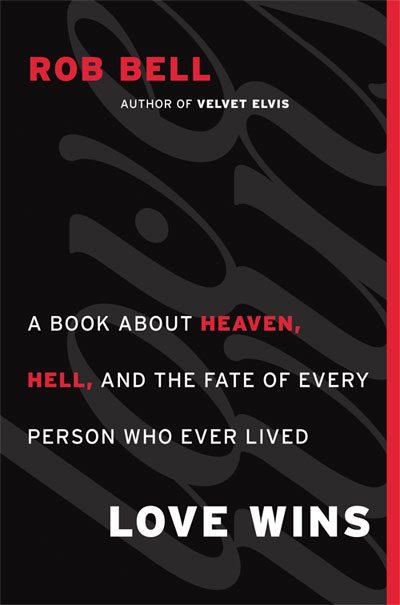 next section is from Ernest Cassara’s opening essay, “Two Centuries of Universalism, 1741-1961: A Brief Historical Sketch” in his 1971 book Universalism in America: A Documentary History of a Liberal Faith. This book is an important reminder that Universalist arguments did not begin with last year’s publication of Rob Bell’s book Love Wins: A Book About Heaven, Hell, and the Fate of Every Person Who Ever Lived. Regarding that bestseller, I’m on record as saying, “I Hope Rob Bell Is a Universalist.” And long before even Cassara’s history begins, there is the Universalism of the early Church Fathers such as Origen of Alexandria (c. 185–254).
Some groups see skepticism regarding the existence of hell (the unfairness that God would allow infinite punishment for all eternity as a consequence for finite sin committed during one’s life on earth) as a “gateway drug” to liberalism religion. But from the perspective of Unitarian Universalism, I say, “May it be so!” We need more Universalists. And just as doubting the existence of hell leads many people to embrace some form of universalism; likewise, religious pluralism leads many people to see Jesus less as “The One” and increasingly as “one among many” sources of wisdom, which subverts the doctrine of the Trinity and puts the Unitarian in Unitarian Universalism.
In the 18th and 19th century, before the 1961 merger of the Universalist Church of America and the American Unitarian Association, the Unitarians tended to come from the upper class and the Universalists form the lower class. This economic divide prompted Thomas Starr King (1824-1864) to say, “The one thinks God is too good to damn them forever, the other thinks they are too good to be damned forever” (6).
Importantly, however, both Unitarians and Universalists, from the early days, shared the liberal tendency of emphasizing reason as a vital criterion of authority in religion. The embrace of reason made Universalism much more accepting and adaptable than more orthodox movements to Higher Criticism of the Bible and Evolution (35). Ironically, as Universalist ideas became more mainstream — and increasingly incorporated into mainline denomination — Universalism shrunk, even as its doctrines triumphed (39).
John Murray (1741-1815), who landed on the New Jersey shore in 1770, is usually credited as the “founder of Universalism in America” for his “tireless propagation of the faith and his drive toward organization” (14). His successor, Hosea Ballou, was born in 1771, the year after Murray’s arrival. As with many Universalists (in contrast to the highly educated Unitarians), Ballou had little schooling, but “he was a powerful reasoner who did not shrink form the consequences of his thought by retreat into inconsistency” (17).
2
To take a closer look at Hosea Ballou’s most important work, A Treatise on Atonement, it was published “while he was a circuit rider in Vermont, a dozen years before he began his ministry in Boston” (iii). For the larger historical context, it is arguably no mistake that it was published during the presidency of Thomas Jefferson (1801-1809). The Enlightenment had increasingly called traditional religious notions to new account in the Age of Reason, and “it was only a matter of time before the Calvinist God was reformed into a being who not only did not wish humanity ill, but positively promoted human happiness. (See Jefferson’s Declaration of Independence.) (vi)” [Relatedly, recall the ways in the first post in this series that the historical Calvin’s persecution of the anti-Trinitarian Michael Servetus exposed Calvin as almost a medieval figure resisting the rising tide of modernity.]
At the same time, much more so than Unitarians, Universalists maintained a connection to the Bible. Ballou, for example, once exclaimed, “Jesus Christ was the greatest Universalist!” (viii). However, the Universalist embrace of scripture was through the lens of reason, an interpretive strategy that is starkly evident in Ballou’s writing (xiii). Regarding the structure of his famous Treatise, he wrote explicitly of his reliance of reason: “I shall notice some opposing doctrines and argument, and endeavor to obviate them by scripture and reason” (138). He deploys strategies such as reversing arguments to expose their weaknesses (139).
It should be noted as well that Ballou did famously maintain the quite illiberal idea of determinism. Ballou found human free will as inconsistent with an omnipotent, omniscience, all-loving God (xvii). He thought universal salvation was ultimately grounded in God’s character, not human acceptance or rejection — either on earth or in eternity. He was ultimately labeled an “Ultra-Universalist” for his belief that there wasn’t even a purgatory or punishment of human in the afterlife (xxi).
One of the most compelling themes in Ballou are his folksy metaphors. He compared God not requiring all people to be perfect in order to save all humanity to a woman not requiring a floor to be clean before deigning the mop it (xviii). Similarly, he once said,
“Your child has fallen into the mire, and its body and garments are defiled. You cleanse it, and array it in clean robes. The query is “Do you love your child because you have washed it?” or “Did you wash it because you loved it?” (xix)
Thus, God would not require either Jesus’ death or even an act of repentance for salvation. God saves us because God loves God’s children. Ballou argues compellingly that we take seriously the divine abundance portrayed in biblical accounts such as the Parable of the Prodigal Son (140-141): “Why live poor? Why should we be so parsimonious of those heavenly stores that can never be exhausted?” (233).
3
The following are a few highlights from the first chapter (“A Summary Overview”) in David Robinson’s 1985 book The Unitarians and the Universalists:
- The American Unitarian Association and the Universalist Church in America are the two groups that merged in 1961 to create the denomination we know today as the Unitarian Universalist Association.
- Many movements are galvanized as much from their opposition to a common enemy as in their shared allegiance to a common cause. This dynamic was at least partially true of both Unitarians and Universalists respectively in the 18th century in the different ways they opposed Calvinism. One points of resistance included a rejection of predestination, which overemphasized God’s sovereignty and control to the exclusion of human free will and agency. (3)
- In 1770, John Murray began teaching the Universalist message that all are saved, not just a predestined “elect” of Calvinism.
- A trend also grew of “to emphasize God’s benevolence, humankind’s free will, and the dignity rather than the depravity of human nature.” You can see a remnant of this debate in the choice to have the First UU Principle be “The inherent worth and dignity of every person.” (4)
- Although figures like Emerson, Thoreau, and Theodore Parker are often remembered as Unitarians, their Transcendentalist movement can more accurately be seen as a “rebellion” from the coalescing Unitarian movement. They “espoused a religion of direction intuition of God, or the ‘One Mind’ of the universe, in opposition to the more empiricist and historically oriented views of…other established Unitarians. Transcendentalism was highly individualistic version of Unitarianism, deposed against ecclesiastical organization” (5). A parallel “rebellious,” “individualistic” dynamic played out in the 20th century with the Humanist movement in relation to the UUA.
- Over time, an shift began to happen with the word Universalist. Instead of only meaning the salvation of all people (or the rejection of predestined elect and damned groups) in the next world, Universalism also became about this world: “the universal community of all men and women and the necessity of working toward the secular realization of that community through peace and justice on earth” (6).
4
In 1997, Conrad Wright published a historical survey of UU polity titled Walking Together: Polity and Participation in Unitarian Universalist Churches. Reading through the section on the late 19th century, I was particularly struck that Universalist polity during that period was presbyterian not congregational. In congregational polity, the congregation has the final authority, whereas in presbyterian polity, often some structure such as a regional board of “elders” has final authority. A third common type of authority is episcopal in which a bishop has final authority. You can see the limitations on congregations from this third model in the conflict currently playing out in my home state of South Carolina in articles such as “South Carolina Diocese Can’t Secede Said Katharine Jefferts Schori, Episcopal Presiding Bishop.” The conservatives congregations, who are upset about liberal victories in regard to gender and sexuality, can’t choose to secede without the bishop’s permission.
In the late 19th century in Universalism, “A church would lose its standing in the state convention if it settled a minister not in fellowship…. Fellowship was likewise to be withdrawn from any minister who accepted settlement in a church that had been disfellowshiped…” (91). I’m personally grateful that contemporary Unitarian Universalism is congregationalist, which allowed the Unitarian Universalist Congregation of Frederick to hire me as their minister even through I am not yet in fellowship with the UUA. The local congregation’s freedom to hire whomever it choose is congregationalism in action. I am, however, seeking fellowship with the UUA with all due haste, which why I am enrolled in this history course behind this series of blog posts.
5
A few notes on Paul Rasor and Susan Ritchie’s Unitarian and Universalist Professions of Faith (1790-1985):
- In 1790, Universalists still viewed the Bible as a “revelation of the perfections and will of God.” And there is explicit reference to redemption through through Jesus’ “blood.” Dallas Willard has called the danger of blood theology, “Vampire Christianity”: “only being interested in Jesus for his blood.”
- In 1853, the Unitarians had a much stronger emphasis on Christianity than is the case today: “assert[ing] our profound belief in the Divine origin, the Divine authority, the Divine sanctions of the religion of Jesus Christ” and calling the authentic “teachings of Christ…infallible truth from God.” In the spirit of the Jefferson Bible, however, it should be noted that there was the caveat about only affirming those teachings of Jesus “separated from all foreign admixtures and later accretions.”
- The 1880 Ames Covenant was repeated frequently in many Unitarian congregations for many years: “In the freedom of truth, and in the spirit of Jesus Christ, we unite for the worship of God and the service of man.”
- James Freeman Clarke’s 1886 “Five Points of Unitarian Faith” was also popular: “The Fatherhood of God; the Brotherhood of Man; the Leadership of Jesus, Salvation by Character, and the continuity of human development in all worlds, or the progress of mankind onward and upward forever.”
- Yet another well loved historical Unitarian formulation was the 1894 Blake Covenant: “Love is the spirit of this church, and service is its law. This is our great covenant: to dwell together in peace, to seek the truth in love, and to help one another.”
- The 1899 Boston Declaration from the Universalist tradition has an important liberty clause that, “neither this, nor any other precise form of words, is required as a condition of fellowship, provided always that the principles above stated should be professed.”
- The 1933 Williams Covenant says, “Love is the doctrine of this church, the quest of truth is its sacrament and service is its prayer. To dwell together in peace, to seek knowledge in freedom, to serve mankind in fellowship, to the end that all souls shall grow into harmony with the divine, thus do we covenant with each other and with God.”
- Some of the differences between the 1961 UU Principles, and the revised version we have today are a “free and disciplined [instead of responsible] search for truth,” “the supreme worth and dignity of every human personality” instead of the inherent worth and dignity of every person, and the “vision of one world” instead of the goal of world community].
6
P.T. Barnum (1810-1891) of Ringling Bros. and Barnum & Bailey Circus fame was also a Universalist. He wrote an essay on “Why I Am A Universalist”:
- He was raised in a conservative religious tradition in which he frequently heard threats about hell. He compared these attempts to teach the love of God through threats as “similar to the love a woman would feel to a tyrant who with a loaded pistol pointed at her heart bade her love him or die” (1).
- You can also see the beginnings of affirming truth as larger than Christianity in quotes such as “The New Testament system of religion is not truth because Jesus said so; but Jesus said so because it is true” and Barnum’s own quoting of the adage of continuing revelation, “The Lord has more truth yet to break forth out of His Holy Word” (3). As the United Church of Christ continues to promote, “God is still speaking” and “Don’t put a period, where God has put a comma.”
- Against biblical texts with which he disagrees, he affirms that some parts of scripture are more important than others. For Barnum, of particular salience is the “the single psalm which twenty-six times declares, ‘His mercy endureth forever'” (8).
- And in even the test case of Judas Iscariot, Barnum follows the lead of a scholar he admires: “Dr. Adam Clarke had no regrets at the thought that he might have to spend an eternity in the heaven of Judas” (12).
7
Ann Lee Bressler’s 2001 book The Universalist Movement in America: 1770-1880, intentionally runs through the peak of Universalism demographically in 1880: “the number of congregations fell precipitously thereafter” (147). Some highlights:
 In 1817, despite the close proximity (“only a few corners away”) of two major nineteenth-century religious liberals — Henry Ballou (“foremost theologian” of the Universalist movement) and William Ellery Channing (writer of “the chief manifesto of American Unitarianism” and “‘prime embodiment’ of the Unitarian movement) — the two did not interact. “[I]t was reported that Channing, by then an eminent figure, treated [Ballou] as though he were a leper. Channing’s most sympathetic biographer can find no real explanation for his ‘infuriating practice of treating Ballou as if he did not exist'” (3-4). At least one (if not the only) reason is classism. Consider this excerpt from an 1833 sermon by Channing: “the poor are often over-worked, but they suffer less than many among the rich, who have not work to do, no interesting objects to fill up life . . . to satisfy the cravings of man for action.” Furthermore, “he referred to the Irish privately as ‘ignorant hordes'” (4-5).
- “Universalism represented a determined effort to ‘improve’ Calvinism…. Early Universalists preached…salvation as a social and communal, rather than as a personal and individual, event” (14).
- “Ballou laid the real intellectual cornerstone of the movement: his Treatise became virtually the testament of Universalism. Though at least the first half of the nineteenth century, most Universalists regarded the work as a necessary companion to the Bible” (24).
- Ballou’s 1805 Treatise “reflected a new insistence upon enlightened human reason as a necessary standard of theological truth… (23-24). In his effort to integrate piety and reason, Ballou remained, in Rabinowitz’s term, a ‘doctrinalist’; the understanding, not the will or the feelings, was most important to him” (28).
- In 1834, Ballou’s last major volume, An Examination of the Doctrine of Future Retribution, “served as an important sequel to his Treatise…. Hatred of sin and love of God, Ballou insisted, could not be induced by fear of future punishment. Moreover, he pointed out, the specter of delayed puishment had done little to deter immoral practices in this world” (44). This argument was an important refutation of a central criticism Universalism often faced.
Previous Posts in This Series
Liberal Religious History: The Radical Reformation
The Rev. Dr. Carl Gregg is a trained spiritual director, a D.Min. graduate of San Francisco Theological Seminary, and the minister of the Unitarian Universalist Congregation of Frederick, Maryland. Follow him on Facebook (facebook.com/carlgregg) and Twitter (@carlgregg).
Learn more about Unitarian Universalism:
http://www.uua.org/beliefs/principles/index.shtml
Previous Post

December 2, 2012
Chrismukah, IllUUmination and Chalica: Navigating the Holidays
Browse Our Archives
Select a Category Advent Anti-Racism Archaeology Atheism Baptism Best of the Year List Book Reviews Buddhism Catholicism Christian Education Church and State Church Planting Climate Change Conscientious Objection to War Creation Spirituality Death Penalty Didache Disability Rights Discernment Easter Ecology Emergent Church Movement Empire-Critical Ethics Evolution Feminist Theology Film Reviews Gandhi Gospel of Mark Gun Control Hinduism Immigration Reform Interfaith Islam JFK Judaism Jungian Spirituality Lectionary Commentary Lent Letters to the Editor LGBT Marriage MLK Multiculturalism Mysticism Nonviolent Activism Occupy Paganism (Earth-centered Religions) Parables Paul Pluralism Politics Process Theology Quantum Physics Requiescat In Pace Seminary and Divinity School Sermon Series Retrospective Sermons Spiritual Direction Spiritual Practices Stewardship (Fundraising) The Book of J The Wheel of the Year (Paganism) Theoblogger Challenge Triathlon Uncategorized Unitarian Universalism Worship Resources Youth Ministry
Select a Month July 2026 May 2026 March 2026 November 2025 October 2025 August 2025 February 2025 December 2024 October 2024 March 2024 January 2024 December 2023 November 2023 March 2023 February 2023 January 2023 December 2022 November 2022 August 2022 March 2022 February 2022 January 2022 December 2021 September 2021 August 2021 July 2021 June 2021 May 2021 February 2021 January 2021 December 2020 August 2020 June 2020 May 2020 April 2020 March 2020 February 2020 January 2020 December 2019 November 2019 October 2019 September 2019 July 2019 June 2019 March 2019 February 2019 January 2019 December 2018 November 2018 October 2018 September 2018 June 2018 May 2018 April 2018 March 2018 February 2018 January 2018 December 2017 November 2017 October 2017 September 2017 August 2017 July 2017 June 2017 May 2017 April 2017 March 2017 February 2017 January 2017 December 2016 November 2016 October 2016 September 2016 August 2016 June 2016 May 2016 April 2016 March 2016 February 2016 January 2016 December 2015 November 2015 October 2015 September 2015 August 2015 July 2015 June 2015 May 2015 April 2015 March 2015 February 2015 January 2015 December 2014 November 2014 October 2014 August 2014 July 2014 June 2014 May 2014 April 2014 March 2014 February 2014 January 2014 December 2013 November 2013 October 2013 September 2013 August 2013 July 2013 June 2013 May 2013 April 2013 March 2013 February 2013 January 2013 December 2012 November 2012 October 2012 September 2012 August 2012 July 2012 June 2012 May 2012 April 2012 March 2012 February 2012 January 2012 December 2011 November 2011 October 2011 September 2011 August 2011 July 2011 June 2011 May 2011 April 2011 March 2011 February 2011 January 2011 December 2010 November 2010 October 2010 August 2009 July 2009 May 2009
Follow Us!
TAKE THE
Religious Wisdom Quiz
Who is the apostle to deny Jesus?
Select your answer to see how you score.
Phillip Judas Peter Andrew
Related posts from Carl Gregg

Peak Spiritual Experiences, Psychedelics, & Consciousness Research

"How the Founding Fathers Became Infallible and Our...

Vampires, Witches, & NPR: The Legacy of Margot...

“Do You Really Want to Know?” From Pope...
TRENDING AT PATHEOS More Voices

Reading America at 250: A Nation Wrestles With...
As part of my own reflection on the 250th anniversary of the...

Whenever I am reading a book or listening to an argument, I...

President Trump Ban Animal Torture Videos on Facebook
Call for Stricter Regulations of Animal Abuse Content on Facebook Although President...

Draft Amendments to Address Ritual Abuse in New...
The proposed changes would make it illegal for individuals in domestic partnerships...

How Bans on LGBTQ+ Student Clubs Threaten Religious...
On June 20, 2025, the State of Texas passed Senate Bill 12....

The Truth About the Gen Z Revival
This past year, there has been a lot of media buzz surrounding...
view all More Voices blogs
Ad-Free & Subscriber Log-In Subscription Support
- About Us
- 2026 Calendar
- Videos
- Podcasts
- Library of World Religions
- Faith In Media Tracker
- Advertise With Us
- Write for Us
- Privacy Policy
- Terms of Service
- Do Not Sell My Data
- Contact Us
- Radiant Digital
- Manage Newsletter Subscriptions
- Unsubscribe From Notifications
- Sitemap
Copyright 2008-2026, Patheos. All rights reserved.
Subscription Support Ad-Free & Subscriber Log-In
Follow Patheos