
BuddhistCatholicContemplativeEvangelicalGeneral ChristianHinduJewishLatter-day SaintMuslimNew VisionsProgressive Christian
Beliefs
- Buddhist
- Catholic
- Contemplative
- Evangelical
- General Christian
- Hindu
- Jewish
- Latter-day Saint
- More Voices
- Muslim
- New Visions
- Pagan
- Progressive Christian
Topics
- Religion News
- Food and Religion
- Sports and Religion
- Religious Art
- Religious Music and Entertainment
- Religious Events
- History and Religion
- Style and Religion
- Politics and Religion
- Women in Religion
- Recreation Outdoors and Religion
- Business Finance and Religion
- Careers Workplace and Religion
- Education and Religion
- Family Parenting and Religion
- Health Fitness and Religion
- Home and Religion
- Relationships and Religion
- Technology and Religion
- Travel and Religion
Columnists
- Buddhist Columnists
- Business Finance and Religion Columnists
- Careers Workplace and Religion Columnists
- Catholic Columnists
- Contemplative Columnists
- Education and Religion Columnists
- Evangelists Columnists
- Family Parenting and Religion Columnists
- General Christian Columnists
- Health Fitness and Religion Columnists
- Hindu Columnists
- History and Religion Columnists
- Home and Religion Columnists
- Jewish Columnists
- More Voices Columnists
- Latter Day Columnists
- Muslim Columnists
- New Visions Columnists
- Nonreligious Columnists
- Pagan Columnists
- Politics and Religion Columnists
- Progressive Columnists
- Recreation Outdoors and Religion Columnists
- Relationships and Religion Columnists
- Religion News Columnists
- Religious Art Columnists
- Religious Events Columnists
- Religious Music and Entertainment Columnists
- Sports and Religion Columnists
- Style and Religion Columnists
- Technology and Religion Columnists
- Travel and Religion Columnists
- Women in Religion Columnists
Resource Library
- 2026 Calendar
- Library of World Religions
- The 100 Most Holy Places on Earth
- Patheos Answers
- Podcasts
- Videos
- Faith Leaders Database
- Anglican Episcopalian
- Bahai
- Baptist
- Buddhism
- Christianity
- Confucianism
- Eastern Orthodoxy
- Hinduism
- Holiness and Pentecostal
- ISKCON
- Islam
- Judaism
- Lutheran
- Methodist
- The Church of Jesus Christ of Latter-day Saints
- New Age
- Paganism
- Presbytarian and Reformed
- Protestantism
- Religion Behind the Scenes
- Roman Catholic
- Scientology
- Shia Islam
- Sikhism
- Sufism
- Sunni Islam
- Taoism
- Zen
- See all religions
Research Tools
 Ad-Free & Subscriber Log-In Subscription Support
Ad-Free & Subscriber Log-In Subscription Support
Follow Patheos 

- Trending:
- Forgiveness
- |
- Marriage
- |
- Consciousness
- |
- Death Penalty
- |
- Election
- |
- Halloween

- Home
- More Voices
- Top 10 Best Books Read in 2012
Top 10 Best Books Read in 2012
Last updated on: November 26, 2012 at 8:14 pm by Carl Gregg
Top 10 Best Books Read in 2012 2012-11-26T20:14:20-05:00 Carl Gregg
Patheos Explore the world's faith through different perspectives on religion and spirituality! Patheos has the views of the prevalent religions and spiritualities of the world.
The following are the top ten best books I’ve read since this time last year. The list is in alphabetical order by the author’s last name because agonizing over a precise order would take all the fun out of remembering these books:
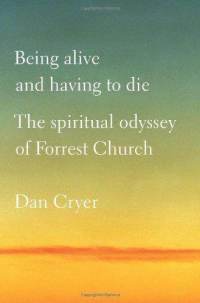
Dan Cryer, Being Alive and Having to Die: The Spiritual Odyssey of Forrest Church
The story of the remarkable public and private journey of Rev. Forrest Church, the scholar, activist, and preacher whose
death became a way to celebrate life. Through his pulpit at the prestigious Unitarian Church of All Souls in New York, Church became a champion of liberal religion and a leading opponent of the religious right. An inspired preacher, a thoughtful theologian and an eloquent public intellectual, Church built a congregation committed to social service for people in need, while writing twenty five books, hosting a cable television program, and being featured in People, Esquire, New York Magazine, and on numerous national television and radio appearances. Being Alive and Having to Die works on two levels, as an examination of liberal religion during the past 30 years of conservative ascendancy, and as a fascinating personal story. Church grew up the son of Senator Frank Church of Idaho, famous for combating the Vietnam War in the 1960s and the CIA in the 1970s. Like many sons of powerful fathers, he rebelled and took a different path in life, which led him to his own prominence. Then, in 1991, at the height of his fame, he fell in love with a married parishioner and nearly lost his pulpit. Eventually, he regained his stature, overcame a long-secret alcoholism, wrote his best books–and found himself diagnosed with terminal cancer. His three year public journey toward death brought into focus the preciousness of life, not only for himself, but for his ministry. Based on extraordinary access to Church and over 200 interviews with family, friends, and colleagues, Dan Cryer bears witness to a full, fascinating, at time controversial life. Being Alive and Having to Die is an honest look at an imperfect man and his lasting influence on modern faith.
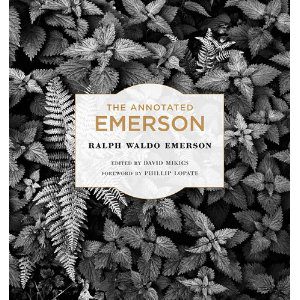
Ralph Waldo Emerson, The Annotated Emerson
A brilliant essayist and a master of the aphorism (“Our moods do not believe in each other”; “Money often costs too much”), Emerson has inspired countless writers. In this annotated selection of Emerson’s writings, David Mikics instructs the reader in a larger appreciation of Emerson’s essential works and the remarkable thinker who produced them. Full of color illustrations and rich in archival photographs, running commentaries illuminate contexts, allusions, and language likely to cause difficulty to modern readers. Mikics quotes extensively from Emerson’s Journal to shed light on particular passages or lines and examines Emerson the essayist, poet, itinerant lecturer, and political activist.
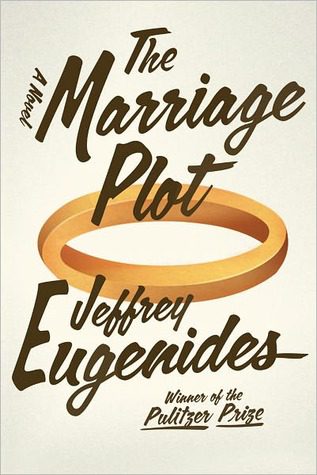
Jeffrey Eugenides, The Marriage Plot: A Novel
Are the great love stories of the nineteenth century dead? Or can there be a new story, written for today and alive to the
realities of feminism, sexual freedom, prenups, and divorce? It’s the early 1980s. In American colleges, the wised-up kids are inhaling Derrida and listening to Talking Heads. But Madeleine Hanna, dutiful English major, is writing her senior thesis on Jane Austen and George Eliot, purveyors of the marriage plot that lies at the heart of the greatest English novels. As Madeleine studies the age-old motivations of the human heart, real life, in the form of two very different guys, intervenes—the charismatic and intense Leonard Bankhead, and her old friend the mystically inclined Mitchell Grammaticus. As all three of them face life in the real world they will have to reevaluate everything they have learned. Jeffrey Eugenides creates a new kind of contemporary love story.
Jonathan Haidt, The Righteous Mind: Why Good People Are Divided by Politics and Religion
Why can’t our political leaders work together as threats loom and problems mount? Why do people so readily assume the worst about the motives of their fellow citizens? Social psychologist Jonathan Haidt explores the origins of our divisions and points the way forward to mutual understanding. His starting point is moral intuition—the nearly instantaneous perceptions we all have about other people and the things they do. These intuitions feel like self-evident truths, making us righteously certain that those who see things differently are wrong. Haidt shows us how these intuitions differ across cultures, including the cultures of the political left and right. He blends his own research findings with those of anthropologists, historians, and other psychologists to draw a map of the moral domain, and he explains why conservatives can navigate that map more skillfully than can liberals. He then examines the origins of morality, overturning the view that evolution made us fundamentally selfish creatures. But rather than arguing that we are innately altruistic, he makes a more subtle claim—that we are fundamentally groupish. It is our groupishness, he explains, that leads to our greatest joys, our religious divisions, and our political affiliations. In a stunning final chapter on ideology and civility, Haidt shows what each side is right about, and why we need the insights of liberals, conservatives, and libertarians to flourish as a nation.

For more, see my previous post based in part on this book: “The Righteous Mind and the Democratic Process.”
Carl Jung, The Red Book
(The linked version is a smaller, more much reasonably priced, soon-to-be relased version
of the full-sized facsimile version previously available.)
The most influential unpublished work in the history of psychology. When Carl Jung embarked on an extended self-exploration he
called his “confrontation with the unconscious,” the heart of it was The Red Book, a large, illuminated volume he created between 1914 and 1930. Here he developed his principle theories—of the archetypes, the collective unconscious, and the process of individuation—that transformed psychotherapy from a practice concerned with treatment of the sick into a means for higher development of the personality. While Jung considered The Red Book to be his most important work, only a handful of people have ever seen it.

For more, see my previous series of posts on Jungian Spirituality.
Sarah Kay, B
In 2011, Sarah Kay performed her poem “B” at the TED conference in Long Beach, California to standing ovations. Now the video of that performance has been forwarded to mothers and daughters (and fathers and sons) all over the world. Originally written in 2007, “B” is a thank you note, a love letter, a wish, a promise, a confession, and a secret. With beautiful illustrations by Sophia Janowitz, “B” is finally available in this whimsical, magical book. Short, touching and lovingly illustrated.

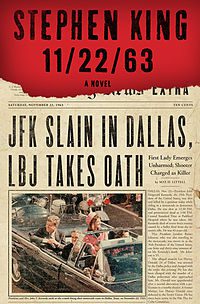
Stephen King, 11/22/63: A Novel
Life can turn on a dime—or stumble into the extraordinary, as it does for Jake Epping, a high school English teacher in a
Maine town. While grading essays by his GED students, Jake reads a gruesome, enthralling piece penned by janitor Harry Dunning: fifty years ago, Harry somehow survived his father’s sledgehammer slaughter of his entire family. Jake is blown away . . . but an even more bizarre secret comes to light when Jake’s friend Al, owner of the local diner, enlists Jake to take over the mission that has become his obsession—to prevent the Kennedy assassination. How? By stepping through a portal in the diner’s storeroom, and into the era of Ike and Elvis, of big American cars, sock hops, and cigarette smoke. . . . Finding himself in warmhearted Jolie, Texas, Jake begins a new life. But all turns in the road lead to a troubled loner named Lee Harvey Oswald. The course of history is about to be rewritten . . . and become heart-stoppingly suspenseful. Time travel has never been so believable. Or so terrifying.
Jeffrey Kripal, Mutants and Mystics: Science Fiction, Superhero Comics, and the Paranormal
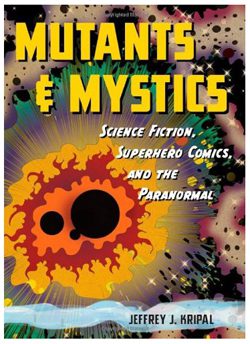 In many ways, twentieth-century America was the land of superheroes and science fiction. From Superman and Batman to the Fantastic Four and the X-Men, these pop-culture juggernauts, with their “powers and abilities far beyond those of mortal men,” thrilled readers and audiences—and simultaneously embodied a host of our dreams and fears about modern life and the onrushing future. But that’s just scratching the surface, says Jeffrey Kripal. In Mutants and Mystics, Kripal offers a brilliantly insightful account of how comic book heroes have helped their creators and fans alike explore and express a wealth of paranormal experiences ignored by mainstream science. Delving deeply into the work of major figures in the field—from Jack Kirby’s cosmic superhero sagas and Philip K. Dick’s futuristic head-trips to Alan Moore’s sex magic and Whitley Strieber’s communion with visitors—Kripal shows how creators turned to science fiction to convey the reality of the inexplicable and the paranormal they experienced in their lives. Expanded consciousness found its language in the metaphors of sci-fi—incredible powers, unprecedented mutations, time-loops and vast intergalactic intelligences—and the deeper influences of mythology and religion that these in turn drew from; the wildly creative work that followed caught the imaginations of millions. Moving deftly from Cold War science and Fredric Wertham’s anticomics crusade to gnostic revelation and alien abduction, Kripal spins out a hidden history of American culture, rich with mythical themes and shot through with an awareness that there are other realities far beyond our everyday understanding. A bravura performance, beautifully illustrated in full color throughout and brimming over with incredible personal stories, Mutants and Mystics is that rarest of things: a book that is guaranteed to broaden—and maybe even blow—your mind.
For more, see my previous review of this book. Also note that Kripal is the chair of the religion department at Rice University and the author of five other well-documented scholarly tomes.
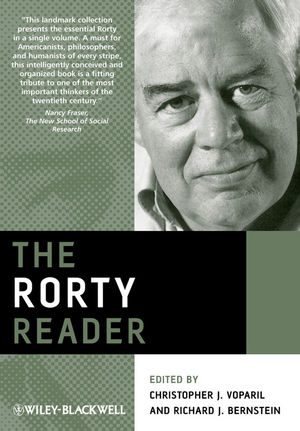
Richard Rorty, The Rorty Reader
The first comprehensive collection of the work of Richard Rorty (1931-2007), The Rorty Reader brings together the influential American
philosopher’s essential essays from over four decades of writings. Offers a comprehensive introduction to Richard Rorty’s life and body of work. Brings key essays published across many volumes and journals into one collection, including selections from his final volume of philosophical papers. Includes in-depth interviews, and several revealing autobiographical pieces. Represents the fullest portrait available today on Rorty’s relationship with American pragmatism and the trajectory of his thought.
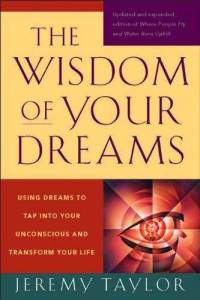
Jeremy Taylor, The Wisdom of Your Dreams: Using Dreams to Tap into Your Unconscious and Transform Your Life
A renowned expert on the subject of dreams, Jeremy Taylor has studied dreams and has worked with thousands of people both individually and in dream groups for more than forty years. His discoveries show us how dreams can be the keys to gaining insight into our past and our conflicts, as well as excursions into the fantastic realm of creative inspiration. An expanded and updated edition of his classic guide to understanding your dreams—Where People Fly and Water Runs Uphill—The Wisdom of Your Dreams provides readers with specific, hands-on techniques to help them remember and interpret their dreams, establish a dream group, and learn the universal symbolism of dreaming. Full of case histories and featuring a revised introduction by the author and a new chapter about dreams as clues to the evolution of consciousness, this is a life- changing and potentially world-changing work.
Previous Lists
What have I left out? What are your favorite books from this past year?
The Rev. Dr. Carl Gregg is a trained spiritual director, a D.Min. graduate of San Francisco Theological Seminary, and the minister of the Unitarian Universalist Congregation of Frederick, Maryland. Follow him on Facebook (facebook.com/carlgregg) and Twitter (@carlgregg) .
Learn more about Unitarian Universalism:
http://www.uua.org/beliefs/principles/index.shtml
Previous Post

November 18, 2012
Savoring the Small Stuff: Ordinary Gratitude as Spiritual Practice
Next Post
November 26, 2012 You May Be Rich and Not Know It: A Jeffersonian Spirituality for Today
Browse Our Archives
Select a Category Advent Anti-Racism Archaeology Atheism Baptism Best of the Year List Book Reviews Buddhism Catholicism Christian Education Church and State Church Planting Climate Change Conscientious Objection to War Creation Spirituality Death Penalty Didache Disability Rights Discernment Easter Ecology Emergent Church Movement Empire-Critical Ethics Evolution Feminist Theology Film Reviews Gandhi Gospel of Mark Gun Control Hinduism Immigration Reform Interfaith Islam JFK Judaism Jungian Spirituality Lectionary Commentary Lent Letters to the Editor LGBT Marriage MLK Multiculturalism Mysticism Nonviolent Activism Occupy Paganism (Earth-centered Religions) Parables Paul Pluralism Politics Process Theology Quantum Physics Requiescat In Pace Seminary and Divinity School Sermon Series Retrospective Sermons Spiritual Direction Spiritual Practices Stewardship (Fundraising) The Book of J The Wheel of the Year (Paganism) Theoblogger Challenge Triathlon Uncategorized Unitarian Universalism Worship Resources Youth Ministry
Select a Month July 2026 May 2026 March 2026 November 2025 October 2025 August 2025 February 2025 December 2024 October 2024 March 2024 January 2024 December 2023 November 2023 March 2023 February 2023 January 2023 December 2022 November 2022 August 2022 March 2022 February 2022 January 2022 December 2021 September 2021 August 2021 July 2021 June 2021 May 2021 February 2021 January 2021 December 2020 August 2020 June 2020 May 2020 April 2020 March 2020 February 2020 January 2020 December 2019 November 2019 October 2019 September 2019 July 2019 June 2019 March 2019 February 2019 January 2019 December 2018 November 2018 October 2018 September 2018 June 2018 May 2018 April 2018 March 2018 February 2018 January 2018 December 2017 November 2017 October 2017 September 2017 August 2017 July 2017 June 2017 May 2017 April 2017 March 2017 February 2017 January 2017 December 2016 November 2016 October 2016 September 2016 August 2016 June 2016 May 2016 April 2016 March 2016 February 2016 January 2016 December 2015 November 2015 October 2015 September 2015 August 2015 July 2015 June 2015 May 2015 April 2015 March 2015 February 2015 January 2015 December 2014 November 2014 October 2014 August 2014 July 2014 June 2014 May 2014 April 2014 March 2014 February 2014 January 2014 December 2013 November 2013 October 2013 September 2013 August 2013 July 2013 June 2013 May 2013 April 2013 March 2013 February 2013 January 2013 December 2012 November 2012 October 2012 September 2012 August 2012 July 2012 June 2012 May 2012 April 2012 March 2012 February 2012 January 2012 December 2011 November 2011 October 2011 September 2011 August 2011 July 2011 June 2011 May 2011 April 2011 March 2011 February 2011 January 2011 December 2010 November 2010 October 2010 August 2009 July 2009 May 2009
Follow Us!
TAKE THE
Religious Wisdom Quiz
What is the Christian principle about speaking words?
Select your answer to see how you score.
Always be silent Never speak Speak harshly Speak with love and grace
Related posts from Carl Gregg

Reading America at 250: A Nation Wrestles With...


Andrew Holocek on the Power of Darkness

The Stories That Shape Us: Myths, Archetypes, &...
TRENDING AT PATHEOS More Voices

Reading America at 250: A Nation Wrestles With...
As part of my own reflection on the 250th anniversary of the...

Whenever I am reading a book or listening to an argument, I...

President Trump Ban Animal Torture Videos on Facebook
Call for Stricter Regulations of Animal Abuse Content on Facebook Although President...

Draft Amendments to Address Ritual Abuse in New...
The proposed changes would make it illegal for individuals in domestic partnerships...

How Bans on LGBTQ+ Student Clubs Threaten Religious...
On June 20, 2025, the State of Texas passed Senate Bill 12....

The Truth About the Gen Z Revival
This past year, there has been a lot of media buzz surrounding...
view all More Voices blogs
Ad-Free & Subscriber Log-In Subscription Support
- About Us
- 2026 Calendar
- Videos
- Podcasts
- Library of World Religions
- Faith In Media Tracker
- Advertise With Us
- Write for Us
- Privacy Policy
- Terms of Service
- Do Not Sell My Data
- Contact Us
- Radiant Digital
- Manage Newsletter Subscriptions
- Unsubscribe From Notifications
- Sitemap
Copyright 2008-2026, Patheos. All rights reserved.
Subscription Support Ad-Free & Subscriber Log-In
Follow Patheos