
BuddhistCatholicContemplativeEvangelicalGeneral ChristianHinduJewishLatter-day SaintMuslimNew VisionsProgressive Christian
Beliefs
- Buddhist
- Catholic
- Contemplative
- Evangelical
- General Christian
- Hindu
- Jewish
- Latter-day Saint
- More Voices
- Muslim
- New Visions
- Pagan
- Progressive Christian
Topics
- Religion News
- Food and Religion
- Sports and Religion
- Religious Art
- Religious Music and Entertainment
- Religious Events
- History and Religion
- Style and Religion
- Politics and Religion
- Women in Religion
- Recreation Outdoors and Religion
- Business Finance and Religion
- Careers Workplace and Religion
- Education and Religion
- Family Parenting and Religion
- Health Fitness and Religion
- Home and Religion
- Relationships and Religion
- Technology and Religion
- Travel and Religion
Columnists
- Buddhist Columnists
- Business Finance and Religion Columnists
- Careers Workplace and Religion Columnists
- Catholic Columnists
- Contemplative Columnists
- Education and Religion Columnists
- Evangelists Columnists
- Family Parenting and Religion Columnists
- General Christian Columnists
- Health Fitness and Religion Columnists
- Hindu Columnists
- History and Religion Columnists
- Home and Religion Columnists
- Jewish Columnists
- More Voices Columnists
- Latter Day Columnists
- Muslim Columnists
- New Visions Columnists
- Nonreligious Columnists
- Pagan Columnists
- Politics and Religion Columnists
- Progressive Columnists
- Recreation Outdoors and Religion Columnists
- Relationships and Religion Columnists
- Religion News Columnists
- Religious Art Columnists
- Religious Events Columnists
- Religious Music and Entertainment Columnists
- Sports and Religion Columnists
- Style and Religion Columnists
- Technology and Religion Columnists
- Travel and Religion Columnists
- Women in Religion Columnists
Resource Library
- 2026 Calendar
- Library of World Religions
- The 100 Most Holy Places on Earth
- Patheos Answers
- Podcasts
- Videos
- Faith Leaders Database
- Anglican Episcopalian
- Bahai
- Baptist
- Buddhism
- Christianity
- Confucianism
- Eastern Orthodoxy
- Hinduism
- Holiness and Pentecostal
- ISKCON
- Islam
- Judaism
- Lutheran
- Methodist
- The Church of Jesus Christ of Latter-day Saints
- New Age
- Paganism
- Presbytarian and Reformed
- Protestantism
- Religion Behind the Scenes
- Roman Catholic
- Scientology
- Shia Islam
- Sikhism
- Sufism
- Sunni Islam
- Taoism
- Zen
- See all religions
Research Tools
 Ad-Free & Subscriber Log-In Subscription Support
Ad-Free & Subscriber Log-In Subscription Support
Follow Patheos 

- Trending:
- Forgiveness
- |
- Marriage
- |
- Consciousness
- |
- Death Penalty
- |
- Election
- |
- Halloween

- Home
- More Voices
- The Gospel According to Process-Relational Theology
The Gospel According to Process-Relational Theology
Last updated on: April 12, 2012 at 3:14 pm by Carl Gregg
The Gospel According to Process-Relational Theology 2012-04-12T15:14:23-04:00 Carl Gregg
Patheos Explore the world's faith through different perspectives on religion and spirituality! Patheos has the views of the prevalent religions and spiritualities of the world.
Last week I had the opportunity to attend the annual Emergent Village Theological Conversation. Emergent Village seeks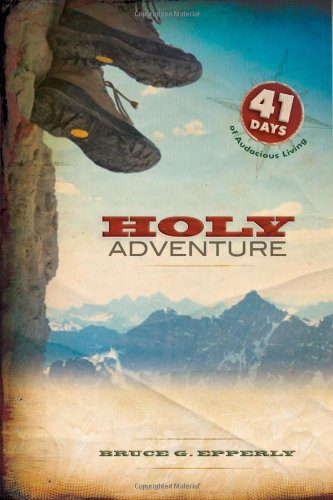 to embody and practice what they call “generative friendship,” which includes a commitment to maintaining relationships over time despite a diversity of theological beliefs and practices. The name “emergent” itself alludes at least in part to an openness to new ways of talking about God, new ways of doing church, and new ways of being Christian that are emerging today in exciting and challenging ways. The goal of the annual Emergent Village Theological Conversations is to bring world-class Christian theologians into dialogue with practitioners who are on the ground leading and participating in local congregations.
This year the theme of the Emergent Village Theological Conversation was Process Theology. Many of you will recall that last year for Lent, we studied Bruce Epperly’s book Holy Adventure, which is an attempt to make Process Thought accessible. And Bruce was one of the presenters at the conference. I would like to briefly remind you of one of the most crucial passages in Bruce’s book. He is attempting to offer a progressive, life-giving alternative vision to evangelical mega-church pastor Rick Warren’s bestselling book The Purpose Driven Life:
Warren charts a road map in which God chooses the most important events and encounters of our lives before we are born and without our input. Our personal calling, according to Warren’s vision, is to discover and live out God’s eternal purposes in our daily lives. We can find our true purpose only when we follow the directions and color inside the lines that God has already planned for us. (21)
In contrast, Epperly says,
I believe God’s holy adventure calls us to be creative and innovative right now as we listen for divine inspiration, and then to respond by coloring outside the lines and giving God something new as a result of our own personal artistry….. God calls us to become creative companions in God’s new and surprising creation.
Instead of fear-based, anxiety-inducing theology, Epperly invites us to embrace our free will with creativity and imagination. Rather than conforming to a narrow, preordained path, Epperly’s perspective calls us to an ongoing, co-creative adventure in partnership with God. Or as another presenter said, “God is always calling, always hoping, always birthing something fresh.”
According to Rick Warren as well as some streams of traditional Christian theology, we should understand God, ourselves, and our lives through the lens of divine control and divine sovereignty — and our call is to be obedient to a preordained path. Process Thought, in contrast, as you may well guess, emphasizes the process of life: that the human experience is messy, complex, and part of an ever-evolving, emerging, organic process.
For me, one of the major appeals of Process Theology, which is also sometimes calls Process-Relational theology is that it draws from the best of Christian theology as well as the insights of the best of modern science and the world’s various religious and wisdom traditions. By emphasizing process and relationship, Process-Relational theology can importantly help us to perceive some of the traps of modernity and point us toward life-giving ways out of these traps. Secularism in the modern world has often taught us to perceive the world around us as a collection of isolated parts that all interact like a machine. But, learning from quantum physics and evolutionary biology, Process-Relational thought invites to notice the ways that our lives are part of an ever-evolving process and the ways in which we are all deeply interrelated and interdependent.
A panelist at the conference speculated that one reasons Process-Relational Thought is not more well-known in Christian circles is the fear and anxiety in some Christian circles that modern science undercuts traditional Christian doctrines. But Process-Relational Thought challenges us to do theology in light of the fullness of truth in all fields of study to which we have access here at the beginning of the twenty-first century. Process-Relational Thought is also highly critical of attempts by some scientists to exclude spirituality as irrelevant to the modern world. While rejecting the topdown divine control that Rick Warren promotes, Process Thought retains a vital place for God, who steadfastly lures and prompts us toward justice, beauty, and creativity. But God acts through persuasion, not coercion. We are free to choose whether to partner with God or not, although we must live with the consequences of our decision.
The emphasis on our free will and responsibility as well as on God working through persuasion, not coercion, is significant for one of the most important advantages of Process-Relational Thought: a way of understanding the problem of evil. The problem of “why evil exists” is complicated by some traditional notions of God. In some Christians theologies — influenced more by Greek philosophy than the Hebrew Scriptures — God is conceived as omniscient, omnipotent, and all-loving. If God is omniscient (“all-knowing”), then God knows about the existence of evil. If God is omnipotent (“all-powerful”), then God has the power prevent evil if God so chooses. And if God is all-loving, then God would want to prevent evil. Critics of religion have often tried to skewer God on the horns of this three-pronged “tri-lemma.” But Process-Relational Theology solves the problem of evil by inviting us to consider that perhaps God is not omnipotent in the way that Greek philosophy thought that God had to be. Instead God acts through persuasion, not coercion. As one presenter said, “Process spreads the blame a little bit better and spread the agency a bit better too.”
I first heard about Process-Relationship philosophy when I was an undergraduate religion major. I had been assigned to write a paper on the doctrine of the Trinity for an Introduction to Christian Theology class. When the professor handed back my paper, he said that he enjoyed reading it and that I might appreciate reading some Process Theology. But when I asked him about it later, he was oddly evasive and cagey. In retrospect I think that he was worried, in the environment of my relatively conservative and historically Baptist college, that I would be scandalized by the challenge of Process Theology. But I wish he had taken the risk of giving me a specific book or two to read because it was many years later before I fully immersed myself in Process-Relational thought.
Although some Christians are disturbed that Process-Relational Theology denies God’s omnipotence, many Process thinkers double-down on God’s omnipresence. Whereas some traditional theologies describe God as only periodically — even haphazardly or capriciously — present (for example, healing some people and not healing others; stopping some car accidents, plane crashes or natural disasters, but not preventing others), Process Theology emphasizes that God is in, with, and beyond all things. Just as you can’t be a little bit pregnant, one presenter said, “You can’t be a little bit omnipresent. You either are or you aren’t. If God is here and in all things,” then in addition to church sanctuaries, all “Bricks and mortar are holy, everyday activities are holy, and spreadsheets are holy — maybe even as holy as the Eucharist.” Extending this point, another panelist said that the full implications of Process-Relational thought may be that, “God is equally in Prozac, therapy, and Eucharist.”
If you’re feeling a bit down the rabbit-hole of Alice in Wonderland at this point, you may be comforted to know that one of my fellow participants at the conference, after listening to many of the presentations, commented that, “Sometimes I wish I would have chosen the blue pill…” He was referring to a scene from the film The Matrix in which the protagonist Neo (played by Keanu Reeves) is told by his mentor that he can take either of two pills (red or blue). Extending the two pills in his palm to Neo, his mentor says, “This is your last chance. After this, there is no turning back. You take the blue pill — the story ends, you wake up in your bed and believe whatever you want to believe. You take the red pill — you stay in Wonderland and I show you how deep the rabbit-hole goes.”
[To watch the central 30 seconds of this scene from The Matrix, visit
http://www.youtube.com/watch?v=uGQF8LAmiaE.]
If you feel like you’ve swallowed the red pill a little bit this morning, let me reassure you that there is both challenge and hope in Process-Relational Thought. The good news is that it gives us permission, as one presenter said that, “If your theology doesn’t bear fruit, then…you should turn to your theology and say, ‘Your fired!” However, Process thought is most assuredly not merely about rejecting obsolete theology. It is about the hard work of constructing a theology that is worthy of this world, our personal experience, and the twenty-first century.
In closing, I invite you to enter into a time of contemplative silence.
How God is speaking to you in this ever-emerging present moment?
What is good news to you about Process-Relational Theology?
For Further Study
- Carl Gregg, “Living the (Hardest) Questions: What If God Is Not “Fully and Unambiguously Good?”: A Process Theology Sermon.”
- John B. Cobb, A Christian Natural Theology, Second Edition: “When the first edition appeared in 1965, it was a groundbreaking work that incorporated the metaphysical philosophy of Alfred North Whitehead (1861-1947) as a framework for developing a Christian natural theology. The work was so significant it helped to launch process theology as a leading alternative to neo-orthodox theology and has since become a classic in the literature of process theology.”
- David Ray Griffin, Reenchantment Without Supernaturalism: A Process Philosophy of Religion (Cornell Studies in the Philosophy of Religion).
- Catherine Keller, On the Mystery: Discerning Divinity in Process.
- See also the important books references in the notes section below by Coleman, Epperly, and Clayton.
Notes
1 For more on Emergent Village and future events, visit http://emergentvillage.org.
2 “Emergent” — There are also fascinating parallels between the “Emergent Church Movement” and the concept of “Emergence” in biology. For more, see “Part Two” of Philip Clayton’s Adventures in the Spirit: God, World, Divine Action.
3 To go deeper into Process-Relational Thought, see Bruce Epperly’s recent introductory book Process Theology: A Guide for the Perplexed.
4 “God is always calling, always hoping, always birthing something fresh.” — Monica A. Coleman. For more, see her book Making a Way Out of No Way: A Womanist Theology (Innovations: African American Religious Thought).
5 “Process spreads the blame a little bit better and spread the agency a bit better too.” — Monica A. Coleman.
6 “Bricks and mortar are holy, everyday activities are holy, and spreadsheets are holy — maybe even as holy as the Eucharist.” — Bruce Epperly, who was explicitly invoking and contemporizing Brother Lawrence of the Resurrection’s classic book Practicing the Presence of God: Learn to Live Moment-by-Moment.
7 “God is equally in Prozac, therapy, and Eucharist.” — Monica A. Coleman.
8 “If your theology doesn’t bear fruit, then…you should turn to your theology and say, ‘Your fired!” — Bruce Epperly.
The Rev. Carl Gregg is a trained spiritual director, a D.Min. candidate at San Francisco Theological Seminary, and the pastor of Broadview Church in Chesapeake Beach, Maryland. Follow him on Facebook (facebook.com/carlgregg) and Twitter (@carlgregg).
Next Post

February 13, 2012 How Do I Find Time to Pray?
Browse Our Archives
Select a Category Advent Anti-Racism Archaeology Atheism Baptism Best of the Year List Book Reviews Buddhism Catholicism Christian Education Church and State Church Planting Climate Change Conscientious Objection to War Creation Spirituality Death Penalty Didache Disability Rights Discernment Easter Ecology Emergent Church Movement Empire-Critical Ethics Evolution Feminist Theology Film Reviews Gandhi Gospel of Mark Gun Control Hinduism Immigration Reform Interfaith Islam JFK Judaism Jungian Spirituality Lectionary Commentary Lent Letters to the Editor LGBT Marriage MLK Multiculturalism Mysticism Nonviolent Activism Occupy Paganism (Earth-centered Religions) Parables Paul Pluralism Politics Process Theology Quantum Physics Requiescat In Pace Seminary and Divinity School Sermon Series Retrospective Sermons Spiritual Direction Spiritual Practices Stewardship (Fundraising) The Book of J The Wheel of the Year (Paganism) Theoblogger Challenge Triathlon Uncategorized Unitarian Universalism Worship Resources Youth Ministry
Select a Month July 2026 May 2026 March 2026 November 2025 October 2025 August 2025 February 2025 December 2024 October 2024 March 2024 January 2024 December 2023 November 2023 March 2023 February 2023 January 2023 December 2022 November 2022 August 2022 March 2022 February 2022 January 2022 December 2021 September 2021 August 2021 July 2021 June 2021 May 2021 February 2021 January 2021 December 2020 August 2020 June 2020 May 2020 April 2020 March 2020 February 2020 January 2020 December 2019 November 2019 October 2019 September 2019 July 2019 June 2019 March 2019 February 2019 January 2019 December 2018 November 2018 October 2018 September 2018 June 2018 May 2018 April 2018 March 2018 February 2018 January 2018 December 2017 November 2017 October 2017 September 2017 August 2017 July 2017 June 2017 May 2017 April 2017 March 2017 February 2017 January 2017 December 2016 November 2016 October 2016 September 2016 August 2016 June 2016 May 2016 April 2016 March 2016 February 2016 January 2016 December 2015 November 2015 October 2015 September 2015 August 2015 July 2015 June 2015 May 2015 April 2015 March 2015 February 2015 January 2015 December 2014 November 2014 October 2014 August 2014 July 2014 June 2014 May 2014 April 2014 March 2014 February 2014 January 2014 December 2013 November 2013 October 2013 September 2013 August 2013 July 2013 June 2013 May 2013 April 2013 March 2013 February 2013 January 2013 December 2012 November 2012 October 2012 September 2012 August 2012 July 2012 June 2012 May 2012 April 2012 March 2012 February 2012 January 2012 December 2011 November 2011 October 2011 September 2011 August 2011 July 2011 June 2011 May 2011 April 2011 March 2011 February 2011 January 2011 December 2010 November 2010 October 2010 August 2009 July 2009 May 2009
Follow Us!
TAKE THE
Religious Wisdom Quiz
Who wrote many of the Psalms?
Select your answer to see how you score.
Solomon Paul Peter David
Related posts from Carl Gregg
Why Peter Singer Hates on Guide Dogs &...

What Do We Mean We When Say, “Building...

Margaret Fuller: The Stories We Tell Matter
TRENDING AT PATHEOS More Voices

Reading America at 250: A Nation Wrestles With...
As part of my own reflection on the 250th anniversary of the...

Whenever I am reading a book or listening to an argument, I...

President Trump Ban Animal Torture Videos on Facebook
Call for Stricter Regulations of Animal Abuse Content on Facebook Although President...

Draft Amendments to Address Ritual Abuse in New...
The proposed changes would make it illegal for individuals in domestic partnerships...

How Bans on LGBTQ+ Student Clubs Threaten Religious...
On June 20, 2025, the State of Texas passed Senate Bill 12....

The Truth About the Gen Z Revival
This past year, there has been a lot of media buzz surrounding...
view all More Voices blogs
Ad-Free & Subscriber Log-In Subscription Support
- About Us
- 2026 Calendar
- Videos
- Podcasts
- Library of World Religions
- Faith In Media Tracker
- Advertise With Us
- Write for Us
- Privacy Policy
- Terms of Service
- Do Not Sell My Data
- Contact Us
- Radiant Digital
- Manage Newsletter Subscriptions
- Unsubscribe From Notifications
- Sitemap
Copyright 2008-2026, Patheos. All rights reserved.
Subscription Support Ad-Free & Subscriber Log-In
Follow Patheos