
BuddhistCatholicContemplativeEvangelicalGeneral ChristianHinduJewishLatter-day SaintMuslimNew VisionsProgressive Christian
Beliefs
- Buddhist
- Catholic
- Contemplative
- Evangelical
- General Christian
- Hindu
- Jewish
- Latter-day Saint
- More Voices
- Muslim
- New Visions
- Pagan
- Progressive Christian
Topics
- Religion News
- Food and Religion
- Sports and Religion
- Religious Art
- Religious Music and Entertainment
- Religious Events
- History and Religion
- Style and Religion
- Politics and Religion
- Women in Religion
- Recreation Outdoors and Religion
- Business Finance and Religion
- Careers Workplace and Religion
- Education and Religion
- Family Parenting and Religion
- Health Fitness and Religion
- Home and Religion
- Relationships and Religion
- Technology and Religion
- Travel and Religion
Columnists
- Buddhist Columnists
- Business Finance and Religion Columnists
- Careers Workplace and Religion Columnists
- Catholic Columnists
- Contemplative Columnists
- Education and Religion Columnists
- Evangelists Columnists
- Family Parenting and Religion Columnists
- General Christian Columnists
- Health Fitness and Religion Columnists
- Hindu Columnists
- History and Religion Columnists
- Home and Religion Columnists
- Jewish Columnists
- More Voices Columnists
- Latter Day Columnists
- Muslim Columnists
- New Visions Columnists
- Nonreligious Columnists
- Pagan Columnists
- Politics and Religion Columnists
- Progressive Columnists
- Recreation Outdoors and Religion Columnists
- Relationships and Religion Columnists
- Religion News Columnists
- Religious Art Columnists
- Religious Events Columnists
- Religious Music and Entertainment Columnists
- Sports and Religion Columnists
- Style and Religion Columnists
- Technology and Religion Columnists
- Travel and Religion Columnists
- Women in Religion Columnists
Resource Library
- 2026 Calendar
- Library of World Religions
- The 100 Most Holy Places on Earth
- Patheos Answers
- Podcasts
- Videos
- Faith Leaders Database
- Anglican Episcopalian
- Bahai
- Baptist
- Buddhism
- Christianity
- Confucianism
- Eastern Orthodoxy
- Hinduism
- Holiness and Pentecostal
- ISKCON
- Islam
- Judaism
- Lutheran
- Methodist
- The Church of Jesus Christ of Latter-day Saints
- New Age
- Paganism
- Presbytarian and Reformed
- Protestantism
- Religion Behind the Scenes
- Roman Catholic
- Scientology
- Shia Islam
- Sikhism
- Sufism
- Sunni Islam
- Taoism
- Zen
- See all religions
Research Tools
 Ad-Free & Subscriber Log-In Subscription Support
Ad-Free & Subscriber Log-In Subscription Support
Follow Patheos 

- Trending:
- Forgiveness
- |
- Marriage
- |
- Consciousness
- |
- Death Penalty
- |
- Election
- |
- Halloween

- Home
- More Voices
- “Your Daughters Shall Prophecy”: Abolishing the Laity and Ordaining Women
“Your Daughters Shall Prophecy”: Abolishing the Laity and Ordaining Women
Last updated on: February 20, 2012 at 9:12 pm by Carl Gregg
“Your Daughters Shall Prophecy”: Abolishing the Laity and Ordaining Women 2012-02-20T21:12:22-05:00 Carl Gregg
Patheos Explore the world's faith through different perspectives on religion and spirituality! Patheos has the views of the prevalent religions and spiritualities of the world.
Note: This post is the final installment in our six-part study of the ancient Christian document the Didache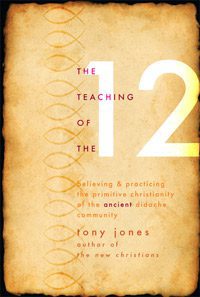 (50-70 C.E., pronounced “DID-ah-KAY). For previous installments in this series, see the links at the end.
Appoint bishops for yourselves, as well as deacons, worthy of the Lord, of meek disposition, unattached to money, truthful and proven; for they also render to you the service of prophets and teachers.
Didache 15:1
Whom should we ordain? And why?
To begin to respond to these questions, I invite you to remember any clergy ordinations you have witnessed. How many times have you seen someone ordained as a pastor or priest?
I suspect that such an event is rare in your experience. Some of you, who have been regular church attenders your whole lives, may still have never witnessed an ordination. I invite you to think with me about why this state of affairs may be problematic for many reasons, perhaps most glaringly as a contradiction of many Protestant churches’ stated or traditional belief in the “priesthood of all believers.”
In the Southern Baptist church in which I was raised, I never saw a clergy ordination. One white male was the senior pastor of the congregation for my entire childhood. And he had been ordained years before I was born. The only other ordained person I can recall ascending to the pulpit on even a semi-regular basis was the associate paster, another white male, who had been ordained at a previous congregation before I was born.
The primary exception that I can think of is that once a year a few graduating high school seniors were selected to collectively preach a sermon on Youth Sunday: generally 3-5 minutes each on a particular theme or set of scriptures. From the best of my recollection, I do not remember a female being selected to preach for Youth Sunday, but I will confess that a female being selected to deliver a sermon would have likely been much more memorable for the young women of the church than for me. As a white male myself, I took it for granted that I had the right to preach a sermon if I felt called to do so because the model of white men preaching was essentially all I had ever known.
In preparing for this sermon, one of my childhood friends, who along with me was one of the four young men selected in our year to preach on Youth Sunday, reminded me that one of our female classmates was angry about being excluded from preaching on Youth Sunday. Ironically, she was one of the three of us from our graduating class, who eventually went to seminary and was later ordained. The fact that I had forgotten about her exclusion is further testament to the dominant paradigm in Southern Baptist life of only a “few good men” being called to preach.
Now allow me to offer some counterexamples. I rarely remember the subject of women’s ordination being raised in seminary. It would’ve been mostly a moot argument since approximately half of my seminary class were women seeking ordination. There were also many ordained female professors. But I do remember once when the argument came up that my seminary roommate, who had been raised in the Christian Church (Disciples of Christ), said, “Of course I’ve always supported women’s ordination. The primary pastor that I knew at my childhood church was a woman.” Similarly, as I grew up and as was exposed to increasing numbers of women who were charismatic leaders, compassionate pastoral caregivers, and talented preachers, I found that I had a new response to people who asked me if I believed in women’s ordination. I started saying incredulously, “Do I believe in women’s ordination? Of course I believe in it. I’ve seen it!”
Part of my point is to satirize the whole situation of asking if someone ‘believes’ in women’s ordination in the same way that you would ask if someone believe in fairies or unicorns. What is more important is to expose that the question of women’s ordination is not an abstract, theoretical debate. The way we talk about women’s ordination and whether the churches of which we are a part ordain women is deeply impactful on the way that approximately 50% of the world’s population thinks about God. In other words, by discouraging women or by failing to model female religious leadership, you are potentially part of blocking young women from hearing God’s call.
Remember those words preached at Pentecost when the early church was born. I’ll quote from Acts 2 in the King James Version as a reminder of those many significant places in the Books of Acts in which men and women are explicitly mentioned in the original Greek text, not merely in contemporary inclusive versions. The apostle Peter, whom tradition tells us was the first pope, stood up — inspired by the Spirit — and preached from the Book of Joel: “And it shall come to pass in the last days, saith God, I will pour out of my Spirit upon all flesh: and your sons and your daughters shall prophesy, and your young men shall see visions, and your old men shall dream dreams.”
Moving from the beginning of the church to the beginning of the Bible, we read, “God created humankind in God’s own image, in the image of God they were created; male and female, God created them.” Notice that the very first chapter of the book of Genesis affirms that the image of God is found in both males and females. Thus, to refuse to see God in the female body is to refuse to see at least a half of what God is trying to show us through human history. We could trace many other instances of women’s leadership in the Bible and in the Christian tradition, but the more important point is that the struggle to make women’s ordination regular, normal, and commonplace was hard fought and is not over.
Whenever I reflect on the struggle for equal rights historically, I am regularly dumbfounded that here in the year 2012 — well into the 21st-century and Christianity’s third millennium — we still have not year reached the 100th anniversary of women’s voting rights in the U.S., which came only in 1920 with the 19th Amendment to the Constitution. We’ve come a long way as a species, but still have a long way to go. I’m reminded of a piece of wisdom from my seminary mentor who used to say about injustice: “Remember: It doesn’t have to be this way.” What he meant was that the first step of living into a better world was realizing that we don’t have to be complacent about the status quo, and we can begin with imagining a different way. As St. Augustine famously said, “Hope has two beautiful daughters: anger and courage. Anger that things are the way they are. Courage to make them the way they ought to be.”
~~~~~~~~
Speaking of the contrast between the way things are as opposed to the way things ought to be, I was ordained on July 6, 2003. But I’ve already alluded to the fact that part of me doesn’t believe in ordination. That part of me believes in the priesthood of all believers: that if you are baptized, then you are just as much of a pastor and priest as I am or as anyone else is. This perspective is a vision of the church as a democracy, a congregation of equals, all different parts of the one body of Christ. This flattened, horizontal view was reaffirmed by many in the Reformation, when individuals and groups began to protest the topdown, hierarchal control of Rome.
However, this egalitarian vision is rooted much earlier. As Paul wrote to the Galatians: “There is no longer Jew or Greek, there is no longer slave or free, there is no longer male and female; for all of you are one in Christ Jesus” (3:28). But this promise of a priesthood of all believers has not yet been fulfilled. One of my mentors, a longtime pastor, has written that,
Ordination sets up a ministry class system: first class, clergy; second class, laity. For all our intentions otherwise, a two-tiered system is created. The difference in gifts for ministry becomes unfortunately a difference in value. As Baptists, even Protestants, our formal theology declares, “the priesthood (ministry) of all believers”; our functional theology declares, “priesthood (ministry) of others.”
In other words, the ordination of clergy can mask and unintentionally subvert the equally important call to ministry of all Christians to take part in bringing about the kingdom of God and building the Beloved Community. Another theologian similarly invites us to consider that the answer to this dilemma is not to criticize the professional class of clergy or even to ban ordinations. Instead, he makes the much more radical suggestion that we should abolish the laity if we want to authentically live into the vision of “every member a minister” — fully enfranchised and fully empowered!
~~~~~~~~
We can see some justification for this perspective in our reading for this morning. Didache 15:1 says, “Appoint bishops for yourselves, as well as deacons, worthy of the Lord, of meek disposition, unattached to money, truthful and proven; for they also render to you the service of prophets and teachers.” When you read this verse, it is important to note that the word “bishops” is plural. The Greek word here episcopous is a secular term that means “overseer.” Similarly, the Greek diakonia, which we transliterate as “deacon,” is a secular term meaning “servant.” There is no connotation in the mid-first century of all the hierarchal and ecclesial baggage that will be woven into these terms over time.
In these early decades after the life and ministry of Jesus, the call for “bishops and deacons” is merely about finding those members of the community willing to serve as “overseers and servants.” There is no talk of lifetime appointments, ontological change, or special garments — much less one single bishop over multiple communities or the whole Church. Instead the Didache seems to envision multiple bishops or “overseers” in each community.
As we enter into a time of contemplative silence, I leave you with the question with which we began:
Whom should we ordain? And why?
For Further Study on the Didache
- Aaron Milavec’s The Didache: Text, Translation, Analysis, and Commentary is an accessible, condensed version of his massive tome The Didache: Faith, Hope, and Life of the Earliest Christian Communities, 50-70 C.E.
- Tony Jones’ The Teaching of the Twelve: Believing & Practicing the Primitive Christianity of the Ancient Didache Community is another accessible entry point. And there is a supplemental DVD.
- Thomas O’Loughlin, The Didache: A Window on the Earliest Christians.
- Read the text of the Didache for yourself free online at http://www.paracletepress.com/didache.html.
Previous Sermons in this Series
- Preaching the Didache: What Is Your Canon and Why? (Didache 1).
- The Pragmatism of the Didache: At Least Do What You Can (Didache 2-6).
- Is Baptism Overrated? (Didache 7)
- Eucharist Like You’ve Never Heard It Before (Didache 9-10)
- Christ-peddlers: If God Is Still Speaking, How Do You Know If Someone Is Authentically Speaking for God? (Didache 11-13)
Notes
1 Regarding the ordination theme of this sermon, Tony Jones makes an important point that is another reason the Didache may have waned in popularity and been disregarded for canonization: self-interested clergy were disinclined to promote it: “…the Didache contains no mention of clergy or priesthood, nor does it grant bishops ecclesiastical authority, so it wouldn’t have been a very popular book for the burgeoning church hierarchy in the fourth and fifth centuries” (9).
2 “men and women are explicitly mentioned in the original Greek text” — New Testament scholar Larry Hurtado highlights that, in the Acts of the Apostles:
- 5:14. Both men and women became believers in response to apostolic preaching and attendant “signs and wonders”.
- 8:12. Likewise, in response to Philip’s preaching, “men and women” were baptized.
- 8:3; 9:2; 22:4. In all these references to persecution of believers by Saul/Paul, the author mentions “men and women” as victims.
For more, see Allen Black, “‘Your sons and Your Daughters Will Prophesy . . .’: Pairings of Men and Women in Luke-Acts,” in Scripture and Traditions: Essays on Early Judaism and Christianity in Honor of Carl R. Holladay, ed. Patrick Gray & Gail R. O’Day (Leiden: Brill, 2008), 193-206. Hurtado notes that: “Black shows that the author of Luke-Acts was likely prompted by passages in Isaiah (e.g., 43:6-7; 49:22; 60:4) where Israel is promised that her ‘sons and daughters’ will be recipients of future divine blessings. So, convinced that early Christianity is the fulfillment of these hopes, the author of Acts underscores the sexual duality of early Christian circles.”
3 “many of instances of women’s leadership in the Bible and in the Christian tradition” — see, for example, my sermon on “Paul: Misogynist or Mystic?” (http://www.patheos.com/blogs/carlgregg/2012/02/paul-misogynist-or-mystic/).
4 Walter Shurden’s book The Baptist Identity: Four Fragile Freedoms identifies four essential Baptist freedoms: Religious Freedom, Bible Freedom, Church Freedom, and Soul Freedom. Religious Freedom is the freedom of individual religion expression as also protected in the free exercise clause in the First Amendment of the Constitution. Bible Freedom is the freedom of any individual to interpret the Bible for him or herself as she or he sees fit. Church Freedom is the freedom of a local congregation to govern itself without the interference of any other congregation, denomination, bishop, or other supervisory body. And finally Soul Freedom is the responsibility of each individual to work out his or her theology for him or herself. Taken together, these Baptist freedoms are what allow such a wide diversity of people from the modern day saint and martyr Martin Luther King, Jr. to the hateful and divisive Fred Phelps to all authentically claim the name Baptist.
5 “Ordination sets up a ministry class system” — Mahan Siler, Letters to Nancy: Reflections on Pastoral Ministry (Wipf and Stock: 2001), 59-60. Siler’s book is a beautiful collection of letters written to his former associate pastor and eventual successor Nancy Petty. The volume is unfortunately out of print, but I highly recommend picking up a used copy if you ever come across one. In the meantime, another excellent book, which includes a reference to the passage from Siler I quoted is Stephen Sprinkle, Ordination: Celebrating the Gift of Ministry, 17-18
6 “abolish the laity” — see James William McClendon, Systematic Theology, Vol. 2: Doctrine, 368-369.
The Rev. Carl Gregg is a trained spiritual director, a D.Min. candidate at San Francisco Theological Seminary, and the pastor of Broadview Church in Chesapeake Beach, Maryland. Follow him on Facebook (facebook.com/carlgregg) and Twitter (@carlgregg).
Next Post

February 20, 2012 Preaching the Didache (50-70 C.E.): A Sermon Series Retrospective
Browse Our Archives
Select a Category Advent Anti-Racism Archaeology Atheism Baptism Best of the Year List Book Reviews Buddhism Catholicism Christian Education Church and State Church Planting Climate Change Conscientious Objection to War Creation Spirituality Death Penalty Didache Disability Rights Discernment Easter Ecology Emergent Church Movement Empire-Critical Ethics Evolution Feminist Theology Film Reviews Gandhi Gospel of Mark Gun Control Hinduism Immigration Reform Interfaith Islam JFK Judaism Jungian Spirituality Lectionary Commentary Lent Letters to the Editor LGBT Marriage MLK Multiculturalism Mysticism Nonviolent Activism Occupy Paganism (Earth-centered Religions) Parables Paul Pluralism Politics Process Theology Quantum Physics Requiescat In Pace Seminary and Divinity School Sermon Series Retrospective Sermons Spiritual Direction Spiritual Practices Stewardship (Fundraising) The Book of J The Wheel of the Year (Paganism) Theoblogger Challenge Triathlon Uncategorized Unitarian Universalism Worship Resources Youth Ministry
Select a Month July 2026 May 2026 March 2026 November 2025 October 2025 August 2025 February 2025 December 2024 October 2024 March 2024 January 2024 December 2023 November 2023 March 2023 February 2023 January 2023 December 2022 November 2022 August 2022 March 2022 February 2022 January 2022 December 2021 September 2021 August 2021 July 2021 June 2021 May 2021 February 2021 January 2021 December 2020 August 2020 June 2020 May 2020 April 2020 March 2020 February 2020 January 2020 December 2019 November 2019 October 2019 September 2019 July 2019 June 2019 March 2019 February 2019 January 2019 December 2018 November 2018 October 2018 September 2018 June 2018 May 2018 April 2018 March 2018 February 2018 January 2018 December 2017 November 2017 October 2017 September 2017 August 2017 July 2017 June 2017 May 2017 April 2017 March 2017 February 2017 January 2017 December 2016 November 2016 October 2016 September 2016 August 2016 June 2016 May 2016 April 2016 March 2016 February 2016 January 2016 December 2015 November 2015 October 2015 September 2015 August 2015 July 2015 June 2015 May 2015 April 2015 March 2015 February 2015 January 2015 December 2014 November 2014 October 2014 August 2014 July 2014 June 2014 May 2014 April 2014 March 2014 February 2014 January 2014 December 2013 November 2013 October 2013 September 2013 August 2013 July 2013 June 2013 May 2013 April 2013 March 2013 February 2013 January 2013 December 2012 November 2012 October 2012 September 2012 August 2012 July 2012 June 2012 May 2012 April 2012 March 2012 February 2012 January 2012 December 2011 November 2011 October 2011 September 2011 August 2011 July 2011 June 2011 May 2011 April 2011 March 2011 February 2011 January 2011 December 2010 November 2010 October 2010 August 2009 July 2009 May 2009
Follow Us!
TAKE THE
Religious Wisdom Quiz
What Christian tradition refers to its pastors as "elders"?
Select your answer to see how you score.
Presbyterian Anglican Orthodox Catholic
Related posts from Carl Gregg

What Do We Mean We When Say, “Building...

Margaret Fuller: The Stories We Tell Matter
"Feminist Masculinity and Father’s Day" #EachEveryWoman #AllMenCan
Religious Mystic & Rational Humanist: The Mystical Humanism...
TRENDING AT PATHEOS More Voices

Reading America at 250: A Nation Wrestles With...
As part of my own reflection on the 250th anniversary of the...

Whenever I am reading a book or listening to an argument, I...

President Trump Ban Animal Torture Videos on Facebook
Call for Stricter Regulations of Animal Abuse Content on Facebook Although President...

Draft Amendments to Address Ritual Abuse in New...
The proposed changes would make it illegal for individuals in domestic partnerships...

How Bans on LGBTQ+ Student Clubs Threaten Religious...
On June 20, 2025, the State of Texas passed Senate Bill 12....

The Truth About the Gen Z Revival
This past year, there has been a lot of media buzz surrounding...
view all More Voices blogs
Ad-Free & Subscriber Log-In Subscription Support
- About Us
- 2026 Calendar
- Videos
- Podcasts
- Library of World Religions
- Faith In Media Tracker
- Advertise With Us
- Write for Us
- Privacy Policy
- Terms of Service
- Do Not Sell My Data
- Contact Us
- Radiant Digital
- Manage Newsletter Subscriptions
- Unsubscribe From Notifications
- Sitemap
Copyright 2008-2026, Patheos. All rights reserved.
Subscription Support Ad-Free & Subscriber Log-In
Follow Patheos