
BuddhistCatholicContemplativeEvangelicalGeneral ChristianHinduJewishLatter-day SaintMuslimNew VisionsProgressive Christian
Beliefs
- Buddhist
- Catholic
- Contemplative
- Evangelical
- General Christian
- Hindu
- Jewish
- Latter-day Saint
- More Voices
- Muslim
- New Visions
- Pagan
- Progressive Christian
Topics
- Religion News
- Food and Religion
- Sports and Religion
- Religious Art
- Religious Music and Entertainment
- Religious Events
- History and Religion
- Style and Religion
- Politics and Religion
- Women in Religion
- Recreation Outdoors and Religion
- Business Finance and Religion
- Careers Workplace and Religion
- Education and Religion
- Family Parenting and Religion
- Health Fitness and Religion
- Home and Religion
- Relationships and Religion
- Technology and Religion
- Travel and Religion
Columnists
- Buddhist Columnists
- Business Finance and Religion Columnists
- Careers Workplace and Religion Columnists
- Catholic Columnists
- Contemplative Columnists
- Education and Religion Columnists
- Evangelists Columnists
- Family Parenting and Religion Columnists
- General Christian Columnists
- Health Fitness and Religion Columnists
- Hindu Columnists
- History and Religion Columnists
- Home and Religion Columnists
- Jewish Columnists
- More Voices Columnists
- Latter Day Columnists
- Muslim Columnists
- New Visions Columnists
- Nonreligious Columnists
- Pagan Columnists
- Politics and Religion Columnists
- Progressive Columnists
- Recreation Outdoors and Religion Columnists
- Relationships and Religion Columnists
- Religion News Columnists
- Religious Art Columnists
- Religious Events Columnists
- Religious Music and Entertainment Columnists
- Sports and Religion Columnists
- Style and Religion Columnists
- Technology and Religion Columnists
- Travel and Religion Columnists
- Women in Religion Columnists
Resource Library
- 2026 Calendar
- Library of World Religions
- The 100 Most Holy Places on Earth
- Patheos Answers
- Podcasts
- Videos
- Faith Leaders Database
- Anglican Episcopalian
- Bahai
- Baptist
- Buddhism
- Christianity
- Confucianism
- Eastern Orthodoxy
- Hinduism
- Holiness and Pentecostal
- ISKCON
- Islam
- Judaism
- Lutheran
- Methodist
- The Church of Jesus Christ of Latter-day Saints
- New Age
- Paganism
- Presbytarian and Reformed
- Protestantism
- Religion Behind the Scenes
- Roman Catholic
- Scientology
- Shia Islam
- Sikhism
- Sufism
- Sunni Islam
- Taoism
- Zen
- See all religions
Research Tools
 Ad-Free & Subscriber Log-In Subscription Support
Ad-Free & Subscriber Log-In Subscription Support
Follow Patheos 

- Trending:
- Forgiveness
- |
- Marriage
- |
- Consciousness
- |
- Death Penalty
- |
- Election
- |
- Halloween

- Home
- More Voices
- “The Upside of Quitting”: Sunk Cost, Opportunity Cost, and the 10th Anniversary of the War in Afghanistan
“The Upside of Quitting”: Sunk Cost, Opportunity Cost, and the 10th Anniversary of the War in Afghanistan
Last updated on: April 3, 2012 at 9:43 pm by Carl Gregg
“The Upside of Quitting”: Sunk Cost, Opportunity Cost, and the 10th Anniversary of the War in Afghanistan 2012-04-03T21:43:01-04:00 Carl Gregg
Patheos Explore the world's faith through different perspectives on religion and spirituality! Patheos has the views of the prevalent religions and spiritualities of the world.
Today marks ten years since the U.S. invaded Afghanistan. To reflect on the meaning of this tenth anniversary and the future of U.S. foreign policy, I invite you to listen to a recent Freakonomics podcast on The Upside of Quitting. You can also read a transcript of the podcast on the Freakonomics website.
Two of the crucial economic concepts that are colorfully explored are sunk costs and opportunity costs:
You know the bromide: winners never quit and quitters never win. To which Freakonomics Radio says… Are you sure? Sometimes quitting is strategic, and sometimes it’s the best thing you can do. It’s all about opportunity cost: when you’re doing one thing, you can’t be doing another. So when do you quit the one and start the other?
Society often considers quitting as failure, but Freakonomics Radio’s Stephen Dubner argues we should think more about the upsides to giving up.
In regard to the War in Afghanistan, simply because we have been there for ten years does not mean we have to continue:
The sunk-cost fallacy is when you tell yourself that you can’t quit because of all that time or money you spent. We shouldn’t fall for this fallacy, but we do it all the time. Arkes and a colleague learned something that makes falling for the sunk-cost fallacy even more embarrassing. It turns out that children don’t fall for it — or even animals.
The opportunity cost of maintaining high troop levels in foreign countries is that time and energy cannot be redirected to crucial domestic needs, as the Occupy Wall Street protests are calling us to address.
To weigh the sunk cost and opportunity cost even after a decade, consider the following evaluation, as reported in The Huffington Post:
The U.S. began the war in Afghanistan with a “frighteningly simplistic” view of the country, and even 10 years later lacks knowledge that could help bring the conflict to a successful end, a former top commander said Thursday. Retired Army Gen. Stanley McChrystal said in remarks at the Council on Foreign Relations that the U.S. and its NATO allies are only “a little better than” 50 percent of the way to reaching their war goals….
McChrystal, who commanded coalition forces in 2009-10 and was forced to resign in a flap over a magazine article, said the U.S. entered Afghanistan in October 2001 with too little knowledge of Afghan culture. “We didn’t know enough and we still don’t know enough,” he said. “Most of us –- me included –- had a very superficial understanding of the situation and history, and we had a frighteningly simplistic view of recent history, the last 50 years.” U.S. forces did not know the country’s languages and did not make “an effective effort” to learn them, he said.
McChrystal also said that the Bush administration’s decision to invade Iraq less than two years after entering Afghanistan made the Afghan effort more difficult. “I think they were made more difficult, clearly,” he said because the Iraq invasion “changed the Muslim world’s view of America’s effort. When we went after the Taliban in Afghanistan in 2001, there was a certain understanding that we had the ability and the right to defend ourselves and the fact that al-Qaida had been harbored by the Taliban was legitimate. I think when we made the decision to go into Iraq that was less legitimate” in the eyes of much of the Muslim world. Iraq also diverted some military resources that could have been put to good use in Afghanistan, he said.
The economic lenses of “sunk cost” and “opportunity cost” are an opportunity to see that our past decisions do not have to dominate our future. And, perhaps it is important to say again that one way of supporting our troops is to take them out of harm’s way and to bring them home to their families.There can be an upside to quitting.
Visit the Freakonomics website to listen or read this episode.
I welcome your comments about this blog or the linked podcast.
The Rev. Carl Gregg is the pastor of Broadview Church in Chesapeake Beach, Maryland. Follow him on Facebook and Twitter.
Previous Post

October 3, 2011
Don't Justify Your Selfishness in Jesus' Name (Bonus: Two Cartoons!)
Next Post
October 12, 2011 Jesus, #OccupyWallSt, and the Rich Young Ruler
Browse Our Archives
Select a Category Advent Anti-Racism Archaeology Atheism Baptism Best of the Year List Book Reviews Buddhism Catholicism Christian Education Church and State Church Planting Climate Change Conscientious Objection to War Creation Spirituality Death Penalty Didache Disability Rights Discernment Easter Ecology Emergent Church Movement Empire-Critical Ethics Evolution Feminist Theology Film Reviews Gandhi Gospel of Mark Gun Control Hinduism Immigration Reform Interfaith Islam JFK Judaism Jungian Spirituality Lectionary Commentary Lent Letters to the Editor LGBT Marriage MLK Multiculturalism Mysticism Nonviolent Activism Occupy Paganism (Earth-centered Religions) Parables Paul Pluralism Politics Process Theology Quantum Physics Requiescat In Pace Seminary and Divinity School Sermon Series Retrospective Sermons Spiritual Direction Spiritual Practices Stewardship (Fundraising) The Book of J The Wheel of the Year (Paganism) Theoblogger Challenge Triathlon Uncategorized Unitarian Universalism Worship Resources Youth Ministry
Select a Month July 2026 May 2026 March 2026 November 2025 October 2025 August 2025 February 2025 December 2024 October 2024 March 2024 January 2024 December 2023 November 2023 March 2023 February 2023 January 2023 December 2022 November 2022 August 2022 March 2022 February 2022 January 2022 December 2021 September 2021 August 2021 July 2021 June 2021 May 2021 February 2021 January 2021 December 2020 August 2020 June 2020 May 2020 April 2020 March 2020 February 2020 January 2020 December 2019 November 2019 October 2019 September 2019 July 2019 June 2019 March 2019 February 2019 January 2019 December 2018 November 2018 October 2018 September 2018 June 2018 May 2018 April 2018 March 2018 February 2018 January 2018 December 2017 November 2017 October 2017 September 2017 August 2017 July 2017 June 2017 May 2017 April 2017 March 2017 February 2017 January 2017 December 2016 November 2016 October 2016 September 2016 August 2016 June 2016 May 2016 April 2016 March 2016 February 2016 January 2016 December 2015 November 2015 October 2015 September 2015 August 2015 July 2015 June 2015 May 2015 April 2015 March 2015 February 2015 January 2015 December 2014 November 2014 October 2014 August 2014 July 2014 June 2014 May 2014 April 2014 March 2014 February 2014 January 2014 December 2013 November 2013 October 2013 September 2013 August 2013 July 2013 June 2013 May 2013 April 2013 March 2013 February 2013 January 2013 December 2012 November 2012 October 2012 September 2012 August 2012 July 2012 June 2012 May 2012 April 2012 March 2012 February 2012 January 2012 December 2011 November 2011 October 2011 September 2011 August 2011 July 2011 June 2011 May 2011 April 2011 March 2011 February 2011 January 2011 December 2010 November 2010 October 2010 August 2009 July 2009 May 2009
Follow Us!
TAKE THE
Religious Wisdom Quiz
What weapon did David use to defeat Goliath?
Select your answer to see how you score.
A spear A sword A bow and arrow A sling and a stone
Related posts from Carl Gregg

Why Peter Singer Hates on Guide Dogs &...

"How the Founding Fathers Became Infallible and Our...
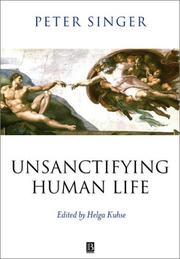
“Unsanctifying Human Life”: Wrestling with Peter Singer’s Ethics

TRENDING AT PATHEOS More Voices

Reading America at 250: A Nation Wrestles With...
As part of my own reflection on the 250th anniversary of the...

Whenever I am reading a book or listening to an argument, I...

President Trump Ban Animal Torture Videos on Facebook
Call for Stricter Regulations of Animal Abuse Content on Facebook Although President...

Draft Amendments to Address Ritual Abuse in New...
The proposed changes would make it illegal for individuals in domestic partnerships...

How Bans on LGBTQ+ Student Clubs Threaten Religious...
On June 20, 2025, the State of Texas passed Senate Bill 12....

The Truth About the Gen Z Revival
This past year, there has been a lot of media buzz surrounding...
view all More Voices blogs
Ad-Free & Subscriber Log-In Subscription Support
- About Us
- 2026 Calendar
- Videos
- Podcasts
- Library of World Religions
- Faith In Media Tracker
- Advertise With Us
- Write for Us
- Privacy Policy
- Terms of Service
- Do Not Sell My Data
- Contact Us
- Radiant Digital
- Manage Newsletter Subscriptions
- Unsubscribe From Notifications
- Sitemap
Copyright 2008-2026, Patheos. All rights reserved.
Subscription Support Ad-Free & Subscriber Log-In
Follow Patheos