
BuddhistCatholicContemplativeEvangelicalGeneral ChristianHinduJewishLatter-day SaintMuslimNew VisionsProgressive Christian
Beliefs
- Buddhist
- Catholic
- Contemplative
- Evangelical
- General Christian
- Hindu
- Jewish
- Latter-day Saint
- More Voices
- Muslim
- New Visions
- Pagan
- Progressive Christian
Topics
- Religion News
- Food and Religion
- Sports and Religion
- Religious Art
- Religious Music and Entertainment
- Religious Events
- History and Religion
- Style and Religion
- Politics and Religion
- Women in Religion
- Recreation Outdoors and Religion
- Business Finance and Religion
- Careers Workplace and Religion
- Education and Religion
- Family Parenting and Religion
- Health Fitness and Religion
- Home and Religion
- Relationships and Religion
- Technology and Religion
- Travel and Religion
Columnists
- Buddhist Columnists
- Business Finance and Religion Columnists
- Careers Workplace and Religion Columnists
- Catholic Columnists
- Contemplative Columnists
- Education and Religion Columnists
- Evangelists Columnists
- Family Parenting and Religion Columnists
- General Christian Columnists
- Health Fitness and Religion Columnists
- Hindu Columnists
- History and Religion Columnists
- Home and Religion Columnists
- Jewish Columnists
- More Voices Columnists
- Latter Day Columnists
- Muslim Columnists
- New Visions Columnists
- Nonreligious Columnists
- Pagan Columnists
- Politics and Religion Columnists
- Progressive Columnists
- Recreation Outdoors and Religion Columnists
- Relationships and Religion Columnists
- Religion News Columnists
- Religious Art Columnists
- Religious Events Columnists
- Religious Music and Entertainment Columnists
- Sports and Religion Columnists
- Style and Religion Columnists
- Technology and Religion Columnists
- Travel and Religion Columnists
- Women in Religion Columnists
Resource Library
- 2026 Calendar
- Library of World Religions
- The 100 Most Holy Places on Earth
- Patheos Answers
- Podcasts
- Videos
- Faith Leaders Database
- Anglican Episcopalian
- Bahai
- Baptist
- Buddhism
- Christianity
- Confucianism
- Eastern Orthodoxy
- Hinduism
- Holiness and Pentecostal
- ISKCON
- Islam
- Judaism
- Lutheran
- Methodist
- The Church of Jesus Christ of Latter-day Saints
- New Age
- Paganism
- Presbytarian and Reformed
- Protestantism
- Religion Behind the Scenes
- Roman Catholic
- Scientology
- Shia Islam
- Sikhism
- Sufism
- Sunni Islam
- Taoism
- Zen
- See all religions
Research Tools
 Ad-Free & Subscriber Log-In Subscription Support
Ad-Free & Subscriber Log-In Subscription Support
Follow Patheos 

- Trending:
- Forgiveness
- |
- Marriage
- |
- Consciousness
- |
- Death Penalty
- |
- Election
- |
- Halloween

- Home
- More Voices
- Response to Tony Jones’ Blog on “Picking and Choosing Your Bible Verses (or, Why To Abandon the Lectionary)”
Response to Tony Jones’ Blog on “Picking and Choosing Your Bible Verses (or, Why To Abandon the Lectionary)”
Last updated on: November 18, 2011 at 5:40 pm by Carl Gregg
Response to Tony Jones’ Blog on “Picking and Choosing Your Bible Verses (or, Why To Abandon the Lectionary)” 2011-11-18T17:40:47-05:00 Carl Gregg
Patheos Explore the world's faith through different perspectives on religion and spirituality! Patheos has the views of the prevalent religions and spiritualities of the world.
(Note: At the end of last week, I posted a lectionary commentary for Sunday, October 23 on “Why Not Choose Love? Picking and Choosing Scripture as a Twenty-first Century Christian.” Tony Jones, a leader in the Emergent Church Movement, wrote a response titled, “Picking and Choosing Your Bible Verses (or, Why To Abandon the Lectionary).” I have been out of town all week at a conference, but when my flight home was delayed yesterday, I had some time to draft these thoughts related to Tony’s original post and the follow-up comments. Reading these previous posts will help clarify the context of my response.)
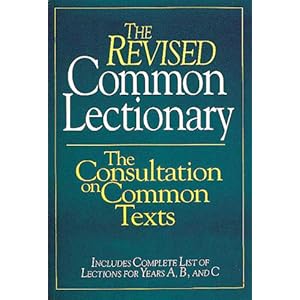
Tony, I’m a longtime reader of your blog, and I’m grateful for your appreciation of my lectionary commentary. Related to your response, I frequently express similar frustration and bewilderment at what is omitted from the lectionary. For example, I think I’m correct that the Song of Songs (an incredibly important book for major Christian figures such as Origen and Bernard of Clairvaux in particular and the Christian monastic tradition in general) is only assigned as a lectionary text for one Sunday out of the entire three year cycle in the Revised Common Lectionary (Year B, Pentecost 13, Song of Songs 2:8-13). And your example of Galatians 3:1-21 is yet another reason why I’m increasingly convinced the lectionary alone (at least as it currently stands) is insufficient, especially for congregations that do not read all four lessons each week.
I also agree with you that, “how about you don’t pick and choose at all?” Dan’s comment is right that our perspectives are complimentary, not contradictory. My post is about ‘how’ to read scripture, and your post is ‘how much’ scripture we should read. As you say about my post: “fair enough.”
Although I was trained in seminary to use the lectionary and although the church where I was an associate for seven years used the lectionary almost exclusively, I have broken with this practice at the new church start, where I’ve been the pastor for more than a year. We started with a chapter-by-chapter study of Mark, reading the whole chapter each week during worship.
Then for Advent, we slowed down considerably and spent four weeks moving through Luke’s Annunciation account.
In Epiphany, we concentrated on a line of the Lord’s Prayer each week.
For Lent we also slowed down for a chapter-a-week study of Bruce Epperly’s book Holy Adventure, which is a process theology / progressive Christian alternative to Rick Warren’s bestseller The Purpose Driven Life:
Warren charts a road map in which God chooses the most important events and encounters of our lives before we are born and without our input. Our personal calling, according to Warren’s vision, is to discover and live out God’s eternal purposes in our daily lives. We can find our true purpose only when we follow the directions and color inside the lines that God has already planned for us. [In contrast,] I believe God’s holy adventure calls us to be creative and innovative right now as we listen for divine inspiration, and then to respond by coloring outside the lines and giving God something new as a result of our own personal artistry….. God calls us to become creative companions in God’s new and surprising creation. (21)
Currently we’re working our way through the Gospel According to Matthew, and it’s been fascinating to contrast how different that account is from the Gospel ‘According to’ Mark. For Matthew, I’ve been sending an e-mail to the congregation weekly with the full chapter for the week, but in worship we only read the section on which my sermon is focusing. However, members of the congregation do bring up questions from time to time about passages they were curious about from the larger chapter that my sermon did not address.
In January, my current plan is to begin working through the “Book of J” as outlined by scholars such as Richard Elliott Friedman. I’m not sure how that will go; we’ll see. Alternatively, I may follow the example of Solomon’s Porch in preaching through Genesis.
Somewhat similar to Doug’s vision in Preaching in the Inventive Age, we pause for two minutes of contemplative silence at the end of the sermon. Then, I join the circle of those present and we transition into a time of open discussion (approximately 15 minutes) in response to the prompt, “What has resonated with you in worship this morning? Or what has intersected with your life or the life of the world?” I was also inspired by a similar worship practice that I witnessed at St. Gregory of Nyssa Episcopal, which I highly recommend visiting for anyone passing through the Bay Area. As they say, “At St. Gregory’s, a sermon is literally not complete until the people who have listened to the preacher have their say.”
I will add that there are aspects to the lectionary that I miss, particularly the way it dovetails with the seasons of the Christian year (see the helpful wall calendar at http://thechristiancalendar.com), and the ecumenical connection of churches across the world focusing on the same passages at the same time. Our practice of slowing down for a seasonal focus during Lent-Easter and Advent-Christmas-Epiphany helps preserve some of this balance.
Those who do use the lectionary but are troubled by the passages it omits, may be interested in Shelley Cochran’s three-volume set from Chalice Press on The Pastor’s Underground Guide to the Revised Common Lectionary. These books are keyed to the lectionary, and during the semi-continuous periods of readings, the commentaries on each of the four readings frequently begins with what has to be skipped to get from the previous week’s passage to the current week’s assigned reading.
For example, the commentary on Genesis 37:1-4, 12-28 begins:
To reach this lesson from the reading last week, the lectionary has skipped nearly five chapters. Some of these omitted stores are one we would have expected to appear in the lectionary, but they do not. These include the reconciliation of Jacob and Esau, God’s changing Jacob’s name to Israel, and a confirmation of God’s promise to Jacob and his descendants….
One omission is particularly noteworthy — the rape of Jacob’s daughter Dinah. This passage was obviously omitted because, according to the standards of the lectionary, it was not edifying enough. By any standards, it is certainly not a comfortable passage to read, hear, or preach on. At the same time, omitting this passage and pretending that it does not exist effectively silences this woman who has already clearly suffered enough. Hers is not a pleasant story, but it illustrates the reality many women still face today. That alone is enough reason not to let this passage go by unnoticed.
Then it goes on to talk about what is excluded from the pericope itself (that is, Genesis 37:5-12). This guide doesn’t have this focus on omissions during the festal cycles, likely because these thematic periods do not assume a continuous reading of an overarching narrative.
In spite of the many great lectionary resources (and the fact that I continue to write lectionary commentaries), I feel much more strongly called to the practice of moving chapter by chapter through entire books of the Bible such as Tony has described at Solomon’s Porch and as Rob Bell and Shane Hipps also do at Mars Hill. I will add also that my wife is Jewish, and attending Temple with her also strongly influenced me to move sequentially through large chunks of scripture. The Jewish tradition is often to read a large section Torah each week (called a parashah, literally ‘portion’) such that the entire Torah is read publicly each year in consecutive order. One of my favorite Jewish festivals is Simchat Torah, which is the Shabbat on which the congregation celebrates the completion of the year’s cycle of readings.
And, Larry, I’m completely with you that, ironically, the way most biblical authors read scripture (that is, the ‘Bible’ such as it was in their day) would be failed as exegesis papers in a many contemporary seminaries. James Kugel makes that point really well in his book How to Read the Bible: A Guide to Scripture, Then and Now. Kugel is perhaps the perfect person to make this point because is a paradoxical figure who is an orthodox Jew, who has also taught the historical-critical study of the Bible at Harvard for decades. His book emerges from living in the tension between ancient and modern ways of reading scripture.
I also love the passage from Richard Hays’ Echoes of Scripture in the Letters of Paul that,
Paul’s readings of Scripture are not constrained by a historical scrupulousness about the original meaning of the texts. Eschatological meaning subsumes original sense…. True interpretation depends neither on historical inquiry nor on erudite literary analysis but on attentiveness to the promptings of the Spirit, who reveals the gospel through Scripture in surprising ways. In such interpretations, there is an element of playfulness, but the freedom of intertextual play is grounded in a secure sense of the continuity of God’s grace: Paul trusts the same God who spoke through Moses to speak still in his own transformative reading.
Just as my lectionary commentary invites Christians to read the Bible as Jesus read the ‘Bible’ in his day (with a hermeneutic of love), Hays’ work invites us to embrace the same freedom to interpret the Bible that Paul with other ancient commentators claimed.
In addition, Dale Martin’s Pedagogy of the Bible: An Analysis and Proposal is a brilliant argument for teaching both ancient and modern ways of reading the Bible as a core part of a future seminary curriculum.
On lectio continua, I first heard that term in a seminary worship class in references to the places in the Revised Common in which the texts are not all thematically linked: specifically those long stretches of weeks where the Hebrew Scripture lections are semi-continuous instead of keyed to the Gospel Lesson. I think those sections are primarily during ‘Ordinary Time.’
I also heard the term lectio continua in church history regarding the Reformation. I don’t have my church history textbook with me at the moment, but a quick Google search uncovered a 1988 article from Hughes Oliphant Old, a scholar on Reformed worship titled, “Preaching by the Book: Using the Lectio Continua Approach in Sermon Planning”:
You may recall that lect comes from the Latin word that means “to read” and that it refers to the Scripture lessons (or lections) that are read on a given Sunday [by those churches which follow a lectionary]…. Lectio continua refers to another scheduling structure — that of preaching through a book, verse by verse or section by section….
Almost five hundred years ago in the city of Zurich, Ulrich Zwingli, inspired by the preaching of early church fathers Augustine and John Chrysostom, preached through the gospel of Matthew. Reformer John Calvin enthusiastically adopted Zwingli’s lectio continua approach to preaching. In fact, during his long ministry in Geneva, Calvin followed this ancient liturgical practice, preaching through most of the Bible.
Similarly, “The New Westminster Dictionary of Church History” says:
Early Christian practice was lectio continua, that is, beginning with the first chapter of a biblical book and reading it in course over a period of Sundays…. As the church year developed, customary readings — lectio selecta — began to be associated with each day or season…. During the Reformation, Luther took a conservative stance, maintaining many of the lections, while Calvin and others rejected them entirely, reverting to lectio continua except at Christmas, Easter, and Pentecost.
For anyone who is interested in pursing these ideas of approaches to scripture and biblical hermeneutics further, I’ve been exploring these concepts in a few recent sermons:
“Even the Devil Quotes Scripture” (Matthew 4; June 5, 2011): The challenge is not to use scripture for our own predetermined ends, but to allow scripture to point us toward God alone: the God who is not there to impress our friends and family, the God who is not there on a quid pro quo basis. Jesus’ temptations remind us that much drama derives from our terms for ourselves and God, but God can only truly be experienced on the stripped down, desert terms of God alone.
“How Does Matthew Read the Bible?” (Matthew 8-9; July 5, 2011): This sermon references our ongoing theme of noticing the differences between “The Gospel According to Mark” in contrast to “The Gospel According to Matthew” — especially the numerous ways that Matthew intentionally shapes his telling of the Jesus story to compare Jesus to Moses. This sermon also invites you to notice the way the different figures in the Bible use scripture — that is, the parts of the Bible that had been written in their day. Specifically, in Matthew 8-9, I invite you to consider that Isaiah and Matthew got it wrong that “He took our infirmities and bore our diseases,” as well as that both Hosea and Jesus got it right that, “God desires mercy, not [vicarious] sacrifice.”
“How To Read the Bible” (Matthew 15; September 11, 2011): An old Latin phrase, “Cui bono?” invites us to ask “To whose benefit?” In other words, when evaluating various method of reading the Bible, we should ask, “Who benefits from this interpretation?” Do the rich and powerful benefit, resulting in a solidification of the status quo (because the word “tradition” is often a cypher for wanting to keep society the same — not necessarily as it once was, but as it currently is in recent memory)? Or, does your biblical interpretation give all people, including the poor and marginalized, new hope and new life?
“Same Scripture, Countless Interpretations” (Matthew 17; September 26, 2011): It is illegitimate for anyone to blame the Bible for their hate, apathy, or vengefulness. I would invite you to consider further that whatever does not lead to love, compassion, forgiveness, justice, mercy, and grace — what Paul called “the fruit of the Spirit: love, joy, peace, patience, kindness, goodness, faithfulness, gentleness, and self-control” (Galatians 5:22-23) — has strayed from the way of God as revealed in the life of Jesus.”
“Keep Your Eye on the Ancient Interpreters” (Matthew 18; October 2, 2011): Although modern biblical scholarship may rightly reveal that many traditional assumptions about the Bible are wrong, the Bible’s ancient interpreters can point us to how God is still speaking to us through scripture — just as God always has and always will.
In closing, I appreciate the time and interest of anyone who has read the entirety of this lengthy post, and hope this response has been helpful to some readers. I welcome continued conversation in the comments sections.
[Update: Vanderbilt University’s extremely useful Lectionary site helps clarify the lectio continua aspect of the Revised Common Lectionary:
“First” OT readings follow major stories/themes, read mostly continuously, beginning in Year A with Genesis and ending in Year C with the later prophets….
“Alternate First” OT readings follow the historical tradition of thematically pairing the OT reading with the Gospel reading….
In a very few instances in the Lectionary, no Psalm reading is offered for reasons relating to the thematic nature of the Day.
The Rev. Carl Gregg is the pastor of Broadview Church in Chesapeake Beach, Maryland. Follow him on Facebook (facebook.com/carlgregg) and Twitter (@carlgregg).
Previous Post

October 18, 2011
More Formation, Less Information (The Future of Seminary Education)
Next Post
October 24, 2011 #OccupyChurch: Jesus Threw out the Moneylenders for a Reason
Browse Our Archives
Select a Category Advent Anti-Racism Archaeology Atheism Baptism Best of the Year List Book Reviews Buddhism Catholicism Christian Education Church and State Church Planting Climate Change Conscientious Objection to War Creation Spirituality Death Penalty Didache Disability Rights Discernment Easter Ecology Emergent Church Movement Empire-Critical Ethics Evolution Feminist Theology Film Reviews Gandhi Gospel of Mark Gun Control Hinduism Immigration Reform Interfaith Islam JFK Judaism Jungian Spirituality Lectionary Commentary Lent Letters to the Editor LGBT Marriage MLK Multiculturalism Mysticism Nonviolent Activism Occupy Paganism (Earth-centered Religions) Parables Paul Pluralism Politics Process Theology Quantum Physics Requiescat In Pace Seminary and Divinity School Sermon Series Retrospective Sermons Spiritual Direction Spiritual Practices Stewardship (Fundraising) The Book of J The Wheel of the Year (Paganism) Theoblogger Challenge Triathlon Uncategorized Unitarian Universalism Worship Resources Youth Ministry
Select a Month July 2026 May 2026 March 2026 November 2025 October 2025 August 2025 February 2025 December 2024 October 2024 March 2024 January 2024 December 2023 November 2023 March 2023 February 2023 January 2023 December 2022 November 2022 August 2022 March 2022 February 2022 January 2022 December 2021 September 2021 August 2021 July 2021 June 2021 May 2021 February 2021 January 2021 December 2020 August 2020 June 2020 May 2020 April 2020 March 2020 February 2020 January 2020 December 2019 November 2019 October 2019 September 2019 July 2019 June 2019 March 2019 February 2019 January 2019 December 2018 November 2018 October 2018 September 2018 June 2018 May 2018 April 2018 March 2018 February 2018 January 2018 December 2017 November 2017 October 2017 September 2017 August 2017 July 2017 June 2017 May 2017 April 2017 March 2017 February 2017 January 2017 December 2016 November 2016 October 2016 September 2016 August 2016 June 2016 May 2016 April 2016 March 2016 February 2016 January 2016 December 2015 November 2015 October 2015 September 2015 August 2015 July 2015 June 2015 May 2015 April 2015 March 2015 February 2015 January 2015 December 2014 November 2014 October 2014 August 2014 July 2014 June 2014 May 2014 April 2014 March 2014 February 2014 January 2014 December 2013 November 2013 October 2013 September 2013 August 2013 July 2013 June 2013 May 2013 April 2013 March 2013 February 2013 January 2013 December 2012 November 2012 October 2012 September 2012 August 2012 July 2012 June 2012 May 2012 April 2012 March 2012 February 2012 January 2012 December 2011 November 2011 October 2011 September 2011 August 2011 July 2011 June 2011 May 2011 April 2011 March 2011 February 2011 January 2011 December 2010 November 2010 October 2010 August 2009 July 2009 May 2009
Follow Us!
TAKE THE
Religious Wisdom Quiz
What did God create on the second day?
Select your answer to see how you score.
Fish Sun Sky Trees
Related posts from Carl Gregg

What Do We Mean We When Say, “Building...
New Lectionary Trilogy for Progressive Christians
Margaret Fuller: The Stories We Tell Matter
"Feminist Masculinity and Father’s Day" #EachEveryWoman #AllMenCan
TRENDING AT PATHEOS More Voices

Reading America at 250: A Nation Wrestles With...
As part of my own reflection on the 250th anniversary of the...

Whenever I am reading a book or listening to an argument, I...

President Trump Ban Animal Torture Videos on Facebook
Call for Stricter Regulations of Animal Abuse Content on Facebook Although President...

Draft Amendments to Address Ritual Abuse in New...
The proposed changes would make it illegal for individuals in domestic partnerships...

How Bans on LGBTQ+ Student Clubs Threaten Religious...
On June 20, 2025, the State of Texas passed Senate Bill 12....

The Truth About the Gen Z Revival
This past year, there has been a lot of media buzz surrounding...
view all More Voices blogs
Ad-Free & Subscriber Log-In Subscription Support
- About Us
- 2026 Calendar
- Videos
- Podcasts
- Library of World Religions
- Faith In Media Tracker
- Advertise With Us
- Write for Us
- Privacy Policy
- Terms of Service
- Do Not Sell My Data
- Contact Us
- Radiant Digital
- Manage Newsletter Subscriptions
- Unsubscribe From Notifications
- Sitemap
Copyright 2008-2026, Patheos. All rights reserved.
Subscription Support Ad-Free & Subscriber Log-In
Follow Patheos