
BuddhistCatholicContemplativeEvangelicalGeneral ChristianHinduJewishLatter-day SaintMuslimNew VisionsProgressive Christian
Beliefs
- Buddhist
- Catholic
- Contemplative
- Evangelical
- General Christian
- Hindu
- Jewish
- Latter-day Saint
- More Voices
- Muslim
- New Visions
- Pagan
- Progressive Christian
Topics
- Religion News
- Food and Religion
- Sports and Religion
- Religious Art
- Religious Music and Entertainment
- Religious Events
- History and Religion
- Style and Religion
- Politics and Religion
- Women in Religion
- Recreation Outdoors and Religion
- Business Finance and Religion
- Careers Workplace and Religion
- Education and Religion
- Family Parenting and Religion
- Health Fitness and Religion
- Home and Religion
- Relationships and Religion
- Technology and Religion
- Travel and Religion
Columnists
- Buddhist Columnists
- Business Finance and Religion Columnists
- Careers Workplace and Religion Columnists
- Catholic Columnists
- Contemplative Columnists
- Education and Religion Columnists
- Evangelists Columnists
- Family Parenting and Religion Columnists
- General Christian Columnists
- Health Fitness and Religion Columnists
- Hindu Columnists
- History and Religion Columnists
- Home and Religion Columnists
- Jewish Columnists
- More Voices Columnists
- Latter Day Columnists
- Muslim Columnists
- New Visions Columnists
- Nonreligious Columnists
- Pagan Columnists
- Politics and Religion Columnists
- Progressive Columnists
- Recreation Outdoors and Religion Columnists
- Relationships and Religion Columnists
- Religion News Columnists
- Religious Art Columnists
- Religious Events Columnists
- Religious Music and Entertainment Columnists
- Sports and Religion Columnists
- Style and Religion Columnists
- Technology and Religion Columnists
- Travel and Religion Columnists
- Women in Religion Columnists
Resource Library
- 2026 Calendar
- Library of World Religions
- The 100 Most Holy Places on Earth
- Patheos Answers
- Podcasts
- Videos
- Faith Leaders Database
- Anglican Episcopalian
- Bahai
- Baptist
- Buddhism
- Christianity
- Confucianism
- Eastern Orthodoxy
- Hinduism
- Holiness and Pentecostal
- ISKCON
- Islam
- Judaism
- Lutheran
- Methodist
- The Church of Jesus Christ of Latter-day Saints
- New Age
- Paganism
- Presbytarian and Reformed
- Protestantism
- Religion Behind the Scenes
- Roman Catholic
- Scientology
- Shia Islam
- Sikhism
- Sufism
- Sunni Islam
- Taoism
- Zen
- See all religions
Research Tools
 Ad-Free & Subscriber Log-In Subscription Support
Follow Patheos 

- Trending:
- Advent
- |
- Forgiveness
- |
- Thanksgiving
- |
- Election
- |
- Seasonal Holidays
- |
- Marriage

- Home
- More Voices
- A God Who Will Wrestle with You until Daybreak (A Progressive Christian Lectionary Commentary on Genesis 32 for Sunday, July 31)
A God Who Will Wrestle with You until Daybreak (A Progressive Christian Lectionary Commentary on Genesis 32 for Sunday, July 31)
Last updated on: November 3, 2011 at 3:12 pm by Carl Gregg
A God Who Will Wrestle with You until Daybreak (A Progressive Christian Lectionary Commentary on Genesis 32 for Sunday, July 31) 2011-11-03T15:12:55-04:00 Carl Gregg
Patheos Explore the world's faith through different perspectives on religion and spirituality! Patheos has the views of the prevalent religions and spiritualities of the world.
“The same night” as what?
This week’s scripture begins by saying, “The same night [Jacob] got up and took his two wives, his two maids, and his eleven children, and crossed the ford of the Jabbok.” We’re led to ask, “‘The same night’ as what?” Earlier in the chapter, we learn that Jacob, the great patriarch of Israel, is afraid. He is afraid of his brother Esau seeking revenge. If you remember the story, Isaac — the child of promise, born of Abraham and Sarah, and nearly blind at the time — had been tricked into giving his inheritance to his younger son Jacob instead of his older son Esau to whom the inheritance was due. For this treachery, Esau hated Jacob, and Jacob fled to the land of his uncle Laban (Gen 27).
In this week’s focal scripture, Jacob has come out of hiding and has sent messengers to his brother Esau. When Jacob heard the report that Esau was coming to meet him along with 400 men, “Jacob was greatly afraid and distressed (Gen 32:6-7).” Out of his fear, Jacob confesses to God, “I am not worthy of the least of all the steadfast love and all the faithfulness that you have shown to your servant, for with only my staff I crossed this Jordan; and now I have become two companies”…but not quite 400 men. He continues, “Deliver me, please, from the hand of my brother, from the hand of Esau, for I am afraid of him; he may come and kill us all, the mothers with the children. Yet you have said, “I will surely do you good, and make your offspring as the sand of the sea, which cannot be counted because of their number (Gen 32:9-12).” After his plea to God, Jacob and his family set up camp for the night; and he sends another set of messengers — this time with many animals as gifts to Esau…and to the 400 men (Gen 32:13-21)! That brings us to the beginning of our scripture. Jacob goes to bed, but sometime during that same night, “[Jacob] got up and took his two wives, his two maids, and his eleven children, and crossed the ford of the Jabbok (Gen 32:22).”
Fording the Jabbok
The Jabbok River is located about twenty miles north of the Dead Sea and flows into the Jordan River. Sometimes crossing a river is just that: another body of water that must be traversed to get to one’s destination. But this crossing seems to be symbolic of the watershed moment that is to come. We Christians know something about such moments; it’s why we build baptismal fonts; it’s why we gather on the banks of rivers for baptisms. Sometimes water symbolizes those threshold moments when change happens. For Jacob, this night crossing of the Jabbok represents more than simply getting wet.
The story continues: “[Jacob] took them and sent them across the stream, and likewise everything that he had. Jacob was left alone.” Perhaps Jacob was sending his family away to keep them safe. Perhaps he thought both he and his family would be safer if he were not with them since he would be harder to find on his own than in the company of many others. Whatever his intent, the departure across the river of everyone and everything Jacob knew, left Jacob alone.
Persevering for a blessing
By himself at night on the bank of the Jabbok, “a man wrestled with [Jacob] until daybreak.” Suddenly and unexpectedly, he is wrestling with a strange man until dawn. The Bible doesn’t record the blow-by-blow details, but it was probably wasn’t like the wrestling we’re used to seeing. It likely had neither the flare of the professional wrestling’s “Monday Night RAW,” nor the strict rules of Olympic wrestling. Whatever form their wrestling took, it was no-holds-barred. Their grappling was serious enough that “When the man saw that he did not prevail against Jacob, he struck him on the hip socket; and Jacob’s hip was put out of joint as he wrestled with him (Gen 32:25).” Some commentators claim that Jacob’s dislocated hip was the ancient writer’s way of saying that Jacob had injured his thigh muscle, which often happens in wrestling matches. That Jacob suffered a serious blow to this thigh muscle is much more persuasive since it would be unlikely that Jacob could even limp away in the morning with a dislocated hip.
Even after sustaining such a serious injury, Jacob does not give up. The melee continues until Jacob’s opponent says, “Let me go, for the day is breaking.” But Jacob says, “I will not let you go, unless you bless me (Gen 32:26).” Jacob does not have his opponent in pain, demanding that his opponent say “mercy” before he will release him. Jacob does not have his opponent pinned, but, even if he can’t “win,” he can at least hold on. And refusing to give up seems to be a threat in itself.
His opponent seems concerned at the first signs of sunrise. Curiously, Jacob says he will only let go in exchange for a blessing. That Jacob perceives his opponent as someone capable of blessing him is the strongest indication yet that this is no ordinary wrestling partner. The unidentified stranger responds by asking Jacob’s name, and then saying, “You shall no longer be called Jacob, but Israel, for you have striven with God and with humans, and have prevailed (Gen 32:27-28).” The name change from Jacob to Israel fulfills the foreshadowing at the river as a watershed moment. It also confirms that the figure with whom Jacob has been wrestling is not simply a “man.” It appears that Jacob has spent the night striving with God.
If this is true, then what does it mean that Jacob has “prevailed” in his wrestling match with God. All of the English versions that I have checked, translate the Hebrew here as “prevailed,” and the sense of the word seems to be that Jacob was the one who was “greater in strength or influence,” the one who “won.” We know that Jacob prevailed earlier in stealing his father’s blessing that was meant for his older brother Esau, but what does it mean to prevail against God in order to get a second blessing?
Do we want to be able to prevail against God? Is God’s blessing to Jacob, a “well done, good and faithful servant” — or does Jacob’s “win” mean that God is a loser? What would that mean about God? A God who takes the form of a human — a God who is humble enough to have self-limited power in order to meet humans on a level playing field. This seems like an odd sort of deity.
As Christians, we know something about this sort of God. In the second chapter of Paul’s letter to the Philippians 2:5-9, he writes, “Let the same mind be in you that was in Christ Jesus, who, though he was in the form of God, did not regard equality with God as something to be [grasped…something to be] exploited, but emptied himself, taking the form of a [servant], being born in human likeness. And being found in human form, he humbled himself….” It is with that sort of humble, self-giving, compassionate God that Jacob wrestled. But this God is also wily and fierce — willing to dislocate hips if necessary to get the goal accomplished. It is that sort of God that renamed Jacob as Israel. In this context, the word Israel translates as, “God strives.” Jacob’s very name now indicates that his God, the God of his ancestors, is one who is willing to enter into the fray and strive with humans.
It also indicates that God will continue to strive with and for Israel, God’s own namesake. “Isra-EL” means “God strives,” and “EL,” the last syllable of the word literally means God — the shorter version that you sometimes as Elohim (“EL-ohim”). You can also see this same etymology reflected in the naming that Jacob himself does at the ford of the River Jabbok to commemorate his encounter with God: “Jacob called the place Peniel, saying, ‘For I have seen God face to face, and yet my life is preserved (Gen 32:30).’” Just as we have heard “ELohim” and “IsraEL”, we now have PeniEL.
Primitive, Spiritual, or Literal?
One way of understanding Jacob’s “face to face” wrestling match with El — with God —is to see this account as a primitive, unevolved, simple, crude, or unsophisticated account, implying that looking back we know that such things just don’t happen that way. A corollary to this approach is spiritualizing the text. First, you deconstruct the text as primitive, then you reconstruct it as spiritual. In other words, Jacob was wrestling with God in his heart in preparation for his upcoming physical encounter with Esau. That’s not necessarily a bad interpretation, but any good text can yield more than one reading. At least for this week, I wasn’t satisfied with writing off the text too quickly as “primitive.” I wanted to wrestle with the scripture longer, just as Jacob had wrestled all night with God.
But eventually the wrestling match ended and so must the interpretation, at least for now. We read that “The sun rose upon [Jacob] as he passed [“Penu-EL”], limping because of his hip (Gen 32:31).” Jacob leaves the fords of Jabbok wounded and prepares to face his brother Esau. But, in the words of the theologian Henri Nouwen, the hope is that Jacob, having wrestled with God, leaves Jabbok as a “wounded healer,” not as a wounded wounder. The hope is that he will learn from his injury and use his experience to heal others, not to wound them out of his woundedness.
As we read in the epilogue to this story, that hope is not in vain. After this night alone, Jacob rejoins those who crossed the river ahead of him: “Jacob walks bravely in front of his family, bowing himself to the ground seven times until he came near his brother [Esau].” Jacob has learned to humble himself to those he has wronged instead of running away. The story continues with the reconciliation of the estranged brothers: “Esau ran to meet [Jacob], and embrace him, and fell on his neck and kissed him, and they wept (Gen 33:3-4).” Jacob responds, “truly to see your face is like seeing the face of God — since you have received me with such favor (Gen 33:10).” And Jacob should know since he has just spent the night wrestling with God face to face!
Wrestling with God Today
Jacob, who was renamed Isra-EL, became the father of twelve sons, who, in turn, became the namesakes of the twelve tribes of Israel. The Hebrews, who are now the Israelites, have embedded in their very name that they are a people who strive—who wrestle—with God. As the church today, we have inherited, for better or worse, this role of being a peculiar people called out from the world to wrestle with God.
Just as Jacob first understood his wrestling partner to be human and not divine, today we find that God is often elusive. This is not the logically consistent God of Greek philosophy, neatly divided into categories of omniscient, omnipotent, and omnipresent. As we have seen, it’s not so clear in the Bible that God is consistently “omni-anything” — much less unchanging, omniscient, omnipotent, omnipresent. The Bible often speaks of a God who is much more radically free than the God of the philosophers.
James Kugel, author of the book The God of the Old, emphasizes the changing understandings of God from the writings of the Hebrews to the writings of the Greeks — with Christians often being influenced more by the Greeks than the Hebrews. Kugel writes:
A certain paradox was built into the cosmic God…. Huge, remote and utterly alone, [God] had unlimited power. But precisely for that reason, [God] was also more predictable — even, in a way, more controllable…. The interaction [between God and humanity] would henceforth be clear: You are the only God and I will be subject to You every minute of the day in every way. But “every minute of the day in every way” meant, in another sense, never in particular; never in high gear at least, never careening this way and that way out of control.
…the way you might out of control in a wrestling match. For those accustomed to reading about the God of Greek philosophy, encountering the God of the Old, the God that initiates wrestling matches in the middle of the night, is like living near Mount St. Helens as the seemingly dormant volcano threatens to erupt.
A living, active volcano has the possibility of erupting anytime — without notice and without warning, which is how God starts his wrestling match with Jacob. This is not the God of the Greek philosophers, but perhaps it is the God we know, the God free to encounter us: the God, who challenges us to wrestle — not only when we’re in our Sunday clothes and gathered in the sanctuary, but also in the middle of the night, when we’re alone, when family and friends are angry at us and our lives are in a mess.
The theologian Amy Laura Hall writes that,
When we consider the seamless beauty displayed in Martha Stewart’s magazines— the happy, well-coifed guests, well-behaved children, the clean white tablecloths and clean, white people — it is easy to become bewildered by our comparatively soiled lives. Her prescription is clear. Find the right votive candle set, omelet recipe, shawl pattern, simple-yet-elegant hairdo, and life will become better. Trained to want a life that is well-ordered and efficient, a portrait worthy of her cover, we despair over the fragile, flawed, drooling, limping, but blessed lives that are our own.
This quote from Hall takes on new meaning since Martha Stewart has been to jail; her stressed-out, imperfect picture on the cover of news magazines; her life has devolved at times into the kind of mess we can relate to. The God who wrestles with us in the mess of our lives and leaves us “limping, but blessed” is good news for us today. As Christians, we know the God, whose “thoughts are higher than our thoughts and ways are higher than our ways” (Jer 55:8-9); but we also know the God, who wrestles with us on our level — a God will to wrestle with us until daybreak.
Notes
1 “Jacob had injured his thigh muscle” — see The New Interpreter’s Study Bible, Old Testament 60, fn 32:32.
2 “Wounded Healer” — see Henri Nouwen, The Wounded Healer: Ministry in Contemporary Society.
3 Kugel, 198-199.
4 “Amy Laura Hall” — I was unable to location the original source for this reference. I believe I originally saw this quote on a handout from Dr. Hall herself for a lecture she gave at the Duke Youth Academy in the summer of 2003.
Previous Post

July 18, 2011
BOOK REVIEW: "Radical: Taking Back Your Faith from the American Dream"
Browse Our Archives
Select a Category Advent Anti-Racism Archaeology Atheism Baptism Best of the Year List Book Reviews Buddhism Catholicism Christian Education Church and State Church Planting Climate Change Conscientious Objection to War Creation Spirituality Death Penalty Didache Disability Rights Discernment Easter Ecology Emergent Church Movement Empire-Critical Ethics Evolution Feminist Theology Film Reviews Gandhi Gospel of Mark Gun Control Hinduism Immigration Reform Interfaith Islam JFK Judaism Jungian Spirituality Lectionary Commentary Lent Letters to the Editor LGBT Marriage MLK Multiculturalism Mysticism Nonviolent Activism Occupy Paganism (Earth-centered Religions) Parables Paul Pluralism Politics Process Theology Quantum Physics Requiescat In Pace Seminary and Divinity School Sermon Series Retrospective Sermons Spiritual Direction Spiritual Practices Stewardship (Fundraising) The Book of J The Wheel of the Year (Paganism) Theoblogger Challenge Triathlon Uncategorized Unitarian Universalism Worship Resources Youth Ministry
Select a Month October 2026 July 2026 May 2026 March 2026 November 2025 October 2025 August 2025 February 2025 December 2024 October 2024 March 2024 January 2024 December 2023 November 2023 March 2023 February 2023 January 2023 December 2022 November 2022 August 2022 March 2022 February 2022 January 2022 December 2021 September 2021 August 2021 July 2021 June 2021 May 2021 February 2021 January 2021 December 2020 August 2020 June 2020 May 2020 April 2020 March 2020 February 2020 January 2020 December 2019 November 2019 October 2019 September 2019 July 2019 June 2019 March 2019 February 2019 January 2019 December 2018 November 2018 October 2018 September 2018 June 2018 May 2018 April 2018 March 2018 February 2018 January 2018 December 2017 November 2017 October 2017 September 2017 August 2017 July 2017 June 2017 May 2017 April 2017 March 2017 February 2017 January 2017 December 2016 November 2016 October 2016 September 2016 August 2016 June 2016 May 2016 April 2016 March 2016 February 2016 January 2016 December 2015 November 2015 October 2015 September 2015 August 2015 July 2015 June 2015 May 2015 April 2015 March 2015 February 2015 January 2015 December 2014 November 2014 October 2014 August 2014 July 2014 June 2014 May 2014 April 2014 March 2014 February 2014 January 2014 December 2013 November 2013 October 2013 September 2013 August 2013 July 2013 June 2013 May 2013 April 2013 March 2013 February 2013 January 2013 December 2012 November 2012 October 2012 September 2012 August 2012 July 2012 June 2012 May 2012 April 2012 March 2012 February 2012 January 2012 December 2011 November 2011 October 2011 September 2011 August 2011 July 2011 June 2011 May 2011 April 2011 March 2011 February 2011 January 2011 December 2010 November 2010 October 2010 August 2009 July 2009 May 2009
Follow Us!
TAKE THE
Religious Wisdom Quiz
Who told God, "I am slow of speech and of tongue"?
Select your answer to see how you score.
Moses Samuel Isaiah Aaron
Related posts from Carl Gregg
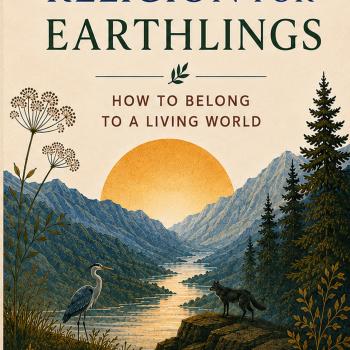
Liberal Religion for Earthlings: My First Book!
Reading America at 250: A Nation Wrestles With...


Andrew Holocek on the Power of Darkness
TRENDING AT PATHEOS More Voices

Liberal Religion for Earthlings: My First Book!
I'm thrilled to share that my first book, Liberal Religion for Earthlings:...

Reading America at 250: A Nation Wrestles With...
As part of my own reflection on the 250th anniversary of the...

President Trump Ban Animal Torture Videos on Facebook
Call for Stricter Regulations of Animal Abuse Content on Facebook Although President...

Draft Amendments to Address Ritual Abuse in New...
The proposed changes would make it illegal for individuals in domestic partnerships...

How Bans on LGBTQ+ Student Clubs Threaten Religious...
On June 20, 2025, the State of Texas passed Senate Bill 12....
The Truth About the Gen Z Revival
This past year, there has been a lot of media buzz surrounding...
view all More Voices blogs
Ad-Free & Subscriber Log-In Subscription Support
- About Us
- 2026 Calendar
- Videos
- Podcasts
- Library of World Religions
- Faith In Media Tracker
- Advertise With Us
- Write for Us
- Privacy Policy
- Terms of Service
- Do Not Sell My Data
- Contact Us
- Radiant Digital
- Manage Newsletter Subscriptions
- Unsubscribe From Notifications
- Sitemap
Copyright 2008-2026, Patheos, part of the Radiant Digital network of media brands. All rights reserved.
Subscription Support Ad-Free & Subscriber Log-In
Follow Patheos