
BuddhistCatholicContemplativeEvangelicalGeneral ChristianHinduJewishLatter-day SaintMuslimNew VisionsProgressive Christian
Beliefs
- Buddhist
- Catholic
- Contemplative
- Evangelical
- General Christian
- Hindu
- Jewish
- Latter-day Saint
- More Voices
- Muslim
- New Visions
- Pagan
- Progressive Christian
Topics
- Religion News
- Food and Religion
- Sports and Religion
- Religious Art
- Religious Music and Entertainment
- Religious Events
- History and Religion
- Style and Religion
- Politics and Religion
- Women in Religion
- Recreation Outdoors and Religion
- Business Finance and Religion
- Careers Workplace and Religion
- Education and Religion
- Family Parenting and Religion
- Health Fitness and Religion
- Home and Religion
- Relationships and Religion
- Technology and Religion
- Travel and Religion
Columnists
- Buddhist Columnists
- Business Finance and Religion Columnists
- Careers Workplace and Religion Columnists
- Catholic Columnists
- Contemplative Columnists
- Education and Religion Columnists
- Evangelists Columnists
- Family Parenting and Religion Columnists
- General Christian Columnists
- Health Fitness and Religion Columnists
- Hindu Columnists
- History and Religion Columnists
- Home and Religion Columnists
- Jewish Columnists
- More Voices Columnists
- Latter Day Columnists
- Muslim Columnists
- New Visions Columnists
- Nonreligious Columnists
- Pagan Columnists
- Politics and Religion Columnists
- Progressive Columnists
- Recreation Outdoors and Religion Columnists
- Relationships and Religion Columnists
- Religion News Columnists
- Religious Art Columnists
- Religious Events Columnists
- Religious Music and Entertainment Columnists
- Sports and Religion Columnists
- Style and Religion Columnists
- Technology and Religion Columnists
- Travel and Religion Columnists
- Women in Religion Columnists
Resource Library
- 2026 Calendar
- Library of World Religions
- The 100 Most Holy Places on Earth
- Patheos Answers
- Podcasts
- Videos
- Faith Leaders Database
- Anglican Episcopalian
- Bahai
- Baptist
- Buddhism
- Christianity
- Confucianism
- Eastern Orthodoxy
- Hinduism
- Holiness and Pentecostal
- ISKCON
- Islam
- Judaism
- Lutheran
- Methodist
- The Church of Jesus Christ of Latter-day Saints
- New Age
- Paganism
- Presbytarian and Reformed
- Protestantism
- Religion Behind the Scenes
- Roman Catholic
- Scientology
- Shia Islam
- Sikhism
- Sufism
- Sunni Islam
- Taoism
- Zen
- See all religions
Research Tools
 Ad-Free & Subscriber Log-In Subscription Support
Ad-Free & Subscriber Log-In Subscription Support
Follow Patheos 

- Trending:
- Forgiveness
- |
- Marriage
- |
- Consciousness
- |
- Death Penalty
- |
- Election
- |
- Halloween

- Home
- Pagan
- Respect the Ancestors Now!
Respect the Ancestors Now!
Last updated on: May 19, 2021 at 7:46 pm by Ian Chambers
Respect the Ancestors Now! 2021-05-19T19:46:20+00:00 Ian Chambers
Patheos Explore the world's faith through different perspectives on religion and spirituality! Patheos has the views of the prevalent religions and spiritualities of the world.

Photo by Artem Beliaikin on Unsplash
Within the milieu of neopaganism, and nature-based religious movements that lie at the heart of modern Wicca and Druidry, as well as the magical arts in a broader context, the ancestors holds high office. When we talk of ancestors, most frequently we are thinking purposefully and immediately of deceased familial groups, past family members and direct lineal predecessors who now occupy the space of spirit. Indeed, there is a persistent regard for such ancestral notions in the Western world, through Catholic prayer, as well as in dominant Eastern traditions such as Taoism and Shinto.
Veneration of the dead has occupied a central place in the the ceremonial and ritualised traditions of human thought and belief for millennia, perhaps since the dawn of consciousness itself. Indeed, it has been noted that intelligent animals, such as crows, possess an awareness of death and enact ritual and superstitious behaviour regarding the dead. It has been suggested that this is, perhaps, more to do with evaluating risk, which may be the origin of funerary behaviours in all species, but the remarkable intuition and awareness of death indicates that the bare root of the concept is not lost on our animal kin.
Whilst watching the fantastic documentary film Tawai, from adventurer and indigenous peoples advocate Bruce Parry, something an Anthropologist said struck a important chord with me. In a discussion of the egalitarian societies of the Penan people of Borneo, a hunter gatherer society whose way of life is under threat from logging companies and the political machinations which encroach irreversibly upon their land, talk of ancestral society comes up. The symbiotic relationship with the forest, which is structurally essential to the Penan’s identity and worldview, is an extension of their egalitarian perspective which does not include concepts of time and possession. Both of these notionally arise after the shift to an agricultural way of life which depends upon apprehending seasonal time and the hoarding of property, together with its subsequent protection and raiding in times of need. It is thought that the Penan, and some few fellows in Indonesia and parts of remote Africa, are among the last of these hunter gatherer societies with such a worldview.
In the discourse on ancestors, however, a couple of thoughts immediately spring to mind. The first is the animist sense of spirit that such people possess, relating to their worldview and the awareness of everything as coexisting in a relational sense to each other. As part of a broader panpsychism, such an animistic outlook perceives the rainforest, and its abundance of life, as a quintessentially living, breathing, vital part of the world of which the Penan themselves are just a part. In this respect, the entire rainforest is ancestral to such a peoples.
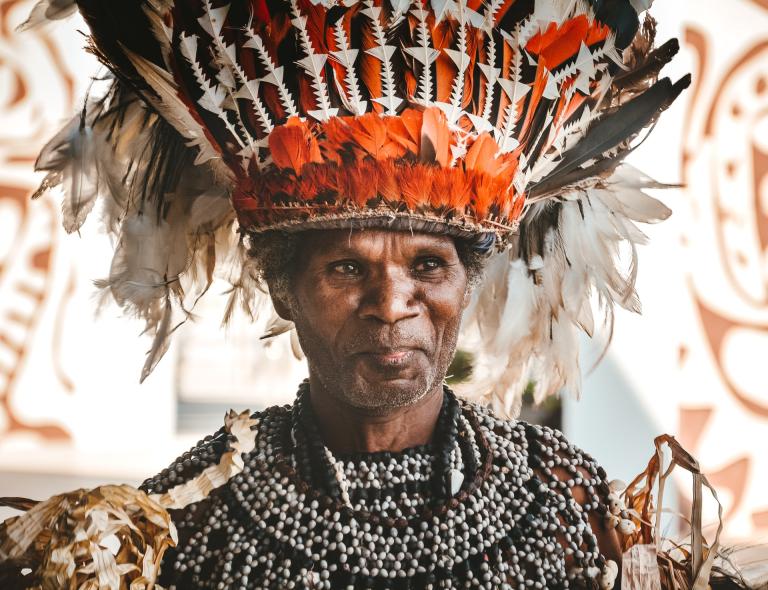
Photo by Adli Wahid on Unsplash
In another documentary film, Hadza – The First and Last, the semi-nomadic hunter gatherer Hadzabe people of Tanzania allow anthropologists into their lives to learn more about their remarkable, ancient society. Having remained largely unaffected by outside influence, the Hadza have survived in their homeland for an estimated 50,000 years or more. Like the Penan, their way of life is also under threat and the viral cancer of modern society, with its materialistic, economic and social attitude invading in the most egregious manner.
One of the extraordinary details of the Hadza cosmology is that they don’t appear, to early anthropological studies, to have a belief in the afterlife. On the contrary, theirs is a complex and rich cosmological model that is thriving and vibrant, with rigorous ritual and an awareness of the innate inequality that is inherent with material possessions as a source of dependence upon a sense of physicality. The truth of this latter is nowhere more evident than our own lives and we need only think for a moment about the value we place upon our own possessions, and how those make us feel inferior and superior within a broad social structure.
An article by Thea Skaanes, Notes on Hadza Cosmology – epeme, objects and rituals, discusses the virtue of spirits and ritualised objects at length. In this fascinating study, we learn that the Hadza acquire their spirit through the ritual of naming, the name itself being possessed of the spiritual quality and nature. Further, the relation between the living and the dead women of the tribe is expounded:
The a’untenakwete-gourd is ritually a non-human instance of the woman herself and the oil it contains is powerful and used only in rituals… During the monthly night-dance rituals, a dancer might dance in the name of a family member’s a’untenakwete-gourd as the potent evocation of the family member herself. Even after her death, the dancers might dance in the name of the gourd to evoke the dead woman’s spirit to the site… Dancing in a dead woman’s name without the mediating gourd will evict her spirit from a proximity to the living, and this is a course of action taken if a recently dead person’s spirit is occupying the minds and dreams of relatives.
Skaanes, Thea. (2015). Notes on Hadza cosmology. Hunter Gatherer Research. 1. 247-267. 10.3828/hgr.2015.13.
The relationship with the ancestors, then, occurs wherever we encounter the spirits, and those are not necessarily permanently resident within the carnal body of the person, but are more closely associated with name and ritualised objects.
In one of the creation stories that form a part of the oral tradition of the Hadza people, mankind descends from a baobab tree, while another has the ancestor of the Hadza being the baboon. This, again, indicates an animist worldview which incorporates the natural world upon which they are reliant. Indeed, the Hadza are so ancient and mutually subsisting within their environment that the Honeyguide bird has evolved alongside humans to lead them to honeybee colonies, scavenging the waste material from such a human raid.
Photo © Ian Chambers 2019
This leads me to my second realisation while watching the film Tawai, named for the Penan word that indicates their relationship to the forest, the assurance that their needs are catered for as a mother cares for her young. In a moment, I became aware that these people are the very ancestors to whom many of us might direct our prayer; the ancient, tribal, animistic, naturally existing humans who sit still at the cradle of civilising society.
These endangered indigenous peoples represent the worldview and way of living that occupied 95% of human existence, with as little as just 5% of our time being formed by civilisations since the dawn of agriculture. Where our most distant, ancient ancestors organised into cooperative, tribal groups in the Late Stone Age, some 50,000 years ago, the beginnings of human society occurred. Suddenly, it is shocking and alarming to realise that those very same ancestors are there still, in parts of Tanzania (Hadza), Congo (Mbendjele), and Borneo (Penan). The most hoary ancestors to whom we might think when we address our attention and awareness toward that romantic hunter gatherer society, existing in a spirit haunted world, alive with all interconnected oneness of symbiotic existence, are alive today, and we are destroying them. By we, of course, I mean our collective modern world which includes the mindless acquisition of goods, almost entirely unnecessarily, and all reliant upon manufacturing methods that are unethical and stripping the planet of necessary resources. Coupled with such processes are the political connivances that aspire to the accoutrements of power, the protection and hoarding thereof – all to the detriment of the indigenous populations of hunter gatherer peoples, who possess little material wealth, living in harmony with the environment which nurtures and sustains them.
I wonder, then, if doing more to help build awareness of the issues affecting indigenous peoples is not ancestral work most worth doing. If building a practice of ancestor work, of venerating the dead, does not include those ancestors who are represented in the living communities of indigenous people across the remote parts of the world then we are in grave danger of the most violent hypocrisy. I, for one, am not sure I can live in the knowledge that I upheld a romantic notion of ancestors and their worldview, practice and magical existence, while neglecting to do anything to help, and limiting the harm I cause to this very people today.
Can we include the Penan, Hadza, Mbendjele and other indigenous, tribal, hunter gatherers in our prayers? Even better, can we commit to reducing the harmful use of plastics and unethical commercialism that encourages gross abuses of the rights of the peoples and land? It is a big ask in our current worldview – so embedded are the structures that coalesce like an abusive codependent relationship, occupying every nook of our existence. But if we don’t work at it, consider our priorities and what we are prepared to change in order to work with living ancestors, they will be consigned to the spirit world forever, and may therefore be undesirous of working with us at all.
Here are nine ways to support the rights of indigenous peoples., from The Guardian. It’s a start. Also, watch Tawai and follow the work of Bruce Parry. Stay informed and be proactive.
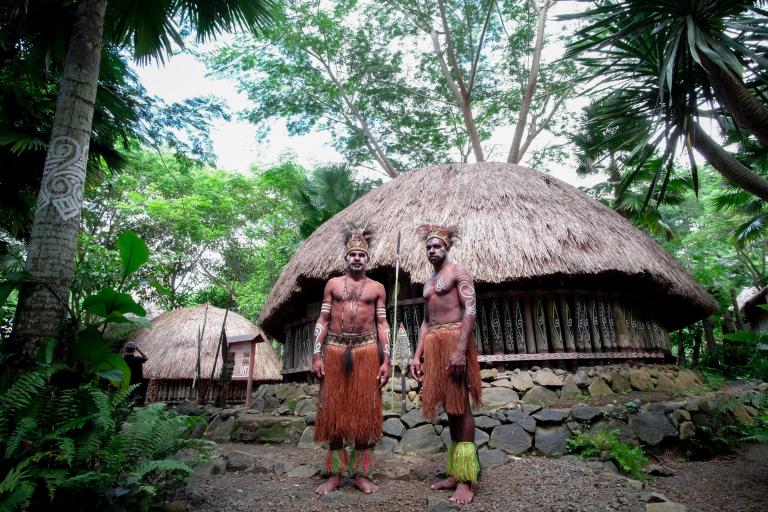
Photo by Surya Prakosa on Unsplash

About Ian Chambers
Ian Chambers is engaged in the pursuit of conscious awareness, the highest ideals and the attainment of unity with all of life, including an environment that remains essential to our continuance on this blue planet. You can read more about the author here.
Previous Post

April 19, 2021
Whistling the Winds of Beltane
Next Post

July 5, 2021 Antisemitism and Witchcraft in the Middle Ages
Browse Our Archives
Select a Category 1734 Ancestors Apophatic Sorcery Atramentous Press Beltane Betrayal big dipper Book Book Review Brigit Candlemas Ced Ced Tarot child of promise Christmas Climate Community Compass Conferences Conjuration culture Cultus Sabbati Dance Death Devil Dionysus Double Easter Environment Esotericism Events Experience Fairy Fate Folklore Greek Gods Greek Magical Papyri Green Man Grimoire history Initiation Interviews Jewish Mysticism Judas Kabbalah Legend Lilith Mandrake Books Llewellyn Lore Lucifer Magic Magic in History Series May Day Meditation Merkabah Monkey King Myth Necromancy New Books NEws north star road Oberon Obituary Occult Offerings Opposer Pagan Pax Deorum Pax Diaboli PGM Philosophy Poetry Politics Praxis Punk Witchcraft Ralph Harvey Reviews Richard Gordon Rita Morgan Ronald “Chalky” White Sabbatic Witchcraft Sabbats Sun Wukong Taoist the Regency The Witch Compass Three Hands Press Tradition Traditional Witchcraft Trickster God Tricksters Uncategorized via Negativa White Dragon Winds Witch lore Witchcraft Witchcraft Lore Witches' Sabbath wyrd Yule
Select a Month May 2025 March 2025 February 2025 January 2025 December 2024 July 2024 June 2024 April 2024 March 2024 February 2024 January 2024 December 2023 November 2023 October 2023 September 2023 August 2023 July 2023 December 2022 October 2022 September 2022 August 2022 May 2022 April 2022 March 2022 February 2022 December 2021 July 2021 May 2021 April 2021 February 2021 January 2021 December 2020 November 2020 September 2020 August 2020 July 2020 June 2020 May 2020 April 2020 March 2020 February 2020 January 2020 December 2019 November 2019 October 2019 September 2019 July 2019 June 2019 May 2019 April 2019 March 2019 December 2018 September 2018 August 2018 July 2018 June 2018 May 2018 April 2018 March 2018 February 2018 June 2017 October 2016 September 2016 July 2016 June 2016 April 2016
Follow Us!
TAKE THE
Religious Wisdom Quiz
Who provided bread and Goliath's sword to David at Nob?
Select your answer to see how you score.
Abner Jonathan Ahimelech the priest Abiathar
Related posts from By The Pale Moonlight

Shattered Illusions: Stories of Pre-Internet Days
Sorcerous Boundaries with the Witch Compass
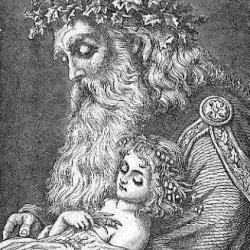
Father Time: Ring out, wild bells…

Midwinter Traditions - From Wild Hunt to Festive...
TRENDING AT PATHEOS Pagan

I was recently chatting with someone on Instagram. She asked me what...

While there are many people who share their results, the end of...

On July 23, I saw Christopher Nolan's The Odyssey which is Homer’s...

As I write this two big events have just finished up. One...

Restoring the Watershed of Divine Love
Perhaps cooperation is not something we manufacture through legislation, ideology, or moral...

Many UUs don’t pray because of bad experiences in a previous religion,...
view all Pagan blogs
Ad-Free & Subscriber Log-In Subscription Support
- About Us
- 2026 Calendar
- Videos
- Podcasts
- Library of World Religions
- Faith In Media Tracker
- Advertise With Us
- Write for Us
- Privacy Policy
- Terms of Service
- Do Not Sell My Data
- Contact Us
- Radiant Digital
- Manage Newsletter Subscriptions
- Unsubscribe From Notifications
- Sitemap
Copyright 2008-2026, Patheos. All rights reserved.
Subscription Support Ad-Free & Subscriber Log-In
Follow Patheos