
BuddhistCatholicContemplativeEvangelicalGeneral ChristianHinduJewishLatter-day SaintMuslimNew VisionsProgressive Christian
Beliefs
- Buddhist
- Catholic
- Contemplative
- Evangelical
- General Christian
- Hindu
- Jewish
- Latter-day Saint
- More Voices
- Muslim
- New Visions
- Pagan
- Progressive Christian
Topics
- Religion News
- Food and Religion
- Sports and Religion
- Religious Art
- Religious Music and Entertainment
- Religious Events
- History and Religion
- Style and Religion
- Politics and Religion
- Women in Religion
- Recreation Outdoors and Religion
- Business Finance and Religion
- Careers Workplace and Religion
- Education and Religion
- Family Parenting and Religion
- Health Fitness and Religion
- Home and Religion
- Relationships and Religion
- Technology and Religion
- Travel and Religion
Columnists
- Buddhist Columnists
- Business Finance and Religion Columnists
- Careers Workplace and Religion Columnists
- Catholic Columnists
- Contemplative Columnists
- Education and Religion Columnists
- Evangelists Columnists
- Family Parenting and Religion Columnists
- General Christian Columnists
- Health Fitness and Religion Columnists
- Hindu Columnists
- History and Religion Columnists
- Home and Religion Columnists
- Jewish Columnists
- More Voices Columnists
- Latter Day Columnists
- Muslim Columnists
- New Visions Columnists
- Nonreligious Columnists
- Pagan Columnists
- Politics and Religion Columnists
- Progressive Columnists
- Recreation Outdoors and Religion Columnists
- Relationships and Religion Columnists
- Religion News Columnists
- Religious Art Columnists
- Religious Events Columnists
- Religious Music and Entertainment Columnists
- Sports and Religion Columnists
- Style and Religion Columnists
- Technology and Religion Columnists
- Travel and Religion Columnists
- Women in Religion Columnists
Resource Library
- 2026 Calendar
- Library of World Religions
- The 100 Most Holy Places on Earth
- Patheos Answers
- Podcasts
- Videos
- Faith Leaders Database
- Anglican Episcopalian
- Bahai
- Baptist
- Buddhism
- Christianity
- Confucianism
- Eastern Orthodoxy
- Hinduism
- Holiness and Pentecostal
- ISKCON
- Islam
- Judaism
- Lutheran
- Methodist
- The Church of Jesus Christ of Latter-day Saints
- New Age
- Paganism
- Presbytarian and Reformed
- Protestantism
- Religion Behind the Scenes
- Roman Catholic
- Scientology
- Shia Islam
- Sikhism
- Sufism
- Sunni Islam
- Taoism
- Zen
- See all religions
Research Tools
 Ad-Free & Subscriber Log-In Subscription Support
Ad-Free & Subscriber Log-In Subscription Support
Follow Patheos 

- Trending:
- Forgiveness
- |
- Marriage
- |
- Consciousness
- |
- Death Penalty
- |
- Election
- |
- Halloween

- Home
- Pagan
- Punk Witchcraft: A Manifesto?
Punk Witchcraft: A Manifesto?
Last updated on: December 22, 2020 at 5:55 pm by Ian Chambers
Punk Witchcraft: A Manifesto? 2020-12-22T17:55:04+00:00 Ian Chambers
Patheos Explore the world's faith through different perspectives on religion and spirituality! Patheos has the views of the prevalent religions and spiritualities of the world.
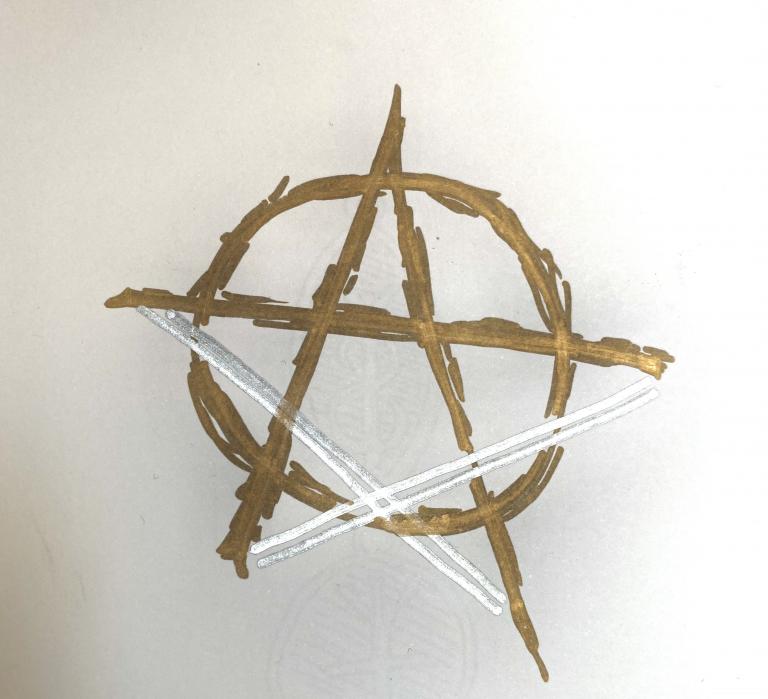
Witchcraft has been a subversive facet of culture since time immemorial. Incorporating inversion, reversion and subversion, witchcraft historically is experienced as the folkish expression of rebellion and liberty against established political and religious elitism. From the inquisitorial and secular witch trials, we learn of the diabolic nature of the witch pact, the inversion of religious Mass and Sacrament, the reversion to atavistic impulse and the subverting of a perceived societal order which maintains the monolithic institutes of the establishment.
Witchcraft, in its oldest and most consistent representation in the psyche of a peoples is reified through the body of the witch who manifests the challenge to order, the antithesis of (church) rule (of whatever religious expression). With a proclivity for sexual liberty at such gatherings, consorting with non-church sanctioned spirits or demons, and frequently working to harm the monarch and government, it’s little wonder that people have been encouraged to fear the witch. She represents the opposite of the iron grip of law and order, which exists to protect the wealth and privilege of the few at the cost of the many.
For many an individual in times past, as well as (shamefully) in some areas today, the common folk experience a life with death a constant companion, poverty, lack of education and opportunity, discrimination and hostile economics conspiring to keep the downtrodden at the mercy of the few exceptionally fortunate individuals. Historically, keeping the establishment rule and the lesser humans in check, institutes are enacted which are founded upon the ideas of sin and castigation.
We live today with the remnant of the Protestant Ethic, emphasising hard work, sacrifice, austerity and thrift as the only principles of value and worth. And lo, we believe that one must work to the bone and relinquish aspirations and ideas of attaining the trinkets of wealth, sacrifice our time and our lives at an unforgiving grindstone in order to attain the minimum and a future of indenture through debt and increasing living costs and dwindling wages. This, as our Protestant forebears ingrained in our societal psyche, is the only thing of worth. And, of course, this system is perpetuated by the wealthy who benefit from the labour of the general populace and reap the most reward from such activity, whilst continuing to insist that we must tighten our belts and work more – of course, this doesn’t apply to them. And yet the wealthy and work-shy are deemed deserving of the wealth lavished upon them by the fortune of birth and opportunity.
Against the backdrop of the Protestant Ethic of valuing only hard work and sacrifice, it is little wonder that the common folk, forced into ever deeper conditions of poverty (begging was recorded as the occupation of the Pendle Witches and an accepted part of the medieval social structure), would resort to the world of witchcraft to alleviate the horrors of their lives and to achieve some form of retribution for the imbalance in an exclusively top favouring soci0-economic structure. Yes, witchcraft was always fairly punk!

We learn from academics and students of historical magics and witchery that the accessibility of materia magica, and the literature of practical sorcery, were meet to the cunning man. From such sources as they might attain, it was common to cobble a practical system together. It is not uncommon to find cunning folk recording a rudimentary understanding of, and a folk custom pertaining to, for example, astrology – as opposed to the clerical and more sophisticated work of educated magicians of the time who were predominantly with sufficient private income to practice at their leisure. By contrast to these latter and respectable, learned magicians, necessity is the force which drives folk sorcerers who are pursuing the magical arts. Of course, access to any reliable literature, and the ability to comprehend and apply the same, are significant to those whose lives are dedicated to surviving an hostile world.
This anti-establishment mentality, coupled with the need to apply inventive and creative use of magical techniques and information, are entirely in line with the subculture of Punk. The principle tenets of the Punk movement are individual liberty, anti-establishment, direct action and a creative, Do-It-Yourself ethic [1].
What happens if you curse the moon?
Learning the art magical has always been an experiential pursuit and requiring of the student’s preparedness to experiment. This is almost a moot point these days, but experimentation has motivated more innovation than repeating by rote. Recently, a shit-storm was caused among the old-guard of occultism, what could be called the ‘establishment’ of occult culture. The community was affronted by the gall of young witches, the so-called TikTik Witches, who claimed to have tried to lay a hex upon the moon.
That lunar sphere, long attached to witches and witchery, is seen as sacrosanct among the growing number of religious Wiccans and traditional witches, not to mention the occult community at large. Indeed, this very blog is named for the lunar energy of change, wild abandon and Sabbatic currents. It seems presumptive, insulting and horrifying that these WitchTok ‘baby witches’ should imagine performing such a thing. The right and wrong of such a proposition are, of course, subjective and we are forced to ask, who is the arbiter in such? Of course, it might be equally preposterous that the establishment witchcraft community responded superciliously in appointing itself the overseer of all things magical and occult.
In the milieu of the occult community, ‘experience’, we are told, trumps all else. Frequently, we see recourse to the actual doing of magic and the resulting personal gnosis as being most signifiant to the individual than what the books say we should do and/or experience as a result. It can be summarised in the phrase: Mileage may vary. What we bring to the circle is as relevant to what it is we take away from it.
In light of this, who is to judge what a TikTok Witch experiences in cursing the moon, and on what basis is a judgement to be made. The truth is, the practical pursuit of sorcery, the doing of magic, and the recording and repeating of experimental magic is how we build our magical world and a working knowledge thereof. Those heretical priests (because it is they who often performed and recorded the magical traditions that have been handed down through the Middle Ages) who summoned demons and invoked the spirit of Solomon to illuminate their knowledge in such work, for personal gain or retribution, were no less outrageous in their time. They were the ones ‘cursing the moon’ in their own time and way! They were punk!
Much of the occult subculture has, since its emerging popularity in the late half of the Twentieth-Century, become rather conservative in respect to itself. That is, there are now perceived ideas of the definition of magic (variations of Crowley’s who, ironically, prizes experimentation rather highly), its rules and moral code of conduct. This all renders it more palatable to a modern society, diminishes its diabolic origins and uses, underplays the negative connotations and, ultimately, conforms to a modern day religiosity. Indeed, you could fit a cigarette paper between a modern magic spell and a Christian prayer, while a sabbat is often more frequently a devotional act of worship centred around a dualist pantheism envisioned frequently through ‘male’ and ‘female’ polarity; that is, a god and goddess.

These ‘baby witches’ of the TikTok community are admonished for their efforts and commanded to work only for healing and protection and to predominantly focus on study. The irony, of course, is that these witches are practically working magic technology and, in so doing, achieving precious experiential knowledge, or gnosis. What happens when you curse the moon? Traditional occultists tut, frown and moan without empirical command of the situation, while you take away the prize of gnosis. All of this situation, of course, is to ignore the fact that, in some cultures past, the moon was a potentially negative influencing celestial body while other peoples would threaten their deities in order to extract results, ritually abusing and assaulting icons of their gods, both of which render the young witches simultaneously the most traditional and radical of our time.
In the end, magic will continue and grow and we must allow the young to expand and evolve it and that is only achievable through experimentation and experience. Of course, there is the wisdom of elders which brings essential grounding and foundation. However, can you recall which parts of your teacher’s or elder’s theory or practice is now outmoded and moribund? We have evolved magic since the 1950s and it is not standing still with us.
It wasn’t long ago when the most frequently heard moan was levelled at ‘armchair’ occultists, those who diligently and studiously pour over their books and resources without actually ever wielding a wand, dagger or circle, whilst the aesthetic of the witch became a fashion style without substance. Now, young people are actually forming communities and experimenting with a modern magic and witchcraft and it is a cold mirror to the face of older occultists, and the reflection reveals that we have become the establishment. Surely we, and the occult, is better served working together?
Magic is in a transition period, it is sloughing off the skin between the rebirth of the last century and next phase, and it is going to be fascinating to discover how it will look tomorrow. That being said, witchcraft has always been punk as fuck! If modern traditional forms of witchcraft have become so conservative that cursing the moon is inversion, reversion and subversion… then that could be where the spirit of witchcraft might reside today!
Nota Bene:
This article may well be subversive in its own way and I’m sure it has potential for fuelling remark – both little thought out and well considered. For that, I can make no apology. It is evident that cursing the moon may be really just a dumb idea – only those who did would know and I haven’t, so I can’t judge the results. This isn’t intended to dwell upon that issue or event, but use it by way of analogy that witchcraft, by its very nature, is challenging to the norm, to our conservative natures and is meant to provoke the creative within us. Imagine how communities felt when they were told that witches trampled the cross and inverted the Mass, spat on the Eucharist and recited the Lord’s Prayer backwards. Consider the inherent religious risk, the outrage, the appalling affront to all that is holy and right? Now consider your first reaction to hearing of somebody cursing the moon – is it not the same as those who were told of the Black Mass? The point is, witchery is meant to be challenging. This is how we evolve and progress and move forward. As one once put it: we only improve by playing better opponents.
[1] https://en.wikipedia.org/wiki/Punk_subculture#Ideologies
About Ian Chambers
Ian Chambers is a folk sorcerer who belongs to several traditional Witchcraft coteries. He practices and studies witchcraft in his home in Surrey. You can read more about the author here.
Previous Post

December 5, 2020
The Black Fast - The Witch Trial of Mabel Brigge and Fasting as Magic
Next Post

January 18, 2021 The Saining of Brigit - A Ritual For Candlemas (Imbolc)
Browse Our Archives
Select a Category 1734 Ancestors Apophatic Sorcery Atramentous Press Beltane Betrayal big dipper Book Book Review Brigit Candlemas Ced Ced Tarot child of promise Christmas Climate Community Compass Conferences Conjuration culture Cultus Sabbati Dance Death Devil Dionysus Double Easter Environment Esotericism Events Experience Fairy Fate Folklore Greek Gods Greek Magical Papyri Green Man Grimoire history Initiation Interviews Jewish Mysticism Judas Kabbalah Legend Lilith Mandrake Books Llewellyn Lore Lucifer Magic Magic in History Series May Day Meditation Merkabah Monkey King Myth Necromancy New Books NEws north star road Oberon Obituary Occult Offerings Opposer Pagan Pax Deorum Pax Diaboli PGM Philosophy Poetry Politics Praxis Punk Witchcraft Ralph Harvey Reviews Richard Gordon Rita Morgan Ronald “Chalky” White Sabbatic Witchcraft Sabbats Sun Wukong Taoist the Regency The Witch Compass Three Hands Press Tradition Traditional Witchcraft Trickster God Tricksters Uncategorized via Negativa White Dragon Winds Witch lore Witchcraft Witchcraft Lore Witches' Sabbath wyrd Yule
Select a Month May 2025 March 2025 February 2025 January 2025 December 2024 July 2024 June 2024 April 2024 March 2024 February 2024 January 2024 December 2023 November 2023 October 2023 September 2023 August 2023 July 2023 December 2022 October 2022 September 2022 August 2022 May 2022 April 2022 March 2022 February 2022 December 2021 July 2021 May 2021 April 2021 February 2021 January 2021 December 2020 November 2020 September 2020 August 2020 July 2020 June 2020 May 2020 April 2020 March 2020 February 2020 January 2020 December 2019 November 2019 October 2019 September 2019 July 2019 June 2019 May 2019 April 2019 March 2019 December 2018 September 2018 August 2018 July 2018 June 2018 May 2018 April 2018 March 2018 February 2018 June 2017 October 2016 September 2016 July 2016 June 2016 April 2016
Follow Us!
TAKE THE
Religious Wisdom Quiz
Who said, "The just shall live by faith"?
Select your answer to see how you score.
Jesus Paul John Peter
Related posts from By The Pale Moonlight

Shattered Illusions: Stories of Pre-Internet Days

Maundy Thursday: Night of the Witches
Traditional Witchcraft and Betrayal...

Witchcraft in Reality: A Rebuttal
TRENDING AT PATHEOS Pagan

I was recently chatting with someone on Instagram. She asked me what...

While there are many people who share their results, the end of...

On July 23, I saw Christopher Nolan's The Odyssey which is Homer’s...

As I write this two big events have just finished up. One...

Restoring the Watershed of Divine Love
Perhaps cooperation is not something we manufacture through legislation, ideology, or moral...

Many UUs don’t pray because of bad experiences in a previous religion,...
view all Pagan blogs
Ad-Free & Subscriber Log-In Subscription Support
- About Us
- 2026 Calendar
- Videos
- Podcasts
- Library of World Religions
- Faith In Media Tracker
- Advertise With Us
- Write for Us
- Privacy Policy
- Terms of Service
- Do Not Sell My Data
- Contact Us
- Radiant Digital
- Manage Newsletter Subscriptions
- Unsubscribe From Notifications
- Sitemap
Copyright 2008-2026, Patheos. All rights reserved.
Subscription Support Ad-Free & Subscriber Log-In
Follow Patheos