
BuddhistCatholicContemplativeEvangelicalGeneral ChristianHinduJewishLatter-day SaintMuslimNew VisionsProgressive Christian
Beliefs
- Buddhist
- Catholic
- Contemplative
- Evangelical
- General Christian
- Hindu
- Jewish
- Latter-day Saint
- More Voices
- Muslim
- New Visions
- Pagan
- Progressive Christian
Topics
- Religion News
- Food and Religion
- Sports and Religion
- Religious Art
- Religious Music and Entertainment
- Religious Events
- History and Religion
- Style and Religion
- Politics and Religion
- Women in Religion
- Recreation Outdoors and Religion
- Business Finance and Religion
- Careers Workplace and Religion
- Education and Religion
- Family Parenting and Religion
- Health Fitness and Religion
- Home and Religion
- Relationships and Religion
- Technology and Religion
- Travel and Religion
Columnists
- Buddhist Columnists
- Business Finance and Religion Columnists
- Careers Workplace and Religion Columnists
- Catholic Columnists
- Contemplative Columnists
- Education and Religion Columnists
- Evangelists Columnists
- Family Parenting and Religion Columnists
- General Christian Columnists
- Health Fitness and Religion Columnists
- Hindu Columnists
- History and Religion Columnists
- Home and Religion Columnists
- Jewish Columnists
- More Voices Columnists
- Latter Day Columnists
- Muslim Columnists
- New Visions Columnists
- Nonreligious Columnists
- Pagan Columnists
- Politics and Religion Columnists
- Progressive Columnists
- Recreation Outdoors and Religion Columnists
- Relationships and Religion Columnists
- Religion News Columnists
- Religious Art Columnists
- Religious Events Columnists
- Religious Music and Entertainment Columnists
- Sports and Religion Columnists
- Style and Religion Columnists
- Technology and Religion Columnists
- Travel and Religion Columnists
- Women in Religion Columnists
Resource Library
- 2026 Calendar
- Library of World Religions
- The 100 Most Holy Places on Earth
- Patheos Answers
- Podcasts
- Videos
- Faith Leaders Database
- Anglican Episcopalian
- Bahai
- Baptist
- Buddhism
- Christianity
- Confucianism
- Eastern Orthodoxy
- Hinduism
- Holiness and Pentecostal
- ISKCON
- Islam
- Judaism
- Lutheran
- Methodist
- The Church of Jesus Christ of Latter-day Saints
- New Age
- Paganism
- Presbytarian and Reformed
- Protestantism
- Religion Behind the Scenes
- Roman Catholic
- Scientology
- Shia Islam
- Sikhism
- Sufism
- Sunni Islam
- Taoism
- Zen
- See all religions
Research Tools
 Ad-Free & Subscriber Log-In Subscription Support
Ad-Free & Subscriber Log-In Subscription Support
Follow Patheos 

- Trending:
- Forgiveness
- |
- Marriage
- |
- Consciousness
- |
- Death Penalty
- |
- Election
- |
- Halloween

- Home
- Pagan
- Warwickshire Witchcraft – Long Compton Coven and Murder
Warwickshire Witchcraft – Long Compton Coven and Murder
Last updated on: January 30, 2024 at 12:26 pm by Ian Chambers
Warwickshire Witchcraft – Long Compton Coven and Murder 2024-01-30T12:26:49+00:00 Ian Chambers
Patheos Explore the world's faith through different perspectives on religion and spirituality! Patheos has the views of the prevalent religions and spiritualities of the world.

From the birthplace of the world’s most famous modern magician, Aleister Crowley, Golden Dawn founder William Wynn Westcott, as well as playing home to the coven of Bob Clay-Egerton in the early-late Twentieth-Century, Warwickshire has been a host to stories of magic and witchcraft for many years. With the mysterious death of Charles Walton on Valentine’s Day 1945 at the ancient and wind-swept Iron Age camp of Meon Hill, Scotland Yard’s premier detective descended, as did the media. In the drama that circulated around the murder, modern witchcraft expertise was sought to eliminate the occult ritual connection and none other than Margaret Murray (1863 – 1963), pioneer of the now debunked theory of ancient fertility religions, waded in with her opinion of the tragic slaughter of a poor, elderly farm worker. Indeed, even Gerald Gardner (1884 – 1964) was drawn to remark upon the case in his book The Meaning of Witchcraft (1959), and the late Mike Howard (1948 – 2015), former editor of The Cauldron and authority on Traditional Witchcraft, was drawn to the incident. What drew so much attention was the supposed similarity to an earlier murder in the nearby village of Long Compton, whereby a pitchfork was used and quickly became identified as a ritual object for the slaying of witches. Unfortunately, the theory utterly sidesteps the likelihood of farm labourers to be in possession of such implements in the course of their everyday work, making the relevance of the murder weapon less mysterious and more mundane. This earlier murder created a good deal of hype at the time and even garnered remark in The Times in the heart of London, ridiculing parochial superstition and magical inclinations. Achieving a level of celebrity, the murderer would later embellish his story as time pushed him ever farther from the crime and his popularity increased, with occasional sensation seekers visiting him in his incarceration. It was his famous lines that would cement Long Compton in the history of witchcraft in the 20th Century when he remarked to some that there were sufficient witches to be found in Long Compton that they could push a cart up nearby Meon Hill. Indeed, by the time of Robert Cochrane’s letters in the 1960s, the position of Long Compton as the premier location for the oldest and largest of the witch covens in Britain was established enough to be remarked upon in passing.
Being a native of Warwickshire, and with a deep interest in local history, I studied the case of Anne Tennant with great interest. The following article was published in White Dragon No. 59, Imbolc 2009, and is the summation of my findings. Unfortunately for those who would further the more sensational history, the truth is rather more mundane and it is with confidence that I declare that the person of Anne Tennant, and most likely Charles Walton, was in no way involved in witchcraft. In the former case, mental illness and superstition are the factors involved in the tragic death of an elderly woman, while the latter was most probably motivated by theft or local grudge. To learn more about the details of this conclusion, I present here the faithful reproduction of the article as it appeared in 2009:
“There are fifteen more of them in the village that I will serve the same. I will kill them all.”
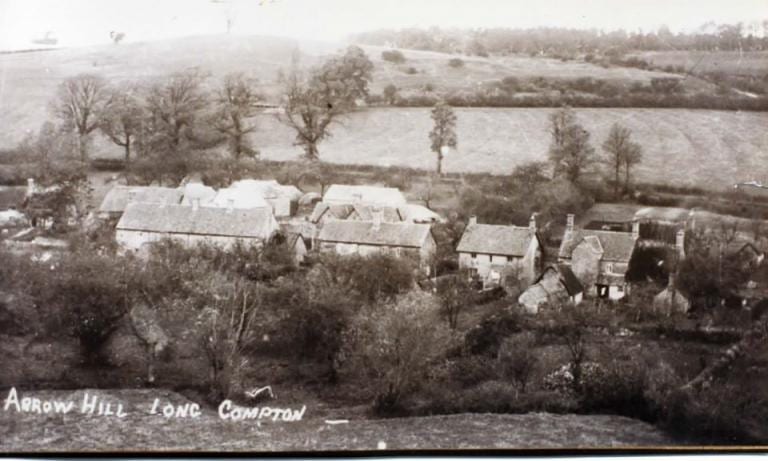
Warwickshire witchcraft can rarely be mentioned these days without reference to the village of Long Compton. Many are the rumours of witches said to have one inhabited this quiet and rural area towards the Cotswolds. Among the most frequent names mentioned is that of farm labourer, Charles Walton, famously murdered on Valentine’s Day 1945. However, here we will look at another murder victim that was recalled by inspectors investigating the Walton case as evidence of bewitching as a motive for gruesome homicide in the local villages around Meon Hill. Using the inquest report and an article from the Stratford Advertiser reporting upon the murder, the facts of the case of poor Ann Tennant show how much water the bewitching charge, discredited as the ravings of a madman, actually holds. Here we may discover the origin and source of many of the stories associating this part of Warwickshire with witchcraft.
On Wednesday 15th September 1875, a farm labourer returning home from a day’s work viciously attacked an elderly lady. The attack left Ann Tennant bloody and dying, while the assailant was arrested for her murder. James Hayward showed no remorse for attacking Ann Tennant, insisting that she was the leader of a coven of fifteen other witches in the area, all of whom he could name and would deal the same treatment if he would be allowed. Moreover, he expressed his lack of concern that she could die from her wounds.
James Hayward was not alone in his belief in bewitchment at the time, although he did display an unusual conviction in his behaviour towards what could be regarded as folk superstition. His fervent beliefs were frequently remarked upon in statements at the Coroner’s Inquest and such was Hayward’s conviction that bewitchment was to blame for his misfortune that he had previously sought out that folk figure who is renowned for opposing witchcraft: the Cunning Man.
The local Cunning Man and Water Doctor, known enigmatically as Manning*, apparently gave Hayward a method for identifying bewitchment by inspecting his urine. Once the cause was apparent, it has been speculated that the Cunning Man informed Hayward of the best way to rid himself of the problem. More accurately, the method of getting the better of the witch, and removing their power, is to draw blood on them. The story goes that Manning told Hayward to “turn upside down a bottle or phial filled with his urine. If bubbles came to the top it would mean that he was, indeed, under a spell”[1].
Some stories claim that Hayward provides a source for the later murder of Charles Walton in that the prescribed method of killing a witch was to pin them to the ground with a pitchfork and slash the throat, or else carve a cross in the chest. Indeed, Hayward is quoted as having said this in some later sources. The apparent culprit linking the Tennant case with the murder of Charles Walton is a 1906 book, Warwickshire by Clive Holland. Here we find reference to Hayward’s ‘traditional’ method of killing a witch, which demonstrates no historical precedence that could lead us to believe it anything other than a fabrication. This book was, according to the story, shown to Fabian of the Yard (Scotland Yard’s detective in the Walton case) whilst investigating the murder of Charles Walton and the link to witchcraft and ritualised murder was sealed in time and legend. Unfortunately, the perpetuation of liberties with the facts concerning Ann Tennant fails to acknowledge that she was not, in fact, murdered in the prescribed method but died after receiving multiple puncture wounds to her legs from a frenzied attack, seemingly intended to draw blood but not kill, per se.
… Hayward wanted to show me some witches that were in the jug of water… He said it was only those that had witches about them that could see them.

The problem with anything ascribed to Hayward is that the facts have been adapted to fit a story of Warwickshire Witchcraft. Most believe Hayward died refusing food and drink in Warwick gaol when, in reality, he was declared a ‘madman’ and spent the remainder of his years in Broadmoor Criminal Lunatic Asylum where he apparently died at the age of 59. One report tells us that there are enough witches in Long Compton to pull a cart up Meon Hill. Sadly, this quote is derived from a man convinced of his own bewitchment and ill-fortune that he was prepared to commit murder in a fit of rage and face being labelled insane in order to break a spell. Even while being held pending the inquiry, Hayward was trying to prove his bewitchment using the water and urine method shown him by Manning. The question remains, though, what drove Hayward to such a rigid and harmful belief.
The folklore of Warwickshire makes a number of enigmatic references to Long Compton witchery, including the story of a young man marking a circle and reciting the Lord’s Prayer backwards (see Mastering Witchcraft by Paul Huson for a contemporary rendition) to summon the Devil [2]. Just a decade before the murder of Ann Tennant, there was another victim attacked for bewitchment in nearby Stratford upon Avon, toward the south of the county. John Davies believed that the only sure way to rid himself of bewitchment was to draw the blood of the witch and was charged with assaulting Jane Ward after causing a gash in her cheek [3]. So, the killer of Anne Tennant was not an isolated account of such a belief in the area. Charles Godfrey Leland (1824 – 1903) in his Etruscan Roman Remains cites a similar belief among Venetians, that a witch loses their power if wounded and their blood spilt.
On the fateful day, 1875, James Hayward had been working with others in a harvest field and was returning home at around eight o’clock in the evening. Sadly, Ann Tennant was also on the turnpike road after fetching a loaf of bread and, upon seeing the elderly lady, Hayward struck Tennant several times with a two-pronged fork and inflicting fatal wounds upon the 79 year-old. When the police constable arrived and arrested Hayward at the scene, the inquest reports that the assailant remarked: “There are fifteen more of them in the village that I will serve the same. I will kill them all.” [4]
Hayward blamed his poor work in the harvest field that day on Ann Tennant, who he claimed had possessed him and, at the sight of her, he stabbed her in the legs with his fork before witnesses restrained him. The comparison with the murder of Charles Walton, and the idea of a ritual method for disposing of a witch, is here diminished by the testimonies of the many witnesses at the Coroner’s Inquest, held at the Red Lion Inn the following Friday.
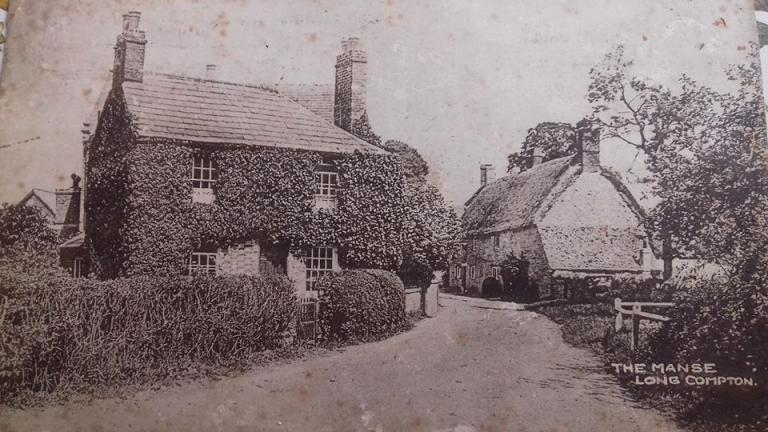
There is no mention of a bill-hook (a hedge laying tool) or the slashing of Tennant as Hayward was concerned with nothing other than drawing blood upon the old woman. It appears that Hayward lost control of his wits and was thrown into a violent rage after the first blow landed. One is inclined to believe that it was not the original intent, however fleeting that may have been, to murder poor Tennant. There is irrefutable evidence to the affect that he had declared no regret should the old lady die during his arrest, even suggesting that there were more women he might kill if opportunity afforded him the chance. However, these seem to be the ravings of a man in the grip of a fury, his wits having left him entirely. It is clear from later remarks to the Police Superintendent that he hadn’t meant to “kill her outright”[5], but rather he was acting spontaneously.
Hayward’s obsession with witchcraft is revealed in the inquest through several of his comments regarding witches. James Thopson, Police Superintendent, remarked that Hayward “…wanted to show me some witches that were in the jug of water… He said it was only those that had witches about them that could see them“[6]. The jury at the Coroner’s Inquest recored a verdict of “wilful murder” and the killer was to stand trial at Warwick Assizes. The witness statements confirmed that Hayward was excited and frenzied during the attack, while the victim’s husband and daughter both confirmed a long acquaintance of some 30 years with the murderer, reflecting upon his persistent delusions about witchcraft.
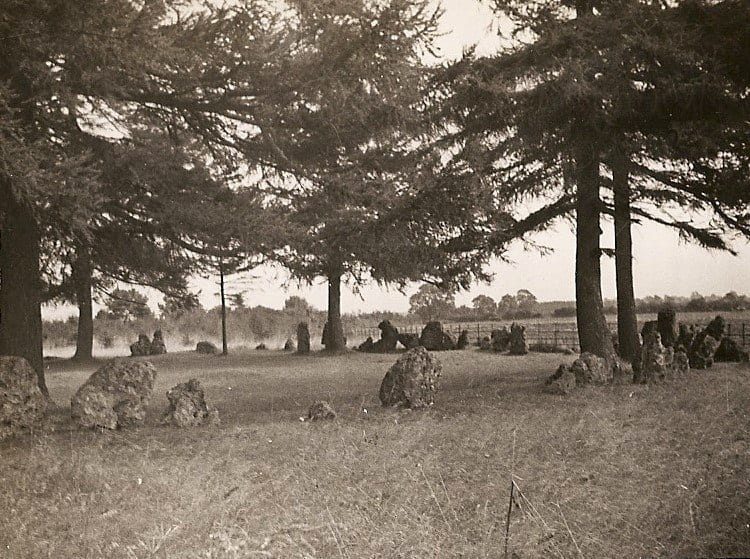
There seems little resemblance between this tragic homicide and the murder of Charles Walton on Meon Hill some 70 years later. Furthermore, some of the more often repeated rumours concerning the sixteen witches of Long Compton originated in statements made by Hayward, who was subsequently committed to a criminal asylum. Since the murder of Charles Walton in 1945, it has been accepted to associate Meon Hill, the close by ancient megalith of the Rollright Stones and the village of Long Compton together in a local diabolic pact where witches consort and bring about bewitchments, ritual murder being the only means of escape for the unwitting victims. The increased interest in witchcraft in the latter half of the last century brought a great many occultists to the area and legend was taken as evidence of a long-standing tradition of witchcraft connecting ancient practices with modern pagans. The occurrence of a couple of attacks against individuals accused of bewitching in the 19th Century is less a testament of surviving practices as it is of lingering folk belief. That one of those assaults resulted in the death of poor Ann Tennant enabled the story to reach a wider audience in early sensational press and has appealed to lazy research into historic witchcraft.
Without question, there is little similarity between the case of Ann Tennant and that of Charles Walton. The coincidental item of fact that occurs in both incidences is the use of the two-pronged pitchfork as a weapon. This is itself does not prove witchcraft or ritual murder in either case as the pitchfork remains a common implement of labour in rural communities. Given that both James Hayward and Charles Walton were farm labourers in the act of working, the pitchfork would be conspicuous only by its absence.
The case of Ann Tennant provides insufficient evidence to enable a satisfactory argument for her being involved in witchcraft, least of all the leader of a coven of fifteen based upon items found to be floating in her murderer’s urine. Given the details available at the inquest, it is apparent that the accusations do not merit serious consideration and receive no corroboration from the community, neighbours and families, as one might expect. In light of the post attack material, Ann Tennant appears to be nothing more than a classic case of wrong place, wrong time. In addition, this author has found no reference to Ann Tennant being associated with bewitching prior to her tragic death. Several websites and rumours abound with statements concerning her use of toads in nefarious magic, and diverse craft practices. None of these claims can be verified and it is safe to say that, like many who suffered at the hands of hysterical individuals, Ann Tennant, the witch of Long Compton, had no such association.
In conclusion, we must deduce that Ann Tennant was the victim of an unbalanced mind struggling with misfortune and hardship and prone to superstition – aside from the framing and the content, some things haven’t changed and ‘fake news’, misinformation and conspiracy theories abound today to replace the fears and scapegoats of yesteryear. Speculation over the years, together with the speculation of twentieth Century occultists, anthropologists and folklorists has fuelled and exaggerated details, creating a modern legend. James Hayward was known to speak frequently of witches preventing him from his labours, a notion identified by his neighbours and colleagues as a delusion. Belief in witches in and around Long Compton was prevalent in the last century and we may not say with certainty that there ever were witches operating out of the area. Much more certain is that modern witches are most assuredly evident today.
With thanks to Ron and Diane Jeavons for sharing the Coroner’s Inquest and Advertiser articles.
* Manning belonged to a family of cunning men, his father and brother both being practitioners — see the entry on Manning in Michael Slater’s wonderful The Old Woman and the Conjurers, Llewellyn, 2020
- Folklore of Warwickshire, Roy Palmer, Tempus Revised Ed. 2004
- ibid.
- ibid.
- Inquest testimony of John Simpson, Police Constable, given at the Red Lion Inn, Long Compton, 17th September 1875.
- Inquest testimony of James Thopson, Police Superintendent given at Red Lion Inn, Long Compton, 17th September 1875.
- ibid.
About Ian Chambers
Ian Chambers is a folk sorcerer and witch, practicing the craft of the Cunning Man of old, trying to do the best he can in a crazy, mad and beautiful world. You can read more about the author here.
Previous Post
July 19, 2020
Review: The Devil's Noctuary - Being The First Song of Qayin
Next Post
September 5, 2020 Castles in Traditional British Witchcraft Lore
Browse Our Archives
Select a Category 1734 Ancestors Apophatic Sorcery Atramentous Press Beltane Betrayal big dipper Book Book Review Brigit Candlemas Ced Ced Tarot child of promise Christmas Climate Community Compass Conferences Conjuration culture Cultus Sabbati Dance Death Devil Dionysus Double Easter Environment Esotericism Events Experience Fairy Fate Folklore Greek Gods Greek Magical Papyri Green Man Grimoire history Initiation Interviews Jewish Mysticism Judas Kabbalah Legend Lilith Mandrake Books Llewellyn Lore Lucifer Magic Magic in History Series May Day Meditation Merkabah Monkey King Myth Necromancy New Books NEws north star road Oberon Obituary Occult Offerings Opposer Pagan Pax Deorum Pax Diaboli PGM Philosophy Poetry Politics Praxis Punk Witchcraft Ralph Harvey Reviews Richard Gordon Rita Morgan Ronald “Chalky” White Sabbatic Witchcraft Sabbats Sun Wukong Taoist the Regency The Witch Compass Three Hands Press Tradition Traditional Witchcraft Trickster God Tricksters Uncategorized via Negativa White Dragon Winds Witch lore Witchcraft Witchcraft Lore Witches' Sabbath wyrd Yule
Select a Month May 2025 March 2025 February 2025 January 2025 December 2024 July 2024 June 2024 April 2024 March 2024 February 2024 January 2024 December 2023 November 2023 October 2023 September 2023 August 2023 July 2023 December 2022 October 2022 September 2022 August 2022 May 2022 April 2022 March 2022 February 2022 December 2021 July 2021 May 2021 April 2021 February 2021 January 2021 December 2020 November 2020 September 2020 August 2020 July 2020 June 2020 May 2020 April 2020 March 2020 February 2020 January 2020 December 2019 November 2019 October 2019 September 2019 July 2019 June 2019 May 2019 April 2019 March 2019 December 2018 September 2018 August 2018 July 2018 June 2018 May 2018 April 2018 March 2018 February 2018 June 2017 October 2016 September 2016 July 2016 June 2016 April 2016
Follow Us!
TAKE THE
Religious Wisdom Quiz
Which book of the Bible has the most chapters?
Select your answer to see how you score.
Psalms Proverbs Genesis Isaiah
Related posts from By The Pale Moonlight

Shattered Illusions: Stories of Pre-Internet Days

Maundy Thursday: Night of the Witches
Traditional Witchcraft and Betrayal...

Witchcraft in Reality: A Rebuttal
TRENDING AT PATHEOS Pagan

I was recently chatting with someone on Instagram. She asked me what...

While there are many people who share their results, the end of...

On July 23, I saw Christopher Nolan's The Odyssey which is Homer’s...

As I write this two big events have just finished up. One...

Restoring the Watershed of Divine Love
Perhaps cooperation is not something we manufacture through legislation, ideology, or moral...

Many UUs don’t pray because of bad experiences in a previous religion,...
view all Pagan blogs
Ad-Free & Subscriber Log-In Subscription Support
- About Us
- 2026 Calendar
- Videos
- Podcasts
- Library of World Religions
- Faith In Media Tracker
- Advertise With Us
- Write for Us
- Privacy Policy
- Terms of Service
- Do Not Sell My Data
- Contact Us
- Radiant Digital
- Manage Newsletter Subscriptions
- Unsubscribe From Notifications
- Sitemap
Copyright 2008-2026, Patheos. All rights reserved.
Subscription Support Ad-Free & Subscriber Log-In
Follow Patheos