
BuddhistCatholicContemplativeEvangelicalGeneral ChristianHinduJewishLatter-day SaintMuslimNew VisionsProgressive Christian
Beliefs
- Buddhist
- Catholic
- Contemplative
- Evangelical
- General Christian
- Hindu
- Jewish
- Latter-day Saint
- More Voices
- Muslim
- New Visions
- Pagan
- Progressive Christian
Topics
- Religion News
- Food and Religion
- Sports and Religion
- Religious Art
- Religious Music and Entertainment
- Religious Events
- History and Religion
- Style and Religion
- Politics and Religion
- Women in Religion
- Recreation Outdoors and Religion
- Business Finance and Religion
- Careers Workplace and Religion
- Education and Religion
- Family Parenting and Religion
- Health Fitness and Religion
- Home and Religion
- Relationships and Religion
- Technology and Religion
- Travel and Religion
Columnists
- Buddhist Columnists
- Business Finance and Religion Columnists
- Careers Workplace and Religion Columnists
- Catholic Columnists
- Contemplative Columnists
- Education and Religion Columnists
- Evangelists Columnists
- Family Parenting and Religion Columnists
- General Christian Columnists
- Health Fitness and Religion Columnists
- Hindu Columnists
- History and Religion Columnists
- Home and Religion Columnists
- Jewish Columnists
- More Voices Columnists
- Latter Day Columnists
- Muslim Columnists
- New Visions Columnists
- Nonreligious Columnists
- Pagan Columnists
- Politics and Religion Columnists
- Progressive Columnists
- Recreation Outdoors and Religion Columnists
- Relationships and Religion Columnists
- Religion News Columnists
- Religious Art Columnists
- Religious Events Columnists
- Religious Music and Entertainment Columnists
- Sports and Religion Columnists
- Style and Religion Columnists
- Technology and Religion Columnists
- Travel and Religion Columnists
- Women in Religion Columnists
Resource Library
- 2026 Calendar
- Library of World Religions
- The 100 Most Holy Places on Earth
- Patheos Answers
- Podcasts
- Videos
- Faith Leaders Database
- Anglican Episcopalian
- Bahai
- Baptist
- Buddhism
- Christianity
- Confucianism
- Eastern Orthodoxy
- Hinduism
- Holiness and Pentecostal
- ISKCON
- Islam
- Judaism
- Lutheran
- Methodist
- The Church of Jesus Christ of Latter-day Saints
- New Age
- Paganism
- Presbytarian and Reformed
- Protestantism
- Religion Behind the Scenes
- Roman Catholic
- Scientology
- Shia Islam
- Sikhism
- Sufism
- Sunni Islam
- Taoism
- Zen
- See all religions
Research Tools
 Ad-Free & Subscriber Log-In Subscription Support
Ad-Free & Subscriber Log-In Subscription Support
Follow Patheos 

- Trending:
- Forgiveness
- |
- Marriage
- |
- Consciousness
- |
- Death Penalty
- |
- Election
- |
- Halloween

- Home
- Pagan
- Hope in Light: Hilaria and the Vernal Equinox
Hope in Light: Hilaria and the Vernal Equinox
Last updated on: March 22, 2018 at 4:12 pm by Ian Chambers
Hope in Light: Hilaria and the Vernal Equinox 2018-03-22T16:12:14+00:00 Ian Chambers
Patheos Explore the world's faith through different perspectives on religion and spirituality! Patheos has the views of the prevalent religions and spiritualities of the world.
In Luce Spesi
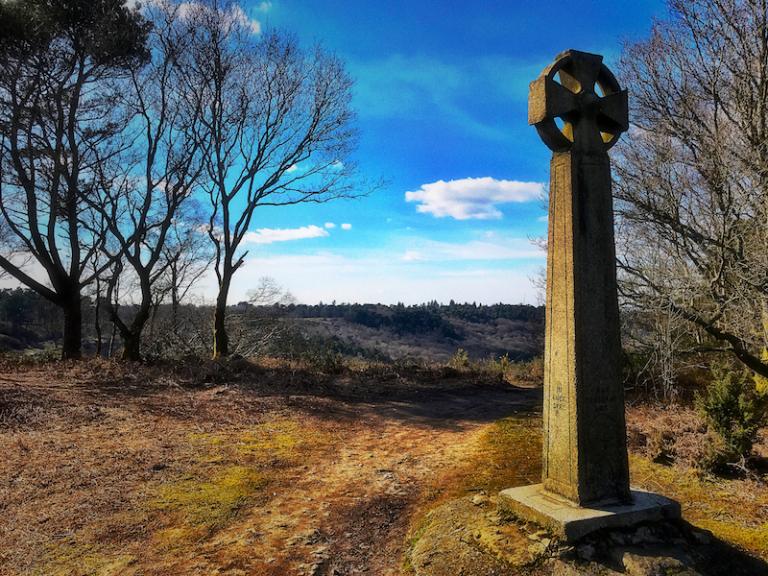
In our discourse upon the feast of the Vernal Equinox, and the theme of hope in light, we have espoused the feminine flavour of the festivities which preside over the equal period of night and day. This, in turn, is analogous of the light and dark in balance, while the festival traditionally utilises the mystery of life and death illustrated in the paradox of the conception and crucifixion of the Christ upon the cross of the elements (anciently symbolic of the four corners/quarters of the sensible world of the elements).
Through exploring the relationships between the heralding light, and inevitable descent into the earth before rising once more, we observe that it was traditionally (and still so in Iranian custom) a time of the New Year. This key node upon the round of the year marks that deep mystery of life and death, which naturally occupy the same metaphysical and mystical space. In my previous article, I discussed the themes that have been inherited into our pagan myth, from their passage through established Christian myth. Now, peeling the layer farther once more, we reveal those mysteries which the Christian world inherited, and those it was perhaps in direct competition. At this time of year, we see the cult of Cybele and Attis and the associated celebrations in the Hellenic calendars of the Classical world.
Reminiscent of how modern Christians bemoan the rise of those religions deemed pagan, who they consider to have scant regard for the institutions, icons and edifices of tradition, and rile against the loss of what was once sacred, our pagan forebears once cried out against the more destructive actions of Christians. Sacrifice to the gods had been outlawed in the Roman Empire by 386 CE. Moreover, Christian monks were vandalising temples to the gods, which was regarded by the pagans as a moral assault upon the very fabric of their traditional life.
…in ruining the temples, they [the monks] are also ruining the countryside itself… The temples are the very life of the countryside…ii (Orator Libanius appeals to Emperor Theodosius).
As a brief interlude, it is reactionary folly to assert negatively against those early Christians who, in truth, are only doing what new religions of man have done since time immemorial. One is immediately drawn to make comparisons with ISIL in the Middle East desecrating all and any images of the sacred that do not conform to their fundamentalist worldview. The temptation to condemn, whilst it is deplorable, is to ignore the nuance in each situation and the fact that Christianity preserved and continued the mysteries of Mithraism and the cult of Attis, among other contemporaneous mystery cults. This topic, however, is one for future debate.
Returning to the Hilaria, we find within the Classical world a festival that likely contributed significantly to our Vernal celebrations and activities, not least the dying and resurrecting god himself. In Latin, hilaria denotes a ‘cheerful, joyous, merry, rejoicing’ and is a Roman festival of the cult of Cybele. It is also the root of our modern word ‘hilarious’, and therefore of significance as part of the origin of April Fool’s Day.
To better identify the Vernal Equinox festival in particular, it was acknowledged as Hilaria Matris Deûm (Hilaria, or joyfulness, mother of the gods). This title immediately calls to mind an epithet of Mary, predominantly in Eastern Christianity, Theotokos, denoting the ‘mother of god’. Of the days that make up the religious observations, the Hilaria is more properly celebrated on the 25th March, Medieval Lady Day, and marks the resurrection of the vegetation god Attis.
The day that followed the Vernal Equinox was regarded as of import as it was the first day of the year whereby the length of day, and therefore light, exceeded that of the dark night. Furthermore, it commemorates the final ‘death’ of winter and the triumph of the light – thus the themes of death and life.
Easter Origins
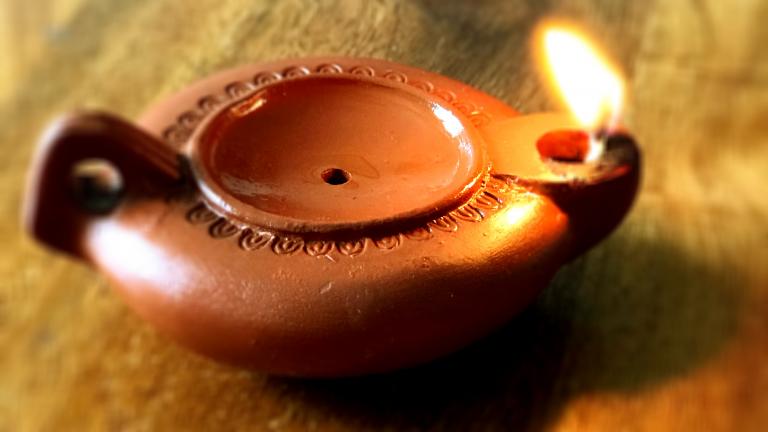
The pertinence of the Hilaria upon the modern Easter festival cannot be overlooked, especially when we consider that two days prior to the resurrection of Attis, at the time of the Vernal Equinox (or, rather, the first day after when light holds supremacy over dark), the celebrants mark the passing of the god with mourning, reminiscent of the Christian Good Friday, before the god is symbolically placed in his grave. Furthermore, tradition would include a fast over the days prior to the resurrection of Christ. Whilst this is believed, likely correctly, to be passed over from Jewish Paschal observations (pun intended), it is interesting to note that the cult of Cybele and Attis required a period of fasting prior to mourning and resurrection. Attis shares with Jesus the symbol of the shepherd (the crook), a solar halo, and other such identifications.
One of the most curious aspects of the Cult of Attis and Cybele was ritual castration, aligning it with the cult of Isis and Osiris in Hellenic Greece. In these myths, the male protagonist either is castrated or else performs the act upon himself, before being resurrected and made whole again. In the myth of Attis, this was ritually observed upon the evening of the 24th March, before the Hilaria proper. The priests, or galli, would adorn themselves in women’s clothing, wearing their hair long together with heavy makeup. Once again, we see the Hermaphrodite story associated with this mortal god, begat as he is from the seed of of the fruit of an almond tree, which sprang from the sexual organ of agdistis, his father/brother, who was a hermaphrodite so powerful he was feared by other gods. This almond tree bore a fruit, which was consumed by Nana, whose womb nurtured the child Attis.
The ritual ceremony associated with Attis, then, uses the ritual association of hermaphrodite, the combined polarities and genders of Hermes and Aphrodite, or Mercury and Venus, the Morning Star. In addition, three days of mourning are observed, during which time a tree is felled and carried to the shrine of Cybele as the body of the wounded King, before being ceremonially interred. Following this, he is resurrected to a joyous reception, a Hilaria, which commemorates the death of the winter and rebirth of the light of spring, the turning from darkness and the ascendancy of the light and, in the light, hope.

i“Hope in Light”
iiLibanius, Pro templis 30.8; quoted by H.D. Saffrey, “The piety and Prayers of Ordinary Men and Women in Late Antiquity,” in Classical Mediterranean Spirituality, ed. A.H.Armstrong (New York: Crossroad, 1986), 200.
Previous Post

March 14, 2018
Robert Cochrane and the Middle Pillar in Traditional Witchcraft
Next Post

March 26, 2018 Od's Man - Riding the Odic Force
Browse Our Archives
Select a Category 1734 Ancestors Apophatic Sorcery Atramentous Press Beltane Betrayal big dipper Book Book Review Brigit Candlemas Ced Ced Tarot child of promise Christmas Climate Community Compass Conferences Conjuration culture Cultus Sabbati Dance Death Devil Dionysus Double Easter Environment Esotericism Events Experience Fairy Fate Folklore Greek Gods Greek Magical Papyri Green Man Grimoire history Initiation Interviews Jewish Mysticism Judas Kabbalah Legend Lilith Mandrake Books Llewellyn Lore Lucifer Magic Magic in History Series May Day Meditation Merkabah Monkey King Myth Necromancy New Books NEws north star road Oberon Obituary Occult Offerings Opposer Pagan Pax Deorum Pax Diaboli PGM Philosophy Poetry Politics Praxis Punk Witchcraft Ralph Harvey Reviews Richard Gordon Rita Morgan Ronald “Chalky” White Sabbatic Witchcraft Sabbats Sun Wukong Taoist the Regency The Witch Compass Three Hands Press Tradition Traditional Witchcraft Trickster God Tricksters Uncategorized via Negativa White Dragon Winds Witch lore Witchcraft Witchcraft Lore Witches' Sabbath wyrd Yule
Select a Month May 2025 March 2025 February 2025 January 2025 December 2024 July 2024 June 2024 April 2024 March 2024 February 2024 January 2024 December 2023 November 2023 October 2023 September 2023 August 2023 July 2023 December 2022 October 2022 September 2022 August 2022 May 2022 April 2022 March 2022 February 2022 December 2021 July 2021 May 2021 April 2021 February 2021 January 2021 December 2020 November 2020 September 2020 August 2020 July 2020 June 2020 May 2020 April 2020 March 2020 February 2020 January 2020 December 2019 November 2019 October 2019 September 2019 July 2019 June 2019 May 2019 April 2019 March 2019 December 2018 September 2018 August 2018 July 2018 June 2018 May 2018 April 2018 March 2018 February 2018 June 2017 October 2016 September 2016 July 2016 June 2016 April 2016
Follow Us!
TAKE THE
Religious Wisdom Quiz
What does "Rabbi" mean?
Select your answer to see how you score.
Scribe Priest Teacher Messenger
Related posts from By The Pale Moonlight

Maundy Thursday: Night of the Witches
Traditional Witchcraft and Betrayal...

Witchcraft in Reality: A Rebuttal
The Devil and the Sun King: The Affair...
TRENDING AT PATHEOS Pagan

I was recently chatting with someone on Instagram. She asked me what...

While there are many people who share their results, the end of...

On July 23, I saw Christopher Nolan's The Odyssey which is Homer’s...

As I write this two big events have just finished up. One...

Restoring the Watershed of Divine Love
Perhaps cooperation is not something we manufacture through legislation, ideology, or moral...

Many UUs don’t pray because of bad experiences in a previous religion,...
view all Pagan blogs
Ad-Free & Subscriber Log-In Subscription Support
- About Us
- 2026 Calendar
- Videos
- Podcasts
- Library of World Religions
- Faith In Media Tracker
- Advertise With Us
- Write for Us
- Privacy Policy
- Terms of Service
- Do Not Sell My Data
- Contact Us
- Radiant Digital
- Manage Newsletter Subscriptions
- Unsubscribe From Notifications
- Sitemap
Copyright 2008-2026, Patheos. All rights reserved.
Subscription Support Ad-Free & Subscriber Log-In
Follow Patheos