
BuddhistCatholicContemplativeEvangelicalGeneral ChristianHinduJewishLatter-day SaintMuslimNew VisionsProgressive Christian
Beliefs
- Buddhist
- Catholic
- Contemplative
- Evangelical
- General Christian
- Hindu
- Jewish
- Latter-day Saint
- More Voices
- Muslim
- New Visions
- Pagan
- Progressive Christian
Topics
- Religion News
- Food and Religion
- Sports and Religion
- Religious Art
- Religious Music and Entertainment
- Religious Events
- History and Religion
- Style and Religion
- Politics and Religion
- Women in Religion
- Recreation Outdoors and Religion
- Business Finance and Religion
- Careers Workplace and Religion
- Education and Religion
- Family Parenting and Religion
- Health Fitness and Religion
- Home and Religion
- Relationships and Religion
- Technology and Religion
- Travel and Religion
Columnists
- Buddhist Columnists
- Business Finance and Religion Columnists
- Careers Workplace and Religion Columnists
- Catholic Columnists
- Contemplative Columnists
- Education and Religion Columnists
- Evangelists Columnists
- Family Parenting and Religion Columnists
- General Christian Columnists
- Health Fitness and Religion Columnists
- Hindu Columnists
- History and Religion Columnists
- Home and Religion Columnists
- Jewish Columnists
- More Voices Columnists
- Latter Day Columnists
- Muslim Columnists
- New Visions Columnists
- Nonreligious Columnists
- Pagan Columnists
- Politics and Religion Columnists
- Progressive Columnists
- Recreation Outdoors and Religion Columnists
- Relationships and Religion Columnists
- Religion News Columnists
- Religious Art Columnists
- Religious Events Columnists
- Religious Music and Entertainment Columnists
- Sports and Religion Columnists
- Style and Religion Columnists
- Technology and Religion Columnists
- Travel and Religion Columnists
- Women in Religion Columnists
Resource Library
- 2026 Calendar
- Library of World Religions
- The 100 Most Holy Places on Earth
- Patheos Answers
- Podcasts
- Videos
- Faith Leaders Database
- Anglican Episcopalian
- Bahai
- Baptist
- Buddhism
- Christianity
- Confucianism
- Eastern Orthodoxy
- Hinduism
- Holiness and Pentecostal
- ISKCON
- Islam
- Judaism
- Lutheran
- Methodist
- The Church of Jesus Christ of Latter-day Saints
- New Age
- Paganism
- Presbytarian and Reformed
- Protestantism
- Religion Behind the Scenes
- Roman Catholic
- Scientology
- Shia Islam
- Sikhism
- Sufism
- Sunni Islam
- Taoism
- Zen
- See all religions
Research Tools
 Ad-Free & Subscriber Log-In Subscription Support
Ad-Free & Subscriber Log-In Subscription Support
Follow Patheos 

- Trending:
- Forgiveness
- |
- Marriage
- |
- Consciousness
- |
- Death Penalty
- |
- Election
- |
- Halloween

- Home
- Pagan
- Cursing a curse: Taking advantage of a double negative
Cursing a curse: Taking advantage of a double negative
Last updated on: March 7, 2018 at 10:30 pm by Ian Chambers
Cursing a curse: Taking advantage of a double negative 2018-03-07T22:30:08+00:00 Ian Chambers
Patheos Explore the world's faith through different perspectives on religion and spirituality! Patheos has the views of the prevalent religions and spiritualities of the world.
“The witch that cannot curse cannot bless”
This is an oft repeated axiom within both Wiccan, Pagan and Witchcraft circles. But what if we have over complicated the matter due to sensibilities and cautious sensitivities which have sought out a truism as if justifying a curse to our peers? If you identify as a witch or Wiccan, let me ask you a question: When was the last time you cast a blessing? And I don’t mean when fashioning the circle, but as something you have been called to do as extraordinary circumstances. Alternatively, when was the last time you casually uttered: “Damn it”?
The simple fact is, throughout history, cursing has been the predominant petition to the supernatural forces, especially in the Classical world. But, and here is the crux of our discourse upon the matter, what if the curse was upon the very thing that afflicts or restricts in some way, and the success of the curse is a condition of blessedness or good health?
If we think about it, it’s something we do all the time anyway: “damn this rotten cold!” This might sound facetious but, I assure you, the purpose is most serious. Cursing is, as an historical folk magical operation, so frequent in our society that we still throw them about carelessly without even a second thought to the words we speak.
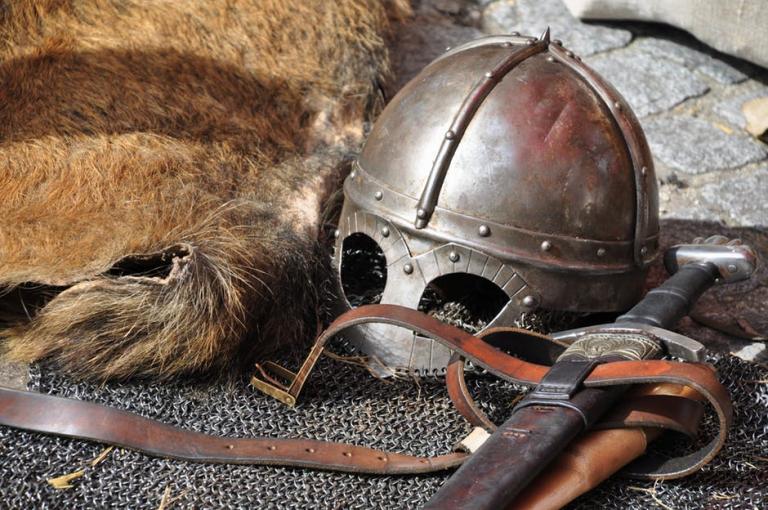 Now, this is cause for shame; not that we curse but that we bandy words around without care. From the Anglo-Saxon folk magics, to Goetic and ceremonial Necromancers, even Neoplatonists of the Iamblichan school, the careful use of incantation, galdr, and preservation of sacred words is of utmost emphasis. At least one school of philosophy would hold that frequent and profane use of incantations, the uttering of sacred words, would render them impotent. Indeed, this may even be the origin of the taboo against misuse of sacred words, such as is found in Biblical literature, and the Christian church, as blasphemy.
My great-grandfather, who lived into his nineties and experienced most of the twentieth Century in his lifetime, used many a variation on common curses, all contrived so as to avoid saying the actual words. Examples include such harmless expressions as ‘Crikey’, a simple euphemism for Christ, and ‘cor blimey’, a Medieval solemn oath meaning ‘may god blind me,’ which recent generations would find ready on their lips with nary a thought.
But does that mean we shouldn’t curse? On the contrary, there are many perfectly reasonable a use for curses which find that they are on equal footing to a blessing. Here’s that crazy thought again: what if we curse the thing that’s bothering us? Well, isn’t that how curses generally work? Damn it, you’re right!
That last was a deliberate curse at the thing I did that was wrong. Granted, a silly little curse, about as effective as the thing itself, which is very little in this case. But the principle is the same. I found something that was erroneous and held some wrong and cursed it. I used the colloquial and socially acceptable incantation, as well, the short form of ‘God damn it’.
Now, in a roundabout manner, I have come to the cut and thrust of this thought: we curse things all the time. It’s ok. It doesn’t mean you can’t bless, in fact you’re more practiced in cursing – I guarantee it. But is the very point of a curse is to be put to a predominantly beneficent purpose, at least to the condition of the one making the petition? Most of the Roman curses found at Bath petitioned Sulis-Minerva for justice. Much as medieval charms, the general intention appears to be, punish a thief, return or find stolen goods, catch an adulterer, name a liar or troublemaker, etc. These are all pretty petty, routine and daily encounters. In fact, they mostly appear to be appealing to a force higher than the harmed party for what they perceive to be some slight or wrong put right.
In conclusion, a curse is much more useful than a blessing, especially in cases of dire need, and a petition to a higher power is the surest way to do it. Whether you ‘damn’ your cold, curse some small thing, it’s all the same. Traditional English Magic would use curse as the first line of defence, and restoring a state of blessing or health, in most cases. They lived in harder times and realised that, sometimes, an aggressive stance with what could harm was the best approach. The same works with spirits; sure, a banishing ritual is nice but, if you’re being harassed, a good curt ‘fuck off!’ will work just as good, if not better (it’s at its most elegant when done in a Northern English accent, I find). And so, I leave you with an example of a less shy time, when social mores were not so sensitive to such issues, nor confused about offence.
The following has been labelled, ‘Against a wen‘ and is an example of an Anglo-Saxon charm, although it is a curse. One thing that is interesting to note is that a “wen is a tumour or goitre, not necessarily dangerous” (Griffiths, 2003). When studying traditional folk magics, especially the type we will reproduce here, one notes that anthropomorphizing is an assumed characteristic. Indeed, a wen was also considered a type of malign spirit which afflicted people. In a rather shamanic technique, the charm calls for the enchanter to personify the invader, some mischievous sprite that must be charmed away, and assault it with a barrage of abuse that would make Gordon Ramsey blush. This is, a charm which affects a lengthy curse upon the cause of the ailment and a perfect example whereby a curse is a blessing in disguise. Using the principle of a double negative whereby the baleful thing is assaulted with negative incantation and a positive outcome results.
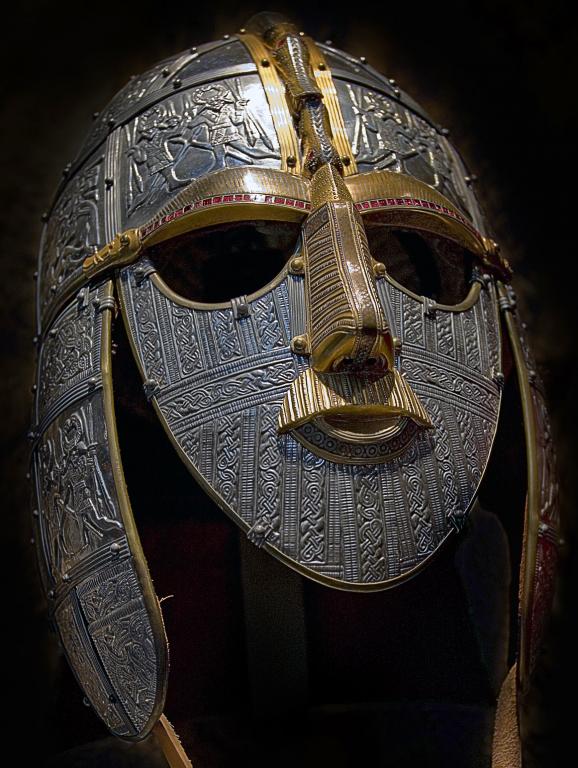 For literary example of the principle, I recommend The Way of Wyrd by Brian Bates which commences with an Anglo-Saxon wizard/shaman battling an ailment by summoning the spirit and giving fight, and thus healing the woman.
Wen! Wen! ugly little wen,
Here you shall not build, nor no home set up,
But you must go north from here to a nearby hill,
Where you have, you unhappy thing, a brother.
He shall place a leaf on your head.
Under the foot of the wolf, under the wing of the eagle,
under the claw of the eagle, continually you will be worn away.
May you be consumed like burning coal in the hearth,
may you shrink way like dung
and evaporate like water in a rock.
You will become as tiny as a linseed,
and much smaller than a cricket’s hip-bone,
and thus you shall be so small that you change into nothing.
(Griffith, 2003)
Griffiths, B. (2003) Aspects of Anglo-Saxon Magic. Revised edn.Anglo-Saxon Books
Previous Post

June 23, 2017
Love's Allure
Next Post

February 11, 2018 Keep pure your highest ideal...
Browse Our Archives
Select a Category 1734 Ancestors Apophatic Sorcery Atramentous Press Beltane Betrayal big dipper Book Book Review Brigit Candlemas Ced Ced Tarot child of promise Christmas Climate Community Compass Conferences Conjuration culture Cultus Sabbati Dance Death Devil Dionysus Double Easter Environment Esotericism Events Experience Fairy Fate Folklore Greek Gods Greek Magical Papyri Green Man Grimoire history Initiation Interviews Jewish Mysticism Judas Kabbalah Legend Lilith Mandrake Books Llewellyn Lore Lucifer Magic Magic in History Series May Day Meditation Merkabah Monkey King Myth Necromancy New Books NEws north star road Oberon Obituary Occult Offerings Opposer Pagan Pax Deorum Pax Diaboli PGM Philosophy Poetry Politics Praxis Punk Witchcraft Ralph Harvey Reviews Richard Gordon Rita Morgan Ronald “Chalky” White Sabbatic Witchcraft Sabbats Sun Wukong Taoist the Regency The Witch Compass Three Hands Press Tradition Traditional Witchcraft Trickster God Tricksters Uncategorized via Negativa White Dragon Winds Witch lore Witchcraft Witchcraft Lore Witches' Sabbath wyrd Yule
Select a Month May 2025 March 2025 February 2025 January 2025 December 2024 July 2024 June 2024 April 2024 March 2024 February 2024 January 2024 December 2023 November 2023 October 2023 September 2023 August 2023 July 2023 December 2022 October 2022 September 2022 August 2022 May 2022 April 2022 March 2022 February 2022 December 2021 July 2021 May 2021 April 2021 February 2021 January 2021 December 2020 November 2020 September 2020 August 2020 July 2020 June 2020 May 2020 April 2020 March 2020 February 2020 January 2020 December 2019 November 2019 October 2019 September 2019 July 2019 June 2019 May 2019 April 2019 March 2019 December 2018 September 2018 August 2018 July 2018 June 2018 May 2018 April 2018 March 2018 February 2018 June 2017 October 2016 September 2016 July 2016 June 2016 April 2016
Follow Us!
TAKE THE
Religious Wisdom Quiz
Who was Jonathan's son, crippled as a child, whom David showed kindness?
Select your answer to see how you score.
Mephibosheth Jedidiah Abinadab Siba
Related posts from By The Pale Moonlight

Maundy Thursday: Night of the Witches
Traditional Witchcraft and Betrayal...

Witchcraft in Reality: A Rebuttal

The Devil and the Sun King: The Affair...
TRENDING AT PATHEOS Pagan

I was recently chatting with someone on Instagram. She asked me what...

While there are many people who share their results, the end of...

On July 23, I saw Christopher Nolan's The Odyssey which is Homer’s...

As I write this two big events have just finished up. One...

Restoring the Watershed of Divine Love
Perhaps cooperation is not something we manufacture through legislation, ideology, or moral...

Many UUs don’t pray because of bad experiences in a previous religion,...
view all Pagan blogs
Ad-Free & Subscriber Log-In Subscription Support
- About Us
- 2026 Calendar
- Videos
- Podcasts
- Library of World Religions
- Faith In Media Tracker
- Advertise With Us
- Write for Us
- Privacy Policy
- Terms of Service
- Do Not Sell My Data
- Contact Us
- Radiant Digital
- Manage Newsletter Subscriptions
- Unsubscribe From Notifications
- Sitemap
Copyright 2008-2026, Patheos. All rights reserved.
Subscription Support Ad-Free & Subscriber Log-In
Follow Patheos